

2018-2025 Enclave, Traverse & Acadia Rear Shock Absorbers: Noises, Leaks & Fitment Guide
This guide covers common failure symptoms, complex fitment issues, and how to choose the right used or new rear shock absorber for your 2018-2025 Buick Enclave, Chevrolet Traverse, or 2024-2025 GMC Acadia.
- Fitment is extremely complex. Compatibility depends on suspension type (standard vs. electronic), wheel size (18", 20", 22"), and drivetrain. You must verify the OEM part number.
- A light oil film with dust is normal seepage per GM. Only replace a shock if it has a wet, active leak with drips.
- Contrary to common advice, GM Service Bulletin 18-NA-315 states that modern shocks only need to be replaced individually, not in pairs, unless both are confirmed to be bad.
- Replacement is a DIY-friendly job with a difficulty of 2/5, but you must use a torque wrench and support the suspension with a jack during the process.
Symptoms of Failing Rear Shock Absorbers
When the rear shocks on your 2018-2025 Buick Enclave, Chevrolet Traverse, or 2024-2025 GMC Acadia begin to wear out, you'll notice changes in ride quality, handling, and noise. Here are the most common symptoms to watch for:
- Excessive Bouncing: The most classic sign of a bad shock. After hitting a bump or dip, the rear of the vehicle will continue to bounce up and down instead of settling quickly. You can test this by pushing down firmly on the rear bumper; if the vehicle bounces more than once or twice after you let go, the shocks are likely worn.
- Unusual Noises: Worn shocks can cause clunking, knocking, or rattling sounds from the rear of the vehicle, especially when driving over bumps or uneven pavement. Some owners have reported squeaking or creaking noises, which may be related to a known issue outlined in GM Technical Service Bulletin (TSB) #20NA033.
- Poor Handling & Stability: You may feel the vehicle sway or roll more during lane changes or turns. In crosswinds, the vehicle might feel less stable. This happens because the shocks can no longer effectively control body motion.
- "Nose-Dive" and "Rear Squat": While more pronounced with front shock failure, worn rear shocks can cause the rear of the vehicle to squat excessively during acceleration and the front to dive more during braking. This weight transfer can increase your stopping distance.
- Uneven Tire Wear: Bad shocks can cause a specific type of uneven tire wear called "cupping" or "scalloping." This appears as hollowed-out patches on the tire tread because the tire is bouncing off the road surface instead of rolling smoothly.
- Visible Fluid Leaks: The shock absorber is filled with hydraulic fluid. If the seals fail, you may see oily fluid leaking down the side of the shock body.
Known Issues, TSBs, and Recalls
While there are no major safety recalls specifically for the rear shock absorbers on these vehicles, GM has issued several Technical Service Bulletins (TSBs) related to the rear suspension that owners should be aware of.
- TSB #PIE0524A: GM issued this bulletin to gather information from dealerships about noises coming from the rear shock absorbers on the Chevrolet Traverse, indicating they are aware of a potential issue.
- TSB #20NA033: For customers complaining of a "Squeak/Creak Noise from Rear Suspension," this bulletin provides a procedure to modify the rear suspension rebound pin.
- TSB #05-03-08-002I: This important bulletin helps technicians and owners differentiate between a true fluid leak and normal "seepage." A light film of oil that attracts dust is considered normal seepage and does not require shock replacement. A shock should only be replaced if there is an active oil drip or a trail of fluid running down the shock body.
- Prematurely Failing Rear Toe Links: Some owners of the Chevrolet Traverse have reported premature failure of the rear toe links, a separate suspension arm that connects to the wheel knuckle. This can be caused by corrosion or other defects and will cause alignment issues and noise. If you are diagnosing a rear suspension problem, it's important to inspect these links as well.
For the newer 2024-2025 GMC Acadia, some early owners have reported popping noises from the front strut assemblies due to improper factory installation, but widespread issues with the rear shocks have not yet been documented.
Fitment & Compatibility Warnings
Choosing the correct shock absorber for these vehicles is complex. Fitment depends on several factory options, and installing the wrong part will negatively affect ride quality and handling. Visually matching the old part is not enough.
Warning: You must verify the correct OEM part number for your specific vehicle before purchasing. The internal valving of the shock is tuned for specific vehicle configurations.
Check the following for your vehicle:
- Suspension Type (Standard vs. Electronic): Higher trim levels, like the Buick Enclave Avenir, may be equipped with Continuously Variable Real-Time Damping (also called Continuous Damping Control or CDC). These are electronic shocks with wires and connectors. Standard, non-electronic shocks are not interchangeable and will cause system errors and a poor ride.
- Wheel Size: The shocks are tuned differently for vehicles with 18-inch, 20-inch, or 22-inch wheels. Part listings often specify the wheel size the shock is designed for.
- Drivetrain (FWD vs. AWD): While many shocks fit both, some part numbers are specific to either Front-Wheel Drive or All-Wheel Drive models. Always confirm compatibility.
Buying a Used Suspension Shock Absorber
A low-mileage used OEM shock can be a great value, often providing better performance and durability than a cheap new aftermarket part. The original GM shocks were designed and tuned specifically for your vehicle's weight and handling characteristics. Here’s what to check before buying.
Physical Inspection
- Check for Leaks: Using GM's own service guidelines (TSB 05-03-08-002I), inspect the shock body. A light, dry film of dust stuck to the shock is normal seepage. Do not buy a shock that is wet with oil, has a visible drip, or shows a clean trail where fluid has recently run down.
- Inspect the Body: Look for major dents, deep rust, or damage to the shock body or mounting points. A dent can interfere with the piston's movement inside.
- Check the Piston Rod: The chrome rod that extends from the shock body should be smooth, straight, and free of pitting or rust. A bent or damaged rod will destroy the seal and cause it to fail.
- Examine the Bushings: Check the rubber bushings in the top and bottom mounting eyes. They should be intact, without major cracks or signs of being torn or pushed out.
Manual Function Test
You can perform a simple test by hand. Hold the shock in its normal vertical orientation.
- Compress the shock: Push down on the piston rod to compress it. It should move with smooth, consistent resistance. It should not feel like it's sticking or have "dead spots" with no resistance.
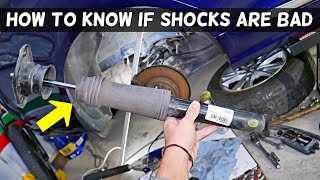
- Extend the shock: After compressing it, the shock should extend on its own. It should move out smoothly and steadily. A shock that doesn't extend or extends very slowly is worn out. 🎬 Watch: How to tell if rear shocks are good or bad
Cost Comparison
Prices for rear shock absorbers can vary significantly based on brand and source. Here are typical price ranges for a single rear shock absorber:
| Part Type | Typical Price Range (per shock) | Notes |
|---|---|---|
| New OEM | $100 - $185 | Purchased from a dealership or online OEM parts retailer. |
| Used OEM | $70 - $140 | Sourced from a recycled vehicle. Price depends on mileage and condition. |
| New Aftermarket (Premium) | $60 - $260+ | From brands like Bilstein, KYB, or ACDelco. |
| New Aftermarket (Budget) | $35 - $60 | From value-focused brands. May not match OEM ride quality or longevity. |
| Shop Labor | $150 - $250 (for a pair) | Typical independent shop labor to replace both rear shocks. |
Rear Shock Absorber Replacement
Replacing the rear shocks on these vehicles is a relatively straightforward job that a DIY mechanic with the right tools can perform.
- Difficulty: 2 out of 5
- Estimated Time: 1.5 hours for a pair
- Tools Required: Jack, jack stands, wheel chocks, breaker bar, torque wrench, socket set (15mm, 21mm, 22mm), wrenches (18mm, 21mm).
Basic Steps
- Safely lift the rear of the vehicle and support it on jack stands. Chock the front wheels.
- Remove the rear wheel (22mm socket).
- Place a jack under the lower control arm to support its weight and relieve tension on the shock bolts.
- Remove the lower shock bolt and nut (21mm socket and wrench).
- Remove the upper shock mounting bolts (15mm socket and 18mm wrench).
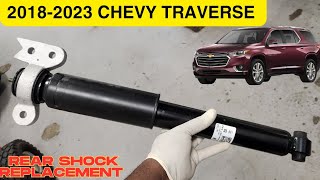
- Remove the old shock absorber. 🎬 See this 2018-2023 Chevy Traverse rear shock replacement walkthrough
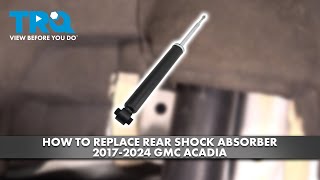
- Install the new shock in reverse order. 🎬 Watch: How to replace rear shock absorbers on a GMC Acadia Do not fully tighten the bolts until the full weight of the vehicle is back on the suspension.
- Reinstall the wheel, lower the vehicle, and torque all bolts to specification.
Pro Tip: GM notes that the lower shock absorber bolt is a one-time-use component and should be replaced.
Torque Specifications
Using a torque wrench is critical for safety and proper function.
- Upper Shock Mount Fasteners: 25 Nm (18 ft-lbs)
- Lower Shock Mount Bolt: 140 Nm (103 ft-lbs)
- Wheel Lug Nuts: 140 Nm (103 ft-lbs)
Frequently Asked Questions (FAQ)
Do I need to replace my shocks in pairs?
Conventional wisdom says yes, but GM Service Bulletin 18-NA-315 states that for modern shocks, it is only required to replace the single shock that has failed. You should only replace them as a pair if a diagnostic inspection confirms that both have failed. However, many technicians still recommend replacing in pairs to ensure even damping performance across the axle, especially if the existing shocks have high mileage.
What is the difference between a shock and a strut?
These vehicles use shocks in the rear and struts in the front. A strut is a structural part of the suspension that incorporates the shock absorber, spring, and steering pivot into one assembly. A shock absorber, like the one used in the rear of these vehicles, is a separate component that only provides damping; the coil spring is mounted separately.
Can I install standard shocks on my Enclave Avenir with electronic suspension?
No. Vehicles equipped with electronic (adaptive) suspension require specific electronic shocks. Installing standard shocks will not work, will likely trigger a "Service Suspension System" warning light on your dash, and will result in poor handling and ride comfort because the vehicle's computer cannot control them.
Is a wheel alignment needed after replacing rear shocks?
Generally, a wheel alignment is not required after replacing only the rear shock absorbers, as they do not control the alignment angles. However, if you are also replacing other components like control arms or toe links, an alignment is absolutely necessary.
Helpful Videos
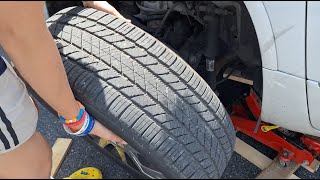
Technical Specifications
OEM Part Numbers: 26477456 26511981 26542427 84287466 84287467 84315236 84315237 84317033 84317034 84453337 84453338 84557946 84557947
Upper Mount Fastener Torque: 25 Nm (18 ft-lbs). Lower Mount Bolt Torque: 140 Nm (103 ft-lbs).
We Have This Part in Stock
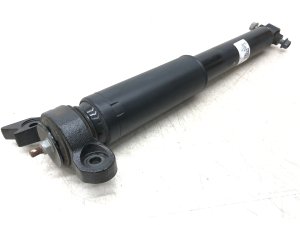
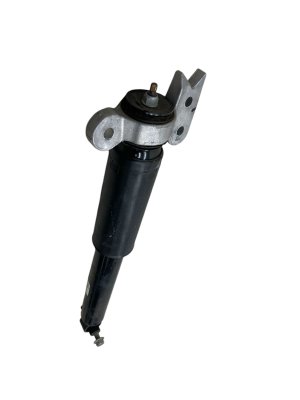
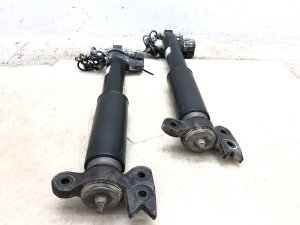
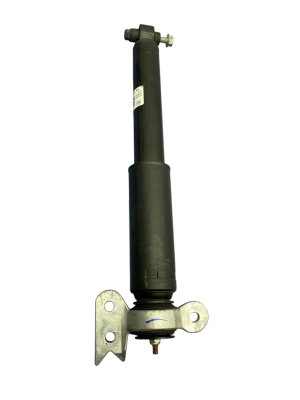
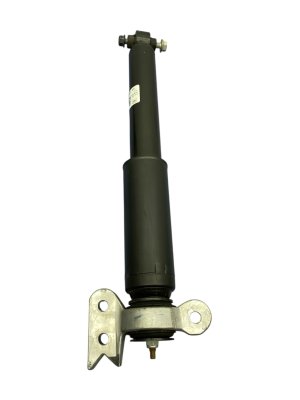
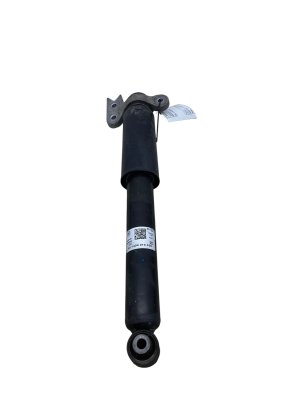

The information in this article is provided for general reference and educational purposes only. Vehicle specifications, procedures, and part compatibility can vary by production date, trim level, and region. Always consult your vehicle's factory service manual and verify part numbers before purchasing or performing repairs. Safety-critical components such as airbags, seat belts, and braking systems should be installed by a qualified professional.
- Buick Enclave:
- Chevrolet Traverse:
- GMC Acadia:
- 🎬 Helpful Videos
- 🛍️ Shop This Part
- Symptoms of Failing Rear Shock Absorbers
- Known Issues, TSBs, and Recalls
- Fitment & Compatibility Warnings
- Buying a Used Suspension Shock Absorber
- Physical Inspection
- Manual Function Test
- Cost Comparison
- Rear Shock Absorber Replacement
- Basic Steps
- Torque Specifications
- Frequently Asked Questions (FAQ)
- 🎟️ Get 5% Off