

2023-2025 Prius & Prius Prime Shocks: A Guide to Noises, Leaks, and FWD/AWD Differences
This guide clarifies the confusing front and rear shock absorber options for 2023-2025 Toyota Prius and Prius Prime models, helping you diagnose failures and choose the right used part.
- Fitment is extremely specific. Part numbers differ for Prius vs. Prius Prime, FWD vs. AWD, and even between trim levels. Always verify your exact part number.
- A clunking noise over bumps is a common early symptom on these models, often pointing to a worn strut mount or the shock itself.
- Replacing rear shocks is a relatively easy DIY job (2/5 difficulty). Replacing front struts is difficult (4/5) and requires a dangerous spring compressor tool and a subsequent wheel alignment.
- When buying a used shock, check for fluid leaks and a smooth, undamaged piston rod. Reject any part that shows signs of leakage or physical damage.
Critical Fitment Differences: 2023-2025 Prius & Prius Prime
Before diagnosing issues or buying a replacement, it's crucial to understand that the shock absorbers for the 2023-2025 Toyota Prius and Toyota Prius Prime are NOT one-size-fits-all. Compatibility depends on three key factors: the vehicle model (standard Prius vs. Prius Prime PHEV), the drivetrain (Front-Wheel Drive vs. All-Wheel Drive), and sometimes the trim level (LE vs. XLE/Limited). Using the wrong shock absorber can result in improper ride height, poor handling, and unsafe driving conditions.
Warning: Always verify the exact OEM part number from your original shock absorber before purchasing a used replacement. The differences are subtle, and visual identification alone is unreliable.
Parts catalogs show distinct part numbers for these configurations. For example, a rear shock for a FWD Prius LE will have a different part number than one for an XLE/Limited model or any AWD model. The Prius Prime (PHEV) also uses specific components due to differences in weight and chassis tuning.
Symptoms of Failing Shock Absorbers
Worn shock absorbers degrade gradually, but they present several clear warning signs. If you notice any of the following, it's time for an inspection.
- Excessive Bouncing: After hitting a bump or dip, the car continues to bounce up and down more than once. A good shock should settle the suspension almost immediately.
- Nose-Diving and Rear-Squatting: The front of the car dips excessively when you brake, or the rear squats down when you accelerate. This indicates the shocks are no longer controlling the vehicle's weight transfer.
- Clunking or Knocking Noises: A common symptom, especially on the newer 2023+ Prius models, is a clunking or rattling sound when going over bumps or making turns. This can be the shock itself or, more commonly, a worn strut mount. Some owners of these new models have reported these noises developing at very low mileage.
- Visible Fluid Leaks: The shock absorber body will appear wet, oily, or grimy. Shocks are filled with hydraulic fluid, and any leak means the internal components are failing and the shock must be replaced.
- Uneven Tire Wear: Worn shocks can cause tires to bounce slightly as they roll, leading to a distinctive wear pattern called "cupping" or "scalloping," which looks like high and low spots in the tread.
- Poor Handling and Stability: The vehicle may feel unstable at highway speeds, sway or roll excessively in turns, or be difficult to control in crosswinds.
Known Issues, TSBs, and Recalls
As of early 2026, there are no specific recalls or Technical Service Bulletins (TSBs) from Toyota or the NHTSA for suspension shock absorbers on the 2023-2025 Prius and Prius Prime. However, owner forums contain multiple reports of clunking or knocking noises from the front suspension, sometimes developing with as little as 800-3,000 miles on the vehicle. This noise often occurs during low-speed turns or over uneven surfaces and may point to premature wear in the strut mounts or stabilizer bar links rather than the shock absorber itself.
Pro Tip: If you hear a clunking noise, have a technician inspect the entire front suspension assembly, including the strut mounts, sway bar links, and ball joints, not just the strut itself.
Buying a Used Suspension Shock Absorber: What to Check
Purchasing a used OEM shock absorber can be a great way to save money, especially since the original parts are designed specifically for your vehicle's handling characteristics. However, a thorough inspection is key.
- Verify the Part Number: This is the most important step. Get the part number from your old shock and match it exactly. Do not rely on visual similarity. Ask the seller for a clear photo of the part number sticker or stamping.
- Check for Leaks: Inspect the entire shock body. It should be dry. Any sign of oily residue or active fluid leakage means the shock is bad and should be rejected.
- Inspect the Piston Rod: The shiny metal rod that extends from the shock body should be perfectly smooth, straight, and free of rust, pitting, or scratches. Any damage to this rod will quickly destroy the main seal, causing the shock to fail.
- Perform a Manual Compression Test: If possible, manually compress and extend the shock. It should provide smooth, consistent resistance in both directions. If it moves too easily, has "dead spots" with no resistance, or makes a gurgling sound, it is likely worn out.
- Examine the Mounts and Bushings: Check any rubber bushings for cracking, tearing, or excessive wear. For front struts, inspect the condition of the lower mounting points where they attach to the steering knuckle.
- Consider the Mileage: Ask the seller for the mileage of the donor vehicle. While shocks don't have a fixed lifespan, one from a low-mileage vehicle (under 50,000 miles) is a much safer bet.
Replacement Cost Comparison
Prices can vary by location and specific part number. The following is an estimated range for a single shock/strut.
| Part/Service | Estimated Cost (Single Unit) | Notes |
|---|---|---|
| New OEM (Dealer) | $70 - $195 | Price varies significantly between front struts and rear shocks. |
| New Aftermarket | $75 - $250 | Quality can vary. Brands like KYB are often OEM suppliers. |
| Used OEM | $40 - $120 | A cost-effective option if inspected carefully from a low-mileage vehicle. |
| Shop Labor (Rear) | $100 - $200 | Relatively simple replacement. |
| Shop Labor (Front) | $200 - $400 | More complex; requires a spring compressor and subsequent wheel alignment. |
Important: A four-wheel alignment, typically costing $100-$200, is required after replacing the front struts. It is not necessary for rear shock replacement.
Installation Guide & Difficulty
Shocks and struts should always be replaced in pairs (both fronts or both rears) to ensure even handling and stability.
Rear Shock Absorbers
- Difficulty: 2 out of 5 (Easy to Moderate)
- DIY Feasible: Yes
- Special Tools: Torque wrench, basic metric socket set.
- Procedure: The process is straightforward. The lower bolt attaches to the rear suspension arm, and the upper mount is accessed by removing interior trim panels in the cargo area. On some Prius models, there is a convenient access panel that makes reaching the top nut very easy. The final tightening of the lower bolt should be done with the vehicle's weight on the suspension (on the ground).
Front Strut Assemblies
- Difficulty: 4 out of 5 (Difficult)
- DIY Feasible: For experienced mechanics only.
- Special Tools: Torque wrench, heavy-duty sockets, spring compressor, pry bars.
- Procedure: This is a much more involved job. It requires removing the windshield wiper and cowl assembly to access the three top mounting nuts. The strut must then be disconnected from the steering knuckle at the bottom. The most dangerous part is using a spring compressor to transfer the coil spring to the new strut. Mishandling a compressed spring can cause serious injury. Many DIYers choose to remove the entire strut assembly and take it to a shop to have the spring swapped professionally.
OEM Part Numbers
This is not an exhaustive list. Part numbers vary by drivetrain, model, and trim. Always confirm with your vehicle's VIN.
| Position | Description | Part Number |
|---|---|---|
| Front Left | Prius, FWD, LE | 48520-8Z439 |
| Front Right | Prius, FWD, LE | 48510-8Z618 |
| Front Left | Prius, FWD, XLE/Limited | 48520-8Z440 |
| Front Right | Prius, FWD, XLE/Limited | 48510-8Z620 |
| Rear (L/R) | Prius, FWD, LE | 48530-8Z238 |
| Rear (L/R) | Prius, FWD, XLE/Limited | 48530-8Z239 |
| Rear (L/R) | Prius, AWD, XLE/Limited | 48530-8Z244 |
Frequently Asked Questions (FAQ)
Do I have to replace my shocks and struts in pairs?
Yes, always. Replacing only one side will result in unbalanced handling and can be unsafe. If one shock has failed due to mileage, the other on the same axle is likely near the end of its life as well.
What is the difference between a shock and a strut?
A shock absorber simply dampens spring movement. A strut is a structural component of the suspension that incorporates the shock absorber, spring mount, and serves as a pivot point for the steering. Your 2023-2025 Prius has struts in the front and shocks in the rear.
Do I need a wheel alignment after replacing my shocks?
An alignment is absolutely necessary after replacing the front struts because their removal and installation affects steering geometry. An alignment is NOT needed after replacing only the rear shocks.
Can I drive with a leaking shock absorber?
While the car will still move, it is not recommended. A leaking shock has lost its ability to control the suspension, which will significantly increase your braking distance, compromise handling in emergency maneuvers, and cause accelerated wear on your tires and other suspension components.
Technical Specifications
OEM Part Numbers: 48520-8Z439 48510-8Z618 48520-8Z440 48510-8Z620 48530-47310 48530-47320 48530-47540 48530-8Z238 48530-8Z239 48530-8Z244 4853047550
Front suspension: MacPherson strut. Rear suspension: Multi-link with separate shock and coil spring.
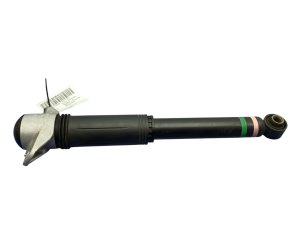
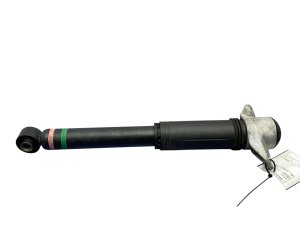
We Have This Part in Stock
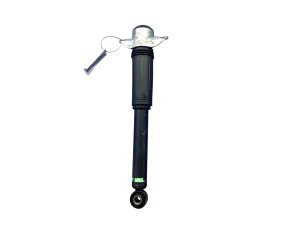
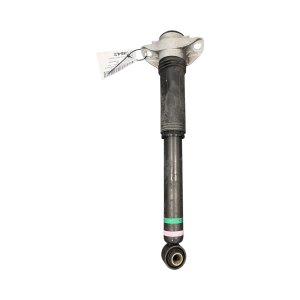
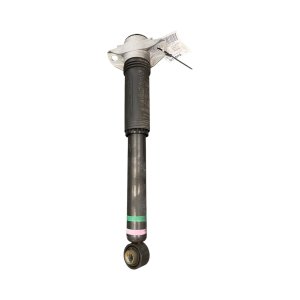

The information in this article is provided for general reference and educational purposes only. Vehicle specifications, procedures, and part compatibility can vary by production date, trim level, and region. Always consult your vehicle's factory service manual and verify part numbers before purchasing or performing repairs. Safety-critical components such as airbags, seat belts, and braking systems should be installed by a qualified professional.
- Toyota Prius:
- Toyota Prius Prime:
- 🛍️ Shop This Part
- Critical Fitment Differences: 2023-2025 Prius & Prius Prime
- Symptoms of Failing Shock Absorbers
- Known Issues, TSBs, and Recalls
- Buying a Used Suspension Shock Absorber: What to Check
- Replacement Cost Comparison
- Installation Guide & Difficulty
- Rear Shock Absorbers
- Front Strut Assemblies
- OEM Part Numbers
- Frequently Asked Questions (FAQ)
- 🎟️ Get 5% Off