

2021-2023 Genesis GV80 Rear Stabilizer Bar: Diagnosing Clunks and Noises
This guide covers the common failure symptoms, replacement costs, and what to look for when buying a used rear stabilizer bar for your 2021-2023 Genesis GV80.
- The most common failure symptom is a clunking or knocking noise from the rear suspension when going over bumps.
- The issue is almost always the end links or bushings, not the bar itself. A used OEM bar is a good value if the end links are in good condition.
- No wheel alignment is needed after replacing the rear stabilizer bar or its links.
- When replacing, always use new frame bushings and tighten the bolts only when the suspension is loaded (car on the ground) to prevent premature wear.
Symptoms of a Failing Rear Stabilizer Bar
Failure in the rear stabilizer bar system on a 2021-2023 Genesis GV80 most often relates to the end links or the bushings, rather than the bar itself. The bar is a solid piece of metal and rarely breaks. When you hear noises or feel a change in handling, it's usually one of the connecting components that has worn out.
Common Failure Symptoms:
- Clunking or Knocking Noises: This is the most common symptom. You'll likely hear a distinct clunking, rattling, or knocking sound coming from the rear of the vehicle, especially when driving over bumps, uneven pavement, or turning. This sound is caused by worn-out sway bar links or bushings that allow for excessive movement.
- Poor Handling or 'Loose' Feeling: A worn stabilizer bar system can make the vehicle feel less stable in corners. You might notice more body roll or a sensation that the rear of the SUV is swaying more than usual.
- Rattling from Rear Seat Area: While sometimes attributed to interior trim, a metallic rattle or knock from the rear can be a sign of a failed stabilizer component. In some GV80s, a similar noise can also be caused by a failed rear seat damper, which is a separate issue but produces a similar sound.
Known Issues, TSBs, and Recalls for 2021-2023 Genesis GV80
As of early 2026, there are no specific recalls or widespread Technical Service Bulletins (TSBs) from the National Highway Traffic Safety Administration (NHTSA) that directly address the rear stabilizer bar or its links for the 2021-2023 Genesis GV80. Most recalls for this period relate to software issues with the instrument panel or other electronic systems. However, some owners have reported general suspension noises and vibrations. One Reddit user noted that vibrations and rear-end issues on earlier models were sometimes traced back to improperly tightened differential bolts, which could be misdiagnosed as a suspension problem.
Pro Tip: If you hear a clunking noise from the rear, it's wise to also check the rear seat dampers. Some GV80s have experienced failures where a damper inside the seat assembly breaks, causing a metallic rattle over bumps that can be mistaken for a suspension issue.
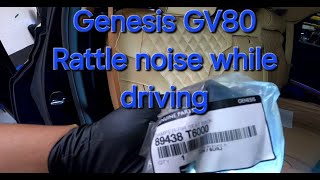
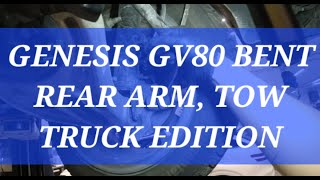
🎬 Watch: Hear the specific rattling noise caused by these common issues.Buying a Used 2021-2023 GV80 Rear Stabilizer Bar
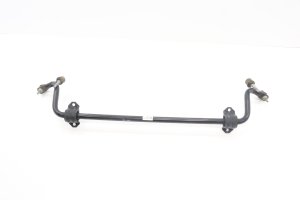
A used OEM stabilizer bar is an excellent, cost-effective option. Since the bar itself is a durable component, the main things to inspect are the included end links and the overall condition of the bar. Mileage is not a primary concern for the bar, but it is for the wearable end links.
Inspection Checklist:
- Check the Bar for Damage: Inspect the steel bar for any signs of cracking, deep corrosion, or bending. While rare, damage from an accident or improper towing could compromise the part.
- Inspect the End Links: The OEM part often comes with end links attached. Check the rubber boots on the ball joints of the end links. They should be intact with no rips or tears. Squeeze the boot to feel for grease; if it's dry, the joint is likely worn. Try to move the ball joint stud by hand; there should be no free play or looseness.
- Verify Bushing Condition: The stabilizer bar is held to the subframe by two rubber or polyurethane bushings. While these are often replaced new during installation, check the condition of any bushings that may come with the used part. Look for cracking, hardening, or tearing.
- Confirm Part Numbers: The 2021-2023 GV80 uses rear stabilizer bar assembly part numbers 55510-T6000 and 55510-T6200. There may be variations based on trim level or suspension options (e.g., standard vs. electronically controlled suspension). Always match the part number from your vehicle to ensure compatibility. The end links may also be sold separately under part number 55530-T6000.
Replacement Overview and Torque Specs
Replacing the rear stabilizer bar is a feasible DIY job for someone with moderate mechanical experience and the right tools. The vehicle must be safely raised and supported on jack stands with the rear suspension unloaded to perform the work.
Key Steps & Torque Specifications:
- Raise and support the vehicle: Ensure the vehicle is on a level surface and use jack stands to support the frame, allowing the rear suspension to hang freely.
- Remove the rear wheels.
- Disconnect End Links: Loosen and remove the nuts connecting both stabilizer bar end links to the lower control arms.
- Remove Bushing Brackets: Unbolt the two brackets holding the stabilizer bar to the rear subframe.
- Remove the Bar: Maneuver the bar out from under the vehicle.
- Installation: Installation is the reverse of removal. It's highly recommended to use new bushings and to ensure all bolts are torqued to factory specifications.
| Component | Torque Specification |
|---|---|
| Stabilizer link to lower control arm nut | 87 lb-ft |
| Stabilizer bar bracket to subframe bolts | 47 lb-ft |
Warning: Do not fully tighten the end link nuts or bushing bracket bolts until the vehicle's suspension is loaded (i.e., with the wheels back on and the car on the ground or on ramps). Tightening these components with the suspension hanging can preload the bushings, leading to premature wear and failure.
Cost Comparison for GV80 Rear Stabilizer Bar Replacement
Costs can vary based on whether you are replacing just the links, the bushings, or the entire bar assembly.
| Item | Estimated Cost | Notes |
|---|---|---|
| New OEM Stabilizer Bar Assembly | $300 - $450 | Includes the bar and often the end links. |
| New Aftermarket Stabilizer Bar Assembly | $150 - $250 | Quality and fit can vary. Aftermarket options for this specific model are still emerging. |
| Used OEM Stabilizer Bar Assembly | $100 - $200 | A cost-effective option if inspected properly. |
| New OEM Stabilizer Link Kit (Pair) | ~$146 | For replacing only the end links. |
| Shop Labor (Links Only) | $50 - $75 | Estimated 0.5 - 1.0 hours. |
| Shop Labor (Full Bar & Bushings) | $150 - $250 | Estimated 1.5 - 2.5 hours. |
Frequently Asked Questions (FAQ)
Do I need a wheel alignment after replacing the rear stabilizer bar?
No. Replacing the stabilizer bar, its links, or its bushings does not affect the vehicle's alignment angles (camber, caster, or toe). An alignment is not necessary for this repair. However, if other suspension components like control arms were loosened or replaced, an alignment would be required.
Can I drive with a broken stabilizer bar link?
Yes, but it's not recommended for long. While the vehicle is still drivable, you will experience significantly more body roll in turns and reduced handling capability. This can be dangerous in an emergency maneuver. The broken link will also continue to make noise.
What is the difference between part numbers 55510-T6000 and 55510-T6200?
These part numbers likely correspond to different suspension configurations available on the GV80. This could be related to the standard suspension versus the electronically controlled adaptive suspension, or differences between the 2.5T and 3.5T models which have different weights and equipment. It is critical to match the part number to your vehicle's specific VIN to ensure you get the correct part.
Should I replace the bushings when I replace the stabilizer bar?
Yes, absolutely. The stabilizer bar bushings are inexpensive rubber or polyurethane parts that wear out over time. It is standard practice to replace them whenever the stabilizer bar is removed, as they are a common source of noise and play in the system.
Helpful Videos
Technical Specifications
OEM Part Numbers: 55510T6000 55510T6200 55530-T6000
Torque Specs: - Stabilizer link to lower control arm nut: 87 lb-ft - Stabilizer bar bracket to subframe bolts: 47 lb-ft
We Have This Part in Stock

The information in this article is provided for general reference and educational purposes only. Vehicle specifications, procedures, and part compatibility can vary by production date, trim level, and region. Always consult your vehicle's factory service manual and verify part numbers before purchasing or performing repairs. Safety-critical components such as airbags, seat belts, and braking systems should be installed by a qualified professional.
- Genesis GV80:
- 🎬 Helpful Videos
- 🛍️ Shop This Part
- Symptoms of a Failing Rear Stabilizer Bar
- Common Failure Symptoms:
- Known Issues, TSBs, and Recalls for 2021-2023 Genesis GV80
- Buying a Used 2021-2023 GV80 Rear Stabilizer Bar
- Inspection Checklist:
- Replacement Overview and Torque Specs
- Key Steps & Torque Specifications:
- Cost Comparison for GV80 Rear Stabilizer Bar Replacement
- Frequently Asked Questions (FAQ)
- 🎟️ Get 5% Off