

Ford Explorer & Lincoln Aviator Front Struts: A Guide to Noises, Recalls, and Platform Differences (2011-2025)
This guide clarifies critical suspension differences between Explorer generations and covers common strut issues, from clunks and leaks to air suspension faults on the Aviator.
- The 2011-2019 Explorer and 2020+ Explorer/Aviator are on different platforms and DO NOT share strut parts.
- Always replace struts in pairs on the same axle and get a wheel alignment immediately after installation.
- For 2023 Explorers, a low-speed clunking noise may be covered by TSB SSM 52405 for a defective internal strut part.
- When buying used, prioritize low-mileage units and inspect carefully for any signs of fluid leaks, which is an immediate red flag.
A Critical Note on Vehicle Platforms

Before diagnosing or buying parts, it's crucial to understand that the vehicles covered in this guide are built on two entirely different platforms. The suspension parts are NOT interchangeable between them.
- 2011-2019 Ford Explorer (5th Generation): These models are built on Ford's D4 platform.
- 2020-2023 Ford Explorer & 2020-2025 Lincoln Aviator (6th Gen Explorer, 1st Gen Aviator): These models share the newer CD6 platform.
This guide is divided into sections based on these two platforms. Ensure you are reading the section that applies to your specific vehicle year.
2011-2019 Ford Explorer (5th Generation)


Symptoms of Failure
Owners of 5th generation Explorers will typically experience the classic signs of strut wear. As these vehicles age, the internal seals and valves in the struts degrade, leading to noticeable changes in ride quality and safety.
- Clunking or Banging Noises: A hollow clunking sound when driving over bumps, potholes, or uneven pavement is a primary indicator. This is caused by worn internal components or, in some cases, a failing strut mount.
- Excessive Bouncing: After hitting a bump, the vehicle continues to bounce up and down instead of settling immediately. You can test this by pushing down firmly on a front corner of the vehicle; if it bounces more than once or twice, the struts are likely worn.
- Nose-Diving and Body Roll: When you brake hard, the front of the vehicle may dip down excessively (nose-dive). Similarly, you may notice significant body roll or sway when cornering.
- Uneven Tire Wear: Worn struts can cause tires to bounce on the road surface, leading to a distinctive pattern of high and low spots on the tread called "cupping."
- Visible Fluid Leaks: A strut is filled with hydraulic oil. If you see oily or greasy residue coating the strut body, it means the seals have failed and the strut must be replaced.
Known Issues, TSBs, and Recalls
While there are no widespread recalls for the front struts on these models, there is a significant recall for a related rear suspension component that can cause similar symptoms.
- Rear Toe Link Recall (NHTSA 21V537 / Ford 21R01): Affecting 2013-2017 Explorers, this recall addresses rear toe links that can fracture due to corrosion, especially in regions that use road salt. A failed toe link can cause a clunking noise, unusual handling, or a loss of steering control. It's important to verify this recall has been performed, as its symptoms can be mistaken for a bad strut.
Compatibility and Part Numbers
Warning: Compatibility for this generation is complex. Always verify the exact part needed for your vehicle's specific configuration before purchasing.
- Drivetrain: Parts often differ between Front-Wheel Drive (FWD) and All-Wheel Drive (AWD) models.
- Engine: Struts can vary based on whether the vehicle has the 2.0L EcoBoost, 3.5L V6, or 3.5L EcoBoost engine.
- Build Dates: There was a design change for the 2013 model year. Parts for vehicles built up to 09/04/2012 are different from those built after.
- Part Numbers: An example OEM part number for a 2011-2012 Explorer is BB5Z-18124-B. This part number replaces BB5Z-18124-A and fits specific early models with the 3.5L non-turbo engine. Always match the OEM part number from your original strut or a dealer database to ensure a correct fit.
2020-2023 Explorer & 2020-2025 Aviator (CD6 Platform)

Symptoms of Failure
While sharing general failure symptoms with the previous generation, these newer models have some specific documented issues.
- Low-Speed Rattle or Clunk (2023 Explorer): A specific rattle, clunk, or pop from the front suspension at low speeds (8-20 mph) over bumps may be due to a loose internal pressure tube within the strut assembly. This was addressed by Ford in a Technical Service Bulletin (TSB).
- Clicking or Popping When Turning: A clicking noise at low speeds, particularly when turning, can point to a faulty upper strut mount washer. This is also covered by a TSB.
- Lincoln Aviator Air Suspension Faults: Aviator models equipped with the optional "Air Glide" suspension may display a "Suspension Fault" or "Drive Malfunction" message on the dash. This indicates a problem within the air suspension system, which could be a leaking air spring (part of the strut assembly), a faulty ride height sensor, or a problem with the air compressor.
Known Issues, TSBs, and Recalls
- TSB SSM 52405 (2023 Explorer): Addresses a rattle/clunk/knock noise from the front suspension at low speeds over uneven pavement on vehicles built between Dec 1, 2022, and Aug 31, 2023. The cause is a loose pressure tube inside the strut, requiring strut replacement. 🎬 See a mechanic demonstrate this 2023 Explorer front suspension rattle.
- Recall 24V091000 (2023 Explorer): A small number of vehicles were recalled for a loose or missing fastener connecting the front right strut to the steering knuckle. This can cause improper tire alignment, steering pull, and potential brake hose damage, increasing crash risk.
- TSB 25-2121 (2020-2025 Explorer): Covers a clicking or popping noise from the front end during low-speed turns, caused by the upper strut mount washer. The fix involves replacing the strut mount.
- TSB SSM 51640 (2020-2023 Aviator): Notes that some vehicles with air suspension may require service of the front air spring/strut assembly.
- Recall 21S11 (2020 Explorer/Aviator): A small number of vehicles were recalled for improperly heat-treated rear lower control arm bolts that could break and cause a loss of steering control.
Variant Differences: Coil vs. Air Suspension
This is the most significant difference on this platform. You must order a part that matches your vehicle's factory suspension type.
- Standard Coil Suspension (Most Explorers, Base Aviator): These use a traditional coil spring over a hydraulic strut. They are reliable and less expensive to replace.
- Adaptive / CCD Suspension (Explorer ST/Platinum): These struts look similar but contain internal valves that allow a computer to adjust damping firmness. They must be replaced with the correct adaptive strut to retain this functionality.
- Air Glide Suspension (Optional on Aviator): This system replaces the steel coil spring with a rubber air bladder (air spring) that sits on the strut. While providing an adjustable ride height and plush feel, they are more complex. Failures often involve air leaks from the rubber bladder, which will cause that corner of the vehicle to sag, especially overnight. Repair costs are significantly higher than for standard coil struts. 🎬 Watch this overview of how the Lincoln Air Glide system works.
Buying a Used Suspension Strut: What to Look For
A low-mileage, used OEM strut can be a great value, offering better quality and fit than a cheap aftermarket part. However, struts are wear items, so careful inspection is key.
- Check for Leaks: The most important check. Look for any oily or wet residue on the strut body. A leaking strut has lost its damping fluid and is no longer effective. Do not buy a leaking strut.
- Inspect for Physical Damage: Check for a bent piston rod (the shiny chrome shaft), dents in the main body, or damage to the mounting points and brackets. Any damage can compromise its function and safety.
- Assess Mileage: Struts typically last 50,000 to 100,000 miles. A used strut from a vehicle with less than 50,000 miles is ideal. Be wary of parts from high-mileage vehicles, as they may not have much life left.
- Verify Compatibility: This is critical. Get the OEM part number from the seller and match it to your needs. Confirm the donor vehicle's year, model, drivetrain (FWD/AWD), and special suspension type (e.g., Police, Sport, Air Suspension). Using the wrong strut can be dangerous and will negatively affect handling.
- Buy a Complete Assembly: Look for a "quick strut" or complete strut assembly, which includes the strut, coil spring, and upper mount. This is much safer and easi 🎬 Watch this step-by-step guide to replacing the complete strut assembly.er to install than disassembling your old strut to reuse the spring, a process that requires a dangerous tool called a spring compressor.
Replacement Information and Costs
Replacing a front strut is a job for an experienced DIYer or a professional shop. A wheel alignment is mandatory after replacement to ensure proper handling and prevent rapid tire wear.
Pro Tip: Struts should always be replaced in pairs (both front or both rear) to ensure even damping and predictable handling. Replacing only one can create a dangerous imbalance.
Key Torque Specs (2011-2019 Explorer)
- Strut to Steering Knuckle Nuts: 180 ft-lbs (244 Nm)
- Upper Strut Mount Nuts (to body): 41 ft-lbs (56 Nm)
- Sway Bar End Link Nut: 111 ft-lbs (150 Nm)
- Wheel Lug Nuts: 100 ft-lbs (135 Nm)
Cost Comparison (Per Strut)
| Part Type | Estimated Cost |
|---|---|
| New OEM (Bare Strut) | $140 - $220 |
| New Aftermarket (Complete Assembly) | $140 - $250 |
| Used OEM (Complete Assembly) | $100 - $150 |
| Shop Labor (One Side) | $230 - $340 |
Frequently Asked Questions (FAQ)
Do I need an alignment after replacing my struts?
Yes, absolutely. Replacing a strut affects steering and suspension angles. A four-wheel alignment is required to ensure vehicle safety, proper handling, and to prevent premature tire wear. Do not skip this step.
Can I replace just one strut?
No. Struts should always be replaced in pairs on the same axle (both front or both rear). A new strut will have different damping characteristics than an old one, and having mismatched struts can make the vehicle's handling unstable and dangerous, especially in emergency maneuvers.
What's the difference between a strut and a shock absorber?
A shock absorber's only job is to damp spring oscillations. A strut is a more complex assembly that does the job of a shock absorber but also serves as a structural part of the suspension, supporting the vehicle's weight via the coil spring. The Ford Explorer and Lincoln Aviator use struts in the front suspension.
My Aviator is sagging in one corner. Is it the strut?
If your Lincoln Aviator has the Air Glide suspension, a sagging corner is a classic symptom of a leaking air spring, which is part of the front strut assembly. The rubber bladder develops small cracks over time and can no longer hold air, causing the vehicle to lower itself when parked. This requires replacement of the air strut assembly.
Helpful Videos
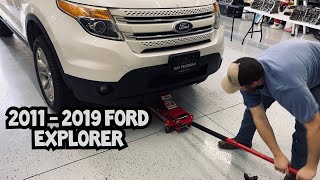
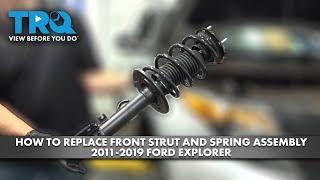
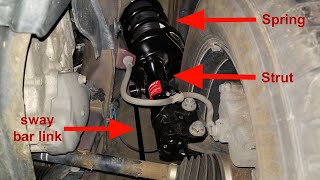

Technical Specifications
OEM Part Numbers: AST-24668 AST-24669 AST-84815 ASTL67 BB5Z-18124-B BB5Z-18124-C BB5Z-18124-D BB5Z18124A BB5Z18124C DB5318045 DB5Z-18124-AA DB5Z-18124-AC DB5Z-18124-AE DB5Z-18124-AF DB5Z18124AA
Torque, Strut to Knuckle (2011-2019): 180 ft-lbs. Torque, Upper Mount Nuts (2011-2019): 41 ft-lbs. Torque, Wheel Lug Nuts: 100 ft-lbs.
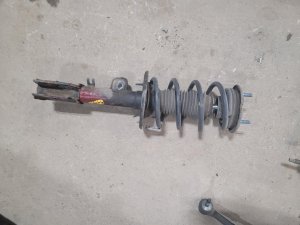
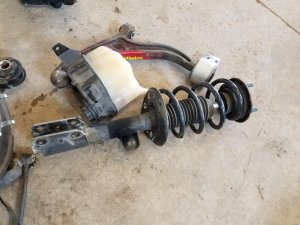
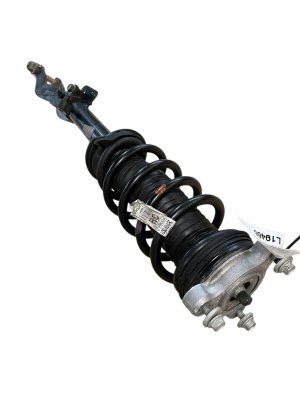
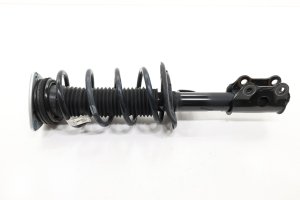
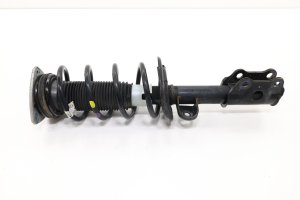
We Have This Part in Stock
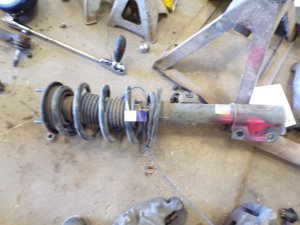

The information in this article is provided for general reference and educational purposes only. Vehicle specifications, procedures, and part compatibility can vary by production date, trim level, and region. Always consult your vehicle's factory service manual and verify part numbers before purchasing or performing repairs. Safety-critical components such as airbags, seat belts, and braking systems should be installed by a qualified professional.
- Ford Explorer:
- Lincoln Aviator:
- 🎬 Helpful Videos
- 🛍️ Shop This Part
- A Critical Note on Vehicle Platforms
- 2011-2019 Ford Explorer (5th Generation)
- Symptoms of Failure
- Known Issues, TSBs, and Recalls
- Compatibility and Part Numbers
- 2020-2023 Explorer & 2020-2025 Aviator (CD6 Platform)
- Symptoms of Failure
- Known Issues, TSBs, and Recalls
- Variant Differences: Coil vs. Air Suspension
- Buying a Used Suspension Strut: What to Look For
- Replacement Information and Costs
- Key Torque Specs (2011-2019 Explorer)
- Cost Comparison (Per Strut)
- Frequently Asked Questions (FAQ)
- 🎟️ Get 5% Off