

2020-2026 Sonata & 2021-2026 K5 Strut Guide: Noises, Leaks, and Critical Fitment Warnings
This guide covers the common failure symptoms and decodes the complex compatibility of suspension struts for the Hyundai Sonata and Kia K5.
- Fitment is extremely specific and complex. Drivetrain (AWD/FWD), engine, and model year are critical. Always verify the OEM part number with your VIN before purchasing.
- A harsh ride on a Kia K5 with large wheels is often normal and not a sign of failure; look for other symptoms like bouncing, clunking, or leaks.
- Always replace struts in pairs (both front or both rear) to maintain safe, balanced handling.
- A professional four-wheel alignment is mandatory after replacing front struts to prevent severe tire wear and handling issues.
Compatibility Warning: Read This Before Buying
The single most important factor when replacing a suspension strut on a 2020-2026 Hyundai Sonata or 2021-2026 Kia K5 is ensuring you have the exact correct part for your vehicle's specific configuration. These vehicles share a platform but have numerous strut variations based on several factors. Ordering the wrong strut can result in an improper ride height, poor handling, and unsafe driving characteristics.
Warning: Fitment is extremely specific. You must verify the part number against your vehicle's VIN. Do not assume a part will fit based on model year alone.
Key Compatibility Factors:
- Drivetrain: All-Wheel Drive (AWD) and Front-Wheel Drive (FWD) models use different struts. They are not interchangeable. Aftermarket kits often explicitly exclude AWD models.
- Engine Type: The vehicle's engine (e.g., 1.6L Turbo, 2.5L Turbo, 2.5L non-turbo) affects the front-end weight, which requires specifically tuned springs and struts.
- Model Year Changes: For the 2025 model year, the Kia K5 AWD switched from the 1.6L Turbo engine to a 2.5L non-turbo engine. Struts for a 2024 K5 AWD will not be correct for a 2025 K5 AWD.
- Wheel Size: Struts can be specific to the factory-installed wheel size (e.g., 16", 18", or 19").
- Position: Each corner of the car (Front Left, Front Right, Rear Left, Rear Right) has a unique part number.
For example, OEM part number 54650-L1855 is for the front left of a 2024-2025 Hyundai Sonata with a turbo engine, FWD, and 19-inch wheels. In contrast, part number 54650-L3010 is for the front left of a Kia K5 with the 1.6L engine, FWD, and 16-inch wheels. This illustrates how granular the fitment is.
Symptoms of a Failing Suspension Strut
When a strut begins to fail, it will give several distinct warnings. Some of these can develop gradually.
Common Failure Symptoms:
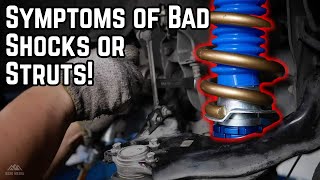
- Clunking or Knocking Noises: A metallic clunking or rattling sound from a corner of the car, especially when driving over bumps or uneven roads. This is often the sound of metal-to-metal contact inside the worn strut or from a failed strut mount.
- Bouncy or Floating Ride: After hitting a bump, the vehicle continues to bounce up and down instead of settling quickly. This indicates the damper is no longer controlling the spring's oscillations.
- Nose-Diving and Body Roll: The front end of the car dips excessively during braking, or the vehicle body leans or sways significantly during turns. This instability is a direct result of worn struts not supporting the vehicle's weight transfer.
- Visible Fluid Leaks: An oily or greasy film on the body of the strut. This is hydraulic fluid leaking past failed internal seals, and it is a clear sign the strut needs immediate replacement.
- Uneven Tire Wear: Worn struts can cause a specific type of tire wear called "cupping" or "scalloping," where hollowed-out spots appear on the tread. This happens because the tire is bouncing as it goes down the road instead of rolling smoothly.
A Note on Ride Quality: Many owners of the Kia K5, particularly GT-Line models with 18-inch or 19-inch wheels, report a very firm or harsh ride from the factory. This is considered normal for the vehicle's sporty tuning and is not necessarily a sign of a failing strut unless accompanied by the other symptoms listed above.
Buying a Used Suspension Strut
A low-mileage used OEM strut can be an excellent value, providing the original factory ride quality at a significant discount compared to a new dealer part. However, since struts are wear items, careful inspection is key.
Inspection Checklist:
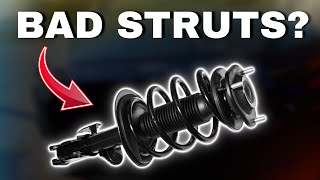
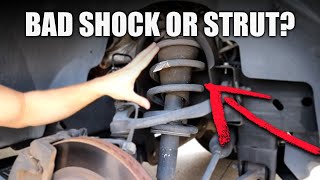
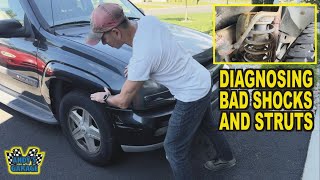
- Check for Leaks: This is the most important check. Wipe a finger across the main body of the strut. Any oily residue indicates a leaking seal, 🎬 See a mechanic's guide to diagnosing bad shocks and struts and the strut should be rejected. Look for dirt caked onto an oily film.
- Inspect the Rod: The shiny chrome piston rod that extends from the top of the strut body should be perfectly smooth and clean. Any rust, pitting, or physical damage will quickly destroy the new seal and cause it to fail.
- Examine the Spring: Check the coil spring for heavy rust, cracks, or breaks. Ensure the protective coating is mostly intact.
- Check the Mounts: Inspect the upper strut mount. The rubber should not be cracked, separated, or collapsed. For front struts, try to turn the bearing in the mount; it should move smoothly, not feel gritty or seized.
- Verify Mileage: Always choose a strut from a vehicle with the lowest possible mileage. A strut from a 30,000-mile vehicle is a good bet; one from a 150,000-mile vehicle is at the end of its life and should be avoided. Struts typically have a lifespan of 50,000 to 100,000 miles.
- Confirm Part Numbers: The most crucial step. Get the part number from the strut itself or confirm with the seller that it was pulled from a vehicle with the exact same specifications as yours (Year, Model, Engine, Drivetrain).
Known Issues, TSBs, and Recalls
As of early 2026, there are no widespread recalls specifically for suspension strut failure on the 2020-2026 Hyundai Sonata or 2021-2026 Kia K5. However, some related service bulletins and common complaints exist.
- TSB 20-SS-001H: A general bulletin for Hyundai models describing best practices for wheel alignment diagnosis and repair.
- TSB 25-SS-002H-1: A 2025 Hyundai bulletin addressing vibration issues across multiple models, requiring a Hunter road force balance test to diagnose.
- Kia TSB PS750: A "Pitstop" bulletin for Kia dealers regarding potential AWD system problems if tires with different circumferences (due to uneven wear or incorrect replacement) are used. This highlights the sensitivity of the vehicle's systems to proper tire and suspension setup.
- Owner Complaints: While not a formal TSB, the most common suspension-related complaint for the Kia K5 is a harsh ride, which is generally considered a characteristic of the car rather than a defect. Some owners have reported premature shock failures on low-mileage vehicles.
Replacement Overview
Replacing a front strut is a moderately difficult job that requires specialized tools. Rear shock absorbers (on models that have separate rear shocks and springs) are generally easier to replace.
- Difficulty: 3/5
- Time: 1.5 - 2.5 hours per side
- DIY Feasible: Yes, for experienced mechanics.
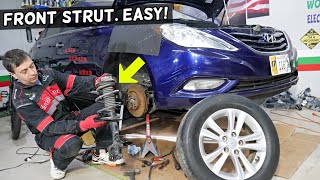
- Key Steps: The process typically involves lifting the vehicle, removing the wheel, disconnecting the sway bar link and any brake line/ABS sensor brackets from the strut, removing the two large bolts connecting the strut to the steering knuckle, and finally removing the nuts holding the top of the strut to the body in the engine bay or trunk. Installation is the reverse of removal. 🎬 Watch this step-by-step front strut replacement walkthrough
Wheel Alignment Required: Replacing a front strut will alter the vehicle's wheel alignment angles. A professional four-wheel alignment is mandatory after replacement to prevent rapid and uneven tire wear, poor handling, and crooked steering.
Pro Tip: Always replace struts in pairs (both fronts or both rears) to ensure balanced handling and performance. Also, many OEM part diagrams note that the top strut nut is a non-reusable part and should be replaced.
Cost Comparison
Prices can vary significantly based on the source of the part and your location. Labor costs for replacing a pair of struts typically range from $200 to $600.
| Item | Estimated Cost (Pair) |
|---|---|
| New OEM (Dealer) | $500 - $850+ |
| New Aftermarket (Complete Assembly) | $200 - $400 |
| Used OEM (Low Mileage) | $150 - $300 |
| Shop Labor (Pair) | $220 - $650 |
| Total Professional Replacement (Pair, Aftermarket) | $420 - $1050 |
| Total Professional Replacement (Pair, New OEM) | $720 - $1500+ |
Frequently Asked Questions (FAQ)
Do I really need to replace struts in pairs?
Yes, absolutely. Struts wear out over time. Replacing only one will result in unbalanced damping from side to side, which can negatively affect handling, stability, and braking performance. A new strut will be much stiffer than the old one on the other side.
Is a wheel alignment necessary after replacing rear shocks?
While it is absolutely mandatory after replacing front struts, it is still highly recommended after replacing rear shocks or struts. Replacing rear components can still affect the vehicle's alignment angles, particularly camber and toe. A post-replacement alignment ensures all four wheels are pointing in the right direction, maximizing tire life and vehicle stability.
What is the difference between a strut and a shock absorber?
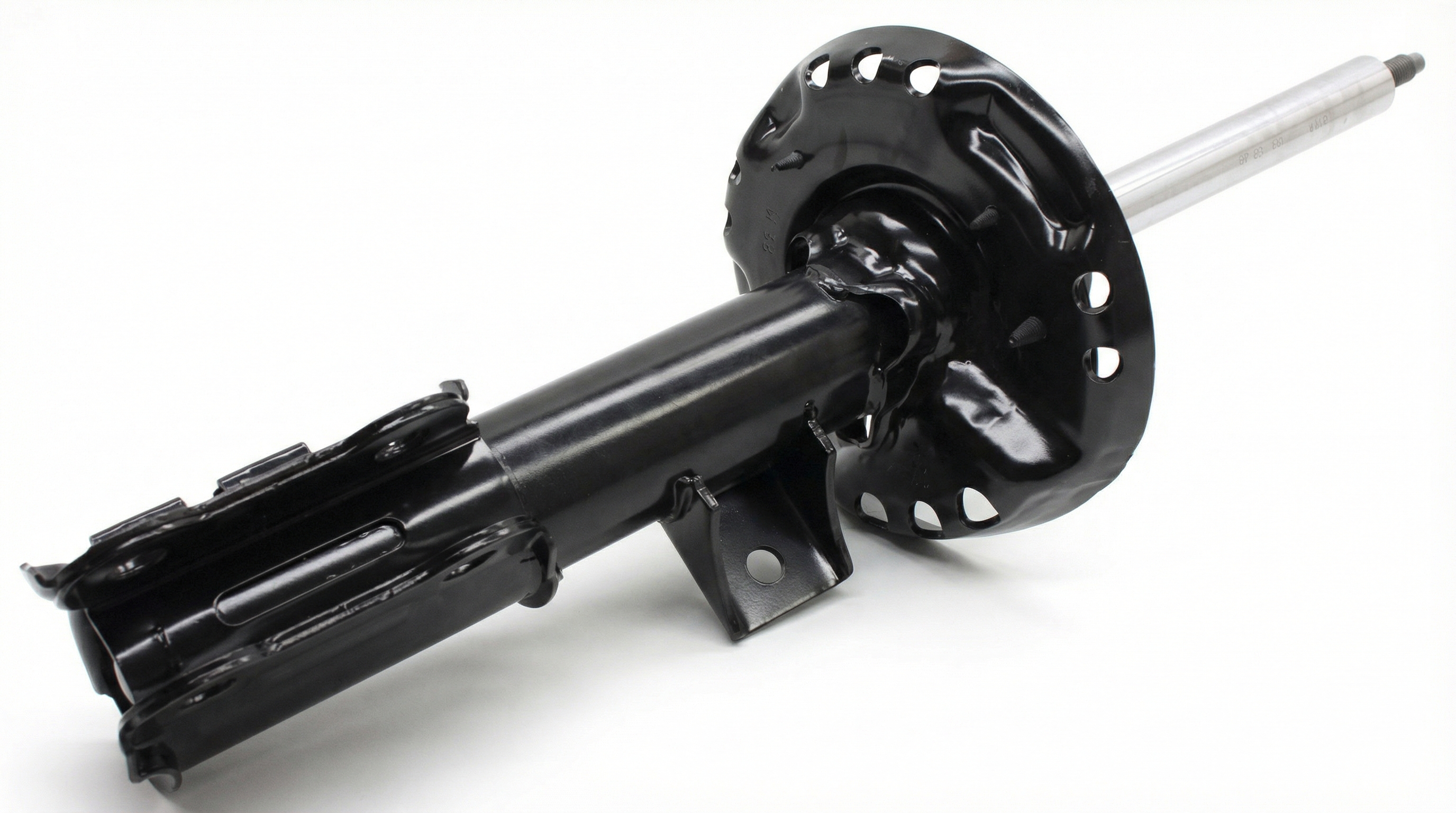
A shock absorber's only job is to dampen suspension movement. A strut is a complete assembly that includes the shock absorber, a coil spring, and an upper mount, and it serves as a structural part of the suspension and a pivot for the steering system. The K5 and Sonata use struts on the front and a multi-link suspension with separate shocks and springs on the rear.
Can I use an AWD strut on my FWD car (or vice-versa)?
No. The spring rates, damping characteristics, and sometimes even the physical mounting points can be different to account for the weight and mechanics of the AWD system. Using the wrong part will lead to incorrect ride height and compromised, potentially unsafe, handling.
Helpful Videos


Technical Specifications
OEM Part Numbers: 54650-L1855 54650-L1955 54600-L2810 54600-L28880 54650-L2710 54650-L2720 54650-L2850 54650-L2880 54650-L3010 54650-L3320 54650-L3340 54650-L3500 54651-L2710 54651-L2720 55300-L3200 54650L0800 54650L3500
Torque specifications vary by bolt and should be confirmed with a model-specific factory service manual. A wheel alignment is required after front strut replacement.
We Have This Part in Stock
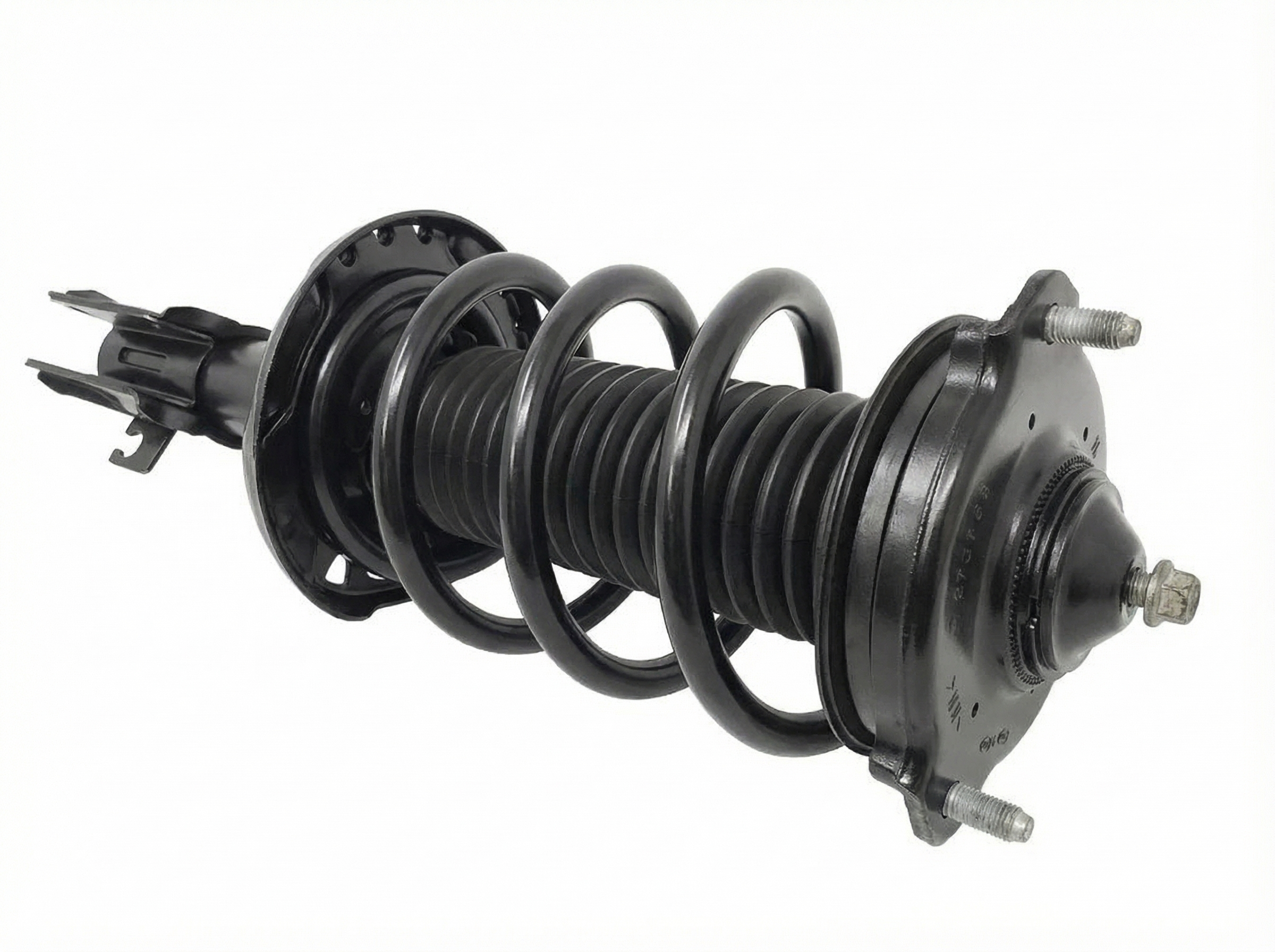
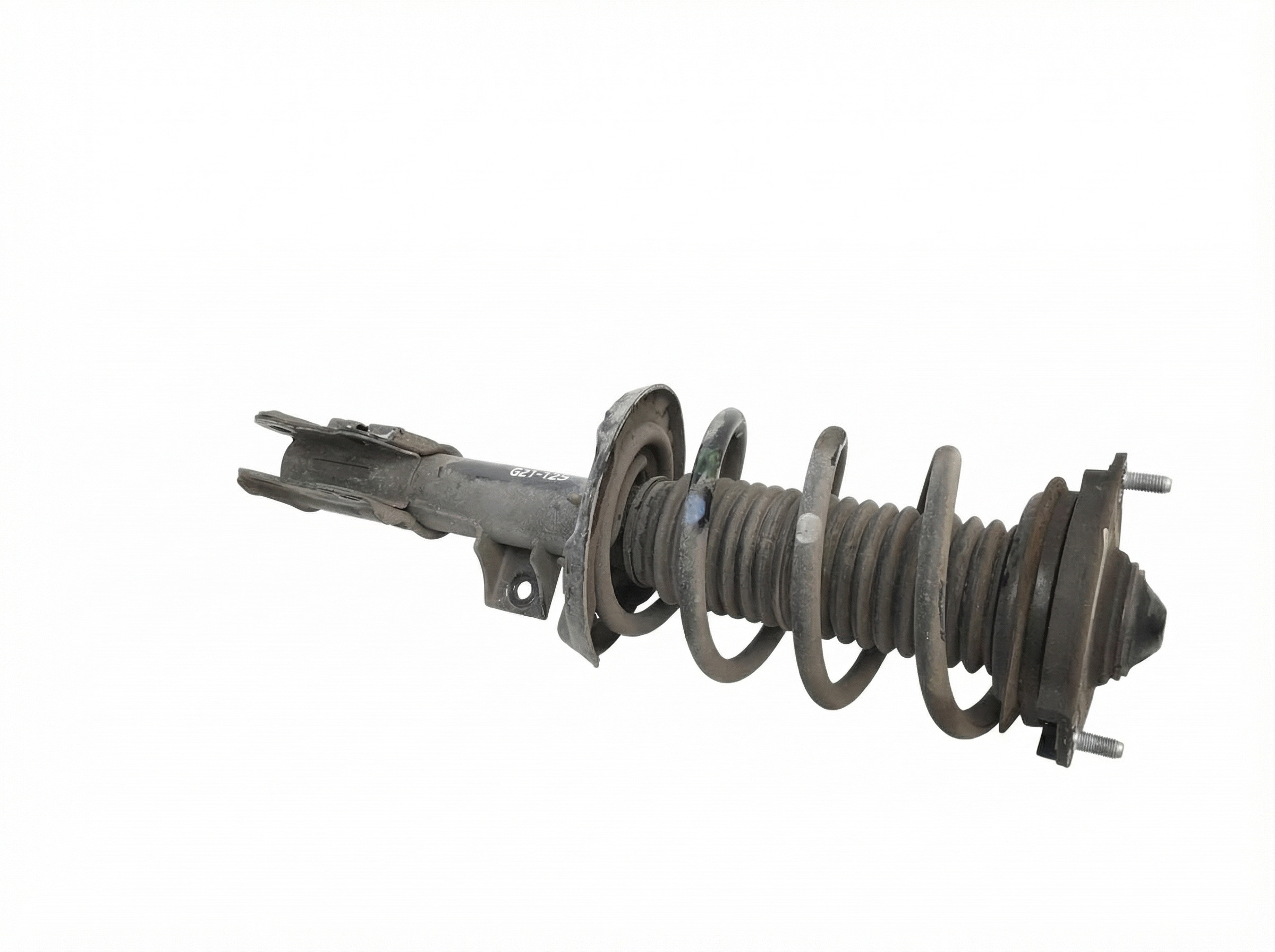

The information in this article is provided for general reference and educational purposes only. Vehicle specifications, procedures, and part compatibility can vary by production date, trim level, and region. Always consult your vehicle's factory service manual and verify part numbers before purchasing or performing repairs. Safety-critical components such as airbags, seat belts, and braking systems should be installed by a qualified professional.
- Kia K5:
- HYUNDAI Sonata:
- 🎬 Helpful Videos
- 🛍️ Shop This Part
- Compatibility Warning: Read This Before Buying
- Key Compatibility Factors:
- Symptoms of a Failing Suspension Strut
- Common Failure Symptoms:
- Buying a Used Suspension Strut
- Inspection Checklist:
- Known Issues, TSBs, and Recalls
- Replacement Overview
- Cost Comparison
- Frequently Asked Questions (FAQ)
- 🎟️ Get 5% Off