

2019-2025 Mazda 3 Front Struts: Decoding Noises, Leaks, and Part Numbers
This guide covers the common failure symptoms, complex compatibility issues, and replacement costs for the fourth-generation Mazda 3 front suspension struts.
- Compatibility is extremely complex; part numbers vary based on build location (Japan vs. Mexico), drivetrain (AWD vs. FWD), and engine (Turbo vs. Non-Turbo).
- Always verify the OEM part number on the original strut before purchasing a replacement.
- Common failure symptoms include clunking over bumps, a bouncy ride, fluid leaks, and uneven tire wear.
- A wheel alignment is mandatory after replacing front struts to prevent poor handling and rapid tire wear.
Symptoms of a Failing Front Strut
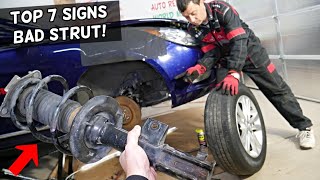
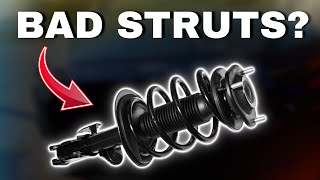
A worn or failing front strut can manifest in several ways, affecting both ride quality and safety. 🎬 Watch: 5 symptoms of bad struts you should not ignore. Pay attention to these specific signs:
- Clunking or Knocking Noises: This is one of the most common symptoms. You may hear a distinct clunk or rattle from the front end when driving over bumps, potholes, or uneven road surfaces. This can be caused by worn internal components or a failing strut mount.
- Bouncy or Unstable Ride: If the strut's internal dampening is worn out, it can no longer effectively control the spring's movement. This results in a ride that feels excessively bouncy, floaty, or unstable, especially at higher speeds.
- Nose-Diving and Body Roll: When you apply the brakes, you might notice the front end of the car dipping or "diving" forward more than usual. Similarly, during turns, the car may exhibit excessive body roll or lean. This indicates the struts are not controlling the vehicle's weight transfer properly.
- Visible Fluid Leaks: The strut is a hydraulic component filled with oil. If you see oily, wet residue on the strut body, it's a clear sign that the internal seals have failed and the strut needs replacement. The leaking fluid will often attract a layer of dirt and grime.
- Uneven Tire Wear: Worn struts can cause the tires to bounce slightly as they roll, leading to a distinctive pattern of uneven wear called "cupping" or "scalloping." If you run your hand over the tire tread and feel high and low spots, failing struts are a likely cause.
- Growling or Clicking When Turning: A growling, clicking, or binding noise when you turn the steering wheel can point to a worn bearing inside the upper strut mount.
Compatibility Warning: Fitment for 2019-2025 Mazda 3 front struts is extremely specific. Mazda uses different parts depending on the drivetrain (All-Wheel Drive or Front-Wheel Drive), engine (Turbo or Non-Turbo), and manufacturing location (Japan or Mexico). It is essential to verify the exact OEM part number on your original strut before ordering a replacement.
Known Issues, TSBs, and Recalls
While there are no widespread recalls specifically for strut failure on the 2019-2025 Mazda 3, some Technical Service Bulletins (TSBs) address related suspension noises.
- TSB 02-001/20: This bulletin addresses a potential clunking noise from the front coil spring when driving over bumps. The noise is attributed to a "stick-slip" condition between the front strut bearing and the coil spring.
- TSB 02-004/22: Mazda issued this bulletin to inform technicians that some oil residue on struts or shock absorbers can be normal and does not necessarily indicate a failure. However, significant active leaks are still a cause for replacement.
- NHTSA Recall 3519F (19V497000): While not a strut recall, this safety recall for some 2019 models involved wheel lug nuts that could loosen. A rattling noise could precede a wheel falling off, which could be mistaken for a suspension issue.
Buying a Used Suspension Strut
A low-mileage, used OEM strut can be an excellent value, often outperforming a new, cheap aftermarket part in terms of ride quality and durability. Here’s what to look for:
- Verify the Part Number: This is the most critical step. Due to the many variations, you must match the OEM part number from your old strut exactly. The part number is typically on a sticker or stamped on the strut body.
- Check for Leaks: Inspect the entire strut body for any signs of hydraulic fluid. A light film of oil might be normal per TSB 02-004/22, but any wetness, drips, or heavy, caked-on grime indicates a failed seal.
- Inspect the Piston Rod: The shiny chrome rod that extends from the top of the strut should be smooth, straight, and free of any pitting, rust, or damage. A bent or damaged rod will destroy the seals quickly.
- Examine the Mounts: Check all mounting points, especially the lower bracket that attaches to the steering knuckle and the studs on the top mount. Ensure they are not bent, cracked, or stripped.
- Consider Mileage: Struts are a wear item. A used strut from a vehicle with 30,000-50,000 miles is a good candidate. Be wary of struts from high-mileage vehicles (over 100,000 miles) as they will have limited service life remaining.
- Buy as a Pair: It is highly recommended to replace struts in pairs (both front struts at the same time) to ensure even damping and predictable handling. Mismatched struts can negatively affect vehicle stability.
How to Determine Your Mazda 3's Build Location
To get the correct strut, you need to know if your car was built in Japan or Mexico. You can find this by checking the first character of your Vehicle Identification Number (VIN), which is visible on the driver's side dashboard through the windshield or on the driver's door jamb sticker.
🎬 See this guide on how to identify your Mazda's build location.- If the VIN starts with a 'J', your car was built in Japan.
- If the VIN starts with a '3', your car was built in Mexico.
Cost Breakdown
Prices can vary based on supplier and location. The following is an estimate of costs for a single front strut assembly.
| Part Type | Estimated Cost (Part Only) |
|---|---|
| New OEM (Dealer) | $150 - $250 |
| New Aftermarket | $65 - $150 |
| Used OEM | $75 - $150 |
| Shop Labor | $120 - $350 per side |
Replacement and Installation Tips
Replacing a front strut is a job for an experienced DIYer or a professional technician due to the safety risks involved with compressing the coil spring.
Warning: The coil spring is under extreme tension. A spring compressor tool is required to safely disassemble the strut assembly. Mishandling a compressed spring can cause serious injury. If you are not experienced with this procedure, it is safer to purchase a complete, pre-assembled "quick strut" or have the work done by a professional.
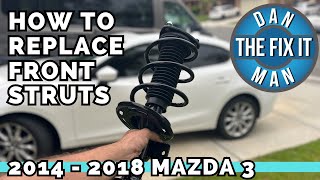
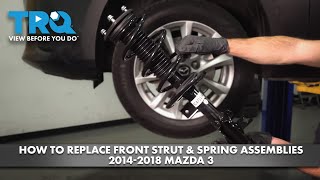
🎬 Watch: Step-by-step walkthrough for replacing front strut and spring assemblies.Key Torque Specs:
Always consult the official service manual for your specific vehicle, but typical torque specs for this job are:
- Strut-to-Knuckle Bolts: ~117-170 ft-lbs (Varies by source and specific bolt)
- Top Mount-to-Body Nuts: ~40 ft-lbs
- Sway Bar End Link Nut: ~35-55 ft-lbs
- Wheel Lug Nuts: ~100-108 ft-lbs
Related Parts to Consider Replacing:
When replacing a front strut, it's often a good idea to replace related components that wear at a similar rate:
- Strut Mount and Bearing: The upper mount contains a rubber insulator and a bearing that allows the strut to pivot. These can wear out, causing noise and steering issues.
- Sway Bar End Links: These connect the sway bar to the strut. They are a common source of clunking noises and are inexpensive to replace at the same time.
- Dust Boot and Bump Stop: These protect the strut's piston rod and prevent it from bottoming out. They often degrade over time.
Pro Tip: A wheel alignment is required after replacing front struts. The strut is a key part of the steering geometry, and replacement will alter the camber and toe settings. Skipping the alignment will lead to poor handling and rapid, uneven tire wear.
Frequently Asked Questions
Can I replace just one front strut?
It is strongly recommended to replace both front struts at the same time. Replacing only one can create an imbalance in damping from side to side, which can negatively affect handling, braking, and overall stability.
Do I need a wheel alignment after replacing the struts?
Yes, an alignment is absolutely necessary. The front struts are a structural part of the suspension and directly affect the wheel's alignment angles (camber, caster, and toe). Failure to get an alignment will result in crooked steering, pulling to one side, and premature tire wear.
Is a used OEM strut better than a new aftermarket one?
Often, yes. A low-mileage used OEM strut was designed and tuned specifically for your Mazda 3's handling characteristics. Many budget-friendly aftermarket struts use generic valving that can result in a ride that is either too stiff or too soft. As long as the used part is in good condition, it can be a superior choice to a cheap new alternative.
What is the difference between a strut and a shock absorber?
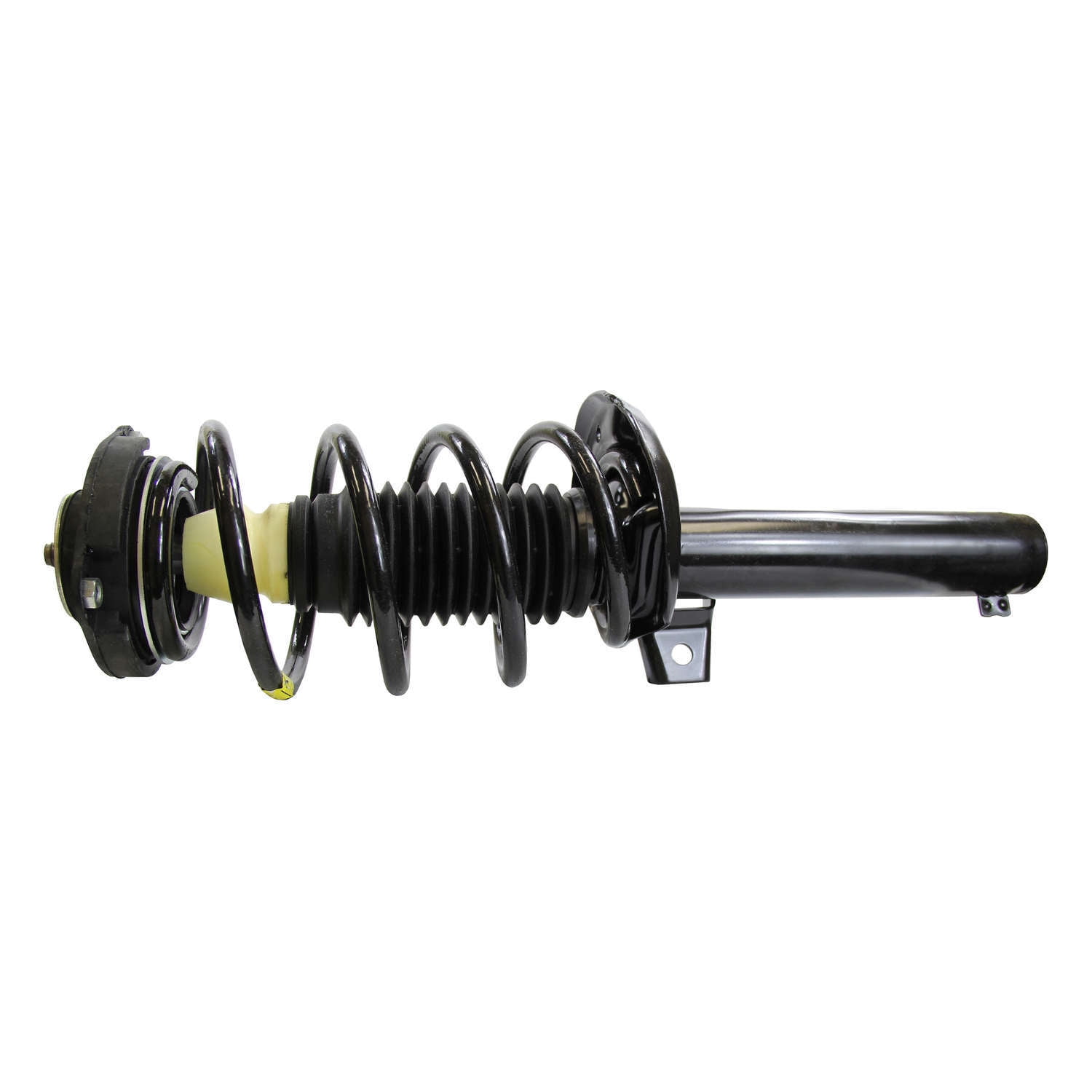
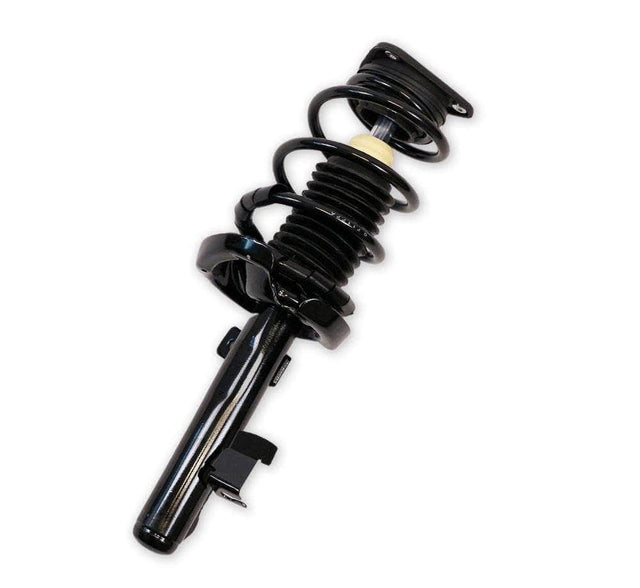
A shock absorber's only job is to dampen spring movement. A strut, like the one on the front of a Mazda 3, is a structural part of the suspension. It incorporates the shock absorber into a single assembly that also supports the vehicle's weight via the coil spring and serves as a pivot point for steering.
Helpful Videos

Technical Specifications
OEM Part Numbers: BDTS-34-70XN BFWM-34-70XA BFWM34700A BCKE-34-70XB BCKE-34-70XF BCKE-34-70XH BCKE-34-70XM BCKE-34-70XN BDTS-34-70XJ BDTS-34-70XM BFWM-34-70X
Fitment is dependent on vehicle's VIN, specifically the first character which indicates build location (J for Japan, 3 for Mexico).
We Have This Part in Stock

The information in this article is provided for general reference and educational purposes only. Vehicle specifications, procedures, and part compatibility can vary by production date, trim level, and region. Always consult your vehicle's factory service manual and verify part numbers before purchasing or performing repairs. Safety-critical components such as airbags, seat belts, and braking systems should be installed by a qualified professional.
- Mazda MAZDA 3:
- 🎬 Helpful Videos
- 🛍️ Shop This Part
- Symptoms of a Failing Front Strut
- Known Issues, TSBs, and Recalls
- Buying a Used Suspension Strut
- How to Determine Your Mazda 3's Build Location
- Cost Breakdown
- Replacement and Installation Tips
- Key Torque Specs:
- Related Parts to Consider Replacing:
- Frequently Asked Questions
- 🎟️ Get 5% Off