

2021-2025 ID.4, Q4 e-tron & Enyaq iV Strut Guide: Decoding Clunks, Leaks & Part Numbers
The definitive guide to diagnosing and replacing front suspension struts on your VW ID.4, Audi Q4 e-tron, or Skoda Enyaq iV, with critical warnings for AWD, RWD, and adaptive suspension models.
- Compatibility is extremely complex. You must match the part to your vehicle's drivetrain (AWD/RWD), suspension type (Standard/Sport/Adaptive), and specific weight range code.
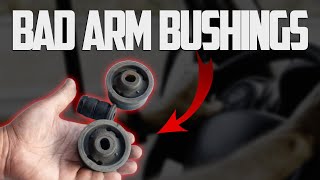
- Clunking noises are common but aren't always the strut. Check sway bar links and control arm bushings, which are frequent points of failure on these models.
- Always replace struts in pairs and get a wheel alignment immediately afterward to ensure safety, proper handling, and to prevent rapid tire wear.
- When buying used, a dry, leak-free strut body is the most important check. Get the donor vehicle's VIN to verify the exact configuration.
Critical Compatibility Warnings: Read This First
Warning: The struts for these vehicles are NOT one-size-fits-all. Ordering the wrong part is very easy. Before buying, you MUST verify your vehicle's exact configuration. There are multiple versions based on:
- Drivetrain: All-Wheel Drive (AWD/Quattro) and Rear-Wheel Drive (RWD) models use different struts.
- Suspension Type: Vehicles can have Standard (Comfort), Sport (lowered 15mm), or Adaptive/Electronically Controlled (DCC) suspension. Each type requires a specific strut.
- Weight Range: Due to battery and option differences, struts are matched to the vehicle's specific weight. OEM part numbers are often tied to a "Weight Range" code (e.g., G04, L02). The only way to be certain is to match the OEM part number from the original strut or have a dealer look it up by VIN.
Symptoms of a Failing Front Strut
A failing strut compromises ride quality and safety. Here are the most common signs, many of which are reported by ID.4 and Q4 e-tron owners.
Noises
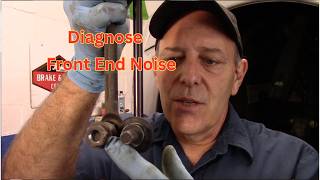
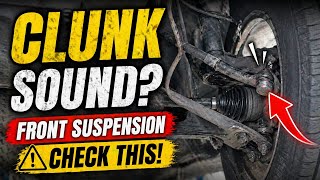
- Clunking or Knocking: This is the most frequent complaint. It's a hollow clunk or bang heard when driving over bumps, speed bumps, or uneven roads. This can be caused by internal wear in the strut or by related worn components like sway bar links. 🎬 Watch: A mechanic's guide to diagnosing front end suspension noises.
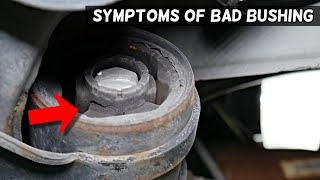
- Creaking or Squeaking: Some owners report a creaking sound, like an old ship, when turning at low speeds or going over bumps, especially in damp weather. This can point to a bad strut mount, bearing, or dry control arm bushings.
Ride & Handling Issues
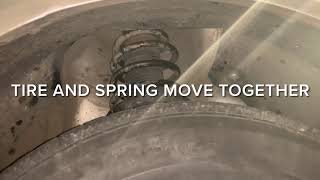
- Excessive Bouncing: After hitting a bump, the vehicle continues to bounce instead of settling quickly. This means the internal shock absorber has failed and is no longer damping spring oscillations.
- Nose-Diving and Squatting: The front of the car dips excessively when you brake hard, or the rear squats during acceleration.
- Swaying or Body Roll: The vehicle may feel unstable or sway during turns, lane changes, or in crosswinds, indicating a loss of control from the dampers.
- Uneven Tire Wear: A bad strut can cause the tire to bounce slightly as it rolls, leading to a distinctive wear pattern called "cupping" or "scalloping," where patches of rubber are gouged out of the tread.
Visual Signs
- Fluid Leaks: The strut body itself appears oily, wet, or caked in a layer of grime-attracting fluid. This is a clear sign that the internal seals have failed and the damping oil has escaped.
- Physical Damage: A bent piston rod or a dented strut housing, often from hitting a major pothole or curb, is a clear sign the strut needs replacement.
Known Issues, TSBs, and Recalls
While there are no widespread recalls for strut failure, several known issues and service bulletins are relevant to front suspension noises on these vehicles.
- Audi TSB for Strut Mount Noise: Audi issued Technical Service Bulletin 2075251/2 for the Q4 e-tron to address noises from the front end when steering or driving over bumps. The issue is contact between the strut mounting and the bearing. The fix involves a technician removing the strut and filing down a positioning lug on the strut mount 🎬 See how to identify and fix a clunking strut bearing. by approximately 3mm.
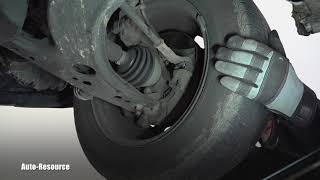
- Commonly Misdiagnosed Noises: Owners and shops often mistake noises from worn sway bar end links or control arm bushings for a bad strut. These are common wear items, and it's often worth inspecting them first when diagnosing a clunk.
- VW Chassis Bolt Recall: A recall was issued for some 2023-2025 VW ID.4 models for chassis and brake system bolts that may not have been tightened to the correct specification at the factory. This includes subframe and control arm bolts. Loose bolts can cause significant suspension noise and alignment issues, so it's critical to ensure this recall has been performed if applicable.
Buying a Used Suspension Strut
A low-mileage used OEM strut can be a great value, often performing better than a cheap new aftermarket part. However, careful inspection is key.
Pro Tip: For these vehicles, a used OEM strut is almost always a better choice than a new aftermarket one, especially for Sport or Adaptive suspensions. The valving is specifically tuned for the vehicle's weight and handling characteristics, which generic parts can't replicate.
- Verify Compatibility Above All Else: Get the VIN of the donor vehicle. Have a dealer or use an online catalog to confirm the exact part number, ensuring the drivetrain (AWD/RWD), suspension type (Standard/Sport/Adaptive), and weight range match your car. Do not buy a strut without confirming the part number.
- Check for Leaks: This is the most important physical check. The strut body should be dry and dusty. Any sign of oily residue, wetness, or a thick layer of caked-on dirt and oil means the strut has failed. Do not buy a leaking strut.
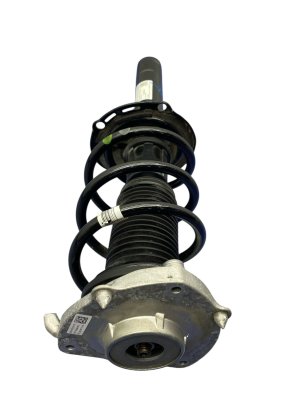
- Inspect for Damage: Look for a bent piston rod (the shiny shaft), dents in the main body, or damage to the mounting tabs and spring perch. A strut that was in a collision is not a good candidate.
- Consider Mileage: While failure can happen at any time, lower mileage is always better. A strut from a 20,000-mile vehicle is a much safer bet than one from a 100,000-mile vehicle. One owner reported needing a full suspension replacement at 113,000 miles.
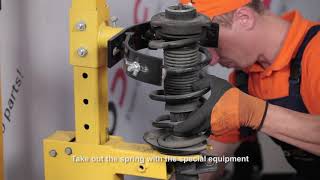
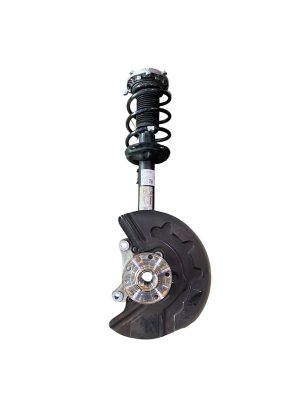
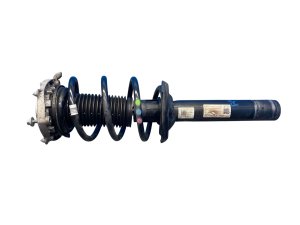
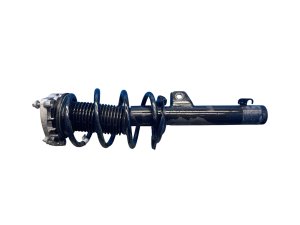
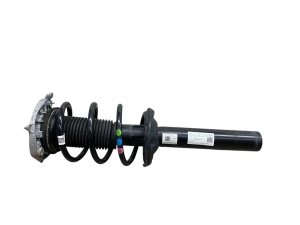
- Buy a Complete Assembly: If possible, buy the complete "loaded" strut assembly, which includes the spring, mount, and bearing. This saves you the difficult and dangerous job of using a spring compressor to swap the spring from your old strut to the new one.
Replacement & Installation Tips
Replacing a strut is a job for an experienced DIYer or a professional shop. It is a structural part of the suspension, and mistakes can be dangerous.
- Always Replace in Pairs: Struts must be replaced in pairs (both front struts at the same time). Replacing only one will result in unbalanced handling, unpredictable steering, and will quickly wear out the new part.
- Replace Related Components: It is highly recommended to replace the strut mount, bearing, and any bump stops or dust boots when replacing the strut. These components wear out and are often the source of noises.
- Alignment is Mandatory: A four-wheel alignment is NOT optional after replacing front struts. The strut's position directly affects the vehicle's alignment angles. Skipping the alignment will result in poor handling, crooked steering, and will destroy your tires in short order.
- Torque Specs: All bolts must be tightened to the manufacturer's specified torque. This is especially true for the large bolts connecting the strut to the steering knuckle and the top mount nuts.
Cost to Replace Front Struts
Costs can vary based on your location and the specific parts required for your vehicle's configuration. Labor typically takes 2-3 hours for the pair.
| Part/Service | Estimated Cost (Pair) |
|---|---|
| New OEM Struts (Parts Only) | $200 - $400 |
| New Aftermarket Struts (Parts Only) | $150 - $350 |
| Used OEM Struts (Parts Only) | $100 - $250 |
| Shop Labor | $400 - $700 |
| Wheel Alignment | $100 - $200 |
| Total Estimated Cost (Used OEM Parts + Labor) | $600 - $1150 |
| Total Estimated Cost (New OEM Parts + Labor) | $700 - $1300 |
Frequently Asked Questions (FAQ)
Can I replace just one strut?
No. Struts should always be replaced in pairs (both front or both rear). A new strut will have different damping characteristics than the old, worn strut on the other side, leading to unbalanced handling, compromised braking, and an unstable feel. This is a significant safety issue.
Do I need an alignment after replacing struts?
Yes, absolutely. The front struts are a key component in the front suspension geometry. Replacing them will always alter the alignment angles (camber, caster, and toe). Driving without an alignment will cause rapid and uneven tire wear, poor handling, and can be unsafe.
How do I know if I have standard, sport, or adaptive suspension?
The best way is to check your vehicle's original window sticker or use a VIN decoder to see the options it was built with. Visually, cars with Sport suspension are visibly lower by about 15mm (0.6 inches). Vehicles with Adaptive Suspension (DCC) will have a specific drive mode setting in the infotainment system to adjust damper firmness.
Will a strut from a VW ID.4 fit my Audi Q4 e-tron?
Maybe, but only if the part numbers are identical. While they share a platform, Audi and VW may use slightly different tuning. The critical factors are matching the drivetrain (AWD/RWD), suspension type, and weight range code. Never assume interchangeability without confirming the exact OEM part number.
Helpful Videos

Technical Specifications
OEM Part Numbers: 1EA412021BQ 1EA412037ED 1EA413023BD 1EA411105C 1EA412331B 1EA413031L 1EK413031A 1EA413023AR 1EA413023AS 1EA413031M 1EA413031ML 1EA413032L 1EA413032P
Fitment is determined by drivetrain (AWD/RWD), suspension type (Standard, Sport, or Electronic/DCC), and vehicle weight range codes (e.g., G01, G02, G04, L02, L03, L04). Sport suspension is 15mm lower than standard.
We Have This Part in Stock

The information in this article is provided for general reference and educational purposes only. Vehicle specifications, procedures, and part compatibility can vary by production date, trim level, and region. Always consult your vehicle's factory service manual and verify part numbers before purchasing or performing repairs. Safety-critical components such as airbags, seat belts, and braking systems should be installed by a qualified professional.
- Volkswagen ID.4:
- Audi Q4 e-tron:
- Skoda Enyaq iV:
- 🎬 Helpful Videos
- 🛍️ Shop This Part
- Critical Compatibility Warnings: Read This First
- Symptoms of a Failing Front Strut
- Noises
- Ride & Handling Issues
- Visual Signs
- Known Issues, TSBs, and Recalls
- Buying a Used Suspension Strut
- Replacement & Installation Tips
- Cost to Replace Front Struts
- Frequently Asked Questions (FAQ)
- 🎟️ Get 5% Off