

Audi Quattro Ultra Transfer Case Guide: 2017-2024 A4, A5, Q5 & A6
Diagnosing and fixing the common binding, shudder, and noises from the transfer case in Audi A4, A5, A6, and Q5 models with Quattro with Ultra Technology.
- The most common issue is a 'Quattro Rumble' (shudder/binding in tight turns), which is often fixed by a specific TSB fluid change procedure, not a full replacement.
- This transfer case is for 'Quattro with Ultra Technology' models only and does NOT fit Plug-In Hybrid (TFSI e) versions.
- Using the correct fluid (Audi P/N G 055 515 A2) is absolutely critical for proper clutch operation; standard gear oil will not work.
- If replacement is needed, a used OEM unit is the most practical choice as new aftermarket or remanufactured units are not widely available.
Understanding the Quattro with Ultra Technology

The transfer case in the 2017-2024 Audi A4, 2017-2024 Audi A5, 2019-2024 Audi A6, and 2018-2024 Audi Q5 is specific to the 'Quattro with Ultra' all-wheel-drive system. This is not a traditional, mechanical, full-time AWD system. Instead, it uses an electronically controlled multi-plate clutch to engage and disengage the rear driveshaft. This design allows the vehicle to run primarily in front-wheel drive for maximum fuel economy, while instantly engaging AWD when conditions warrant. The transfer case assembly houses this critical clutch pack and the gearset needed to direct power to the rear of the vehicle.
Compatibility Warning: This part is only for models equipped with Quattro with Ultra Technology. It does not fit models with the traditional Torsen-based Quattro system or front-wheel-drive models. Crucially, it also does not fit Plug-In Hybrid (TFSI e) models. TFSI e variants integrate an electric motor into the transmission assembly, which alters the drivetrain layout and requires a different part. Always verify your vehicle's specific drivetrain before purchasing.
Common Failure Symptoms: The 'Quattro Rumble'

The most widely reported issue with this transfer case is a distinct shudder, vibration, or binding sensation during low-speed, tight turns, such as in a parking lot. This is commonly referred to by owners and technicians as the 'Quattro Rumble'.
1. Noises and Vibrations
- Binding or Shuddering in Turns: The most prevalent symptom is a vibration, shudder, or a feeling of wheels skipping or hopping during sharp turns at low speeds. This happens because the clutch plates inside the transfer case are not disengaging smoothly, causing the front and rear axles to bind.
- Grinding or Whining Noises: A grinding, whining, or humming sound from the center of the vehicle that changes with speed can indicate internal gear or bearing wear, often due to fluid loss or breakdown.
- Clunking: A 'clunk' sound when accelerating from a stop or when the system engages/disengages can point to excessive wear in the clutch pack or gears.
2. Fluid Leaks
A visible fluid leak is a serious warning sign. The fluid is a reddish-brown, thick gear oil. A leak can develop at the case seam, input/output shaft seals, or drain/fill plugs. Driving with low fluid will quickly lead to overheating and catastrophic internal damage. Some leaks from the case seam were common enough to be addressed by a Technical Service Bulletin (TSB).
3. Drivetrain Warnings
In cases of advanced failure or issues with the electronic control motor, you may see warnings on the instrument cluster, such as:
- 'Drive system: malfunction!'
- 'AWD malfunction'
These warnings indicate the system has detected a fault and may disable the all-wheel-drive system as a precaution.
Known Issues, TSBs, and Recalls

There are no major recalls for this specific transfer case assembly, but Audi has issued several Technical Service Bulletins (TSBs) to address the common 'Quattro Rumble' issue.
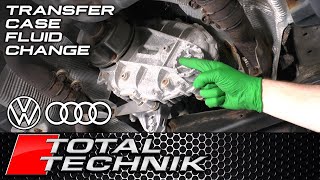
TSB 2059057 (Multiple Revisions): 🎬 Watch: A detailed walkthrough of the TSB fluid service procedure. This is the key document for the binding/shuddering issue. It acknowledges that noises and vibrations can occur in tight turns. The official fix is not an immediate replacement of the transfer case. Instead, the TSB outlines a specific fluid service procedure. This involves draining the old fluid, filling with a special fluid (Part No. G 055 515 A2), driving the vehicle to heat it up, draining it again, and then performing a final fill. This process, often called a 'fluid flush', helps clean the clutch plates and restore smooth operation. In some cases, the procedure also requires a software adaptation using a diagnostic tool to 'Reset learnt values for oil ageing'. 🎬 See how to perform the fluid change and software adaptation. Many owners report this TSB procedure successfully resolves the issue. It may take up to 60 miles of driving after the service for the condition to fully improve.
Diagnosing the Problem

- Reproduce the Symptom: The 'Quattro Rumble' is most obvious in a parking lot. With the vehicle warmed up, turn the steering wheel to full lock and drive slowly in a circle. The binding, hopping, or shuddering should be apparent if the issue is present.
- Visual Inspection: Safely raise the vehicle on a lift or jack stands. The transfer case is bolted to the passenger side of the transmission. Inspect the entire housing for signs of fluid leaks. Look for fresh drips or areas caked in oily grime.
- Check the Fluid: Checking the fluid is the most definitive step. The procedure can be complex, but at a minimum, a technician can remove the fill plug to check the fluid level 🎬 Watch: Step-by-step guide to changing your B9 transfer case fluid. and condition. Dark, burnt-smelling fluid or fluid with a high concentration of metallic particles indicates significant internal wear. Always remove the fill plug before the drain plug to ensure you can refill the unit.
Pro Tip: The binding and shuddering symptom is almost always related to the fluid and clutch pack inside the transfer case. If the primary symptom is a warning light on the dash with a specific fault code for the actuator motor, the issue may be the separate electronic motor, not the mechanical transfer case itself.
Buying a Used Transfer Case Assembly

Since the most common problem is often fixed with a fluid service, a full replacement is only necessary for units with severe mechanical damage (like gear or bearing failure) or persistent binding that the TSB procedure doesn't fix. If you need to replace the unit, a low-mileage used OEM part is often the most cost-effective option.
- Verify Part Numbers: Match the OEM part number from your original unit to the replacement. The part number is typically on a sticker or stamped on the case. Known part numbers include 0CJ409431B, 0CJ409431C, 0CJ409431D, 0CJ409431E, and the latest revision, 0CJ409431G.
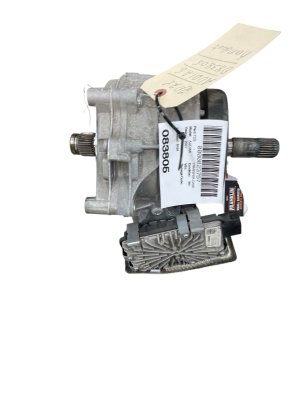
- Physical Inspection: Inspect the used unit for any cracks in the aluminum housing, especially around mounting points. Check for damage to the electrical connector for the actuator motor. Ensure the input and output splines are clean and free of damage.
- Mileage vs. Condition: While lower mileage is generally better, a unit that has had its fluid serviced is preferable to a low-mileage unit that has been run with contaminated fluid. Ask the supplier if they have any history on the donor vehicle.
- Why Used OEM is a Good Choice: New OEM units are very expensive, and new aftermarket or professionally remanufactured units are generally not available. This makes a quality, tested used OEM assembly the best value. The complex internal clutch mechanism and precise manufacturing make it a part where OEM quality is critical for proper function of the Quattro Ultra system.
Replacement & Service Overview
Replacing the transfer case is a job for an experienced DIYer or a professional shop, as it requires a vehicle lift and specialized tools.
- Difficulty: 4 out of 5
- Estimated Time: 4-6 hours
The general process involves supporting the transmission, removing underbody panels and heat shields, disconnecting and lowering the exhaust, and removing the driveshaft. The transfer case is then unbolted from the side of the transmission. Some mechanics recommend swapping your original actuator motor onto the replacement unit to avoid potential programming issues.
Torque Specs & Special Procedures
Using correct torque specs is critical. While you should always consult a factory service manual for your specific vehicle, here are some commonly cited values:
- Fill/Drain Plugs: 10-15 Nm. These are often single-use plugs with a sealant patch and should be replaced.
- Driveshaft to Transfer Case Bolts: These are torque-to-yield bolts and must be replaced. A common spec for similar applications is around 55 Nm (41 ft-lbs).
- Transmission Crossmember Bolts: These also have specific torque values (e.g., 20-55 Nm depending on the bolt) and may have an additional angle-tightening requirement.
Fluid Fill: The fluid fill procedure outlined in the TSB is complex, involving specific fill steps, warm-up cycles, and drain/refill sequences to ensure the clutch pack is properly saturated. A simple drain and fill may not be sufficient to correct the binding issue.
Cost Comparison
| Item | Estimated Cost |
|---|---|
| New OEM Unit | $1,400 - $3,200 |
| Used OEM Unit | $400 - $800 |
| New Aftermarket / Remanufactured | Not commonly available |
| Shop Labor (Replacement) | $650 - $1,100 |
| Shop Labor (TSB Fluid Service) | $300 - $600 |
Frequently Asked Questions (FAQ)
What fluid does the Quattro Ultra transfer case use?
The correct fluid is critical. For the clutch pack service, you must use Audi part number G 055 515 A2. Using standard gear oil will not solve the binding issue and may cause further damage.
Can I just ignore the 'Quattro Rumble' noise?
It is not recommended. While Audi has described it as a 'comfort problem' in some documents, the binding and vibration puts unnecessary stress on the entire drivetrain, including the driveshaft, differentials, and transmission mounts. Performing the TSB fluid service is the best course of action to prevent long-term damage.
Do I need to program the new transfer case?
If you replace the entire assembly including the electronic actuator motor, a programming or adaptation procedure may be required. To avoid this, many technicians swap the original actuator motor onto the replacement transfer case. If you perform the TSB fluid service, a 'Reset learnt values for oil ageing' procedure with a compatible diagnostic tool is required.
Is the transfer case fluid a 'lifetime' fluid?
While Audi may not specify a regular change interval in the owner's maintenance schedule, experience has shown that this fluid breaks down, causing the common binding issues. Many independent specialists recommend changing the transfer case fluid every 40,000 to 60,000 miles as preventative maintenance to avoid problems.
Helpful Videos



Technical Specifications
OEM Part Numbers: 0CJ409431B 0CJ409431C 0CJ409431D 0CJ409431E 0CJ409431G
Fluid Type: Audi G 055 515 A2 (for clutch service)
We Have This Part in Stock

The information in this article is provided for general reference and educational purposes only. Vehicle specifications, procedures, and part compatibility can vary by production date, trim level, and region. Always consult your vehicle's factory service manual and verify part numbers before purchasing or performing repairs. Safety-critical components such as airbags, seat belts, and braking systems should be installed by a qualified professional.
- Audi A4:
- Audi A5:
- Audi A6:
- Audi Q5:
- 🎬 Helpful Videos
- 🛍️ Shop This Part
- Understanding the Quattro with Ultra Technology
- Common Failure Symptoms: The 'Quattro Rumble'
- 1. Noises and Vibrations
- 2. Fluid Leaks
- 3. Drivetrain Warnings
- Known Issues, TSBs, and Recalls
- Diagnosing the Problem
- Buying a Used Transfer Case Assembly
- Replacement & Service Overview
- Torque Specs & Special Procedures
- Cost Comparison
- Frequently Asked Questions (FAQ)
- 🎟️ Get 5% Off