

2018-2024 Toyota 4Runner Shifter Guide: Diagnosing a Stuck Shifter and Other Common Issues
This guide covers the rare failures, common symptoms, and cost-effective solutions for the transmission shift lever in the 2018-2024 Toyota 4Runner.
- The most common issue, being stuck in Park, is almost never caused by the shifter itself but by a simple blown fuse or a bad brake light switch.
- Complete failure of the shifter assembly is extremely rare, and there are no recalls or TSBs for this part, confirming its high reliability.
- A used OEM shifter assembly provides excellent value, costing around $100-$150 compared to over $740 for a new OEM part.
- Replacement is a straightforward DIY task that involves removing center console trim and requires no special programming.
Symptoms of Failure

The transmission shifter assembly on the 5th Generation Toyota 4Runner is known for its durability. Outright failure is uncommon. However, when issues do arise, they often present in a few specific ways. Many symptoms that seem to be caused by the shifter are actually caused by related, and much cheaper, parts.
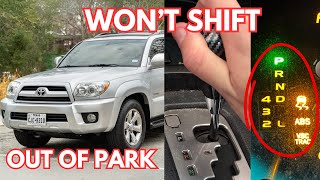
Vehicle Stuck in Park
This is the most common complaint related to the shifter, but it is almost never the fault of the shifter assembly itself. The 4Runner has a safety feature called a shift-lock solenoid that locks the lever in Park until the brake pedal is pressed. If you cannot shift out of Park, the issue is almost always one of two things:
- Blown STOP Fuse: A burnt-out 10-amp "STOP" fuse in the under-hood fuse box is a frequent cause. This fuse is tied to the brake light circuit, and if it blows, the system doesn't get the signal that the brake has been pressed.
- Faulty Brake Light Switch: This small switch, located at the top of the brake pedal arm, can fail. If the switch doesn't work, the brake lights won't illuminate, and the shift-lock solenoid will not disengage.
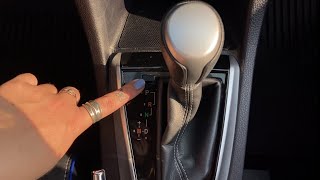
Pro Tip: To temporarily move your vehicle if it's stuck in Park, you can use the manual shift-lock override. Pry up the small, square cover next to the shifter lever. Press a key or small screwdriver into the slot while stepping on the brake; this will allow you to move the shifter into Neutral or Drive. 🎬 Watch: How to use the manual shift-lock override Do not drive without functioning brake lights.
Stiff or Squeaky Shifter
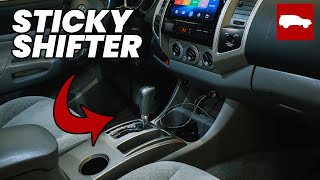
Over time, the shifter may become stiff, difficult to move, or make squeaking noises. This is usually not a sign of a major failure but rather a lack of lubrication or debris in the mechanism. Spilled drinks are a common cause, gumming up the moving parts inside the console. The issue can also be caused by corrosion or binding in the external shift linkage on the side of the transmission, which can be cleaned and lubricated.
🎬 See how to clean and fix a sticky shifterLoose or Wobbly Shifter
While more common on older 4th Generation models, a loose or sloppy feeling in the shifter can be caused by worn internal bushings. This might manifest as excessive play when in gear. On the 2018-2024 models, this is very rare but could occur on very high-mileage examples.
Gear Indicator Not Matching
If the light on the dash (P, R, N, D) doesn't match the gear you've selected, or if the 'D' light doesn't illuminate, it could indicate a problem with the electronic position switches inside the shifter assembly or an issue with the neutral safety switch on the transmission itself. This can sometimes be caused by a poor electrical connection or a failing switch.
Known Issues, TSBs, and Recalls

The 2018-2024 Toyota 4Runner has an excellent reliability record, and the transmission shift lever is no exception. There are no major safety recalls or Technical Service Bulletins (TSBs) specifically addressing the failure of the transmission shifter assembly for this generation.
Searches of the National Highway Traffic Safety Administration (NHTSA) database show recalls for other components on these vehicles, such as fuel pumps or instrument panel software, but none are directly related to the shifter mechanism failing. The absence of widespread complaints or service actions indicates that the original part is robust and not prone to premature failure.
Buying a Used Transmission Shift Lever

Given the high cost of a new OEM shifter assembly, a used part from a recycled vehicle is an excellent, cost-effective option. Because this part is not a common wear item, a used OEM unit is likely to provide many years of service.
What to Check Before Buying
- Physical Inspection: Carefully inspect the plastic housing for any cracks, especially around the four mounting bolt holes. Check that the main electrical connector is intact with no bent or corroded pins.
- Test the Action: Move the lever through its full range of motion. It should move smoothly without binding. Press the thumb button; it should depress and return crisply.
- Check the Shift Knob: The shift knob is often the most worn part. Check the leather or plastic for excessive wear, scratches, or tears. Keep in mind that shift knobs are often sold separately and can be expensive, so getting a used assembly with a knob in good condition is a bonus. The TRD Pro knob is different from the SR5 or Limited knobs.
- Verify Compatibility: The basic shifter assembly is consistent across the 2018-2024 model years. The primary difference you might encounter is the style of the shift knob. The underlying assembly and mounting points are the same. Do not confuse the transmission shifter with the separate, manually-operated transfer case lever found on TRD models.
- Mileage vs. Condition: For this part, physical condition is far more important than the mileage of the donor vehicle. A low-mileage part that has been damaged by a spilled soda is a worse choice than a high-mileage part that is clean and physically intact.
Pro Tip: When buying used, ask the seller for a clear photo of the electrical connector pins. This is a common point of damage during removal and is critical for the part to function correctly.
Cost Comparison
Replacing the shifter assembly shows a stark difference in cost between new and used options, making a recycled OEM part a very attractive value.
| Part Type | Estimated Cost |
|---|---|
| New OEM Assembly | $740 - $935 |
| New Aftermarket Assembly | Not commonly available |
| Used OEM Assembly | $100 - $150 |
| Shop Labor | $100 - $200 |
Replacement Difficulty
- Difficulty Rating: 2 out of 5 (Easy to Moderate)
- Estimated Time: 1 - 1.5 hours
- DIY Feasible: Yes
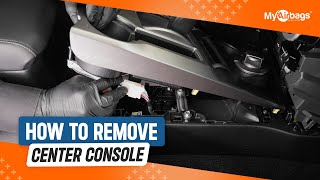
Replacing the shifter assembly is a straightforward job that most DIYers can handle with basic tools. The process primarily involves removing the center console trim panels to gain access. Using a set of plastic trim removal tools is highly recommended to avoid scratching or breaking the clips.
🎬 Watch: Step-by-step guide to removing the center consoleHigh-Level Steps:
- Disconnect the negative battery terminal.
- Unscrew the shift knob.
- Carefully pry up and remove the center console trim pieces surrounding the shifter.
- Unplug the electrical connectors attached to the shifter assembly.
- Remove the four bolts securing the shifter assembly to the vehicle floor.
- Disconnect the shift cable from the side of the assembly.
- Install the new assembly by reversing these steps.
No special programming or calibration is required after installation.
Frequently Asked Questions (FAQ)
Why is my 4Runner stuck in Park if the shifter isn't broken?
Your 4Runner is likely stuck in Park due to an issue in the shift-lock safety system, not the shifter itself. The system requires a signal from the brake light circuit to release the shifter. The most common causes are a blown 10A 'STOP' fuse or a failed brake light switch located on the brake pedal arm.
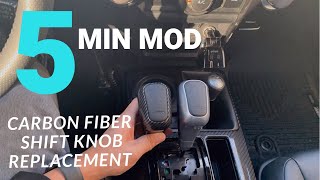
Can I just replace the shift knob?
Yes. The shift knob simply unscrews counter-clockwise. You can replace a worn standard knob or upgrade to a different style, like the popular TRD Pro knob. Be aware that new OEM knobs can be expensive, sometimes costing over $100.
What is the small square slot next to the shifter for?
This is the manual shift-lock override. If your battery is dead or the shift-lock system fails, you can pry this cover off and press a key or screwdriver into the slot to manually release the shifter from Park, allowing you to move the vehicle or put it in Neutral for towing.
Is a stiff or squeaky shifter a serious problem?
Generally, no. A stiff or squeaky feel is usually caused by a lack of lubrication or debris from a spill. It can typically be fixed by cleaning and lubricating the moving parts within the console and the linkage on the transmission. While annoying, it doesn't usually indicate an impending mechanical failure.
Helpful Videos
Technical Specifications
OEM Part Numbers: 33550-35820 35970-35051 PTR57-34141-02 33504-35170-C0
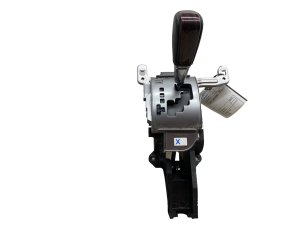
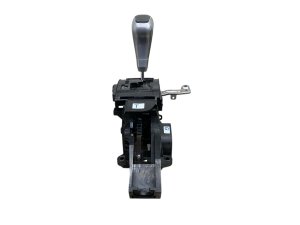
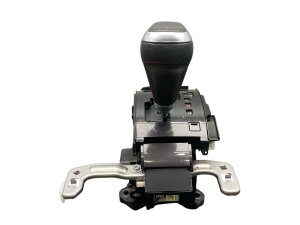
Fits 2018-2024 Toyota 4Runner models. Connects to transmission via a single mechanical cable and one primary electrical connector. Includes integrated shift-lock solenoid and gear position switches.
We Have This Part in Stock

The information in this article is provided for general reference and educational purposes only. Vehicle specifications, procedures, and part compatibility can vary by production date, trim level, and region. Always consult your vehicle's factory service manual and verify part numbers before purchasing or performing repairs. Safety-critical components such as airbags, seat belts, and braking systems should be installed by a qualified professional.
- Toyota 4Runner:
- 🎬 Helpful Videos
- 🛍️ Shop This Part
- Symptoms of Failure
- Vehicle Stuck in Park
- Stiff or Squeaky Shifter
- Loose or Wobbly Shifter
- Gear Indicator Not Matching
- Known Issues, TSBs, and Recalls
- Buying a Used Transmission Shift Lever
- What to Check Before Buying
- Cost Comparison
- Replacement Difficulty
- Frequently Asked Questions (FAQ)
- 🎟️ Get 5% Off