

2016-2025 Prius & Prius Prime Shifter Problems: Sticking, Failure to Shift, and Diagnosis
This guide covers the common failure points of the electronic 'joystick' shifter in the 2016-2022 Toyota Prius, Prius Prime, and Prius AWD-e, and notes differences for the 2023-2025 models.
- The most common failure is the shifter physically sticking, caused by old internal grease; this is a mechanical issue.
- A 'Shift System Malfunction' warning is frequently caused by a weak 12V battery, not the shifter itself. Always test the battery first.
- The main assembly for 2016-2022 models is part number 33550-47090 and fits the Prius, Prius Prime, and Prius AWD-e.
- Replacement is a straightforward DIY task requiring basic tools and about 1.5 hours.
Understanding the Prius Shifter: 4th Gen (2016-2022) vs. 5th Gen (2023-2025)
This guide primarily focuses on the dash-mounted 'joystick' style electronic shifter found in the fourth-generation Toyota Prius family. It's important to distinguish between the generations, as the parts are not interchangeable.
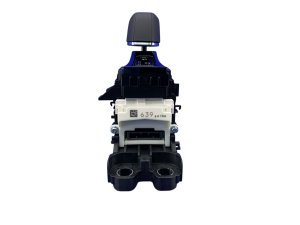
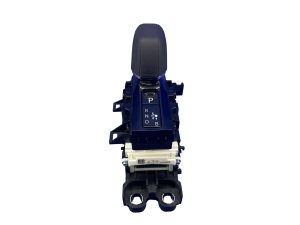
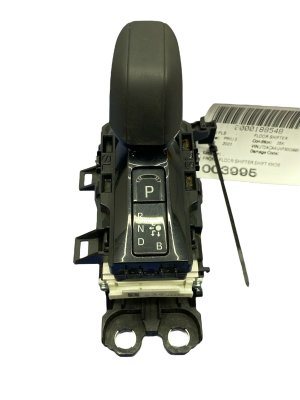
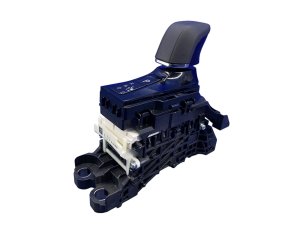
- 2016-2022 Toyota Prius, 2017-2022 Toyota Prius Prime, 2019-2022 Toyota Prius AWD-e: These models use a small, dash-mounted joystick that springs back to a central position after selecting a gear. The main assembly is part number 33550-47090.
- 2023-2025 Toyota Prius & Prius Prime: These models use a more conventional-looking, console-mounted electronic shifter. It is a different design and uses different part numbers, such as assembly 33550-47140. Issues with the earlier joystick do not apply to this newer design.
Symptoms of a Failing Transmission Shift Lever (2016-2022)
When the shifter assembly begins to fail, it can manifest in several ways, ranging from a minor annoyance to leaving you stranded.
1. Shifter Physically Sticks or Doesn't Return to Center
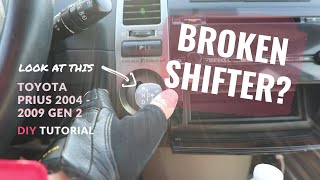
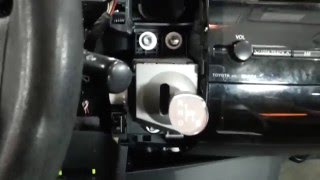
This is the most common reported issue. The joystick feels stiff or gets stuck in the Drive or Reverse 🎬 See how a failing shifter behaves when stuck in neutral position instead of springing back to the center. This is typically a mechanical failure inside the assembly itself. The grease used in the pivot mechanism can dry out and become gummy, or internal plastic components can warp over time, causing excessive friction. While not immediately critical, it can make shifting difficult and frustrating.
2. Vehicle Fails to Go Into Gear
You move the shifter, but the car remains in Neutral or Park. The gear indicator on the dashboard may not change or may flash. This points to an electronic failure. The sensors inside the shifter assembly that detect the joystick's position are failing to send the correct signal to the transmission control module. The car doesn't know what gear you've selected.
3. 'Shift System Malfunction' Warning on Dash
This warning message is a clear indicator of a fault within the electronic shifting system. However, the shifter itself is not always the culprit.
Pro Tip: Before assuming the shifter is bad, check the 12-volt battery. A weak or failing 12V battery is a very common cause for the 'Shift System Malfunction' error on a Prius. The vehicle's complex electronics are sensitive to low voltage, which can cause communication errors that mimic a shifter failure. Always test the battery first.
🎬 Watch: Troubleshooting a Prius that won't go into gearKnown Issues, TSBs, and Recalls
As of early 2026, there are no specific recalls or major Technical Service Bulletins (TSBs) from Toyota for the transmission shift lever assembly on the 2016-2022 Prius, Prius Prime, or Prius AWD-e models in the North American market. The most common known issue, widely discussed in owner forums, is the mechanical sticking of the joystick due to aging grease. This is generally considered a wear-and-tear item and is repaired at the owner's expense if outside of the vehicle's warranty period.
Buying a Used Transmission Shift Lever: What to Check
Given the high cost of a new OEM shifter, a used assembly from a low-mileage vehicle is an excellent value. Here’s what to inspect to ensure you get a good part.
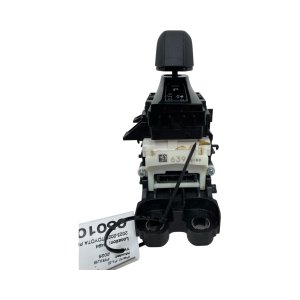
- Verify the Part Number: The primary assembly for 2016-2022 models is 33550-47090. Ensure this matches the part you are replacing. While the shifter knob may have a different part number (like 33504-47070 for the blue-accented Prime knob), the core assembly is the key component.
- Test the Mechanical Action: This is the most important check. Hold the assembly and move the joystick. Does it move smoothly in all directions (left, right, down)? Does it spring back to the center position crisply? Avoid any unit that feels stiff, gritty, or gets stuck.
- Inspect the Electrical Connectors: Look at the two connector ports on the assembly. The plastic should be free of cracks, and the pins inside should be straight, clean, and free of any green or white corrosion.
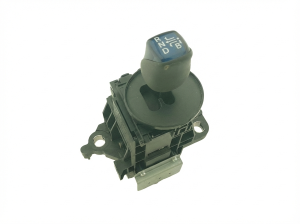
- Check for Cosmetic Wear: Look at the shift pattern indicator (P, R, N, D, B) on the unit. Ensure it's not worn away. While you can often swap your old knob onto the replacement assembly, a clean knob indicates a well-cared-for part.
- Why Used OEM is a Smart Choice: For an electronic part like this, OEM quality is crucial for reliability. A used OEM shifter that passes the physical inspection is often a more reliable and durable choice than a new, unbranded aftermarket part, which may have lower quality internal electronics and a different feel.
Replacement Difficulty & Walkthrough
- Difficulty: 2/5 (Easy to Moderate)
- Estimated Time: 1 - 1.5 hours
- Tools Required: Plastic trim removal tools, Phillips screwdriver, 12mm socket with extension.
Replacing the shifter is a straightforward DIY job. The process involves carefully prying off several interlocking plastic dash trim pieces around the steering column and shifter area. Once the trim is removed, the shifter assembly is held in place by just three 12mm bolts. After removing the bolts, you can lift the assembly out, disconnect the two electrical plugs, and remove it from the vehicle. Installation is the reverse of removal.
🎬 Watch this video for a general shifter replacement walkthroughCost Comparison
| Part Type | Estimated Cost | Notes |
|---|---|---|
| New OEM Assembly | $600 - $950 | Purchased from a Toyota dealership. Pricey but comes with a warranty. |
| Used OEM Assembly | $75 - $200 | A cost-effective and reliable option. Prices vary by condition and seller. |
| New Aftermarket | $100 - $250 | Availability is limited. Quality and feel may not match OEM. |
| Shop Labor Cost | $150 - $250 | The typical cost for a professional technician to perform the replacement. |
Frequently Asked Questions (FAQ)
Can I use a Prius Prime shifter in a regular Prius?
Yes. For the 2016-2022 generation, the main shifter assembly (33550-47090) is the same for the standard Prius, Prius Prime, and Prius AWD-e. The only common difference is the color of the shift knob itself; the Prime often features a blue accent, but the function is identical.
My shifter is just sticky. Can I fix it without replacing it?
Maybe. Some owners have successfully disassembled the shifter unit to clean out the old, hardened grease from the internal pivot mechanism and applied fresh white lithium grease. This can restore the smooth, spring-loaded action. However, this is a delicate process and risks damaging the plastic components.
Why does my Prius say 'Shift System Malfunction' when the battery is low?
The entire shifting system is electronic and relies on stable voltage to communicate. When the 12V battery is weak, the voltage can drop during system checks, causing the transmission control module to receive an incomplete or corrupt signal from the shifter. The system interprets this communication failure as a fault and displays a warning message.
What does the 'B' on the shifter mean?
'B' stands for 'Brake' or engine braking mode. When you select it, the vehicle uses the gasoline engine and regenerative braking more aggressively to slow the car down, which is useful on long downhill grades. This helps reduce wear on the conventional brakes and can also help recharge the hybrid battery.
Helpful Videos

Technical Specifications
OEM Part Numbers: 33550-47090 33504-47070 33504-47160 33550-47140
The shift lever is an electronic 'shift-by-wire' joystick for 2016-2022 models, and a console-mounted electronic lever for 2023-2025 models. It communicates with the vehicle's Transmission Control Module (TCM) via electrical signals.
We Have This Part in Stock

The information in this article is provided for general reference and educational purposes only. Vehicle specifications, procedures, and part compatibility can vary by production date, trim level, and region. Always consult your vehicle's factory service manual and verify part numbers before purchasing or performing repairs. Safety-critical components such as airbags, seat belts, and braking systems should be installed by a qualified professional.
- Toyota Prius:
- Toyota Prius Prime:
- Toyota Prius AWD-e:
- 🎬 Helpful Videos
- 🛍️ Shop This Part
- Understanding the Prius Shifter: 4th Gen (2016-2022) vs. 5th Gen (2023-2025)
- Symptoms of a Failing Transmission Shift Lever (2016-2022)
- 1. Shifter Physically Sticks or Doesn't Return to Center
- 2. Vehicle Fails to Go Into Gear
- 3. 'Shift System Malfunction' Warning on Dash
- Known Issues, TSBs, and Recalls
- Buying a Used Transmission Shift Lever: What to Check
- Replacement Difficulty & Walkthrough
- Cost Comparison
- Frequently Asked Questions (FAQ)
- 🎟️ Get 5% Off