

2024-2025 Mazda CX-90 & CX-70 3.3L Turbocharger Diagnosis and Replacement
Addressing early performance issues and guiding you on how to inspect and replace the turbo on Mazda's new inline-six engine.
- Many performance issues like hesitation on the CX-90/CX-70 are software-related; check for recalls and TSBs before replacing the turbo.
- When buying a used turbo, physically inspect for shaft play (in-and-out movement is bad) and fin damage.
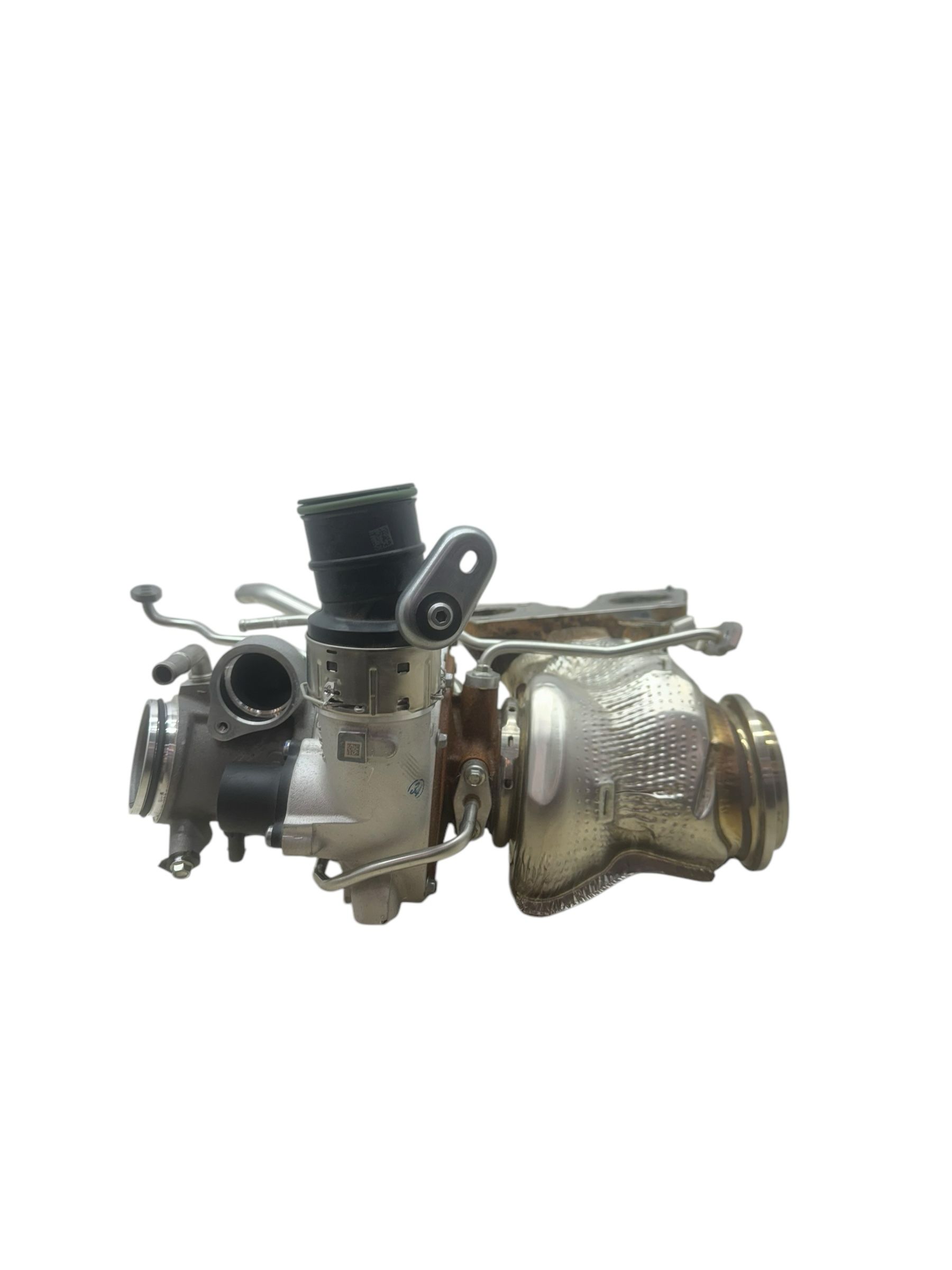
- This turbocharger (H301-13-700B) is only for the 3.3L inline-six engine, not the 2.5L PHEV models.
- Always prime a replacement turbo with fresh oil before starting the engine to prevent immediate bearing failure.
Distinguishing Turbo Problems from Software Issues
The 2024-2025 Mazda CX-90 and 2025 Mazda CX-70 are new vehicles 🎬 Watch: Common CX-70 issues you should know about built on an advanced platform. While the 3.3L inline-six engine is mechanically robust 🎬 See this breakdown of known Mazda CX-90 problems, many owners have reported drivability issues like hesitation, jerky shifting, or a sudden loss of power. It is crucial to understand that many of these symptoms are caused by software glitches, not a mechanical failure of the turbocharger itself. Mazda has issued several recalls and Technical Service Bulletins (TSBs) to update the Powertrain Control Module (PCM), Engine Control Module (ECM), and Transmission Control Module (TCM) to resolve these problems. Before assuming the turbocharger has failed, ensure the vehicle's software is up to date by checking with a Mazda dealer for any open recalls or service campaigns.
Symptoms of a Failing Turbocharger
When a turbocharger does begin to fail mechanically, the symptoms are distinct from the software issues mentioned above. Here’s what to look and listen for:
- Loss of Power: A noticeable decrease in acceleration and overall power is the most common sign. The vehicle may feel sluggish and struggle to reach highway speeds.
- Whining or Siren-Like Noise: A high-pitched whining sound from the engine bay that increases with engine RPM is a classic sign of a failing turbo. This noise is often compared to a dentist's drill or a police siren and is caused by damaged fins on the compressor wheel or worn bearings.
- Blue or Gray Exhaust Smoke: If the turbo's internal seals fail, engine oil can leak into the exhaust system and burn, producing visible blue or gray smoke, especially during acceleration.
- Increased Oil Consumption: A leaking turbo can cause a gradual but noticeable drop in engine oil levels between changes, with no other signs of an external oil leak.
- Check Engine Light: A failing turbo can trigger a Check Engine Light. A common trouble code is P0299 (Turbocharger/Supercharger Underboost Condition), which indicates the turbo is not producing the expected amount of pressure.
Warning: This guide applies ONLY to the 3.3L inline-six turbocharged (MHEV) models of the Mazda CX-90 and CX-70. It does NOT apply to the Plug-in Hybrid (PHEV) models, which use a different 2.5L four-cylinder engine and do not have this turbocharger.
Known Issues, TSBs, and Recalls
As of early 2026, there are no specific recalls issued by the National Highway Traffic Safety Administration (NHTSA) for mechanical failure of the turbocharger unit on these vehicles. However, several software-related recalls address symptoms that could be mistaken for turbo failure:
- NHTSA Campaign 24V815000: Addresses improper software in the PCM and ECM that can cause malfunction lights and a loss of drive power. The fix is a software update.
- Mazda Safety Recall 7024J: A broad campaign to update multiple ECUs for issues including potential engine stalling from i-stop and loss of power under certain conditions.
These campaigns highlight the importance of diagnosing software issues before condemning an expensive hardware component like the turbocharger.
Buying a Used Turbocharger: What to Inspect
A recycled OEM turbocharger can be a cost-effective and reliable alternative to an expensive new unit, especially for a newer engine platform. However, careful inspection is critical.
Buyer Warning: Be aware of listings for non-working parts recovered from flood vehicles, which are intended for parts or rebuilding only. These are not functional, bolt-on replacements and should be avoided unless you are a professional rebuilder.
Physical Inspection Checklist:
- Check for Shaft Play: This is the most important test. Grasp the nut on the compressor wheel (the intake side) and try to move the shaft.
- Radial Play (Side-to-Side): A very small amount of side-to-side movement is normal, but if the wheel can touch the inside of the housing, the bearings are worn and the turbo is bad.
- Axial Play (In-and-Out): There should be almost zero in-and-out play. Any noticeable movement in this direction indicates thrust bearing failure, and the unit should be rejected.
- Inspect the Compressor and Turbine Wheels: Use a flashlight to look at the fins on both the intake (compressor) and exhaust (turbine) wheels. Look for any signs of chipping, bending, or scraping marks on the edges of the fins or the inside of the housing. Damaged fins indicate the turbo has ingested foreign debris or has severe bearing failure.
- Look for Oil Residue: Check the intake and exhaust openings for excessive wet oil. A light coating can be normal, but pooled oil suggests failed internal seals.
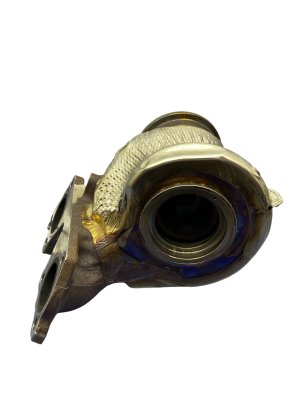
- Examine the Housings: Inspect the cast iron exhaust housing for cracks, especially around the wastegate port where heat is most extreme. Check all threaded holes and mounting flanges for damage.
- Verify Part Numbers: Ensure the part number matches your vehicle's requirement. Known OEM part numbers are H301-13-700 and its successor, H301-13-700B.
Pro Tip: For a new and complex engine like Mazda's 3.3L inline-six, a low-mileage used OEM turbocharger is often a safer bet than a new, unproven aftermarket part. The vehicle's engine management system is precisely calibrated for the flow characteristics and wastegate operation of the original factory turbo.
Cost Comparison
| Part Type | Estimated Cost |
|---|---|
| New OEM | $2,200 - $3,500 |
| New Aftermarket | Not widely available as of early 2026 |
| Used OEM | $500 - $1,200 |
| Remanufactured | Not widely available as of early 2026 |
| Shop Labor | $800 - $1,400 |
Replacement Overview
Replacing the turbocharger on the Mazda 3.3L inline-six is a complex job best left to experienced technicians. The longitudinal engine layout in a modern, crowded engine bay presents significant access challenges.
- Difficulty: 4 out of 5
- Estimated Time: 5-7 hours
- DIY Feasible: Not recommended for beginners.
Critical Steps:
- Pre-lube the New Turbo: Before installation, you must pour fresh engine oil into the turbo's oil feed port and spin the compressor wheel by hand to lubricate the bearings. Failure to do this can cause immediate failure upon engine start.
- Replace Oil Lines: Always install new oil feed and return lines (or at least new gaskets and seals) with a replacement turbo. Debris from the old turbo can contaminate the lines and starve the new unit of oil.
- Inspect the Charge Air System: If the old turbo failed catastrophically, metal fragments may be present in the intercooler and charge pipes. The entire system must be removed and cleaned thoroughly to prevent debris from entering the engine.
Frequently Asked Questions (FAQ)
Can I drive my CX-90 or CX-70 with a failing turbo?
It is not recommended. While the vehicle may be drivable, you will experience significant power loss. More importantly, if the turbo fails completely, it can send metal fragments into your engine, causing catastrophic damage that is far more expensive to repair than the turbo itself.
What causes the turbocharger to fail?
The most common causes of turbo failure are oil starvation and oil contamination. Not changing the oil on schedule, using the wrong type of oil, or low oil levels can destroy the turbo's bearings. Foreign object damage, from things like a piece of a broken air filter, can also destroy the delicate compressor fins.
Do I need to reprogram the car's computer after installing a new turbo?
If you are replacing the failed turbo with an identical OEM unit (new or used), no special programming is typically required. The factory engine computer is already calibrated for this part. However, it is always a good practice to ensure all vehicle control modules have the latest software by checking with a dealer.
Is the turbocharger covered under the powertrain warranty?
Yes, the turbocharger is a major engine component and is covered under Mazda's factory powertrain warranty. If your vehicle is still within the warranty period (typically 5 years or 60,000 miles), any failure should be diagnosed and repaired by a Mazda dealer.
Helpful Videos


Technical Specifications
OEM Part Numbers: H301-13-700 H301-13-700B
Fits 3.3L e-Skyactiv G Mild-Hybrid (MHEV) inline-six engine.
We Have This Part in Stock

The information in this article is provided for general reference and educational purposes only. Vehicle specifications, procedures, and part compatibility can vary by production date, trim level, and region. Always consult your vehicle's factory service manual and verify part numbers before purchasing or performing repairs. Safety-critical components such as airbags, seat belts, and braking systems should be installed by a qualified professional.
- Mazda CX-70:
- Mazda CX-90:
- 🎬 Helpful Videos
- 🛍️ Shop This Part
- Distinguishing Turbo Problems from Software Issues
- Symptoms of a Failing Turbocharger
- Known Issues, TSBs, and Recalls
- Buying a Used Turbocharger: What to Inspect
- Physical Inspection Checklist:
- Cost Comparison
- Replacement Overview
- Critical Steps:
- Frequently Asked Questions (FAQ)
- 🎟️ Get 5% Off