

Audi & Porsche 3.0L & 3.6L Turbocharger Issues: A Guide for Macan, Cayenne, S4, A6 & More (2015-2025)
Diagnosing power loss, underboost codes (P0299), and whining noises in your V6 Audi or Porsche and what to look for when buying a replacement turbo.
- This guide covers three different turbo setups: a single-turbo 3.0L V6 (most Audis), a twin-turbo 3.0L V6 (Macan S/GTS), and a twin-turbo 3.6L V6 (Macan Turbo). Verify your specific engine before buying parts.
- The P0299 underboost code is the most common symptom, but it can also be caused by boost leaks, a faulty diverter valve, or even a failing water pump on the EA839 engine.
- When buying a used turbo, the most critical inspection is for shaft play. Any noticeable in-and-out (axial) play or side-to-side play that allows the wheel to touch the housing means the unit is bad.
- Replacement is a very difficult (5/5) job due to the turbo's location in the engine's 'hot-vee'. Always replace oil feed lines and gaskets with the turbo to prevent immediate failure of the new part.
Symptoms of a Failing Turbocharger

A failing turbocharger rarely fails silently. It will almost always provide audible or performance-related clues. Ignoring these signs can lead to more severe engine damage if the turbo fails catastrophically and sends metal fragments into the engine.
- Loss of Power: This is the most common symptom. Your vehicle will feel noticeably slower and less responsive, especially during acceleration, because the engine is not receiving the 'boost' of compressed air it expects.
- Whining or Siren-like Noise: A high-pitched whining or siren sound from the engine bay that rises and falls with engine RPM is a classic sign of a failing turbo. This is often caused by damaged compressor or turbine blades, or worn bearings.
- Check Engine Light: A failing turbo will trigger a Check Engine Light. The most common diagnostic trouble code (DTC) is P0299 - Turbocharger/Supercharger 'A' Underboost Condition. You may also see codes related to the wastegate or boost control solenoids, such as P0234 (Overboost Condition).
- Excessive Exhaust Smoke: If the internal seals of the turbo fail, engine oil can leak into the exhaust system. This will produce blue or grayish smoke from the tailpipe, especially under acceleration.
- Increased Oil Consumption: A turbo with failing seals will consume oil, requiring you to top it off more frequently.
Vehicle and Part-Specific Information

It is critical to correctly identify your vehicle's engine and turbocharger setup, as there are significant differences across this model range.
Compatibility Warning: These vehicles use several different V6 engines with different turbocharger configurations. The Audi models and base Porsche Cayenne primarily use a single turbo, while the Porsche Macan S, GTS, and Turbo models use a twin-turbo setup. Always verify your engine type and OEM part number before purchasing.
| Vehicle(s) | Engine | Turbo Configuration | Common Part Numbers |
|---|---|---|---|
| 2018-2024 Audi S4, S5, SQ5; 2019-2024 Audi A6, A7, A8, Q8; 2020-2024 Audi Q7; 2019-2025 Porsche Cayenne (Base) | 3.0L V6 Turbo (EA839) | Single Turbo (in engine 'hot-vee') | 06M145689AC, 06M145689J, 06M145689M, 53039700380, 53039700437 |
| 2015-2018 Porsche Macan S, GTS | 3.0L V6 Twin-Turbo | Twin Turbo (Left & Right) | Left: 94612302631, 94612302635 Right: 94612302531, 94612302535 |
| 2015-2018 Porsche Macan Turbo | 3.6L V6 Twin-Turbo | Twin Turbo (Left & Right) | Left: 94612302632, 94612302636 Right: 94612302532, 94612302536 |
Known Issues, TSBs, and Recalls
While there are no widespread recalls specifically for turbocharger failure on these models, the surrounding systems and engine have known issues that can affect the turbo's performance or lead to a misdiagnosis.
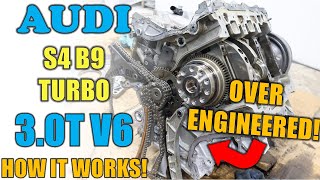
- EA839 Engine Issues: The 3.0L single-turbo V6 engine has documented issues with rocker arm failure (primarily early models) and piston skirt wear. A catastrophic engine failure can send debris into the turbocharger, destroying it. If you are replacing a turbo, it is crucial to ensure the engine itself is healthy. 🎬 Watch: Detailed teardown of the EA839 engine's common failure points.
- Water Pump Failure: The EA839 engine is also known for premature water pump failures. When the pump fails, it can leak coolant into a vacuum solenoid valve, which can cause a P0299 underboost code, mimicking a turbo failure. Always inspect the water pump and vacuum system before condemning the turbo.
- PCV System Failure: The Positive Crankcase Ventilation (PCV) system can fail, leading to improper crankcase pressure and oil leaks. On the B9 S4, a failed check valve in the PCV system can allow boost pressure to enter the crankcase, which can cause oil leaks and other issues.
- Porsche Macan Fuel Pump Flange Recall: Certain 2015-2017 Macan models were recalled for a fuel pump flange that could develop hairline cracks and leak fuel (NHTSA Recall No. 17V-289). This is unrelated to the turbocharger but is an important safety item to be aware of.
Buying a Used Turbocharger: What to Inspect

A quality used OEM turbocharger can be a reliable and cost-effective alternative to an expensive new unit. Cheap aftermarket turbos often use inferior materials and may not be balanced correctly, leading to premature failure. Here’s what to check before buying a used OEM unit.
- Check for Shaft Play: This is the most important check. Grasp the nut on the compressor wheel (the intake side) and try to move it.
- Side-to-side (radial) play: A very small amount of movement is normal, as the bearing relies on oil pressure to be perfectly centered. However, if the wheel can be moved enough to touch or scrape the housing, the turbo is worn out.
- In-and-out (axial) play: There should be almost zero in-and-out movement. Any noticeable axial play is a sign of a failed thrust bearing and a major red flag.
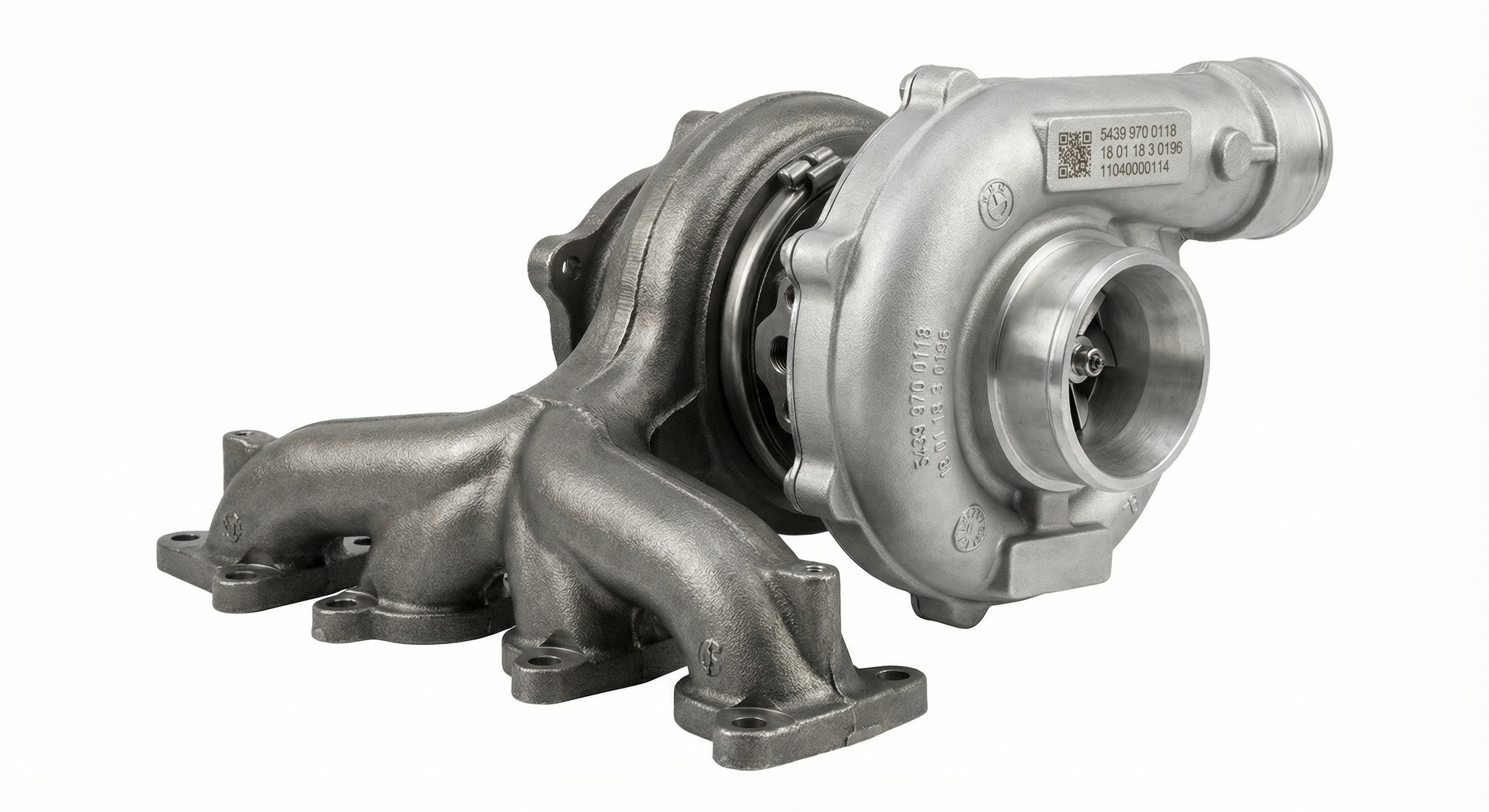
- Inspect the Compressor and Turbine Wheels: Look closely at the fins on both the shiny aluminum compressor wheel and the darker turbine (exhaust) wheel. Any signs of chipping, cracking, or bent fins indicate the turbo has ingested foreign debris or failed internally. Do not buy it.
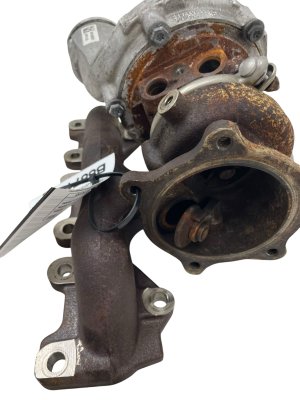
- Look for Oil Residue: Check the intake and exhaust housings for heavy, wet oil residue. A little bit of dry soot is normal, but wet oil suggests the internal seals have failed.
- Check the Wastegate Actuator: This turbo uses an electronic wastegate actuator. Ensure the electrical connector and pins are clean and undamaged. Check that the actuator arm moves freely without binding. A faulty actuator can cause boost control problems.
- Examine the Housings: Inspect the cast iron turbine housing for any cracks, which can be caused by extreme heat cycles. Ensure all threaded holes for oil and coolant lines are clean and undamaged.
Replacement Difficulty and Cost
Replacing the turbocharger on these vehicles is a complex and labor-intensive job.
- Installation Difficulty: 5 out of 5 (Professional Recommended)
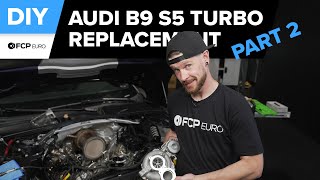
- DIY Feasible: Not for beginners. The turbo's location in the 'hot-vee' of the engine requires removing numerous components for access, including fuel lines, coolant pipes, and electrical harnesses. While some experienced DIYers have replaced the single-turbo on a B9 S5 with the engine in the car, it is an advanced procedure. 🎬 See this walkthrough of a B9 S5 turbocharger replacement. For many applications, mechanics may recommend removing the engine entirely to perform the replacement, which significantly increases labor time.
Pro Tip: Always replace the oil feed and return lines, along with all gaskets and O-rings, when installing a new or used turbocharger. Oil starvation is the #1 killer of turbochargers, and a clogged feed line will destroy a replacement unit in seconds. It is also recommended to perform an oil and filter change immediately before and shortly after the replacement.
Cost Breakdown
The cost can vary significantly based on your vehicle and the chosen part. Prices are estimates and will vary by location and supplier.
| Part/Service | Estimated Cost | Notes |
|---|---|---|
| New OEM Turbocharger | $2,500 - $3,800 | Highest quality and price. |
| New Aftermarket | $800 - $1,900 | Quality can vary widely. BorgWarner is the OEM supplier, so a BorgWarner-branded part is equivalent to OEM. |
| Used OEM | $650 - $1,500 | A cost-effective option if inspected carefully. |
| Shop Labor | $1,000 - $2,500+ | Labor can range from 8-12 hours, but can be much higher if the engine must be removed. |
| Total Estimated Cost | $1,650 - $6,300+ | Reflects the wide range from a DIY-installed used part to a dealer-installed new OEM unit. |
Frequently Asked Questions
Can I drive my car with a failing turbo?
It is not recommended. While the car may be drivable, a failing turbo can cause further damage. If the bearings fail completely, the turbine wheels can break apart, sending metal fragments into your engine or catalytic converter, leading to a much more expensive repair.
Do I need to get my car's computer reprogrammed after replacing the turbo?
For a direct OEM-for-OEM replacement, no special programming is required. However, the system may need to have adaptations cleared and the electronic wastegate may need to be calibrated using a diagnostic tool.
My car has a P0299 underboost code. Is it definitely the turbo?
Not necessarily. A P0299 code means the engine is not seeing the amount of boost it expects. While this can be a faulty turbo, it can also be caused by a boost leak from a cracked hose, a faulty diverter valve, a clogged catalytic converter, or a failing boost pressure sensor. On the EA839 engine, it can even be caused by a failing water pump leaking coolant into the vacuum system. Proper diagnosis is key.
Why is it so important to replace the oil lines with the turbo?
The oil feed line contains a small filter or screen that can become clogged with carbon deposits or debris from the old, failing turbo. If this line is not replaced, the new turbo will be starved of oil and will fail almost immediately. It is cheap insurance for an expensive part.
Helpful Videos
Technical Specifications
OEM Part Numbers: 06M145689AC 06M145689J 06M145689M 94612302530 94612302531 94612302535 94612302536 94612302630 94612302631 94612302632 94612302635 94612302636
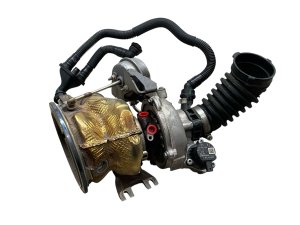
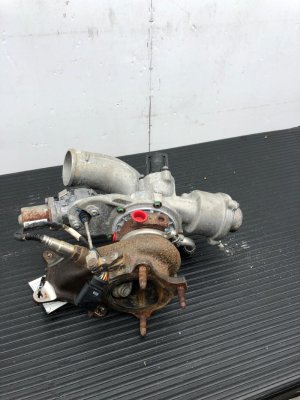
OEM Supplier: BorgWarner. Configuration: Single-turbo (most Audi/base Cayenne) or Twin-turbo (Porsche Macan S/GTS/Turbo). Location: Hot-Vee (between cylinder banks) for single-turbo models.
We Have This Part in Stock

The information in this article is provided for general reference and educational purposes only. Vehicle specifications, procedures, and part compatibility can vary by production date, trim level, and region. Always consult your vehicle's factory service manual and verify part numbers before purchasing or performing repairs. Safety-critical components such as airbags, seat belts, and braking systems should be installed by a qualified professional.
- Porsche Macan:
- Audi A6:
- Audi A7:
- Audi A8:
- Audi Q7:
- Audi Q8:
- Audi S4:
- Audi S5:
- Audi SQ5:
- Porsche Cayenne: