

2007-2012 Mazda CX-7 Vapor Canister: Solving EVAP Codes and Fueling Issues
This guide covers the common failure symptoms, diagnostic steps, and replacement costs for the vapor canister on your 2.3L turbocharged Mazda CX-7.
- The most common failure symptoms are a Check Engine Light for EVAP codes (P0455, P0456) and difficulty starting the engine right after refueling.
- This specific canister (part AJG1-13-970B) is ONLY for the 2.3L turbocharged CX-7; it does not fit the 2.5L non-turbo engine.
- Before replacing the canister, always check the gas cap and the purge valve first, as these are cheaper, common failure points that cause identical symptoms.
- A functioning vapor canister is required to pass state emissions inspections; a faulty one will cause an automatic failure due to the Check Engine Light.
Symptoms of a Failing Vapor Canister
When the vapor canister on a 2007-2012 Mazda CX-7 begins to fail, it can cause several distinct and frustrating symptoms. While the car may remain drivable, these issues point to a problem in the EVAP system that needs attention to pass emissions tests and ensure proper vehicle operation.
🎬 See a breakdown of bad charcoal canister symptoms and costs.1. Check Engine Light for EVAP Leaks
The most common symptom is an illuminated Check Engine Light (CEL). The vehicle's computer monitors the EVAP system for leaks, and when it detects one, it stores a diagnostic trouble code (DTC). For the CX-7, a failing vapor canister often triggers codes indicating a leak.
| Code | Meaning | Common Cause |
|---|---|---|
| P0455 | EVAP System Leak Detected (Gross Leak) | This often points to a large leak, such as a cracked canister, a disconnected hose, or a very loose gas cap. |
| P0456 | EVAP System Leak Detected (Very Small Leak) | Can be caused by small cracks in the canister housing or failing seals. |
| P0442 | EVAP System Leak Detected (Small Leak) | Similar to P0456, this indicates a small leak in the system. |
| P0441 | EVAP System Incorrect Purge Flow | While often related to the purge valve, a saturated or blocked canister can also cause this code. |
Pro Tip: Before assuming the canister is bad, always check the gas cap first. A loose or worn gas cap is a very common cause for EVAP codes and is a much cheaper fix.
2. Difficulty Starting After Refueling
This is a classic sign of a saturated vapor canister or a stuck-open purge valve. When you fill the fuel tank, the displaced vapors are supposed to be absorbed by the canister. If the canister is already full of liquid fuel (from consistently overfilling the tank) or the purge valve is stuck open, raw fuel vapors can be drawn directly into the engine intake. This creates a fuel mixture that is too rich to ignite easily, causing the engine to crank for an extended period before it finally starts. The problem is usually most apparent immediately after a fill-up and does not occur during normal cold starts.
3. Fuel Smell
A noticeable smell of raw gasoline, especially around the rear of the vehicle, can indicate a physically cracked or damaged vapor canister. The canister is designed to be a sealed system. If the plastic housing is broken, fuel vapors will escape directly into the atmosphere instead of being stored.
Known Issues, TSBs, and Recalls
While there are no direct recalls for the vapor canister itself, Mazda has issued Technical Service Bulletins (TSBs) and an emissions recall related to the EVAP system on the 2007-2012 CX-7 with the 2.3L turbo engine.
- Emission Recall 7113L (supersedes MSP36): Mazda identified that incorrect PCM (engine computer) software parameters could cause the vehicle to fail evaporative emission standards. The fix involves reprogramming the PCM with updated software. This should be performed by a dealer.
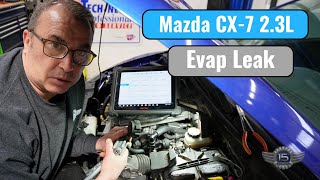
- TSB 01-023/10: This bulletin provides a diagnostic procedure for technicians to determine the location of an EVAP leak when codes P0441, P0442, P0455, or P0456 are present. 🎬 Watch: Diagnostic walkthrough for CX-7 EVAP leak codes.
- TSB 01-040/09: Specifically referenced for certain 2007 CX-7 models, this TSB addresses the P0455 gross leak code, often related to the fuel filler cap.
Warning: This vapor canister, OEM part number AJG1-13-970B, is specifically for the 2.3L turbocharged engine. It will not fit models equipped with the 2.5L non-turbo engine, which use a different EVAP system configuration.
Buying a Used 2007-2012 Mazda CX-7 Vapor Canister
A used OEM vapor canister can be a smart, cost-effective alternative to an expensive new part. Because the canister is primarily a passive component, a good-condition used unit from a reputable recycler can provide the same performance as a new one. Here’s what to look for:
- Verify the Part Number: Ensure the part is stamped with or matches the OEM number AJG1-13-970B. It may also supersede older numbers like AJG1-13-970 or AJG1-13-970A.
- Inspect the Housing: Carefully check the entire plastic body of the canister for any cracks, fractures, or signs of heat damage. Even a small crack will cause an EVAP leak and a Check Engine Light.
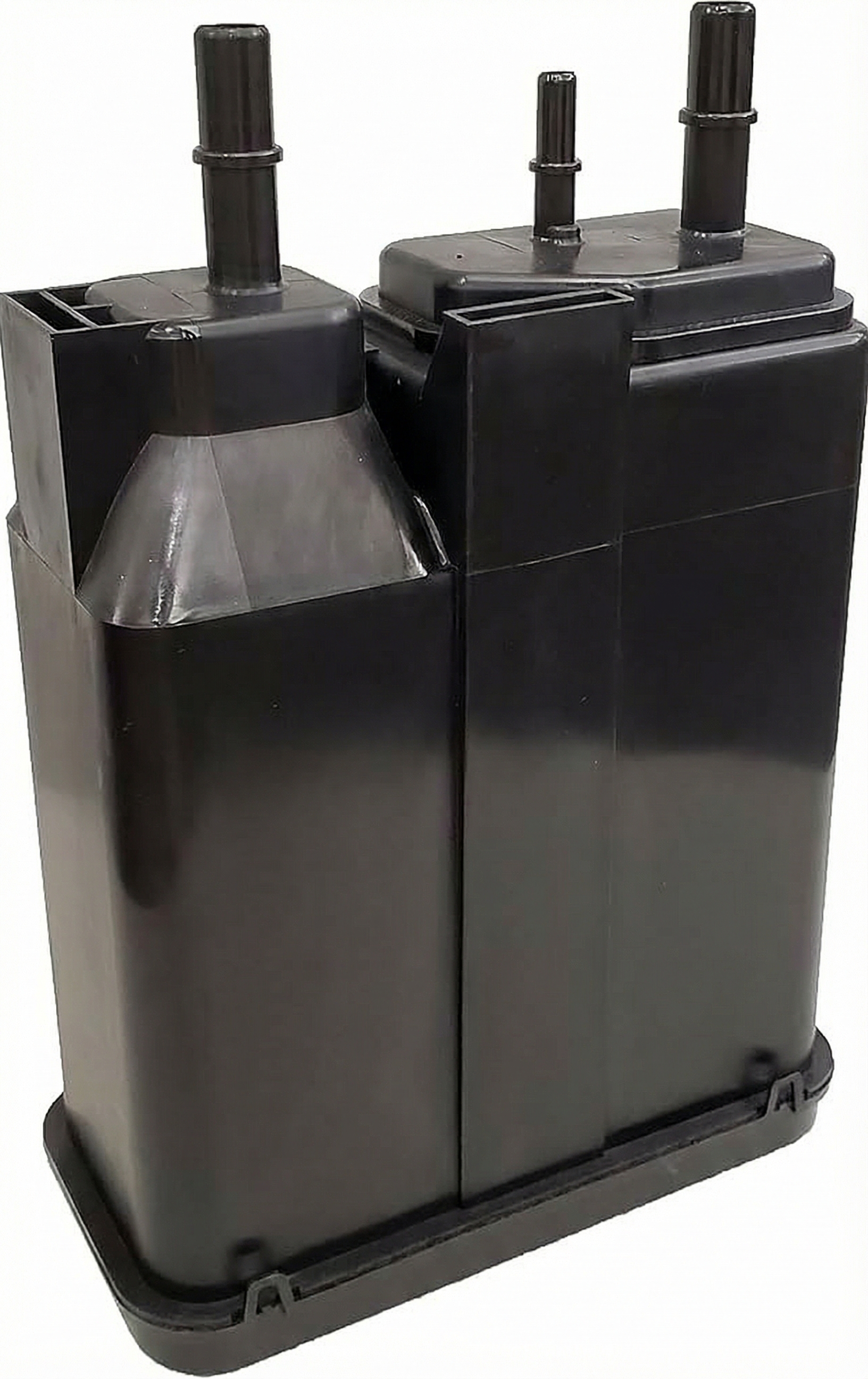
- Check All Nipples and Ports: The canister has several plastic nipples where rubber hoses connect. Make sure all of them are intact and not broken or cracked. A broken port makes the part unusable.
- Listen for Loose Charcoal: Gently shake the canister. You should not hear significant rattling. While some minor sound is normal, loud rattling could indicate the internal charcoal structure has broken down.
- Avoid Fuel-Saturated Canisters: Do not buy a canister that smells strongly of raw fuel or feels heavy and sloshes. This indicates it has been flooded with liquid fuel, likely from a vehicle that was habitually overfilled at the gas pump, and its ability to absorb vapors is compromised.
Cost & Replacement Information
Replacing the vapor canister is a moderately easy job that a DIY mechanic can perform with basic tools. The canister is located under the rear of the vehicle, near the fuel tank. Access requires safely raising and supporting the vehicle.
| Item | Estimated Cost |
|---|---|
| New OEM Canister | $270 - $400 |
| New Aftermarket Canister | $150 - $250 |
| Used OEM Canister | $50 - $125 |
| Shop Labor Cost | $330 - $485 |
The replacement process generally involves disconnecting the battery, raising the vehicle, unplugging one or two electrical connectors, disconnecting several spring-clamp hoses, and unbolting the canister's mounting bracket.
Legal and Emissions Requirements
A functioning EVAP system is a federal requirement for all modern vehicles in the United States. You cannot pass a state emissions inspection with an active Check Engine Light, which is a guaranteed result of a failed vapor canister. While there are no specific CARB-only versions of this part, vehicles in California and other states following CARB regulations must have a fully functional, leak-free EVAP system to be legally registered and driven. Driving with a known EVAP leak means your vehicle is releasing unburned hydrocarbons into the atmosphere.
Frequently Asked Questions (FAQ)
Why is my CX-7 hard to start only after getting gas?
This is a classic symptom of a saturated vapor canister or a faulty purge valve. Excess fuel vapor is flooding the engine, making the air/fuel mixture too rich to start easily. Before replacing the expensive canister, it's wise to inspect the much cheaper purge valve first.
Can a bad gas cap cause the same P0455 code?
Yes, absolutely. A loose, damaged, or incorrect gas cap is one of the most common causes of a P0455 (Gross Leak) code. Always check, tighten, or replace the gas cap before suspecting more complex components like the canister.
Where is the vapor canister located on a 2007-2012 Mazda CX-7?
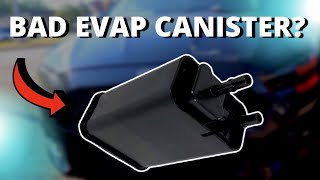
The vapor canister is located underneath the rear of the vehicle, mounted near the fuel tank and spare tire area. It is a black plastic box with several hoses and electrical connectors attached.
🎬 Watch: Locate the EVAP purge and other emissions components.Can I clean a vapor canister instead of replacing it?
No. The activated charcoal inside is not serviceable. Once it becomes saturated with liquid fuel or the internal structure breaks down, it cannot be cleaned or restored. Replacement is the only effective repair.
Helpful Videos

Technical Specifications
OEM Part Numbers: AJG1-13-970B AJG1-13-970A AJG1-13-970
Designed for the 2.3L L3-VDT turbocharged engine in 2007-2012 Mazda CX-7 models.
We Have This Part in Stock

The information in this article is provided for general reference and educational purposes only. Vehicle specifications, procedures, and part compatibility can vary by production date, trim level, and region. Always consult your vehicle's factory service manual and verify part numbers before purchasing or performing repairs. Safety-critical components such as airbags, seat belts, and braking systems should be installed by a qualified professional.
- Mazda CX-7:
- 🎬 Helpful Videos
- 🛍️ Shop This Part
- Symptoms of a Failing Vapor Canister
- 1. Check Engine Light for EVAP Leaks
- 2. Difficulty Starting After Refueling
- 3. Fuel Smell
- Known Issues, TSBs, and Recalls
- Buying a Used 2007-2012 Mazda CX-7 Vapor Canister
- Cost & Replacement Information
- Legal and Emissions Requirements
- Frequently Asked Questions (FAQ)
- 🎟️ Get 5% Off