

2008-2025 Sequoia & Tundra Vapor Canister: Solving Fuel Tank & Part Number Confusion
This guide explains the common check engine light codes and fueling issues caused by a failed vapor canister and shows how to find the exact right part based on your truck's fuel tank size.
- Compatibility is determined by your vehicle's generation AND fuel tank size; you must verify the part number on your old canister before buying.
- The most common cause of canister failure is repeatedly overfilling the fuel tank, which forces liquid gas into the charcoal and ruins it.
- Key symptoms of failure are a Check Engine Light (with EVAP codes), difficulty filling the gas tank, and a raw fuel smell.
- A bad vapor canister will cause an automatic failure of any state emissions inspection.
Critical Compatibility Warnings: Read This First

Warning: There are multiple, non-interchangeable vapor canisters for the Toyota Sequoia and Tundra, even within the same year. Compatibility depends entirely on your vehicle's generation and fuel tank size. Ordering the wrong part will result in fitment issues and persistent check engine lights.
These vehicles span two distinct platforms, which use different parts:
- 2nd Generation (2008-2021 Sequoia / 2007-2021 Tundra): These models have at least two different canisters. The key difference is often the fuel tank size (standard 26.4-gallon vs. optional larger tanks). The 2013-2015 model years are a common point of confusion where different part numbers were used.
- 3rd Generation (2022-2025 Sequoia / 2022-2024 Tundra): These models also use different canisters based on the standard 22.5-gallon tank or the larger 32.2-gallon tank. The larger tank is standard on higher trims like the Limited, Platinum, and Capstone, and optional on the SR5.
You must verify the part number on your original canister before ordering a replacement. Visually inspecting the original part is the only guaranteed way to get the correct one.
Symptoms of a Failing Vapor Canister

When a vapor canister fails, it can cause several distinct and annoying symptoms.
Check Engine Light and OBD-II Codes
This is the most common sign. A fault in the EVAP system will trigger the Check Engine Light. Common codes associated with a bad vapor canister include:
- P0441: Incorrect Purge Flow.
- P0442: Small EVAP System Leak Detected.
- P0455: Gross EVAP System Leak Detected (often from a large crack in the canister).
- P0456: Very Small EVAP System Leak Detected.
- P043E, P043F, P2401, P2402, P2419: These codes often point to issues with the canister's associated leak detection pump or valves, which can be part of the canister assembly.
Difficulty Refueling
If the gas pump nozzle constantly clicks off every few seconds when you're trying to fill your tank, it's a classic sign of a clogged or saturated canister. The canister is unable to vent pressure from the tank as new fuel goes in, causing the pump's back-pressure sensor to shut it off prematurely.
Fuel Smell
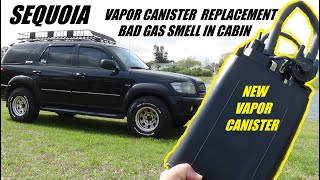
A strong gasoline odor around the rear of the vehicle, especially when parked, indicates that fuel vapors are escaping. 🎬 Watch: Fixing a fuel smell with a canister replacement. This can happen if the canister's plastic housing is cracked or if it's so saturated with fuel that it can no longer store vapors effectively.
Hissing Noise from Gas Cap
When you open your gas cap, a loud, prolonged hiss of air rushing out suggests excessive pressure is building in the tank. A functioning EVAP system manages this pressure, so a loud hiss points to a blockage, often within the canister.
Common Causes of Failure

- Overfilling The Fuel Tank: Consistently topping off your tank after the pump automatically stops can force liquid gasoline into the vapor canister. The charcoal is designed to handle vapor, not liquid fuel. Once saturated, it is permanently damaged and must be replaced.
- Cracked Housing: The canister is a plastic box located under the vehicle, near the rear axle. Over time, exposure to road debris, weather, and vibration can cause the plastic to become brittle and crack, creating an EVAP leak.
- Internal Component Failure: Modern canisters are complex assemblies that may include integrated valves and sensors. The failure of these internal components can render the entire unit inoperative.
Buying a Used Vapor Canister: What to Look For

A used OEM canister can be a smart buy, offering original factory quality for significantly less than a new part. However, you must inspect it carefully.
- Verify the Part Number: This is the most important step. The part number is printed on a label on the canister. Make sure it is an exact match for your original part.
- Inspect for Cracks: Carefully check the entire plastic housing, especially around mounting tabs and hose connections, for any cracks, no matter how small. A cracked canister is useless.
- Check for Raw Fuel: Shake the canister. You should not hear any liquid sloshing inside. If you smell a strong odor of raw gasoline coming from the hose ports, the canister is likely saturated and should be avoided. It should smell faintly of charcoal, not like an open gas can.
- Ensure Hoses and Connectors are Intact: Make sure none of the plastic hose barbs or electrical connector housings are broken or damaged. These can be brittle and easily break during removal.
Pro Tip: For this part, a high-quality used OEM unit is often a better choice than a cheap new aftermarket one. OEM canisters are built to Toyota's exact specifications for materials and flow rates, ensuring proper function of the sensitive EVAP system. Some aftermarket units may have lower quality charcoal or construction, leading to premature failure or persistent codes.
Part Number and Vehicle Fitment Guide
This table is a guide based on available data. Always confirm the part number on your specific vehicle before purchasing.
| Part Number | Vehicle(s) | Year Range | Engine(s) | Primary Fitment Notes |
|---|---|---|---|---|
| 77740-0C060 | Sequoia | 2008-2015 | 4.6L V8, 4.7L V8, 5.7L V8 | Fits models with the standard 26.4-gallon fuel tank. |
| 77740-0C100 | Sequoia, Tundra | 2013-2022 | 4.6L V8, 5.7L V8 | Commonly used in the 2013-2015 overlap period, often for different tank sizes or emissions packages than the -0C060 part. |
| 77740-0C130 | Sequoia, Tundra | 2022-2025 | 3.4L/3.5L V6 (Gas & Hybrid) | Fits models with the larger 32.2-gallon fuel tank. |
| 77740-0C140 | Sequoia | 2023-2025 | 3.5L V6 | Also listed for 3rd gen models, may be specific to Hybrid vs. non-hybrid or other configurations. |
Cost Comparison
Prices can vary significantly based on the specific part number your vehicle requires.
| Part Source | Estimated Price Range |
|---|---|
| New OEM | $340 - $670 |
| New Aftermarket | $190 - $500 |
| Used OEM | $150 - $400 |
| Shop Labor | $95 - $150 |
Legal & Emissions Compliance
A functioning vapor canister and EVAP system are required by federal law. You cannot legally remove or bypass this component. In states and counties that require emissions testing, a Check Engine Light triggered by an EVAP code is an automatic failure. Driving with a known EVAP issue could prevent you from renewing your vehicle's registration until it is repaired.
Frequently Asked Questions (FAQ)
Can I drive with a bad vapor canister?
Yes, but it's not recommended for long. While it typically won't cause immediate engine damage, you will be releasing harmful pollutants, you may experience a persistent fuel smell, and you will fail any required emissions inspection.
How do I know if I have the small or large fuel tank?
For 2022+ models, SR and SR5 trims usually have the 22.5-gallon tank, while Limited, Platinum, TRD Pro, and Capstone trims have the 32.2-gallon tank. For older models, you can check your original window sticker or run your VIN through a Toyota owner's portal. The most reliable way is to run your tank near empty and see how many gallons it takes to fill up.
Can I clean a vapor canister instead of replacing it?
No. If the canister is saturated with liquid fuel, the activated charcoal is permanently ruined and cannot be cleaned or dried out. If the canister is cracked, some owners have attempted to repair the plastic housing with epoxy as a temporary fix, but replacement is the only reliable, long-term solution.
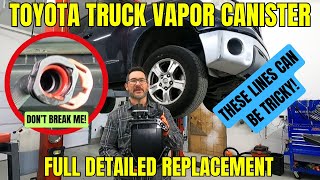
🎬 Watch this step-by-step Toyota truck vapor canister replacement guide.Will replacing the gas cap fix my EVAP code?
Sometimes, but not always. A loose or faulty gas cap can cause EVAP leak codes like P0442 or P0456. If your canister has failed, causing symptoms like difficulty fueling or a strong fuel smell, a new gas cap will not solve the problem.
Helpful Videos


Technical Specifications
OEM Part Numbers: 77740-0C060 77740-0C100 77740-0C130 77740-0C140 77740-0C050 77740-0C110 77704-0C070 77730-0C050 77740-0C120 77740-0C150
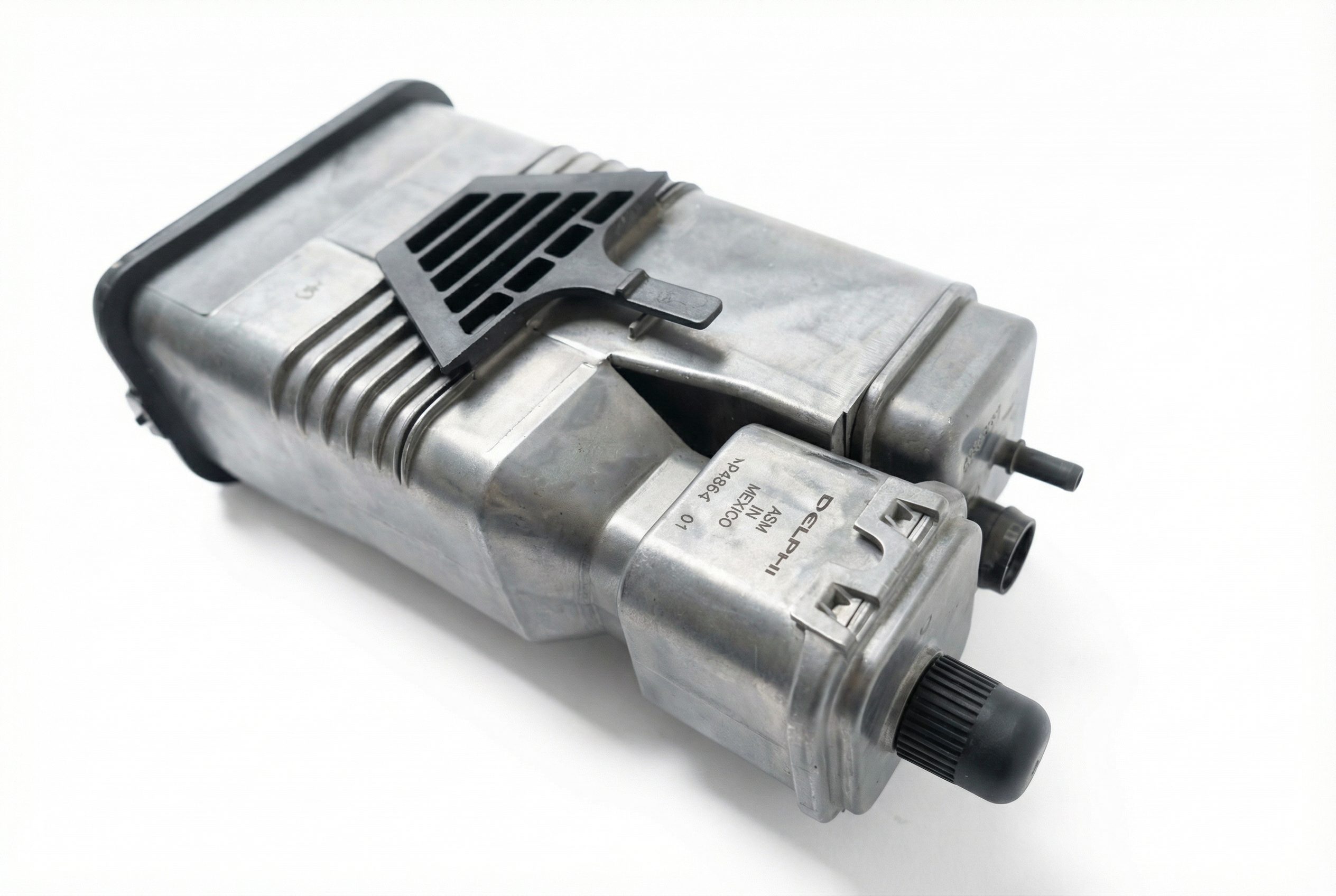
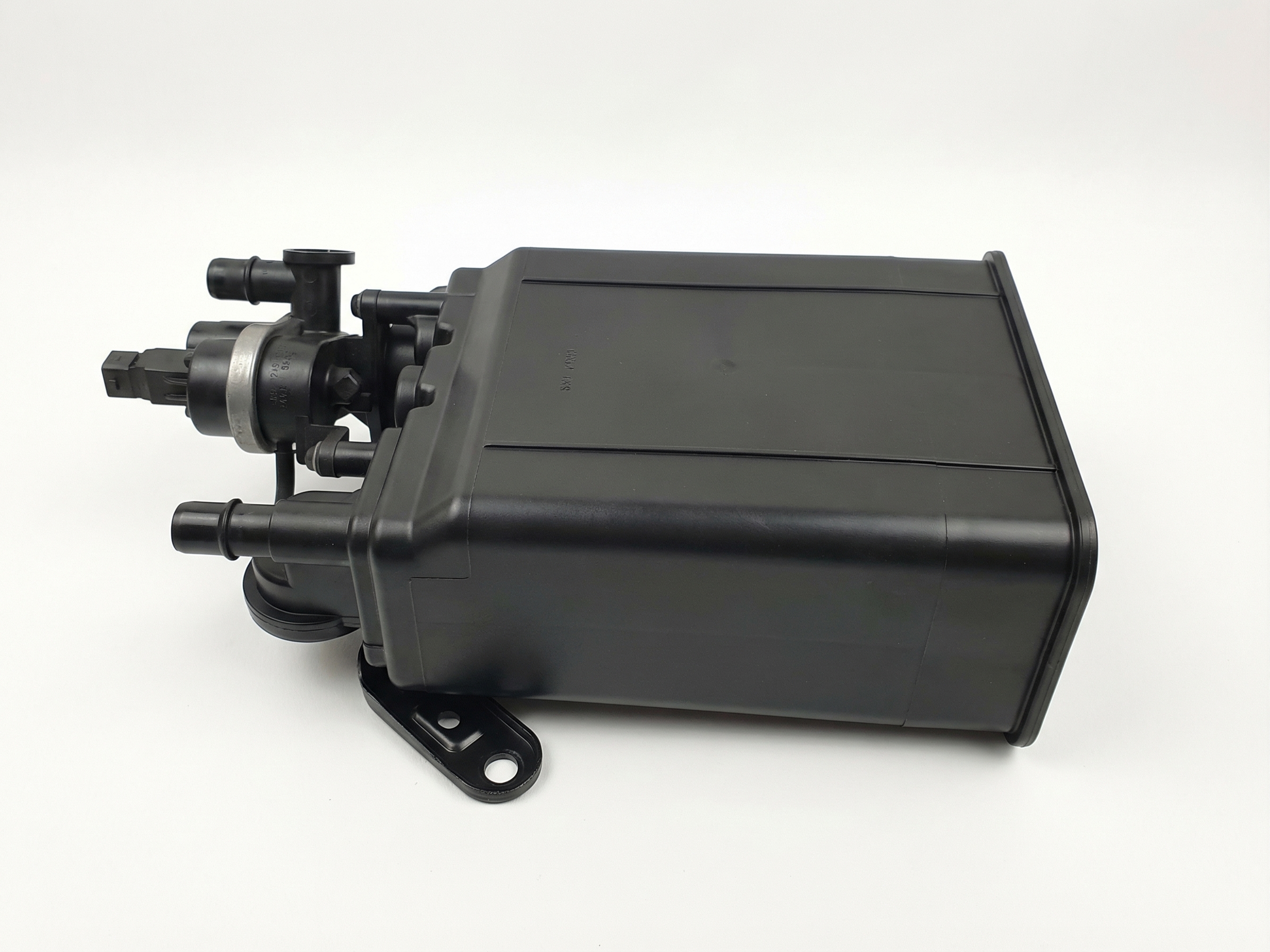
The part is located underneath the vehicle, mounted to the frame near the fuel tank. It is a black plastic box with multiple hose connections and potentially one or more electrical connectors.
We Have This Part in Stock


The information in this article is provided for general reference and educational purposes only. Vehicle specifications, procedures, and part compatibility can vary by production date, trim level, and region. Always consult your vehicle's factory service manual and verify part numbers before purchasing or performing repairs. Safety-critical components such as airbags, seat belts, and braking systems should be installed by a qualified professional.
- Toyota Sequoia:
- Toyota Tundra:
- 🎬 Helpful Videos
- 🛍️ Shop This Part
- Critical Compatibility Warnings: Read This First
- Symptoms of a Failing Vapor Canister
- Check Engine Light and OBD-II Codes
- Difficulty Refueling
- Fuel Smell
- Hissing Noise from Gas Cap
- Common Causes of Failure
- Buying a Used Vapor Canister: What to Look For
- Part Number and Vehicle Fitment Guide
- Cost Comparison
- Legal & Emissions Compliance
- Frequently Asked Questions (FAQ)
- 🎟️ Get 5% Off