

2022-2025 GR86 & BRZ Blind Spot Radar Failure: Diagnosis and Replacement Guide
This guide explains common failures, costs, and the critical calibration needs for the blind spot monitoring radar sensors on the Toyota GR86 and Subaru BRZ.
- This part is a radar sensor, not a camera, and it requires professional ADAS calibration after replacement.
- Failure is often indicated by a "Blind Spot Monitor Unavailable" message on the dash.
- A used OEM sensor is a viable option, but inspect it carefully for cracks and connector corrosion.
- The job is not DIY-friendly because of the mandatory and complex calibration procedure that requires special tools.
Identifying the Part: Radar Sensor vs. Video Camera
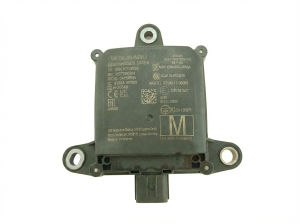
First, let's clear up a common point of confusion. The part responsible for the blind spot monitoring system is a radar sensor module, not a video camera. These sensors are located behind the left (driver-side) and right (passenger-side) corners of the rear bumper. The part numbers covered in this guide—Subaru's 87611CC001 and Toyota's SU00308762 and SU00310876—all refer to this radar sensor. While your car does have cameras for other systems (like Subaru's EyeSight), they are not involved in blind spot detection.
Compatibility Warning
Warning: These sensors are only compatible with vehicles originally equipped with Blind Spot Monitoring (BSM). For the Toyota GR86, this feature was standard on the Premium (GTS in some markets) trim but not available on the base model. The Subaru BRZ offered it on the Limited trim. You cannot add blind spot monitoring to a base model car simply by installing these sensors.
Common Symptoms of Failure
When a blind spot radar sensor fails, your vehicle will usually alert you with a specific message on the dashboard. Here are the most common symptoms:
- "Blind Spot Monitor Unavailable" or "Check BSM System" Message: This is the most direct indication of a problem. The system has run a self-check and detected a fault.
- Warning Light on Dash or Mirror: A persistent warning light related to the BSM or traction control system may illuminate.
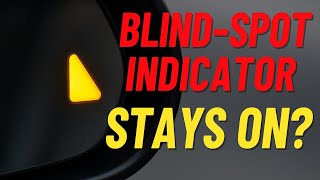
- BSM Light Stays On: The warning indicator on the side mirror may stay lit continuously, even when no car is present.
- No Alerts: The system may fail to detect vehicles entirely, providing no warnings when cars are in your blind spot.
- False Alerts: The system may alert you to a vehicle when none is there, or the light may flash erratically.
Often, the first thing to check is for simple obstructions. Dirt, mud, snow, or even heavy rain can block the sensor's view and cause a temporary error message. Always clean the rear bumper corners thoroughly before assuming the sensor has failed.
Known Issues, TSBs, and Recalls
As of early 2026, there are no specific recalls or widespread Technical Service Bulletins (TSBs) for blind spot sensor *failure* on the 2022-2025 Subaru BRZ and Toyota GR86. However, some related issues and general knowledge apply:
- DTC B2329: A Reddit user reported a Diagnostic Trouble Code (DTC) B2329, indicating an "incomplete radar alignment state." This occurred after a front-end accident, highlighting that system faults can arise even if the sensor itself isn't directly impacted.
- Heat-Related Issues: On other vehicle platforms, excessive heat has been known to cause temporary or permanent sensor failure. While not a documented widespread issue for the BRZ/GR86, it's a possibility in very hot climates if the bumper cover heats up significantly in direct sunlight. 🎬 Watch: How excessive heat can trigger blind spot sensor failures.
- Rear Turn Signal Recall (2022 Models): A recall (NHTSA #23V-609) was issued for some 2022 BRZ and GR86 vehicles for faulty rear turn signals that could fail in bright sunlight. This is unrelated to the blind spot sensors but involves the rear lighting assemblies in the same area of the car. 🎬 See this video for details on the 2022 model recall.
Buying a Used Blind Spot Radar Sensor
A used OEM sensor can be a great value, but it requires careful inspection. Since aftermarket options are virtually non-existent and often unreliable for ADAS components, a recycled OEM part is often the best alternative to an expensive new one.
What to Check Before Buying:
- Verify the Part Number: Match the part number exactly. While Subaru and Toyota parts are often interchangeable on this platform, it's safest to match your original part number (87611CC001 for Subaru, SU00308762 for Toyota).
- Inspect for Physical Damage: Look for cracks in the black plastic housing. Any crack can allow water inside, which will destroy the delicate electronics. This is a primary cause of failure.
- Check the Connector: The electrical connector pins should be clean, straight, and free of any green or white corrosion. Corrosion indicates water intrusion and the part should be considered faulty.
- Ask About the Donor Vehicle: If possible, find out the history of the car it came from. A sensor from a low-mileage, non-accident vehicle is always preferable. A sensor from a car with a rear-end collision is a major red flag.
Replacement and Calibration
Replacing the sensor is a multi-step process that requires both mechanical work and specialized electronic calibration.
1. Mechanical Installation: The rear bumper cover must be removed to access the sensor. The sensor itself is typically held by a few bolts to a bracket on the vehicle's body. While unbolting the old sensor and bolting on the new one is straightforward, the bumper removal adds significant time and complexity.
2. ADAS Calibration (Required): This is the most critical and difficult part of the job. A new or used sensor cannot simply be installed and expected to work. The system must be calibrated by a qualified technician using specialized equipment. This process involves:
- Connecting a diagnostic tool (like Toyota's Techstream) to the vehicle.
- Placing specific radar reflectors or targets at precise, measured distances and angles behind the vehicle.
- Running the calibration utility in the software, which tells the sensor how to aim itself and interpret the radar signals correctly for your specific car.
Warning: Skipping calibration will result in a non-functional system and persistent dashboard warnings. This is not a DIY-friendly procedure for most home mechanics due to the need for expensive and specialized ADAS calibration tools.
| Item | Estimated Cost |
|---|---|
| New OEM Sensor | $470 - $700 |
| Used OEM Sensor | $150 - $300 |
| Shop Labor (Replacement & Bumper R&R) | $200 - $400 |
| Shop Labor (ADAS Calibration) | $250 - $500 |
| Total (New Part, Professional Install) | $920 - $1600 |
| Total (Used Part, Professional Install) | $600 - $1200 |
Frequently Asked Questions
Can I replace the blind spot sensor myself?
While you might be able to physically swap the part if you are comfortable removing the rear bumper, you will still need to take the vehicle to a dealership or a qualified auto shop for the mandatory ADAS calibration. For this reason, it is not considered a fully DIY-feasible job.
Is the Subaru BRZ sensor the same as the Toyota GR86 sensor?
Yes, the parts are physically the same and interchangeable. They are built in the same factory and share the same core components. However, it is always best practice to match the OEM part number from your specific vehicle when sourcing a replacement.
Why did my blind spot monitor stop working after a minor accident?
Even a small impact to the rear bumper can knock the sensor out of alignment, causing the system to shut down and display an error. The sensor's mounting bracket could be bent, or the sensor itself could have internal damage. Any repair involving the rear bumper or quarter panel area may require a sensor recalibration.
Can I drive with a broken blind spot sensor?
Yes, the vehicle is safe to drive. A faulty blind spot sensor will not affect the engine, brakes, or steering. However, you will not have the benefit of the Blind Spot Monitoring or Rear Cross-Traffic Alert safety systems, so you must rely solely on your mirrors and shoulder checks when changing lanes or reversing.
Helpful Videos
![The First RECALL [GR86·BRZ]](https://img.youtube.com/vi/pX5fYZDQgMw/mqdefault.jpg)
Technical Specifications
OEM Part Numbers: 87611CC001 SU00308762 SU00310876
Microwave radar sensor for Blind Spot Monitoring (BSM) and Rear Cross-Traffic Alert (RCTA) systems. Requires professional ADAS calibration after installation.
We Have This Part in Stock

The information in this article is provided for general reference and educational purposes only. Vehicle specifications, procedures, and part compatibility can vary by production date, trim level, and region. Always consult your vehicle's factory service manual and verify part numbers before purchasing or performing repairs. Safety-critical components such as airbags, seat belts, and braking systems should be installed by a qualified professional.
- Subaru BRZ:
- Toyota GR86:
- 🎬 Helpful Videos
- 🛍️ Shop This Part
- Identifying the Part: Radar Sensor vs. Video Camera
- Compatibility Warning
- Common Symptoms of Failure
- Known Issues, TSBs, and Recalls
- Buying a Used Blind Spot Radar Sensor
- What to Check Before Buying:
- Replacement and Calibration
- Frequently Asked Questions
- 🎟️ Get 5% Off