

2011-2024 Dodge Durango Wheel Bearing: Noises, Diagnosis, and Replacement Costs
This guide explains the common humming and growling noises from a failing wheel bearing on your Durango and what to know before buying a replacement.
- The most common symptom of failure is a humming or growling noise that gets louder with speed and changes pitch when turning.
- The front wheel bearings are bolt-in hub assemblies, while the rear bearings are press-in style, requiring special tools.
- A failing bearing can trigger the ABS/ESC warning light because the wheel speed sensor is integrated into the hub assembly.
- Driving on a bad wheel bearing is dangerous and can lead to wheel separation from the vehicle.
Symptoms of a Failing Wheel Bearing


A bad wheel bearing is not just noisy; it's a safety issue that gets progressively worse. The most common sign is a noise coming from one of the corners of your vehicle. Ignoring these symptoms can eventually lead to the wheel separating from the vehicle.
1. Humming, Growling, or Roaring Noise
This is the classic symptom of a bad wheel bearing. The noise is often described as a hum, roar, or growl that starts faint and gets louder over time. The sound will change with your vehicle's speed—the faster you go, the louder it gets. A key diagnostic trick is to pay attention to the noise while turning. If you turn right and the noise gets louder, the bad bearing is likely on the left side (the side bearing more weight). If you turn left and it gets louder, the problem is likely on the right side.
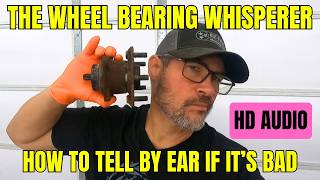
🎬 Watch: Hear exactly what a failing bearing sounds like while driving.2. Vibration in the Steering Wheel
As the bearing wears out, it can cause excessive play in the wheel, leading to a vibration you can feel in the steering wheel. This vibration may come and go, and it often gets worse as you accelerate.
3. Loose or Unresponsive Steering
A severely worn bearing can make the steering feel loose or less precise. Your Durango might feel like it's pulling to one side, which can sometimes be mistaken for an alignment issue.
4. ABS or Stability Control Warning Light
The 2011-2024 Dodge Durango uses a wheel hub assembly that contains the wheel speed sensor for the Anti-lock Braking System (ABS) and Electronic Stability Control (ESC). When the bearing fails, it can create excessive movement or damage the sensor's magnetic encoder ring, triggering a warning light on your dashboard. If you have an ABS light along with a humming noise, a bad wheel bearing is a likely culprit.
Diagnosing a Bad Wheel Bearing

You can perform a simple physical check to confirm a bad wheel bearing.
- Safely raise the vehicle so the suspect wheel is off the ground and support it with a jack stand.
- Check for wheel play. Grab the tire at the 12 and 6 o'clock positions and try to wiggle it back and forth. Then, grab it at the 3 and 9 o'clock positions and do the same. There should be no noticeable movement or clunking. Any play suggests a worn bearing.
- Spin the wheel. Turn the wheel by hand and listen for grinding or scraping noises. You can also place a hand on the coil spring or suspension knuckle to feel for roughness or vibration as the wheel spins. A good bearing will be smooth and silent.
Known Issues, TSBs, and Recalls

While widespread, systemic issues are not commonly reported, some owners have experienced premature wheel bearing failure. There have been no major safety recalls specifically for wheel bearing failure on the 2011-2024 Durango. However, Technical Service Bulletin (TSB) #9002877 was issued on March 27, 2013, for rear bearing noise, advising technicians to follow an updated diagnostic procedure before replacing the part. A separate recall (24V-794) for some 2025 model year vehicles from a sister brand noted that damaged wheel bearing encoder rings during assembly could disable the ESC system, highlighting the sensor's importance.
Pro Tip: The front wheel bearings are the same for both Rear-Wheel Drive (RWD) and All-Wheel Drive (AWD) models. However, the rear bearings are different. The front and rear bearings are also not interchangeable. Always verify the correct part for your specific vehicle configuration.
Buying a Used Wheel Bearing Assembly
While buying a used wear-and-tear item like a wheel bearing is not typically recommended, it can be a cost-effective option if the part is sourced as a complete, low-mileage steering knuckle or hub assembly from a reputable recycler. The main advantage is getting a high-quality Original Equipment (OEM) part for a fraction of the new price.
What to Inspect:
- Mileage Verification: The most crucial factor. Only consider assemblies from vehicles with low, verified mileage. A bearing from a 30,000-mile vehicle is a much better bet than one from a 150,000-mile vehicle.
- Physical Inspection: Check the assembly for any signs of impact, heavy corrosion, or damage. Pay close attention to the ABS sensor wire and connector—ensure it is intact and not cut or frayed.
- Bearing Play Check: Even on a used part, perform the wiggle test. There should be zero play in the bearing. Spin the hub by hand; it should be smooth and silent. If you feel any roughness, grinding, or notchiness, reject the part.
- Studs and Mounting Points: Inspect the wheel studs for any thread damage. Check the mounting holes to ensure they are not elongated or damaged.
An OEM used bearing assembly from a low-mileage donor car is often a better choice than a brand-new, cheap aftermarket part. Inexpensive aftermarket bearings are known for premature failure, sometimes in less than a year.
Cost Comparison for One Wheel Bearing Replacement
| Part/Service | Estimated Cost |
|---|---|
| New OEM (Mopar) | $180 - $270 (part only) |
| New Aftermarket | $85 - $520 (part only) |
| Used OEM | $50 - $150 (part only) |
| Shop Labor | $95 - $519 |
| Total Professional Replacement | $402 - $834 |
FAQ
Do I have to replace the whole hub or can I just press in a new bearing?
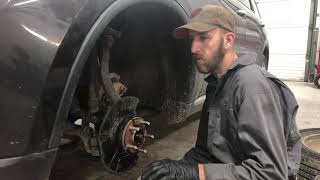
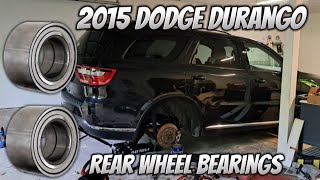
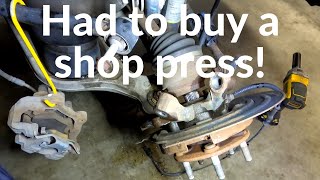
For the 2011-2024 Dodge Durango, the front wheel bearings are sold as a complete, sealed hub assembly 🎬 Watch this walkthrough of a front wheel hub and brake replacement. that bolts on. The rear bearings, however, are typically pressed into the knuckle. Replacing a press-in bearing requires a hydraulic press and specialized tools, making it a more difficult job 🎬 See how to replace rear bearings without using a hydraulic press. than replacing the bolt-on front hubs.
Is the front wheel bearing different from the rear? Is AWD different from RWD?
Yes, front and rear bearings are different and not interchangeable. For the front axle, the same wheel hub assembly is used for both All-Wheel Drive (AWD) and Rear-Wheel Drive (RWD) models. For the rear axle, the bearings are different for AWD and RWD models.
How long should a wheel bearing last on a Dodge Durango?
Under normal conditions, a wheel bearing should last 100,000 miles or more. However, factors like hitting potholes, curb impacts, or driving with oversized wheels can cause them to fail sooner. Some owners have reported failures at much lower mileages.
What happens if I don't replace a bad wheel bearing?
Continuing to drive on a bad wheel bearing is extremely dangerous. The noise and vibration will get worse, and the excessive heat generated can damage the hub, spindle, and braking components. In a worst-case scenario, the bearing can completely fail, causing the wheel to wobble severely or detach from the vehicle while driving.
Helpful Videos
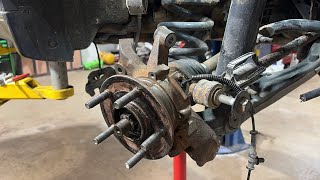
Technical Specifications
OEM Part Numbers: 52124768AB 4779612AD 4779612AE 4779612AC 68306998AB
The 2011-2024 Durango uses a sealed wheel hub assembly for the front wheels and a press-in bearing for the rear. The assembly includes an integrated ABS sensor.
We Have This Part in Stock

The information in this article is provided for general reference and educational purposes only. Vehicle specifications, procedures, and part compatibility can vary by production date, trim level, and region. Always consult your vehicle's factory service manual and verify part numbers before purchasing or performing repairs. Safety-critical components such as airbags, seat belts, and braking systems should be installed by a qualified professional.
- Dodge Durango:
- 🎬 Helpful Videos
- 🛍️ Shop This Part
- Symptoms of a Failing Wheel Bearing
- 1. Humming, Growling, or Roaring Noise
- 2. Vibration in the Steering Wheel
- 3. Loose or Unresponsive Steering
- 4. ABS or Stability Control Warning Light
- Diagnosing a Bad Wheel Bearing
- Known Issues, TSBs, and Recalls
- Buying a Used Wheel Bearing Assembly
- What to Inspect:
- Cost Comparison for One Wheel Bearing Replacement
- FAQ
- 🎟️ Get 5% Off