

2004-2009 Cadillac XLR & XLR-V Wheels: Avoiding Mismatches and Damage
This guide covers the critical differences between the standard 18-inch and XLR-V 19-inch wheels, including specs, common issues, and how to inspect a used one.
- The base Cadillac XLR uses 18-inch 7-spoke wheels, while the XLR-V uses 19-inch 10-spoke wheels; they are NOT interchangeable due to brake clearance.
- The most common failure is cosmetic: the clear coat on polished wheels peels and causes corrosion. This can be fixed by professional refinishing.
- When buying used, check meticulously for cracks (especially on the inner barrel), bends, and signs of previous weld repairs.
- All XLR models use a 5x120.65mm bolt pattern and require a lug nut torque of 100 ft-lbs.
Variant Differences: Base vs. XLR-V Wheels
The most significant issue when replacing a Cadillac XLR wheel is ensuring you have the correct one for your model. The standard (base) XLR and the high-performance XLR-V use different wheel sizes. These wheels are not interchangeable.
Warning: A 19-inch XLR-V wheel will not fit a standard base model XLR, and an 18-inch base model wheel will not fit an XLR-V. The XLR-V features larger brakes that require the clearance of the larger 19-inch wheel.
| Feature | Standard Cadillac XLR (2004-2009) | Cadillac XLR-V (2006-2009) |
|---|---|---|
| Diameter | 18 inches | 19 inches |
| Width | 8.0 inches | 8.5 inches |
| Style | 7-spoke | 10-spoke |
| Available Finishes | Polished, Chrome, Silver Painted | Powder Coat Hyper Silver, Chrome |
| Known Part Numbers | 9595252, 9595386, 9595622 | 9595790, 9595792, 9595793 |
How to Identify Finishes
Since these wheels were offered in multiple finishes that can look similar when dirty, it's important to know what you have. There is no specific paint code for wheels like there is for a car's body. Identification is visual.
- Polished: A very bright, mirror-like finish, but without the deep, liquid reflection of chrome. Polished wheels have a protective clear coat.
- Chrome: A deep, highly reflective, mirror-like surface. It has a slightly darker, bluer tint compared to polished aluminum.
- Hyper Silver: A bright silver paint that uses metallic flakes to create depth. It looks like a high-quality silver paint, not a raw metal finish.
Technical Specifications
Understanding wheel specifications is key to ensuring proper fitment and safety. Using a wheel with the wrong offset can cause tire rubbing or premature wear on wheel bearings.
| Specification | Value |
|---|---|
| Bolt Pattern (PCD) | 5x120.65mm (also commonly listed as 5x4.75 inches) |
| Center Bore | 70.3 mm |
| Offset | ~61mm |
| Lug Nut Thread Size | 12x1.50 |
| Lug Nut Torque | 100 ft-lbs |
Pro Tip: When tightening lug nuts, always use a torque wrench and tighten them in a star pattern to ensure the wheel is seated evenly against the hub. It's also recommended to re-torque the lug nuts after about 50 miles of driving.
Known Issues, Recalls, and TSBs
While the wheels themselves have not been the subject of major recalls, there are related issues and common problems to be aware of.
- Clear Coat Peeling: The most common issue with the polished factory wheels is the peeling or delamination of the protective clear coat. This allows moisture and air to reach the aluminum underneath, causing a milky or white corrosion. This is a cosmetic issue and does not typically affect the structural integrity of the wheel.
- Vibrations: A vibration or shimmy felt in the steering wheel, especially at highway speeds, can be a sign of a bent or out-of-round wheel. This can also be caused by improper tire balancing, so it's important to have a shop check both.
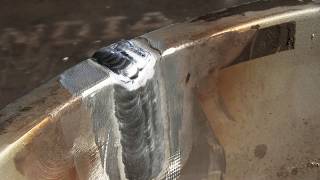
- Slow Air Leaks: A hairline crack in the wheel, often on the inner barrel, can cause 🎬 Watch: How professional welding can repair a cracked aluminum wheel a slow, persistent air leak that is difficult to diagnose. If a tire continually loses air without an obvious puncture, the wheel itself should be inspected carefully.
- NHTSA Recall 04V382000 (04043): This recall was for an improper lower control arm ball stud nut that could loosen. While not a wheel defect, if the ball joint separated, it could lead to a loss of control and potential wheel assembly separation. Dealers were to inspect the torque and replace components if necessary.
Buyer's Guide: Inspecting a Used Cadillac XLR Wheel
Buying a used OEM wheel is a great way to save money, but careful inspection is crucial to avoid buying a damaged or incorrect part.
- Verify Size and Style: First, confirm you are buying the correct diameter (18" for base, 19" for XLR-V) and spoke count (7 for base, 10 for XLR-V).
- Check for Cracks: Inspect the entire wheel, front and back, for hairline cracks. Pay close attention to the area where the spokes meet the outer rim and around the lug nut holes.
- Look for Bends: Place the wheel on a flat surface and check the inner and outer lips for any visible bends or flat spots. A bent wheel will be difficult or impossible to balance and will cause vibrations.
- Inspect for Repairs: Look for signs of previous repairs, such as welding marks (often visible as cleaner, discolored lines on the back of the wheel), grinding marks, or fresh paint that might be hiding damage.
- Assess the Finish: For polished wheels, check for peeling or bubbling clear coat. For chrome wheels, look for pitting, flaking, or curb rash that has damaged the chrome layer. Minor curb rash can often be refinished, but severe damage may not be repairable.
Cost of Replacement & Refinishing
The cost to replace or repair a Cadillac XLR wheel can vary significantly based on the source and condition.
| Item | Estimated Cost |
|---|---|
| New OEM (Dealer) | $800 - $1200+ per wheel |
| New Aftermarket Replica | $200 - $400 per wheel |
| Used OEM | $150 - $350 per wheel, depending on condition and finish |
| Reconditioned OEM | $275 - $520 per wheel |
| Wheel Refinishing (Curb Rash/Peeling Clear Coat) | $100 - $250 per wheel |
| Shop Labor (Mount & Balance) | $25 - $50 per wheel |
Frequently Asked Questions (FAQ)
Can I put 19-inch XLR-V wheels on my base model XLR?
No. While the bolt pattern is the same, the larger wheels are designed to clear the bigger brakes on the XLR-V model. They may not fit properly on a base model and are not recommended.
My polished wheels have a peeling, cloudy finish. Can this be fixed?
Yes. This is a common problem caused by the clear coat failing. A professional wheel refinishing service can strip the old clear coat, re-polish the aluminum, and apply a new, durable powder clear coat. This typically costs between $150 and $250 per wheel.
Is a bent wheel safe to drive on?
It is not recommended. A bent wheel can cause unsafe vibrations, lead to uneven tire wear, and may compromise the structural integrity of the wheel, increasing the risk of failure.
Why is my tire always losing air but there's no nail in it?
This could be due to a few reasons: a poor seal between the tire and the wheel bead, a faulty TPMS sensor seal, or a hairline crack in the wheel itself. A tire shop can submerge the wheel and tire in a water tank to pinpoint the source of the leak.
Helpful Videos
Technical Specifications
OEM Part Numbers: 9595252 9595386 9595622 9595790 9595792 9595793
Bolt Pattern: 5x120.65mm (5x4.75"); Center Bore: 70.3mm; Offset: ~61mm; Lug Nut Torque: 100 ft-lbs.

The information in this article is provided for general reference and educational purposes only. Vehicle specifications, procedures, and part compatibility can vary by production date, trim level, and region. Always consult your vehicle's factory service manual and verify part numbers before purchasing or performing repairs. Safety-critical components such as airbags, seat belts, and braking systems should be installed by a qualified professional.
- CADILLAC XLR: