

2002-2005 Ram 1500 20-Inch Wheel: Solving Clear Coat Peeling and Finish Confusion
This guide explains the common issue of peeling clear coat on the 20-inch polished aluminum wheels and clarifies how to distinguish them from the chrome-clad version to ensure you buy the right part.
- The biggest issue for buyers is confusing the 20-inch polished aluminum wheel with the chrome-clad version; check for a fuzzy reflection (polished) vs. a mirror reflection (chrome).
- The primary failure on polished wheels is the clear coat peeling, which leads to cosmetic corrosion but can also cause air leaks if it reaches the bead seat.
- When buying used, check for cracks around lug holes, bends by laying it on a flat surface, and corrosion on the bead seat area.
- The correct bolt pattern is 5x139.7mm (5x5.5") and the lug nut torque spec is a critical 120-150 ft-lbs, which should be re-checked after 25-50 miles.
Key Differences: Polished vs. Chrome-Clad Wheels
One of the biggest points of confusion for 2002-2005 Ram 1500 owners is the 20-inch wheel option. Two visually similar but functionally different versions were available: polished aluminum and chrome-clad. Choosing the wrong one can be a costly mistake.
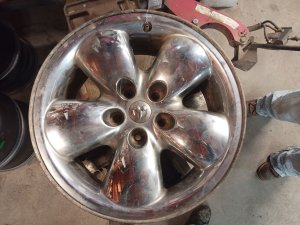
- Polished Aluminum (OEM Part # 52110166AD and others): This is a solid aluminum wheel that has been polished to a high shine and then covered with a protective clear coat. Its reflection is bright but slightly fuzzy or hazy. This is the wheel that is known for the clear coat peeling and corroding underneath.
- Chrome-Clad: This wheel has a permanently bonded chrome-plated plastic cover (a 'cladding' or 'skin') over the face of an underlying aluminum wheel. It has a deep, mirror-like reflection, similar to a chrome bumper. If the chrome is peeling, you may see the plastic underneath. These are generally more resistant to corrosion until the chrome layer is damaged.
Pro Tip: To quickly tell the difference, look at your reflection in the wheel. If it's a sharp, clear, mirror image, you have chrome-clad wheels. If the reflection is bright but blurry, you have polished aluminum wheels.
Symptoms of a Damaged or Failing Wheel
Wheel problems can manifest in several ways, ranging from cosmetic flaws to serious safety hazards.
- Vibration or Shaking: A bent wheel will cause a noticeable vibration or shake, especially at highway speeds. This can feel similar to an unbalanced tire, but it won't go away after a re-balance. This can also put stress on wheel bearings and suspension components.
- Slow Air Leaks: Corrosion or pitting on the bead surface (where the tire seals against the wheel) can cause a slow, persistent loss of tire pressure. Cracks in the wheel, which can be microscopic, will also cause leaks.
- Visible Damage: Obvious signs include cracks (especially around the lug nuts or spokes), bends or dents from pot holes or curb impacts, and significant corrosion.
- Peeling Finish: The most common issue with the polished aluminum wheels is the protective clear coat failing, bubbling, and peeling away. This exposes the raw aluminum to moisture and road salt, causing white, chalky corrosion underneath.
Known Issues, Recalls, and TSBs for 2002-2005 Ram 1500 Wheels
While there are no major recalls specifically for the wheels cracking or failing, there are common problems and one related recall to be aware of.
- Clear Coat Failure: The most prevalent issue with the 20-inch polished aluminum wheels is the failure of the factory clear coat. Owners frequently report it bubbling, flaking, or peeling, which leads to unsightly aluminum corrosion. This is often triggered by rock chips or exposure to road salt and harsh chemicals.
- NHTSA Recall #04V285000 (D24): This recall from May 2004 affects a small number of 2004 Ram 1500/2500 trucks. The issue was an incorrect certification label on the door jamb that listed the wrong tire/rim size and inflation pressure. This did not involve a defect in the wheel itself, but the information related to it. Owners were sent a corrected label to apply themselves.
- Rear Axle Pinion Nut Recall: Some 2005 Ram 1500 models were recalled because the rear axle pinion nut could loosen. While not a wheel issue directly, the resulting axle problems could cause rear-end vibration or noise that might be mistaken for a wheel or tire problem.
Warning: A peeling clear coat is more than just a cosmetic issue. Once moisture gets underneath, it can cause corrosion on the bead seat area, leading to slow air leaks and potential tire de-beading in extreme cases.
Buying a Used 20-Inch Ram 1500 Wheel
A used OEM wheel is often a better choice than a cheap aftermarket replacement due to superior material quality and fitment. However, careful inspection is crucial.
- Verify the Finish: First, confirm if you need a polished or chrome-clad wheel using the reflection test mentioned earlier. They are not interchangeable in appearance.
- Check for Bends: Lay the wheel on a flat, level surface. Check the front and back lip for any wobbling or gaps. Even a small bend can cause a major vibration.
- Inspect for Cracks: Carefully examine the entire wheel, front and back. Pay close attention to the area around the lug nut holes and where the spokes meet the rim. A small crack can quickly become a catastrophic failure.
- Examine the Bead Seat: Look at the inner and outer edges where the tire seals. Check for deep corrosion, pitting, or any damage that could prevent the tire from sealing properly.
- Look for Repairs: Be wary of wheels that show signs of welding, grinding, or excessive paint. These could be attempts to hide a previous crack or major damage.
- Assess the Finish: For polished wheels, check the condition of the clear coat. Is it peeling or bubbling? Minor peeling can be refinished, but widespread failure will be more expensive to fix. For chrome-clad wheels, check for peeling or bubbling chrome, which can expose the plastic underneath and is difficult to repair.
Technical Specifications
| Specification | Value |
|---|---|
| Fits Vehicles | 2002-2005 Dodge Ram 1500 Pickup |
| Size | 20x9 inches |
| Bolt Pattern | 5 x 139.7 mm (5 x 5.5 inches) |
| Offset | ~ +19mm to +20mm (Positive) |
| Center Bore | 77.8 mm |
| Lug Nut Torque | 120-150 ft-lbs for cone-type nuts |
| OEM Part Numbers | 52110166AB, 52110166AD, 52110356AA, 52110356AB, 52110356AC, 52113153AA, 5HK22PAKAD, M82208430 |
What happens if the offset is wrong? The offset determines how far the wheel sits in or out of the fender. Using a wheel with the wrong offset can cause the tire to rub against the suspension or fender, especially during turns. It also changes the suspension geometry, which can lead to premature wear on wheel bearings and other suspension parts.
Cost Comparison
| Part Type | Estimated Cost (per wheel) |
|---|---|
| New OEM | $850 - $1300 |
| New Aftermarket | $250 - $500+ |
| Used OEM | $150 - $350 |
| Wheel Refinishing (Polished) | $150 - $250 |
| Shop Labor (Swap Tire) | $25 - $50 per wheel |
Frequently Asked Questions (FAQ)
Can I fix the peeling clear coat on my polished wheels?
Yes. The process involves chemically stripping the old clear coat, sanding the corrosion off the aluminum, and then either re-polishing and clear-coating or painting the wheel. A professional refinishing service for a polished wheel typically costs between $150 and $250. DIY kits are available but require significant labor to achieve good results.
Is a bent wheel safe to drive on?
No. A bent wheel is a safety hazard. It compromises the seal with the tire, can cause dangerous vibrations that affect control, and puts excessive strain on your wheel bearings and suspension. Some minor bends can be professionally repaired, but a severely bent or cracked wheel must be replaced.
Why are my chrome-clad wheels peeling?
The 'chrome' on a chrome-clad wheel is a thin layer of chrome plating over a plastic cover that is bonded to the wheel. Impacts from road debris or curb rash can chip this plating, allowing moisture to get underneath. This causes the chrome to bubble and peel away from the plastic cladding. Unlike polished wheels, this is very difficult to repair, and replacement is usually the only option.
Do I need to re-torque my lug nuts after installing a wheel?
Yes, this is a critical safety step. After installing a wheel, you should drive about 25-50 miles and then re-torque the lug nuts to the specified 120-150 ft-lbs. This ensures the wheel has seated properly and the lug nuts have not loosened.
Technical Specifications
OEM Part Numbers: 52110166AB 52110166AD 52110356AA 52110356AB 52110356AC 52113153AA 5HK22PAKAD M82208430
Size: 20x9", Bolt Pattern: 5x139.7mm (5x5.5"), Offset: +19mm to +20mm, Center Bore: 77.8mm, Lug Nut Torque: 120-150 ft-lbs.
We Have This Part in Stock

The information in this article is provided for general reference and educational purposes only. Vehicle specifications, procedures, and part compatibility can vary by production date, trim level, and region. Always consult your vehicle's factory service manual and verify part numbers before purchasing or performing repairs. Safety-critical components such as airbags, seat belts, and braking systems should be installed by a qualified professional.
- Dodge Ram 1500 Pickup: