

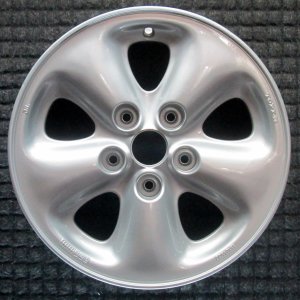
1990-2002 Mazda 626, MX-6 & Ford Probe Wheel Guide: Decoding the 16-inch 'Curved Spoke' Wheel
This guide covers the shared 16-inch alloy wheels for the Mazda 626, MX-6, and Ford Probe, explaining compatibility, specs, and how to inspect a used one.
- This 5-lug wheel fits 1993-97 Mazda MX-6/626/Ford Probe and 1998-2002 Mazda 626. It does NOT fit 1990-92 models.
- When buying used, your highest priority is checking for cracks around the spokes and lug holes. A cracked wheel is unsafe and cannot be reliably repaired.
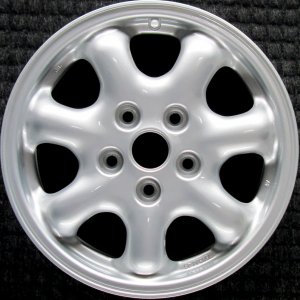
- Verify the wheel style on a Ford Probe; this guide covers the 'curved spoke' design, but a 'straight spoke' version also exists.
- Using a wheel with the wrong offset can cause tire rubbing, poor handling, and premature wear on wheel bearings.
Quick Reference Specifications
These specifications apply to the 5-lug wheels found on the 1993-1997 Mazda MX-6, 1993-2002 Mazda 626, and 1993-1997 Ford Probe.
| Specification | Measurement |
|---|---|
| Bolt Pattern (PCD) | 5x114.3 mm (also known as 5x4.5 inches) |
| Center Bore | 67.1 mm |
| Wheel Size | 16x7 inches (for the specific wheel in this guide) |
| Factory Offset | Approximately +40mm to +50mm |
| Lug Nut Thread | M12x1.5 |
Vehicle Fitment and Compatibility
Understanding which vehicles share these wheels can be confusing because of overlapping platforms. Here’s a breakdown:
- Direct Interchange (GE Platform): The 1993-1997 Mazda MX-6, 1993-1997 Mazda 626, and 1993-1997 Ford Probe were all built on the Mazda GE platform. They share the same suspension and hub design, making their wheels directly interchangeable.
- Compatible (GF Platform): The 1998-2002 Mazda 626 was built on the updated GF platform, but it retained the same 5x114.3 bolt pattern and 67.1mm center bore, making these wheels compatible.
Warning: This guide does NOT apply to 1990-1992 Mazda 626 and MX-6 models. Those earlier cars were built on the 'GD' platform and typically used a 4-lug bolt pattern, which is incompatible with these 5-lug wheels.
Ford Probe: Curved vs. Straight Spokes
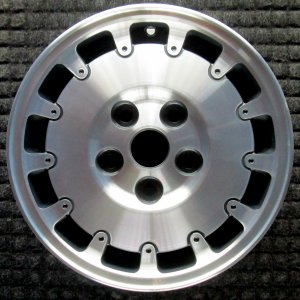
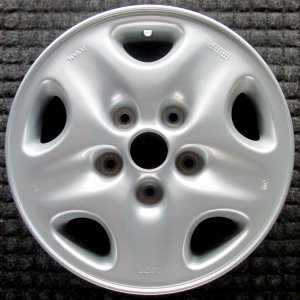
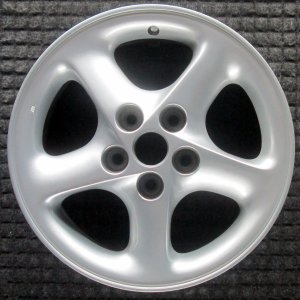
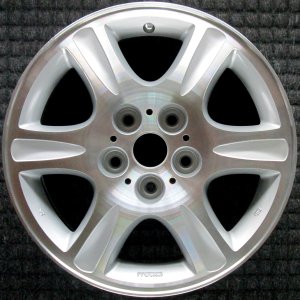
The Ford Probe GT was available with two different 16-inch wheel styles. This guide focuses on the popular 'curved spoke' or 'swirl' design. Ford also offered a 'straight spoke' 5-star design. Before purchasing, verify which style you have or need, as they are not visually the same.
Symptoms of a Damaged Wheel
Wheel problems can be subtle or dramatic. It's important to distinguish between a bad wheel and a bad wheel bearing, which can have similar symptoms like noise and vibration.
- Vibration or Shaking: A bent wheel will cause a noticeable vibration that gets worse with speed. You may feel it in the steering wheel if a front wheel is bent, or in the seat if it's a rear wheel.
- Difficulty Balancing: If a tire shop tells you a wheel requires an excessive amount of weight to balance, it's likely bent or out-of-round.
- Visible Wobble: When raised off the ground, a spinning wheel with a significant bend will have a visible wobble.
- Constant Air Loss: A slow leak in a tire that can't be explained by a puncture could be caused by a hairline crack in the wheel or corrosion on the bead seat where the tire seals against the rim.
- Visible Damage: Obvious cracks, especially around the lug nuts or spokes, and large bent sections on the inner or outer lip are clear signs of failure.
Pro Tip: A humming or grinding noise that changes pitch when you turn is a classic sign of a bad wheel bearing, not necessarily the wheel itself. If the noise gets louder when turning right, the bad bearing is likely on the left side, and vice-versa.
Buying a Used OEM Wheel: What to Inspect
Since new OEM wheels for these models are discontinued, buying a quality used wheel is the most common repair path. A thorough inspection is critical for your safety. Used OEM wheels are often a better choice than cheap aftermarket alternatives due to superior metallurgy and guaranteed fitment.
1. Check for Cracks
This is the most important safety check. A cracked wheel is junk. Use a flashlight and inspect the entire wheel, paying close attention to:
- The area around each lug nut hole.
- Where the spokes meet the center hub.
- Where the spokes meet the outer barrel.
- The inner and outer lip of the wheel.
Hairline cracks can be hard to see, especially if the wheel is dirty. Clean the wheel first for a proper inspection.
2. Check for Bends
Lay the wheel on a flat surface and check for any gaps under the lip. Roll it across a flat concrete floor and watch for any wobble. Pay attention to both the inner (back) and outer (front) lip, as damage to the inner lip is common and harder to spot.
3. Look for Previous Repairs
Be wary of wheels that have been repaired. Look for signs like:
- Welding marks: Freshly ground aluminum or discoloration on the back of a spoke or barrel could indicate a crack repair. Welded aluminum wheels can be unpredictable and may fail without warning.
- Excessive paint or filler: Thick, uneven paint or body filler can hide serious damage.
4. Inspect Cosmetic Condition
Cosmetic issues are less critical but affect value.
- Curb Rash: Scrapes and gouges on the outer lip are common. Minor rash is cosmetic, but deep gouges can create stress points that may lead to cracks.
- Clear Coat Failure: Peeling or yellowing clear coat is common on older wheels. This is purely cosmetic and can be fixed by refinishing.
- Corrosion: Check the bead seat area (where the tire seals) for heavy corrosion or pitting, which can cause slow air leaks.
Known Issues, Recalls, and TSBs
There are no specific NHTSA recalls or widespread Technical Service Bulletins (TSBs) for wheel failure on the 1990-1997 Mazda MX-6, 1990-2002 Mazda 626, or 1993-1997 Ford Probe. Recalls issued for these vehicles pertain to other components like ignition switches, timing belt tensioners, and fuel filters.
Compact Spare Wheel Warning: The initial data for this article mentioned a compatibility issue with compact spare wheels on certain models. For 1998-2002 Mazda 626 models, it is noted that some compact spare wheels are only compatible with vehicles NOT equipped with ABS brakes. Always verify the specific application of a compact spare before use.
The Importance of Correct Offset
Offset is the distance in millimeters from the wheel's mounting surface to its centerline. Using a wheel with the wrong offset can cause serious problems.
- Too much positive offset (tucked in too far) can cause the tire or wheel to hit suspension components or brake calipers.
- Too much negative offset (pushed out too far) can cause the tire to rub on the fender, especially during turns or suspension compression.
- Incorrect offset of any kind changes the suspension geometry and scrub radius, which can lead to unstable handling, increased steering effort, and premature wear on wheel bearings and suspension parts.
Cost Comparison
Replacing a damaged wheel involves several potential costs. Here are typical price ranges:
| Item | Estimated Cost (per wheel) |
|---|---|
| New OEM | Discontinued / Not Available |
| Used OEM (Salvage/eBay) | $100 - $220 |
| New Aftermarket Replica | $150 - $250 |
| Remanufactured OEM | $200 - $250 |
| Wheel Refinishing (Cosmetic) | $80 - $150 |
| Wheel Repair (Bent/Cracked) | $150 - $400 (Cracked wheel repair is not recommended for safety) |
| Shop Labor (Mount & Balance) | $15 - $60 |
Frequently Asked Questions (FAQ)
Can I repair a cracked aluminum wheel?
While it is technically possible to weld a cracked aluminum wheel, it is strongly discouraged for safety reasons. The heat from welding alters the temper of the aluminum, creating a weak spot that can fail catastrophically. A cracked wheel should be replaced.
Will a wheel from a Ford Probe fit my Mazda 626?
Yes, if both cars are from the 1993-1997 model years, the wheels are directly interchangeable. Wheels from a 1993-1997 Probe or MX-6 will also fit a 1993-2002 Mazda 626, as they share the same 5x114.3 bolt pattern and 67.1mm center bore.
What happens if I don't use hub-centric rings with aftermarket wheels?
OEM wheels are 'hub-centric,' meaning they are centered by the vehicle's hub for a perfect fit. Many aftermarket wheels are 'lug-centric' and have a larger center bore to fit more vehicles. If you install a lug-centric wheel without the proper plastic or metal hub-centric rings to fill the gap, the wheel will not be perfectly centered. This can cause persistent vibrations that cannot be fixed by balancing, and it puts extra stress on the lug studs.
Does this wheel require painting or refinishing?
A used wheel does not inherently require refinishing. If the paint and clear coat are in good condition, it can be installed as-is. However, if it has significant curb rash or clear coat failure, you may choose to have it professionally refinished to match the other wheels on your vehicle. Refinishing costs typically range from $80 to $150 per wheel.
Technical Specifications
OEM Part Numbers: F32Z1007G 8BGV-37-600 8BGV37600 8DG737600 8DG837600 8DGN-37-600 8DGN37600 8DGP-37-600 8DGP37600 9965-18-6040 9965-21-4050 9965186040 9965214050 9965D56050
Size: 16x7 inches, Bolt Pattern: 5x114.3mm, Center Bore: 67.1mm, Offset: ~+40mm to +50mm, Lug Nut: M12x1.5
We Have This Part in Stock

The information in this article is provided for general reference and educational purposes only. Vehicle specifications, procedures, and part compatibility can vary by production date, trim level, and region. Always consult your vehicle's factory service manual and verify part numbers before purchasing or performing repairs. Safety-critical components such as airbags, seat belts, and braking systems should be installed by a qualified professional.
- Mazda MX-6:
- Mazda 626:
- Ford Probe:
- 🛍️ Shop This Part
- Quick Reference Specifications
- Vehicle Fitment and Compatibility
- Ford Probe: Curved vs. Straight Spokes
- Symptoms of a Damaged Wheel
- Buying a Used OEM Wheel: What to Inspect
- 1. Check for Cracks
- 2. Check for Bends
- 3. Look for Previous Repairs
- 4. Inspect Cosmetic Condition
- Known Issues, Recalls, and TSBs
- The Importance of Correct Offset
- Cost Comparison
- Frequently Asked Questions (FAQ)
- 🎟️ Get 5% Off