

Tesla Model 3 & Y Wheel Guide: Sizes, Styles, and Performance Model Pitfalls (2017-2026)
Your complete reference for identifying, inspecting, and replacing wheels on the 2017-2026 Tesla Model 3 and 2020-2026 Tesla Model Y, including critical fitment warnings for Performance trims.
- The biggest compatibility trap is with Performance models; they require specific wheels to clear their larger brake calipers. Standard wheels will not fit.
- Model 3 and Model Y wheels share a 5x114.3 bolt pattern and 64.1mm center bore, making them physically interchangeable, but be mindful of different load ratings and tire diameters.
- When inspecting a used wheel, prioritize checking for cracks on the inner barrel and signs of welding over cosmetic curb rash. A cracked wheel is unsafe and should be rejected.
- Wheel choice directly impacts EV range. OEM wheels with aero covers are optimized for efficiency; larger, heavier, or non-aerodynamic aftermarket wheels can noticeably reduce how far you can drive on a charge.
Symptoms of a Damaged Wheel
A damaged wheel can compromise your vehicle's safety and performance. Be aware of these common symptoms:
- Vibration or Wobbling: A shaking steering wheel or a noticeable wobble from a corner of the car, especially at highway speeds, is a primary sign of a bent or out-of-balance wheel. In Teslas, this can also be caused by the factory acoustic foam inside the tire detaching and bunching up, which requires dismounting the tire to fix.
- Constant Air Loss: If a tire repeatedly loses air without any visible puncture, the wheel may have a hairline crack. These cracks often form on the inner barrel of the wheel after hitting a pothole and can be difficult to see without removing the wheel.
- Visible Damage: Obvious cracks, significant bends (especially on the lip or barrel), or chunks of metal missing are clear indicators that the wheel must be replaced immediately. While cosmetic curb rash is common, any structural damage is a serious safety concern.
- Vehicle Pulling to One Side: While often an alignment issue, a severely bent wheel can also cause the vehicle to pull to the left or right.
Wheel Variants for Model 3 and Model Y
Tesla has offered numerous wheel styles across the Model 3 and Model Y lineups. Identifying the correct style is essential for matching a single replacement. All wheels for these models share a 5x114.3 bolt pattern and a 64.1mm center bore.
Tesla Model 3 Wheels (2017-2023 Pre-Refresh)
- 18" Aero (Standard): These wheels feature a 10-spoke base wheel covered by a removable plastic aero cover designed to maximize range. The underlying wheel is dark gray. The aero covers themselves were updated in late 2020.
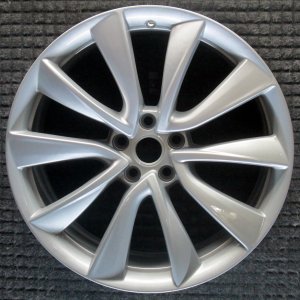
- 19" Sport (Optional): A 10-spoke silver wheel that was a common upgrade for Standard and Long Range models.
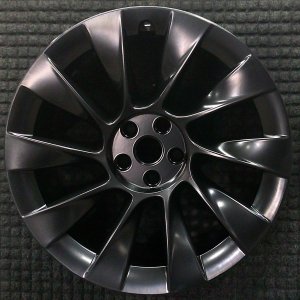
- 20" Sport / Überturbine (Performance): Performance models came with larger 20-inch wheels in gray finishes to clear the bigger brakes.
Tesla Model 3 Wheels (2024+ "Highland" Refresh)
- 18" Photon (Standard): The new standard wheel for RWD and Long Range models, featuring a split-7-spoke design under a new aero cover.
- 19" Nova (Optional): A dual-tone, 10-spoke optional upgrade for non-Performance models.
- 20" Warp (Performance): Forged wheels exclusive to the Highland Performance model, featuring a staggered setup (wider in the rear).
Tesla Model Y Wheels (2020-2026)
- 19" Gemini (Standard): The standard wheel for Long Range models, which includes a removable aero cover.
- 20" Induction (Optional): A popular optional upgrade, these wheels have a dark gray, turbine-style design.
- 21" Überturbine (Performance): Standard on the Model Y Performance, these large, dark gray wheels are in a staggered fitment (rear wheels are wider) to handle the extra power and require significant brake clearance.
Critical Warning: Performance Models Have Different Brake Clearance
Standard 18" and 19" wheels from the Model 3, or 19" and 20" wheels from the Model Y, WILL NOT FIT on their respective Performance trim counterparts. The Performance models are equipped with larger brake calipers that will physically interfere with the barrel of the smaller, non-performance wheels. You must use a wheel specifically designed for a Performance model if that is the trim you own.
Technical Specifications
| Specification | Value |
|---|---|
| Bolt Pattern (PCD) | 5x114.3 mm |
| Center Bore | 64.1 mm (Hub-centric) |
| Lug Nut Specification | M14x1.5 Thread, 21mm Hex |
| Lug Nut Torque | 129 lb-ft (175 Nm) |
Data sourced from multiple guides and forums.
What is Wheel Offset and Why Does it Matter?
Offset (stamped as 'ET' on the wheel) is the distance from the wheel's mounting surface to its centerline. Using a wheel with the wrong offset can cause problems:
- Too High (Positive) Offset: The wheel sits too far inside the wheel well, potentially rubbing against suspension components or brake calipers.
- Too Low (Negative) Offset: The wheel pokes out too far, which can cause it to rub on the fender, especially during turns or suspension compression. It also increases stress on wheel bearings, leading to premature failure.
Model 3 and Model Y wheels have slightly different offsets (e.g., +40mm for pre-refresh Model 3, +45mm for Model Y). While they can often be swapped, be aware that it will change how the wheel sits in the fender.
Buying a Used Tesla Wheel: A Detailed Inspection Guide
Buying a used OEM wheel is a great way to save money, but a thorough inspection is critical to ensure you're getting a safe, reliable part. Here’s what to look for:
- Check for Cracks: This is the most important check. Carefully inspect the entire wheel, front and back. Pay special attention to the inner barrel (the 'back' side) and where the spokes meet the rim. Hairline cracks can be hard to spot but are a fatal flaw. Never buy a cracked wheel.
- Look for Bends: Place the wheel on a flat surface and look at the lip from all angles. A bent lip on the outer edge is often cosmetic, but a bend on the inner barrel can cause serious vibrations.
- Inspect for Welds or Repairs: Check the back of the wheel for any signs of welding. A repaired wheel is structurally weaker than an original one and should be avoided. Look for areas where the paint or finish looks different, which might hide a previous repair.
- Evaluate Curb Rash: Most used wheels will have some curb rash. Minor scuffs and scratches are cosmetic and can often be repaired for $150-$200. However, deep gouges or missing chunks of metal indicate a more severe impact that could have caused hidden structural damage.
- Verify OEM Markings: Genuine Tesla wheels have part numbers, size specifications (e.g., 19x8.5J), and the 'ET' offset value stamped on the back of the spokes or hub mounting pad. This confirms it's an authentic part.
- Aero Cover Condition: If buying an Aero or Gemini wheel, check the condition of the plastic cover and its mounting clips. Broken clips can cause rattling or allow the cover to fall off.
OEM vs. Aftermarket Wheels
When replacing a wheel, you can choose between a used Original Equipment Manufacturer (OEM) part or a new aftermarket one.
- OEM Wheels: These are identical to the wheels that came on your car from the factory. They are designed and tested by Tesla for optimal strength, weight, and aerodynamics to maximize range. A used OEM wheel is often the best choice for replacing a single damaged wheel to ensure a perfect match.
- Aftermarket Wheels: These are made by third-party companies. While they offer a huge variety of styles, their quality can be inconsistent. Cheaper cast wheels may be heavier or weaker than OEM wheels, and their different aerodynamic properties can noticeably reduce your vehicle's driving range.
Wheel Finish and Paint Codes
Tesla body paint codes, found on a sticker in the driver's door jamb, are not used for wheels. Wheels have specific finish names, such as "Gunpowder," "Satin Black," or simply "Silver." If you are repairing curb rash, you will need to buy touch-up paint specifically matched to the wheel's finish, not the car's body color.
Replacement Cost Comparison
Prices can vary based on wheel style, size, and condition.
| Item | Estimated Cost |
|---|---|
| New OEM Wheel (from Tesla) | $400 - $1,200+ per wheel |
| New Aftermarket Wheel | $200 - $1,200+ per wheel |
| Used OEM Wheel | $200 - $450 per wheel |
| Shop Labor (Mount & Balance) | $25 - $50 per wheel |
| Curb Rash Repair (Professional) | $150 - $200 per wheel |
Frequently Asked Questions (FAQ)
Can I put Model Y wheels on my Model 3 (or vice-versa)?
Yes, in most cases, as they share the same bolt pattern and center bore. However, there are two main considerations. First, Model Y wheels often have a different offset and a larger overall tire diameter, which can affect speedometer accuracy and potentially cause rubbing. Second, the Model Y is heavier, and some older Model 3 wheels may not be rated for the Y's higher load capacity.
Do I need to replace the TPMS sensor when I replace a wheel?
If you are just swapping the wheel, you can have your existing Tire Pressure Monitoring System (TPMS) sensor and tire moved to the new wheel. If you are buying a complete wheel and tire assembly, you will need to ensure it has a compatible TPMS sensor. Tesla changed its TPMS technology around 2020 from a radio-based system to Bluetooth (BLE), and they are not cross-compatible.
What is the lug nut torque specification for the Model 3 and Model Y?
The correct torque specification for the lug nuts on all Model 3 and Model Y variants is 129 lb-ft (175 Nm). It is important to re-torque the wheels after driving about 50 miles after they have been installed.
Will changing my wheels affect my car's range?
Yes. Larger, heavier, and less aerodynamic wheels will decrease your driving range. The 18" Aero and 19" Gemini wheels with their covers are the most efficient. Moving to larger wheels like the 20" Inductions or 21" Überturbines can reduce range, in some cases by up to 10%, due to increased weight and aerodynamic drag.
Technical Specifications
OEM Part Numbers: 1044261-00-A 1044231-99-B 104426400A 1044267-00-A 123422400A 123422400B 1344221-00-B 134422200C 1344227-00-A 1344229-00-B
Bolt Pattern: 5x114.3 mm, Center Bore: 64.1 mm, Lug Nut: M14x1.5, Lug Torque: 129 lb-ft (175 Nm). Offsets vary by style: Model 3 (pre-refresh) is typically +40mm, Model Y is +45mm, Model 3 Highland is +38mm.
We Have This Part in Stock





The information in this article is provided for general reference and educational purposes only. Vehicle specifications, procedures, and part compatibility can vary by production date, trim level, and region. Always consult your vehicle's factory service manual and verify part numbers before purchasing or performing repairs. Safety-critical components such as airbags, seat belts, and braking systems should be installed by a qualified professional.
- Tesla 3:
- TESLA Y:
- Tesla Model 3:
- 🛍️ Shop This Part
- Symptoms of a Damaged Wheel
- Wheel Variants for Model 3 and Model Y
- Tesla Model 3 Wheels (2017-2023 Pre-Refresh)
- Tesla Model 3 Wheels (2024+ "Highland" Refresh)
- Tesla Model Y Wheels (2020-2026)
- Technical Specifications
- What is Wheel Offset and Why Does it Matter?
- Buying a Used Tesla Wheel: A Detailed Inspection Guide
- OEM vs. Aftermarket Wheels
- Wheel Finish and Paint Codes
- Replacement Cost Comparison
- Frequently Asked Questions (FAQ)
- 🎟️ Get 5% Off