

Tesla Model 3 & Y Wheels (2017-2026): A Guide to Sizes, Cracks, and Performance Brake Fitment
This guide covers the critical differences between wheel options for the Tesla Model 3 and Model Y, including how to identify damage and ensure compatibility with Performance brakes.
- The biggest compatibility trap is with Performance models. Contrary to some beliefs, factory 19" and 20" wheels DO fit over the larger Performance brakes, making them viable options.
- Wheels are highly susceptible to cracking from potholes, especially the larger 20" and 21" low-profile designs. Always inspect used wheels carefully for cracks on the inner barrel.
- When lifting the vehicle, ONLY use the four designated jack points near the wheels. Lifting by the battery or side rails can cause thousands of dollars in damage not covered by warranty.
- Model 3/Y vehicles from 2021+ use Bluetooth (BLE) TPMS sensors. Older RF sensors are not compatible. The car relearns new BLE sensors automatically.
Wheel Variants and Specifications for Model 3 & Model Y
Tesla has offered several wheel designs for the Model 3 and Model Y, with specific options tied to trim levels like Standard Range (RWD), Long Range (LR), and Performance. All Model 3 and Model Y wheels share a 5x114.3 mm bolt pattern and a 64.1 mm center bore. The recommended lug nut torque for all models is 129 lb-ft (175 Nm).
Tesla Model Y (2020-2026)
The Model Y was available with three main factory wheel options before the "Juniper" refresh.
| Wheel Name | Size | Offset | Weight | Standard On | Optional On |
|---|---|---|---|---|---|
| 19" Gemini (or Apollo) | 19x9.5" | +45 | ~29.6 lbs | Long Range / RWD | - |
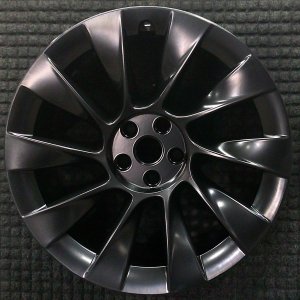
| 20" Induction | 20x9.5" | +45 | ~31.6 lbs | - | Long Range |
| 21" Überturbine | 21x9.5" (F) 21x10.5" (R) |
+40 (F) +48 (R) |
~38 lbs | Performance | - |
Specifications sourced from multiple guides.
Tesla Model 3 (2017-2026)
The Model 3 has had several wheel updates, especially with the "Highland" refresh in 2024.
| Wheel Name | Size | Offset | Model Years | Trim |
|---|---|---|---|---|
| 18" Aero | 18x8.5" | +40 | 2017-2023 | Standard/Long Range |
| 19" Sport (Stiletto) | 19x8.5" | +40 | 2017-2023 | Optional on SR/LR |
| 20" Sport / Überturbine | 20x8.5" | +35 / +40 | 2018-2023 | Performance |
| 18" Photon | 18x8.5" | +40 | 2024+ | Standard on Highland |
| 19" Nova | 19x8.5" | +40 | 2024+ | Optional on Highland |
Specifications sourced from multiple guides.
Warning: While Model 3 and Model Y wheels share a bolt pattern, they are not always interchangeable. Model Y wheels are designed for a heavier vehicle and have a higher load rating. Using Model 3 wheels on a Model Y is generally not recommended for safety reasons.
Known Issues and Common Problems
Cracked or Bent Rims
The most common issue, especially with the larger 20-inch and 21-inch wheels, is damage from potholes and road hazards. The low-profile tires on these wheels provide less sidewall cushioning, making the rim itself more susceptible to cracking or bending upon impact. A significant impact can cause a hairline crack, often on the inner barrel of the wheel where it is not easily visible.
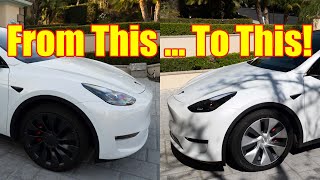
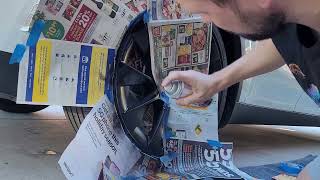
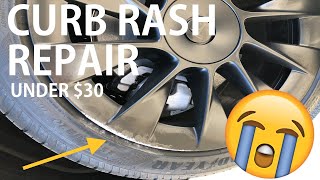
Curb Rash
Tesla's factory wheels are often designed to be flush with or protrude slightly beyond the tire's sidewall to improve aerodynamics. This design makes them extremely prone to scraping against curbs during parking, resulting in cosmetic damage known as "curb rash."
🎬 Watch this DIY guide to repair scratched Induction wheels.Uneven Tire Wear and Vibrations
Some owners report persistent vibrations or premature, uneven tire wear, particularly on the inner edge of the tires. While sometimes caused by a bent wheel, this is often a symptom of poor wheel alignment from the factory or from suspension components wearing over time. If you experience a persistent vibration even after having the wheels balanced, an alignment check is recommended.
Compatibility with Performance Brakes
A major point of confusion for buyers is whether smaller wheels will fit on Performance trim vehicles, which are equipped with larger red brake calipers.
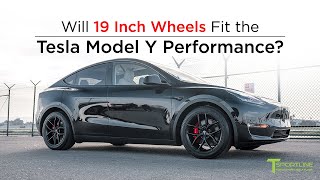
- 19" Gemini and 20" Induction wheels from a Model Y WILL fit on a Model Y Performance. Despite what some service centers may advise, the factory 19-inch and 20-inch wheels have enough clearance to fit over the larger Performance brakes. Tesla even sells a winter tire package for the Performance model that uses 19" Gemini wheels. 🎬 See how 19" Gemini wheels fit on a Performance model.
- Aftermarket wheels must be verified. Not all aftermarket 19-inch or 20-inch wheels will clear the Performance calipers. Always confirm fitment with the wheel manufacturer before purchasing.
A Note on Model Y Performance Rear Brakes
Starting around August 2022, Tesla changed the rear brake supplier for the Model Y Performance from Brembo to Mando. The new Mando rear calipers are physically smaller (identical to those on the Long Range model) and are fitted with a larger red cosmetic cover to maintain the "performance" look. This change does not affect wheel fitment but is an important distinction for owners to be aware of.
Symptoms of a Damaged Wheel
- Vibration or Shaking: A bent wheel will often cause a noticeable vibration in the steering wheel or through the chassis, which gets worse with speed.
- Slow Air Leak: A hairline crack, especially at the bead seat, can cause a tire to slowly lose air over days or weeks.
- Visible Damage: Obvious cracks, bends, or large chunks missing from the wheel are clear signs of failure. Always inspect both the front and back of the wheel.
- Thumping Noise: A severely bent wheel can cause a rhythmic thumping sound as it rotates.
Pro Tip: To check for a bend at home, remove the wheel and lay it on a flat surface. Place a straight edge across the rim and look for gaps. You can also slowly roll it across a garage floor and watch for any wobble.
Buying a Used Wheel: What to Inspect
Buying a used OEM wheel is a great way to save money, but careful inspection is crucial.
- Check for Cracks: Inspect the entire wheel, paying close attention to the inner barrel and around the spokes. Fresh paint or excessive dirt in one area could be hiding a crack.
- Look for Bends: Check both the inner and outer lip for any signs of being bent. A bent lip can prevent the tire from sealing properly.
- Identify Previous Repairs: Look for signs of welding. A weld is a permanent repair that can create a weak spot. Also, look for signs of body filler or thick, uneven paint, which may hide previous damage.
- Verify the Part Number: The OEM part number is stamped on the back of one of the spokes. Match this to your vehicle's required wheel to ensure you are buying the correct size, offset, and style.
- Assess Cosmetic Condition: Note any curb rash or peeling clear coat. While cosmetic, refinishing a single wheel to perfectly match the others can cost $150 or more.
OEM vs. Aftermarket Quality
Original Equipment Manufacturer (OEM) wheels are engineered and tested by Tesla for strength, durability, and weight to match the vehicle's dynamics. Many cheap aftermarket wheels are made from lower-quality cast aluminum, which can be heavier and more prone to cracking under the significant weight of an EV. For safety and to maintain vehicle range, a quality used OEM wheel or a reputable flow-formed/forged aftermarket wheel is a better choice than a cheap cast replica.
Verifying Paint Code and Color Match
The vehicle's paint code is found on the vehicle specification sticker located on the driver's side door jamb. However, Tesla wheels have specific color names (e.g., Sonic Carbon, Gunpowder) that are standard for that style, not tied to the car's body color. When replacing one wheel, the biggest challenge is matching the finish and gloss level of the existing wheels, which may have faded or changed over time.
Replacement and Installation
Replacing a wheel is a straightforward task for a DIYer.
Warning: Never lift a Tesla from under the battery pack or the side rails. Use only the four designated lift points, which are circular cutouts in the frame located near each wheel. Using the wrong lift point can cause catastrophic damage to the high-voltage battery, which is not covered by warranty. Using a "jack puck" or pad is highly recommended to ensure the jack only makes contact with the strong lift point.
🎬 Watch this step-by-step wheel and tire replacement walkthrough.- Set the vehicle to 'Jack Mode' if it has air suspension (Model S/X). The Model 3 and Y do not have this mode.
- Chock the wheels that will remain on the ground.
- Using a jack with a puck, lift the vehicle at the designated lift point.
- Remove the lug nuts and swap the wheel.
- Hand-tighten the lug nuts in a star pattern, then lower the vehicle until the tire just touches the ground.
- Use a torque wrench to tighten the lug nuts to 129 lb-ft (175 Nm).
A Note on TPMS Sensors
Tesla Model 3 and Y vehicles produced in 2021 and later use a Bluetooth Low Energy (BLE) TPMS system. Older radio frequency (RF) sensors are not compatible. When installing a new wheel, you must either transfer the original BLE sensor or install a new, compatible one. The vehicle will automatically learn the new sensors after driving a short distance; no special programming tool is needed.
Cost of Replacement (2024-2026 Estimates)
| Part Type | Estimated Cost (Per Wheel) | Notes |
|---|---|---|
| New OEM (from Tesla) | $750 - $1,200 | Does not include tire, TPMS, or labor. Can be over $1,500 with a tire. |
| New Aftermarket | $250 - $1,200+ | Price varies widely based on brand, quality (cast vs. forged), and design. |
| Used OEM (Recycled) | $200 - $500 | A cost-effective option for an original wheel. Price depends on condition. |
| Remanufactured OEM | $260 - $450 | A used wheel that has been professionally inspected and refinished. |
| Wheel Repair (Curb Rash) | $150 - $250 | Cost to cosmetically refinish a wheel with curb rash. |
| Shop Labor (Swap & Balance) | $50 - $100 | Cost for a tire shop to mount and balance a tire onto a wheel and install it. |
Frequently Asked Questions
Can I put Model Y wheels on a Model 3?
Yes, in many cases this is possible as they share the same bolt pattern and center bore. However, the Model Y wheels are typically wider and have a different offset, which may cause rubbing on a Model 3, especially on the front wheels when turning. Tire sizes would also need to be adjusted.
Can I put non-Performance wheels on my Performance Model 3 or Y?
Yes. The factory 18" Aero, 19" Gemini, and 20" Induction wheels all clear the larger red brake calipers on the Performance models, making them a popular choice for winter tire setups or for a more comfortable ride. However, always verify fitment for aftermarket wheels.
What happens if I use a wheel with the wrong offset?
Offset is the distance from the wheel's mounting hub to its centerline. An incorrect offset can cause serious problems. Too little offset (wheel sticks out too far) can cause the tire to rub on the fender. Too much offset (wheel is too far inboard) can cause it to rub on suspension components or the inner wheel well. Both scenarios can also put premature stress on the wheel bearings.
Do I need to replace my TPMS sensor when I get a new wheel?
Not necessarily. If your existing TPMS sensor is working, a tire shop can carefully remove it from the old wheel and install it in the new one. If you are building a second set of wheels (e.g., for winter), you will need to purchase a new set of compatible Bluetooth (BLE) TPMS sensors.
Helpful Videos
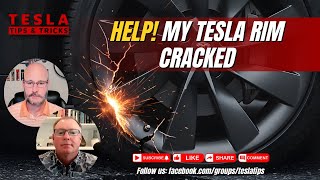
Technical Specifications
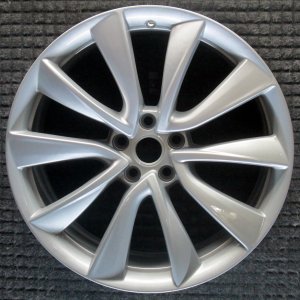
OEM Part Numbers: 1188222-00-B 118822200B 348822200A 1044221 104422100A 104422100B 1344221-00-B 1344229-00-B 134422900B 2188226 2188226-00-B 218822600B
Bolt Pattern: 5x114.3 mm, Center Bore: 64.1 mm, Lug Nut Thread: M14x1.50, Lug Nut Torque: 129 lb-ft (175 Nm).
We Have This Part in Stock





The information in this article is provided for general reference and educational purposes only. Vehicle specifications, procedures, and part compatibility can vary by production date, trim level, and region. Always consult your vehicle's factory service manual and verify part numbers before purchasing or performing repairs. Safety-critical components such as airbags, seat belts, and braking systems should be installed by a qualified professional.
- Tesla Y:
- Tesla 3:
- Tesla Model Y:
- 🎬 Helpful Videos
- 🛍️ Shop This Part
- Wheel Variants and Specifications for Model 3 & Model Y
- Tesla Model Y (2020-2026)
- Tesla Model 3 (2017-2026)
- Known Issues and Common Problems
- Cracked or Bent Rims
- Curb Rash
- Uneven Tire Wear and Vibrations
- Compatibility with Performance Brakes
- A Note on Model Y Performance Rear Brakes
- Symptoms of a Damaged Wheel
- Buying a Used Wheel: What to Inspect
- OEM vs. Aftermarket Quality
- Verifying Paint Code and Color Match
- Replacement and Installation
- A Note on TPMS Sensors
- Cost of Replacement (2024-2026 Estimates)
- Frequently Asked Questions
- 🎟️ Get 5% Off