

2001-2004 300M, Concorde, Intrepid & LHS Window Regulator Failure: Noises, Fixes, and Parts Guide
Diagnose common window drop and noise issues in your Chrysler or Dodge sedan and learn what to look for when buying a replacement regulator assembly.
- The most common failure is the regulator's plastic guides or cables, not the electric motor.
- Symptoms include grinding noises, a crooked window, slow movement, or the window dropping into the door.
- A high-quality used OEM regulator is often more durable than a cheap new aftermarket part; inspect any used part for cracked plastic and frayed cables before buying.
- Replacement is a DIY-friendly job requiring basic tools, with a difficulty of about 2 out of 5.
Symptoms of a Failing Window Regulator
A failing window regulator on your Chrysler 300M, Concorde, LHS, or Dodge Intrepid will usually give you clear warning signs. Because these vehicles all share the same Chrysler LH platform, the symptoms of failure are identical across all four models. The most common issue is the failure of the internal cables or plastic guide components, not the electric motor itself.
- Grinding, Clicking, or Popping Noises: This is often the first sign of trouble. When you operate the window, you may hear grinding or clicking sounds from inside the door. This is typically caused by a frayed cable or a broken plastic pulley inside the regulator assembly.
- Window Drops Into the Door: A loud pop followed by the window glass suddenly falling into the door means the regulator has completely failed. This usually happens because a cable has snapped or the brackets holding the glass have broken.
- Slow or Erratic Movement: If the window moves much slower than it used to, struggles to go up, or moves in a jerky, uneven motion, the regulator is likely binding. This puts extra strain on the motor and is a sign of impending failure.
- Crooked Window: A window that tilts to one side as it goes up or down is a classic symptom. This indicates that one of the lift points on the regulator track has broken, causing the glass to become misaligned.
- Motor Runs, But Window Doesn't Move: If you can hear the motor whirring inside the door when you press the switch, but the window stays put, the motor is working but is no longer connected to the glass. The regulator's drive mechanism is broken. If you hear no sound at all, the problem is more likely the switch, fuse, or the motor itself.
Pro Tip: If your window is stuck down, you can often pull it up by hand and secure it with strong tape across the top of the door frame as a temporary fix until you can perform the repair.
Buying a Used Window Regulator: What to Inspect
For these vehicles, a high-quality used OEM window regulator assembly is often a better value and can be more durable than a cheap, new aftermarket part. The original Mopar parts used thicker plastics and better-quality cables. However, since the common failure point is brittle plastic, a thorough inspection is critical before buying a used part.
Inspection Checklist:
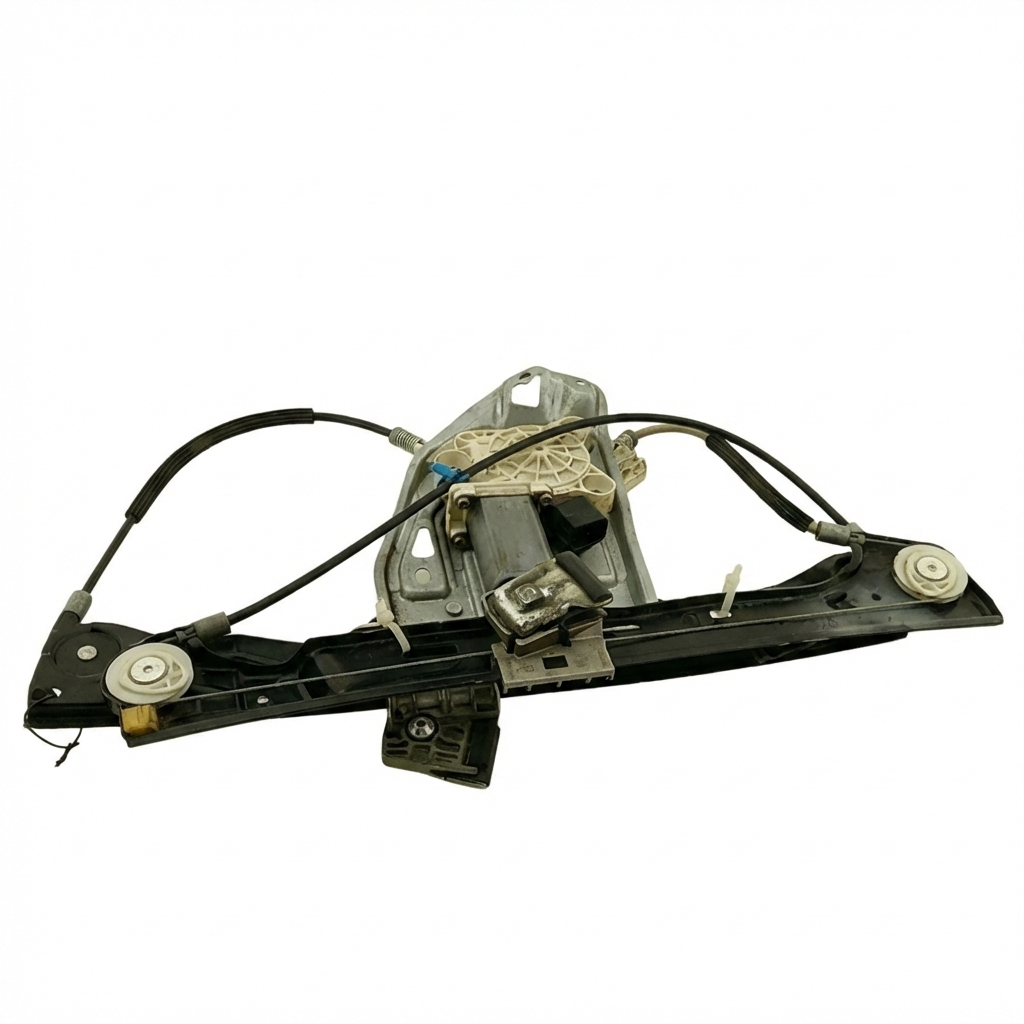
- Check the Plastic Guides: This is the most important step. Look closely at all plastic components, especially the clips that attach to the window glass and the pulleys the cable runs on. Reject any regulator that has visible cracks, stress marks (white lines in the plastic), or feels brittle.
- Inspect the Cables: Check the full length of the steel cables. Look for any signs of fraying, kinks, or rust. A damaged cable will fail soon after installation.
- Verify the Motor (If Possible): If you have access to a 12V power source (like a car battery), you can briefly touch the two pins on the motor's electrical connector to test its function. The motor should spin smoothly in both directions when you reverse the polarity.
- Confirm Compatibility: Ensure the part is from a 2001-2004 300M, Concorde, Intrepid, or a 2001 LHS. Most importantly, verify the door location. A regulator for the rear passenger side will not fit any other door.
Known Issues, Recalls, and Technical Service Bulletins (TSBs)
As of mid-2026, there are no active recalls or specific Technical Service Bulletins (TSBs) from the National Highway Traffic Safety Administration (NHTSA) for window regulator failure on the 2001-2004 Chrysler 300M, Concorde, LHS, or Dodge Intrepid. The failures experienced in these vehicles are generally due to the age and wear of the regulator's moving parts, particularly the plastic components which can become brittle over time.
Cost of Replacement
The cost to replace a window regulator assembly can vary significantly depending on the type of part you choose. For these models, the regulator and motor are almost always replaced as a single unit.
| Part Type | Estimated Cost | Notes |
|---|---|---|
| New OEM | $400 - $500+ | Highest cost, but original quality. May be difficult to find for vehicles of this age. |
| New Aftermarket | $65 - $90 | Widely available from brands like Dorman. Quality can be inconsistent compared to OEM. |
| Used OEM | $40 - $75 | Excellent value if a quality part can be found. Requires careful inspection before purchase. |
| Shop Labor | $140 - $220 | Typically 1.5 to 2 hours of work at an independent repair shop. |
DIY Replacement Guide & Difficulty
Replacing the window regulator on a 2001-2004 Chrysler 300M, Concorde, LHS, or Intrepid is a manageable DIY project for someone with basic mechanical skills. The process is very similar for all four doors.
- Difficulty: 2/5 (Easy to Moderate)
- Estimated Time: 1.5 - 2 hours
- Tools Required: Phillips screwdriver, flat-blade screwdriver or trim removal tool, 10mm socket with ratchet and extension, strong tape (e.g., painter's or duct tape).
Step-by-Step Overview:
- Remove the Door Panel: Start by removing several Phillips head screws located in the door pull handle, inside the door release handle, and along the bottom edge of the panel. Use a trim tool to carefully pry the panel away from the door to release the plastic clips.
- Disconnect Switches and Cables: Unplug the electrical connectors for the window and lock switches. Disconnect the cable for the interior door handle.
- Access the Regulator: Carefully peel back the plastic water shield to expose the inside of the door cavity.
- Secure the Window: Use strong tape to hold the window glass in the fully 'up' position. Run the tape from one side of the glass, over the top of the door frame, to the other side. This prevents it from falling when you unbolt it.
- Unbolt the Glass: Lower the regulator (if possible) until you can see the two 10mm bolts that clamp the regulator to the glass through the access holes. Loosen these bolts so the glass is free from the regulator.
- Remove the Regulator Assembly: Disconnect the motor's electrical plug. Remove the 10mm bolts holding the regulator assembly to the door shell. Carefully collapse the assembly and remove it through the large access hole in the door.
- Installation: Installation is the reverse of removal. Transfer the mounting bolts to the new regulator, guide it into the door, and loosely attach it. Connect the motor and window switch temporarily to move the new regulator into position to attach the glass. Tighten all bolts and reinstall the door panel.
Warning: Each door (Front Left, Front Right, Rear Left, Rear Right) uses a unique window regulator. The part numbers listed here are for the Rear Passenger (Right) side only. Ensure you are purchasing the correct part for your specific needs.
Technical Specifications & Part Numbers
These part numbers are for the Rear Passenger (Right) Side Window Regulator and Motor Assembly. Part numbers often supersede over time; the latest number in the sequence is the most current replacement.
- OEM Part Numbers (Chrysler/Mopar): 4574100AK, 4574100AL, 4574100AN, 4574100AQ
- Common Aftermarket Part Number (Dorman): 741-559
- Vehicle Platforms: Chrysler LH Platform (2nd Generation)
- Fitment Years: 2001, 2002, 2003, 2004
Frequently Asked Questions (FAQ)
My window motor runs but the glass is crooked. Is the motor bad?
No, if you can hear the motor running, the motor itself is likely fine. A crooked window is a classic sign that the mechanical part of the regulator—usually a plastic guide or cable mount—has broken. The entire regulator and motor assembly must be replaced.
Can I just replace the broken plastic clip instead of the whole assembly?
While some aftermarket companies sell repair kits with just the plastic clips, it is generally not recommended. If one plastic piece has become brittle enough to break, the others are likely near failure as well. Replacing the complete assembly with a good quality part is a more reliable, long-term repair.
Are the front and rear, driver and passenger side regulators the same?
No, they are all different. Each of the four doors on the vehicle requires a specific window regulator designed for that location. They are not interchangeable. Be sure to order the correct part for the door you are repairing.
My window doesn't make any noise when I press the switch. Is it the regulator?
If there is no sound at all (no click, no whirring), the problem is likely electrical, not the regulator itself. Start by checking the fuse for the power windows. If the fuse is good, the problem could be the window switch or the motor itself. If other windows work from the same switch panel, the switch is likely okay, pointing toward a failed motor.
Technical Specifications
OEM Part Numbers: 4574100AK 4574100AL 4574100AN 4574100AQ
Fits Rear Passenger (Right) Side only. Sold as a complete assembly with motor.
We Have This Part in Stock

The information in this article is provided for general reference and educational purposes only. Vehicle specifications, procedures, and part compatibility can vary by production date, trim level, and region. Always consult your vehicle's factory service manual and verify part numbers before purchasing or performing repairs. Safety-critical components such as airbags, seat belts, and braking systems should be installed by a qualified professional.
- Chrysler 300M:
- Chrysler Concorde:
- Chrysler LHS:
- Dodge Intrepid:
- 🛍️ Shop This Part
- Symptoms of a Failing Window Regulator
- Buying a Used Window Regulator: What to Inspect
- Inspection Checklist:
- Known Issues, Recalls, and Technical Service Bulletins (TSBs)
- Cost of Replacement
- DIY Replacement Guide & Difficulty
- Step-by-Step Overview:
- Technical Specifications & Part Numbers
- Frequently Asked Questions (FAQ)
- 🎟️ Get 5% Off