

2013-2022 Honda Accord Window Regulator: Noises, Failure Diagnosis & Replacement
This guide details common failure symptoms for the 9th and 10th generation Honda Accord window regulator, how to diagnose the issue, and what to look for when buying a used part.
- The most common failure is a snapped cable or broken plastic clip, often signaled by grinding noises or the window falling into the door.
- Parts are not interchangeable between the 9th Gen (2013-17) and 10th Gen (2018-22), or between Sedan and Coupe models.
- After replacement, you must perform a window reset procedure to restore the auto up/down function.
- Buying a used OEM regulator is often a better value than a new aftermarket part due to superior fitment and durability.
Generational Differences: 9th Gen (2013-2017) vs. 10th Gen (2018-2022)

The 2013-2022 Honda Accord spans two distinct generations, and their window regulators are not interchangeable. Understanding which generation you have is the first step in sourcing the correct part.
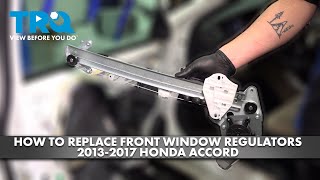
- 9th Generation (2013-2017): This generation was available as both a 4-door Sedan and a 2-door Coupe. The window regulators for the sedan and coupe are different and cannot be swapped. Part numbers for this era typically contain "T2A" or "T3L". 🎬 Watch: Step-by-step front window regulator replacement for 9th Gen Accords.
- 10th Generation (2018-2022): This generation was sold only as a 4-door Sedan. Part numbers for this era typically contain "TVA".
Warning: Always verify compatibility by door position (e.g., front driver side), body style (Sedan vs. Coupe for 9th gen), and generation. A front regulator will not fit a rear door, and a driver's side part will not fit the passenger's side.
Common Symptoms of a Failing Window Regulator

Window regulator failure in the Honda Accord is common and usually presents with clear, audible, or visible symptoms. The failure is almost always mechanical (cables, pulleys, or plastic clips) rather than an issue with the motor itself.
Grinding, Clicking, or Popping Noises
Loud grinding or clicking sounds when you press the switch are a classic sign of a failing regulator. This noise is often caused by a frayed cable binding in the pulleys or the motor's gears stripping as they struggle to move a broken mechanism. Eventually, the cable will snap, and the window will stop moving entirely.
Window is Slow, Jerky, or Crooked
If the window moves much slower than it used to, stutters on its way up or down, or appears tilted in the frame, the regulator is likely binding. This can be caused by a stretched cable, damaged plastic guide clips, or debris in the window tracks. This symptom puts extra strain on the motor, and continuing to use it can cause the motor to burn out.
Window Drops Inside the Door
A sudden thud followed by the window glass disappearing completely into the door is a sign of catastrophic failure. This happens when a cable snaps or a critical plastic clip holding the glass breaks, leaving nothing to support the weight of the window.
Window Won't Stay Up
You may be able to pull the glass up by hand, but it slowly slides back down into the door on its own. This indicates the mechanism that holds the glass in place has failed, even if the motor and cables are partially intact.
No Sound and No Movement
If you press the switch and nothing happens—no motor sound, no movement—the problem might not be the regulator itself. This symptom often points to an electrical issue, such as a blown fuse, a bad window switch, or a failed motor. Start by checking the fuse box before assuming the regulator is the culprit.
Known Issues, Recalls, and TSBs
As of early 2026, there are no widespread recalls or Technical Service Bulletins (TSBs) issued by Honda or the NHTSA specifically for window regulator failure on the 2013-2022 Honda Accord. Problems with this part are generally attributed to normal wear and tear over time rather than a specific manufacturing defect. The cable-and-pulley design is prone to failure from use, age, and environmental factors like moisture and temperature extremes.
Buying a Used Window Regulator: What to Check

Given the high cost of new OEM regulators, a quality used OEM part is an excellent value. Aftermarket parts are cheaper but are notorious for premature failure, poor fitment, and noisy operation. A used original Honda part will fit correctly and often provides better longevity than a new, non-OEM alternative.
Before purchasing a used regulator, perform these inspections:
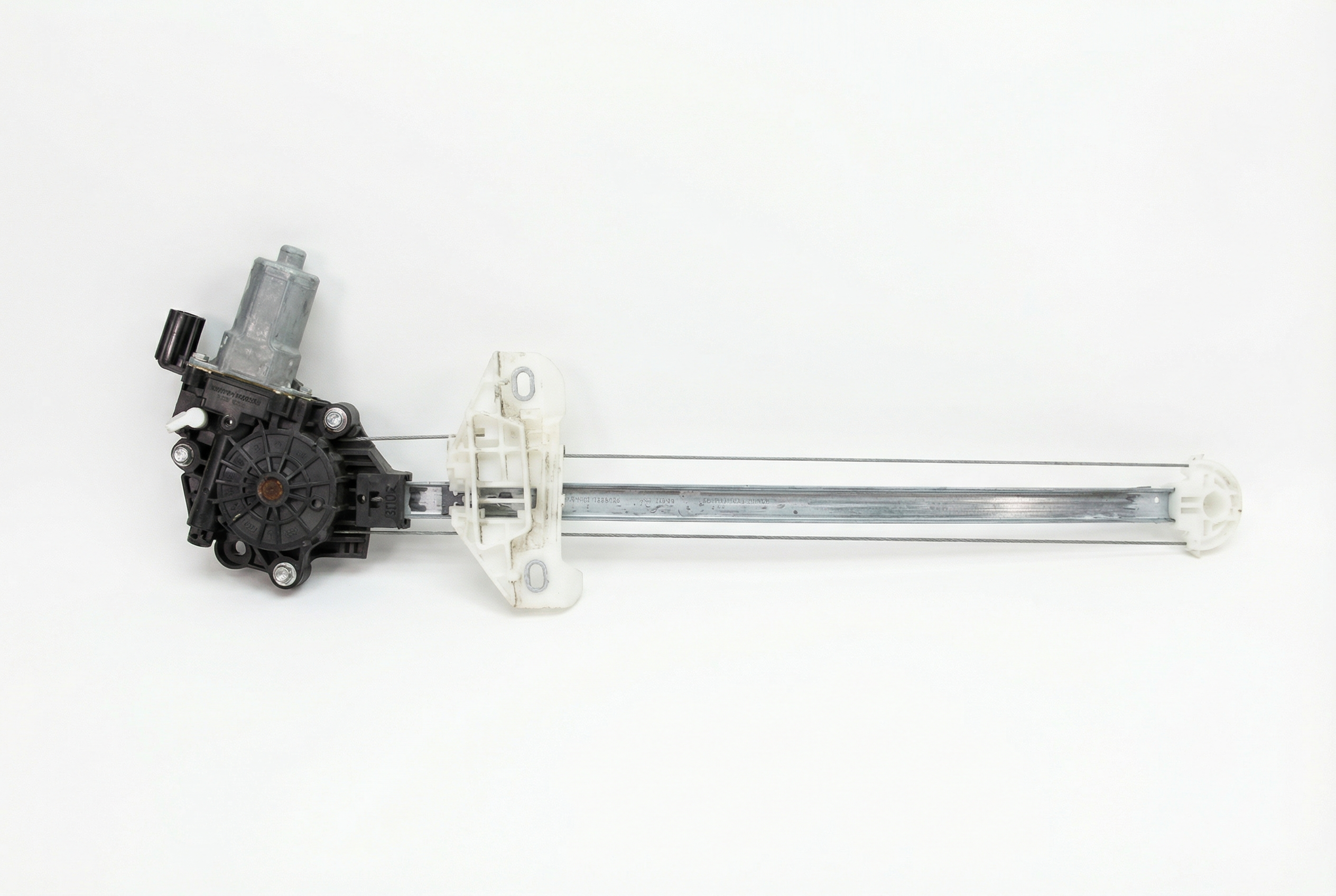
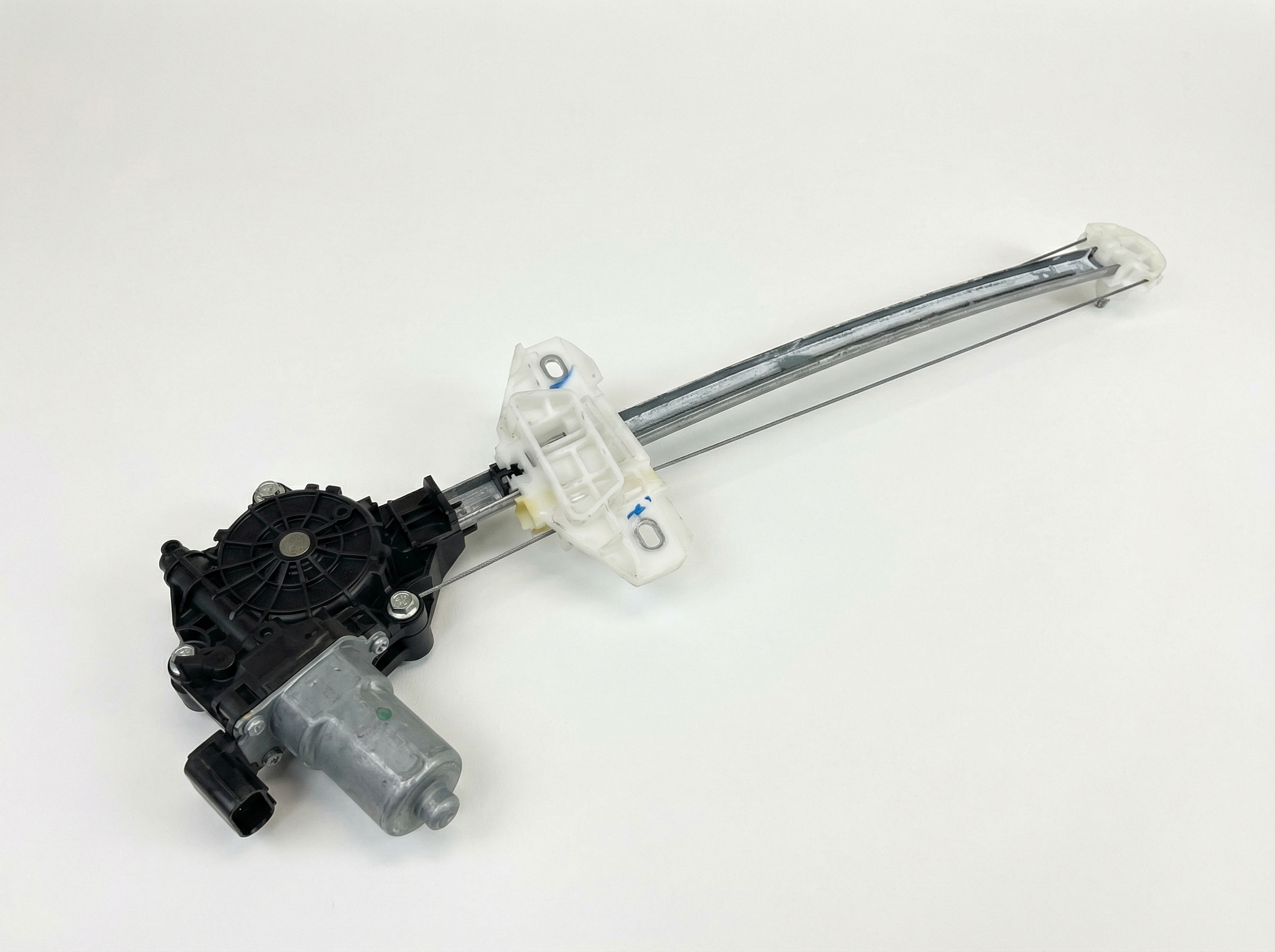
- Inspect the Cables: Check the steel cables for any signs of fraying, kinking, or rust. A damaged cable is the most common point of failure.
- Check Plastic Guides: Examine the plastic clips and guides that attach to the window glass and slide along the rail. Ensure they are not cracked, brittle, or broken.
- Verify the Motor is Included: Most regulators are sold as a complete assembly with the motor. Confirm the motor is attached and that its electrical connector is clean and undamaged.
- Confirm Part Numbers: The safest way to ensure compatibility is to match the OEM part number from your old regulator to the replacement part.
- Ask About Donor Vehicle Mileage: A regulator from a lower-mileage vehicle will naturally have less wear and a longer remaining service life.
Replacement Overview & Difficulty

Replacing the window regulator is a manageable DIY project for someone with basic mechanical skills. The process is similar for all four doors and across both generations.
- Difficulty: 3 out of 5
- Estimated Time: 1.5 - 2 hours
- Tools Required: Phillips screwdriver, 10mm socket and ratchet, plastic trim removal tools, painter's tape.
Basic Replacement Steps:
- Remove the Interior Door Panel: This involves removing a few screws (usually in the door handle and armrest area) and carefully prying the panel off with trim tools.
- Peel Back the Vapor Barrier: Carefully peel back the plastic or foam sheet to access the inside of the door. Try not to tear it, as it protects the inner door from moisture.
- Secure the Window Glass: If the glass is not fully retracted, you will need to tape it firmly to the top of the door frame with strong painter's tape. This prevents it from falling and breaking once you disconnect it from the old regulator.
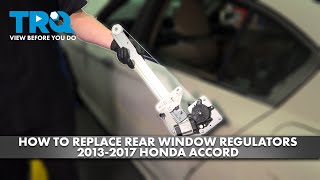
- Disconnect and Remove the Regulator: Unplug the motor's electrical connector. Loosen the bolts that hold the glass to the regulator clips. Finally, unbolt the regulator assembly from the door shell and carefully maneuver it out through the largest access hole. 🎬 See this guide for replacing the rear window regulator assembly.
- Install the New Regulator: Transfer the new assembly into the door, bolt it in place, reconnect the glass, and plug in the motor.
- Test and Reset: Before re-installing the door panel, temporarily connect the window switch and test the operation. After confirming it works, perform the window reset procedure below to restore the auto up/down function.
- Reassemble: Re-apply the vapor barrier and reinstall the door panel.
Pro Tip: After installing the new regulator but before reattaching the door panel, you MUST perform the window reset procedure. Failure to do so will result in the 'auto up/down' feature not working.
Window Reset (Relearn) Procedure
After replacing the regulator or disconnecting the battery, the window's auto-reverse and auto up/down functions must be reset.
- Turn the ignition to the ON position (do not start the engine).
- Roll the window all the way down using the switch, then release the switch.
- Pull the switch up to roll the window all the way to the top. Do not release the switch.
- Continue holding the switch in the 'up' position for 2-5 seconds after the window is fully closed.
- Release the switch. The auto up/down function should now be restored. Repeat for any other affected windows. 🎬 Watch: A quick demonstration of the power window reset procedure.
Cost Comparison
The cost to replace a Honda Accord window regulator varies significantly depending on the type of part used.
| Part/Service | Estimated Cost | Notes |
|---|---|---|
| New OEM | $330 - $420 | Price for the part only from a dealer. Front regulators are typically more expensive than rear ones. |
| New Aftermarket | $70 - $200 | Wide range in quality and price. Brands like Dorman or TYC are common. |
| Used OEM | $125 - $250 | A cost-effective option that retains original factory quality and fitment. |
| Shop Labor | $140 - $220 | Typically 1-1.5 hours of labor at an independent repair shop. |
OEM Part Numbers
Below are some of the known OEM part numbers for the 2013-2022 Honda Accord Sedan. Part numbers can be superseded, so always verify fitment with the seller using your vehicle's VIN.
| Position | 9th Gen (2013-2017) | 10th Gen (2018-2022) |
|---|---|---|
| Front Left (Driver) | 72250-T2A-A11 | 72250-TVA-A01 |
| Front Right (Passenger) | 72210-T2A-A01, 72210-T2A-A11 | 72210-TVA-A01 |
| Rear Left (Driver) | 72750-T2A-A01, 72750-T2A-A02, 72750-T2A-A03 | 72750-TVA-A01 |
| Rear Right (Passenger) | 72710-T2A-A01, 72710-T2A-A02, 72710-T2A-A03 | 72710-TVA-A01 |
Frequently Asked Questions (FAQ)
Do I have to replace the motor with the regulator?
It is highly recommended. Most failures are in the regulator's cables or plastic parts, but the extra strain can damage the motor. New and used regulators almost always come as a complete assembly with the motor, which simplifies installation and prevents near-future failures.
My window goes up and then comes back down halfway. What's wrong?
This is usually caused by the anti-pinch safety feature being triggered incorrectly. The system senses resistance (from a dirty window track, poor alignment, or cold weather) and reverses direction. First, try cleaning the window's rubber tracks. If that doesn't work, perform the window reset procedure described above. If the problem persists, the regulator may be failing.
Will a window regulator from a 2017 Accord Coupe fit my 2017 Accord Sedan?
No. For the 9th generation (2013-2017), the doors on the coupe and sedan are different shapes and sizes. You must use a regulator specific to the 4-door sedan model.
Can I just replace the broken cable or plastic clip?
While some individual components might be available, it is not a recommended repair. The regulator assembly is complex and often spring-loaded, making it difficult and potentially unsafe to rebuild. Replacing the entire assembly is safer, faster, and more reliable.
Helpful Videos

Technical Specifications
OEM Part Numbers: 72250-T2A-A11 72210-T2A-A01 72210-T2A-A11 72750-T2A-A01 72750-T2A-A02 72750-T2A-A03 72710-T2A-A01 72710-T2A-A02 72710-T2A-A03 72250-TVA-A01 72210-TVA-A01 72750-TVA-A01 72710-TVA-A01
Cable-driven power window regulator and motor assembly. Designed for 4-door Sedan models (and 2-door Coupe for 2013-2017). Requires a window position reset procedure after installation.
We Have This Part in Stock

The information in this article is provided for general reference and educational purposes only. Vehicle specifications, procedures, and part compatibility can vary by production date, trim level, and region. Always consult your vehicle's factory service manual and verify part numbers before purchasing or performing repairs. Safety-critical components such as airbags, seat belts, and braking systems should be installed by a qualified professional.
- Honda Accord:
- 🎬 Helpful Videos
- 🛍️ Shop This Part
- Generational Differences: 9th Gen (2013-2017) vs. 10th Gen (2018-2022)
- Common Symptoms of a Failing Window Regulator
- Grinding, Clicking, or Popping Noises
- Window is Slow, Jerky, or Crooked
- Window Drops Inside the Door
- Window Won't Stay Up
- No Sound and No Movement
- Known Issues, Recalls, and TSBs
- Buying a Used Window Regulator: What to Check
- Replacement Overview & Difficulty
- Basic Replacement Steps:
- Window Reset (Relearn) Procedure
- Cost Comparison
- OEM Part Numbers
- Frequently Asked Questions (FAQ)
- 🎟️ Get 5% Off