

2020-2025 Palisade & Telluride Rear Sunroof Shade: Diagnosis, Repair, and Replacement Guide
Your definitive guide to diagnosing a faulty rear panoramic sunroof shade, understanding replacement costs, and what to inspect when buying a used part for your Hyundai Palisade or Kia Telluride.
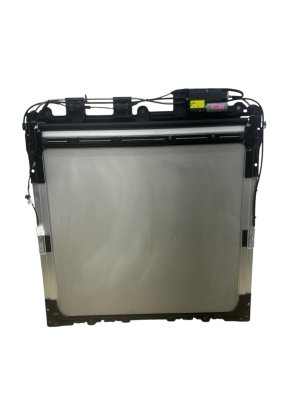
- This guide is for the REAR fabric shade on PANORAMIC SUNROOF models only; it is not the front shade or the glass panel.
- Replacement is a very difficult job (4.5/5) that requires removing the entire vehicle headliner and is not recommended for beginners.
- Before assuming a major failure, try the sunshade reset procedure found in the owner's manual, especially after a battery disconnect.
- When buying a used shade, prioritize the condition of the fabric and ensure all plastic mounting tabs are intact to prevent future rattles.
Part Identification and Compatibility Warning
Crucial: This guide covers the fabric sunshade for the rear, fixed glass panel on vehicles equipped with a panoramic sunroof. It does NOT fit vehicles without a panoramic sunroof. The part number for the fabric shade assembly is distinct from the glass panel itself. A common point of confusion is part number 81640-S8100, which is the rear sunroof glass panel, not the shade. The shade assembly has its own part number, such as 81660-S8000-MMH for the beige version. Always verify the part number for the shade itself before purchasing.
Symptoms of a Failing Rear Sunroof Shade
When the rear sunshade begins to fail, the symptoms are usually straightforward. Here’s what to look and listen for:
- Shade Does Not Move: The most common symptom is the shade failing to open or close when the button is pressed. You may hear a faint click from a relay, or no sound at all.
- Slow or Stuttering Operation: The shade may move much slower than it used to or move in short bursts, indicating a weak motor or binding in the tracks.
- Grinding or Clicking Noises: Loud grinding or repetitive clicking sounds during operation often point to stripped gears in the motor assembly or an obstruction in the guide tracks.
- Sagging or Detached Fabric: The fabric shade material can detach from its leading edge or begin to sag in the middle. This is more common in hotter climates where adhesives can degrade over time.
- Stuck Partially Open or Closed: The shade might travel part of the way and then stop, refusing to move further in either direction. This can be caused by a faulty motor, a jam in the track, or an issue with the control module.
Pro Tip: Before assuming the motor or mechanism has failed, try resetting the sunshade system. This is especially important if the battery has been disconnected or discharged. According to the owner's manual, with the vehicle on, press and hold the 'CLOSE' button for the rear shade until it fully cycles open and then closed. This can sometimes resolve simple electronic glitches.
Known Issues, TSBs, and Recalls
While there are no specific recalls for the rear sunshade assembly itself, Hyundai has issued a Technical Service Bulletin (TSB) for a related issue on the front panoramic sunroof panel that owners should be aware of.
TSB 23-BD-003H-1: Front Sunroof Wind Deflector and Mechanism
This TSB applies to certain 2020-2022 Palisade models. It addresses a condition where the front wind deflector (the part that pops up when the sunroof is opened) can break. When this happens, it can damage the sunroof mechanism and cause the front glass panel to become stuck open or closed. Symptoms include a popping sound when opening the sunroof, followed by the inability to close it. While this TSB does not directly involve the rear shade, it is the most common sunroof-related complaint for this vehicle platform.
Buying a Used Rear Sunroof Shade: What to Inspect
Purchasing a used OEM sunshade is a great way to save money, as aftermarket options are virtually nonexistent for this part. However, careful inspection is key to getting a good part. Here is a checklist to follow:
- Inspect the Fabric: Unroll the shade completely. Look for any stains, tears, or permanent creases. Most importantly, check for any signs of sagging or the fabric delaminating from the roller or front bar.
- Check the Frame for Cracks: The shade is housed in a plastic frame assembly. Inspect this frame carefully, especially around the mounting points, for any cracks or stress marks. Damage often occurs during removal from the donor vehicle.
- Verify All Mounting Tabs are Intact: Look at every single plastic tab, clip, and screw hole on the assembly. If any of these are broken, it will not mount securely in your vehicle and will likely be a source of future rattles.
- Test the Mechanism (If Possible): If the motor is attached, try to power it with a 12V source to see if it operates. If not, try to manually move the shade along its tracks. It should move smoothly without binding or excessive force.
- Confirm Part Number and Color: Double-check that the part number on the unit matches what you need for your vehicle's year and that the fabric color (e.g., beige, gray) matches your headliner.
Replacement Difficulty: 4.5 out of 5
Replacing the rear sunroof shade is a complex and time-consuming job that is not recommended for most DIY mechanics. The difficulty lies in the fact that the entire headliner must be removed to access the shade assembly.
The process involves:
- Disconnecting the battery.
- Removing both front sun visors and their clips.
- Removing all grab handles (typically three or four).
- Prying off and removing the A, B, and C-pillar trim panels.
- Removing the overhead console and any dome lights.
- Disconnecting all wiring attached to the headliner.
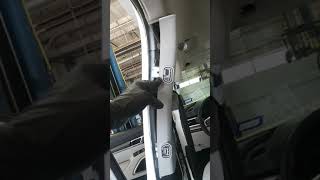
- Carefully maneuvering the large, cumbersome headliner out of the vehicle without creasing or damaging it, which often requires reclining both front seats completely. 🎬 Watch: A walkthrough of the complex headliner removal process.
Only after the headliner is out can you unbolt and replace the sunshade assembly. Due to the high risk of breaking plastic trim clips or damaging the headliner board, this job is best left to experienced technicians.
Cost of Replacement
The cost to replace a rear sunroof shade can vary significantly based on the parts source and labor rates.
| Part/Service | Estimated Cost |
|---|---|
| New OEM Sunshade Assembly | $275 - $410 |
| Used OEM Sunshade Assembly | $150 - $300 |
| New Aftermarket | Not Available |
| Shop Labor Cost | $450 - $750 (3-5 hours) |
Frequently Asked Questions (FAQ)
Is the rear sunshade for the Hyundai Palisade the same as the Kia Telluride?
Yes, because the Palisade and Telluride share the same platform, many parts, including the sunroof components, are identical. The rear glass panel (81640-S8100) is confirmed to fit both. It is highly likely the shade assembly is also a direct fit, but you should always verify the specific part number before purchase.
Can I just replace the fabric on my sunshade?
Generally, no. The fabric is integrated into a roller assembly and is not designed to be replaced separately. The entire sunshade is sold as a single unit. Attempting to replace only the fabric would be a custom upholstery job and would likely yield poor results.
My sunroof is making a rattling noise. Is it the shade?
It could be, but it's important to diagnose the source. Rattles in this area can come from the shade assembly, the sunroof tracks, the glass panel itself, or even loose headliner clips. Have a passenger try to apply light pressure to different areas of the headliner and shade while driving to see if the noise changes or stops, which can help pinpoint the source.
My sunroof won't close and I heard a pop. Is that the shade?
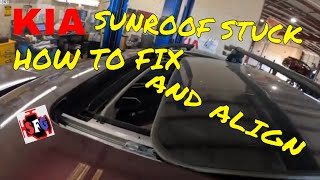
A loud pop followed by the sunroof not closing is the classic symptom of the front wind deflector breaking, as described in TSB 23-BD-003H-1. 🎬 Watch: What to do when your sunroof won't close. This issue affects the front sliding glass panel, not the rear shade. The repair involves replacing parts of the front sunroof mechanism.
Helpful Videos
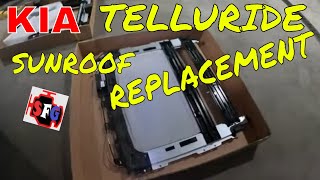
Technical Specifications
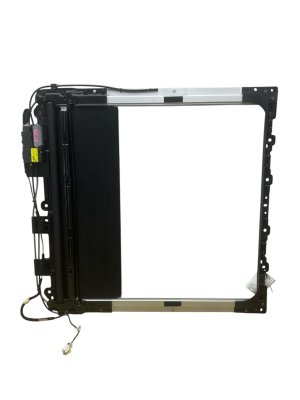
OEM Part Numbers: 81660-S8000-MMH 81660S8000MMH
Fits 2020-2025 Hyundai Palisade and Kia Telluride models equipped with a panoramic sunroof (rear fixed panel shade only).
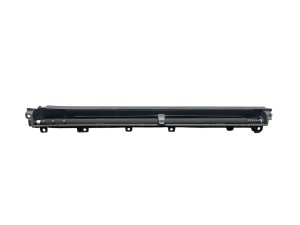
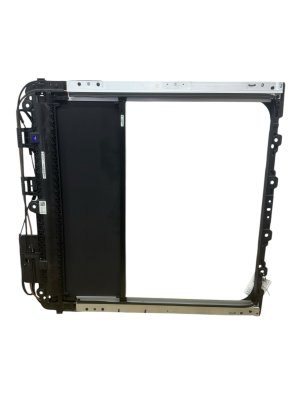
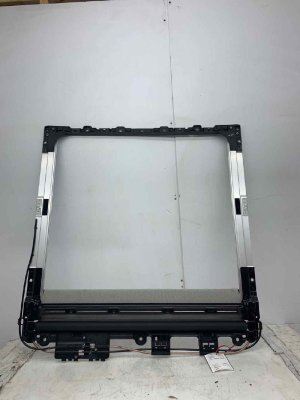
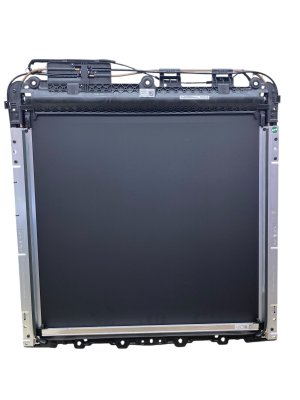
We Have This Part in Stock

The information in this article is provided for general reference and educational purposes only. Vehicle specifications, procedures, and part compatibility can vary by production date, trim level, and region. Always consult your vehicle's factory service manual and verify part numbers before purchasing or performing repairs. Safety-critical components such as airbags, seat belts, and braking systems should be installed by a qualified professional.
- Hyundai Palisade:
- 🎬 Helpful Videos
- 🛍️ Shop This Part
- Part Identification and Compatibility Warning
- Symptoms of a Failing Rear Sunroof Shade
- Known Issues, TSBs, and Recalls
- TSB 23-BD-003H-1: Front Sunroof Wind Deflector and Mechanism
- Buying a Used Rear Sunroof Shade: What to Inspect
- Replacement Difficulty: 4.5 out of 5
- Cost of Replacement
- Frequently Asked Questions (FAQ)
- 🎟️ Get 5% Off