

B3055 on 2023-2025 GMC Yukon XL: Key Not Detected, No Start Causes and Fixes
On a 2023-2025 GMC Yukon XL, code B3055 means the vehicle's anti-theft system can't detect the key fob, causing a no-start. This is most commonly caused by radio frequency interference (RFI) from aftermarket devices like phone chargers, as detailed in GM TSB PIC5650. Before major repairs, remove all electronics and try placing the fob in the backup transmitter pocket in the front cupholder. This issue is also common on its platform mates: the Chevrolet Tahoe, Suburban, and Cadillac Escalade.
- B3055 on your Yukon XL means the anti-theft system can't see your key fob, which prevents the engine from starting.
- The most likely cause is not a broken part, but radio interference from a phone charger, dash cam, or other aftermarket electronic device.
- Before calling for a tow, remove all non-factory electronics from the vehicle and try starting it again.
- If that fails, try your spare key or place the original key in the backup slot in the front cupholder to start the vehicle.
- Do not replace the starter or vehicle battery for this code; the problem is with the security system.
What's Unique About the 2023-2025 Gmc YUKON XL
The fifth-generation Yukon XL (2021-present) is built on GM's T1 platform and features the new Vehicle Intelligence Platform (VIP), also known as Global B electrical architecture. This highly complex system, while enabling advanced features, is exceptionally sensitive to electronic noise. The B3055 code is frequently linked to intermittent no-start conditions documented in GM Technical Service Bulletin PIC5650M and its subsequent revisions. Unlike older vehicles, these modern SUVs rely entirely on radio frequency for keyless entry and ignition, making them highly susceptible to RFI from aftermarket phone chargers, LED lights, or even toll passes, which can jam the 125 kHz, 315 MHz, or 433 MHz signals used by the keyless entry and immobilizer systems.
Diagnostic Flowchart
Tap your situation to follow the diagnostic path that matches what you're seeing on this vehicle.
Symptoms You May Notice
- Intermittent no-crank or no-start condition.
- Engine starts and then immediately stalls.
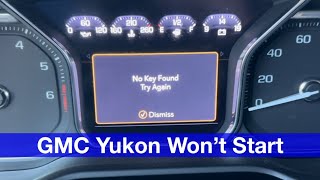
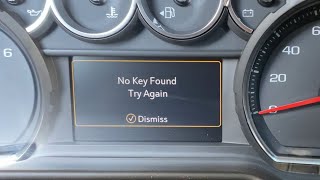
- "No Remote/Fob Detected" message on the Driver Information Center (DIC).
- Security indicator light illuminated on the dashboard.
- Keyless entry functions (door locks) work poorly or not at all.
- Remote start may work, but the vehicle will not start and run when the driver gets in.
- Replacing the starter motor. The B3055 code indicates a security system command to prevent starting; it is not a failure of the starter itself.
- Replacing the main vehicle battery without proper testing. While a low battery can cause issues, RFI and key fob problems are more common for this specific code on this platform.
Most Likely Causes
- Radio Frequency Interference (RFI) from Aftermarket Devices 🔴 High Probability The Global B electrical architecture is sensitive to electronic noise. Low-quality electronics like USB chargers, dash cams, aftermarket LED bulbs, and even some phone mounts can emit RFI that jams the key fob signal. TSB #PIC5650M specifically calls this out 🎬 Watch this guide on fixing 'No Fob Detected' errors. as a primary diagnostic step.
How to confirm: Unplug all aftermarket devices from the vehicle's power outlets. Remove any non-factory electronic items from the car (including toll passes and access cards on the keychain). If the vehicle starts consistently with these items removed, RFI is the cause. A technician may use an RFI meter to pinpoint the source.
Typical fix: Remove or replace the offending aftermarket device with a high-quality, properly shielded alternative. Use ferrite beads on power cords as a potential mitigation.
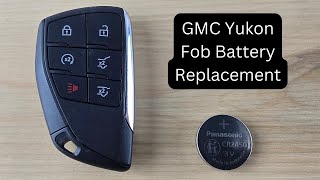
Est. part cost: $0-$50 - Weak or Dead Key Fob Battery 🟡 Medium Probability → Shop Vehicle Battery Owners on forums report fobs for this platform draining batteries faster than expected, sometimes in a matter of weeks or months. The key fob for the 2021+ Yukon uses a CR2450 battery. 🎬 Watch: How to replace your key fob battery step-by-step.
How to confirm: Try starting the vehicle with the spare key fob. Alternatively, place the suspect key fob in the designated transmitter backup pocket 🎬 See how to start your Yukon using the backup pocket. (in the front cupholder area) as described in the owner's manual; this allows the vehicle to start even with a very weak fob battery. If either of these methods work, the fob battery is the likely culprit.
Typical fix: Replace the CR2450 battery inside the key fob.
Est. part cost: $1-$10 - Faulty Key Fob ⚪ Low Probability → Shop Keyless Entry Transmitter
How to confirm: If the spare key fob works perfectly and the primary fob does not (even with a new battery and with no RFI sources present), the internal electronics of the primary fob have likely failed.
Typical fix: The faulty key fob must be replaced and programmed to the vehicle by a dealer or qualified automotive locksmith.
Est. part cost: $150-$400 - Body Control Module (BCM) or Other Module Fault ⚪ Low Probability → Shop Body Control Module While less common, the BCM is the central computer for the security system. An internal fault or a poor connection can cause this code. In one owner-reported case for a 2023 Yukon, a faulty Restraint Control Module was the ultimate cause of the 'Key Not Detected' issue.
How to confirm: This requires professional diagnosis with a GM-specific scan tool (GDS2) to monitor communication with the key fobs and immobilizer antennas. A technician will check for other related BCM codes and inspect wiring harnesses.
Typical fix: Repair wiring or replace and program the faulty control module (BCM, RCDLR, or potentially another module). This must be done by a dealership or specialized repair shop.
Est. part cost: $600-$1200
Rare But Worth Checking
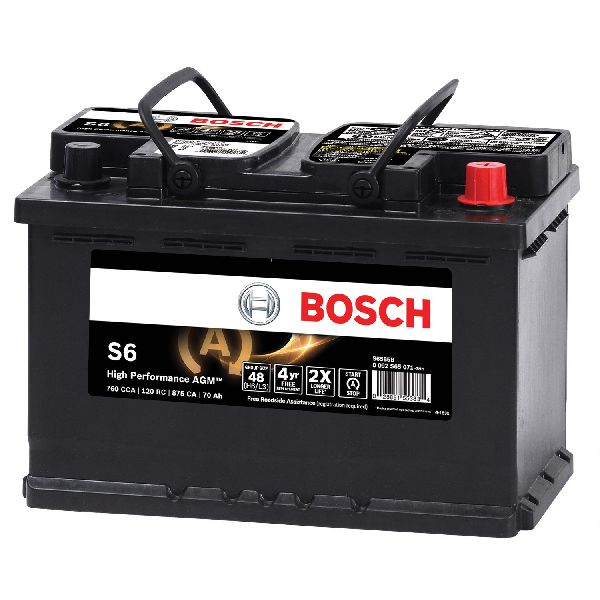
- Low Vehicle Battery Voltage: → Shop Vehicle Battery A weak main vehicle battery can cause unpredictable communication errors between various electronic modules, including the BCM. Before diagnosing complex security issues, ensure the vehicle's 12V battery is fully charged and healthy.
- Key Fob Stored Too Close to Vehicle: → Shop Keyless Entry Transmitter Some owners on forums have reported that if the key fob is stored just within range of the vehicle (e.g., inside a garage near the vehicle), it can cause the vehicle's systems to remain in a semi-awake state, draining both the vehicle battery and the fob battery.
Diagnosis Steps
- Question the driver about any aftermarket electronics in the vehicle (phone chargers, dash cams, LED lights, USB power banks, etc.).
- Remove ALL aftermarket devices and extra fobs/cards from the vehicle and keychain.
- Attempt to start the vehicle. If it starts, the issue is RFI from one of the removed devices.
- If the vehicle still does not start, try using the spare key fob.
- If the spare fob works, the primary fob is faulty or has a dead battery (CR2450).
- If neither fob works, place a fob in the transmitter backup pocket (front cupholder) and attempt to start. If it starts, this strongly indicates a weak fob battery or significant RFI.
- If the vehicle still will not start, but remote functions work, check for a 'No Remote Detected' message. This points specifically to the immobilizer handshake failing.
- Scan all vehicle modules for DTCs. Note all codes present, especially B3055, B3060, and B3935.
- Check the main 12V vehicle battery to ensure it is fully charged and in good health.
- If all else fails, the vehicle requires professional diagnosis to inspect the BCM, Keyless Entry Control Module (RCDLR), and associated wiring.
Parts You'll Likely Need
- Key Fob Battery
(OEM #CR2450)— This is the most common and inexpensive fix when the key fob's signal becomes too weak for the vehicle to detect. The 2021+ models use a CR2450 battery.
Trusted brands: Energizer, Duracell, Panasonic
OEM price range: $5-$10
Aftermarket price range: $1-$5 - Keyless Entry Remote Fob
(OEM #13548434 (6-Button))— If the fob's internal electronics fail, it must be replaced. This is the next most likely part to fail after ruling out RFI and the battery. Part number may vary based on specific options.
Trusted brands: ACDelco, GM Genuine Parts
OEM price range: $150-$400
Aftermarket price range: $70-$200 - Body Control Module (BCM) — In rare cases where RFI and key fobs are ruled out, the BCM itself may have an internal fault preventing it from recognizing valid keys. Replacement requires dealer programming.
Trusted brands: ACDelco, GM Genuine Parts
OEM price range: $500-$800
Related Codes That Often Appear With This One
- B3060 — This code is for 'Unlearned Key Detected' and is frequently listed alongside B3055 in GM service bulletins for similar no-start conditions.
- B3935 — Another transponder key authentication error code that points to a failure in the key identification process, often triggered by the same RFI or communication fault.
- C0750, C0755, C0760, C0765, C0775 — These codes relate to the Tire Pressure Monitoring (TPM) system, which also uses radio frequency communication. TSB PIC5650M notes that significant RFI can disrupt both the immobilizer and TPM systems simultaneously.
Technical Service Bulletins (TSBs) & Recalls
- PIC5650M: Addresses intermittent no-crank, no-start, or start-stall concerns with the security light on, often accompanied by DTC B3055.
Platform-Specific Known Issues
- GM has issued Technical Service Bulletin #PIC5650 (with multiple revisions like M, K, etc.), which directly addresses an intermittent no-crank, no-start, or start-and-stall condition with the security light on. The bulletin specifically lists DTC B3055 and strongly advises technicians to investigate and remove sources of Radio Frequency Interference (RFI) before replacing any parts.
- The TSB lists common RFI culprits including aftermarket cell phone chargers, USB power banks, LED lights, and even toll passes or building access cards on the keychain.
Scan Tool Commands That Help
- GDS2: Immobilizer Learn / Programming Theft Deterrent System Components — This function is required after replacing a key fob, the Remote Control Door Lock Receiver (RCDLR), or the Body Control Module (BCM). It initiates the security relearn procedure to allow the new components to be recognized by the vehicle.
- GDS2: Add or Replace Key Fobs — When a new key fob needs to be programmed to the vehicle. This function is found under 'Remote Control Door Lock Receiver' > 'Configuration/Reset Functions'. The tool places the system in learn mode to accept the new fob.
- GDS2: Data Bus Diagnostic Tool — If multiple seemingly unrelated DTCs are present along with B3055, this function can check the health of the vehicle's communication networks (CAN bus) to identify which modules are offline, pointing towards a broader wiring or module failure.
- GDS2: Diagnostic Data Display — To view live data related to the keyless entry system. A technician can monitor parameters like 'Key State' or 'Transponder Status' to see if the BCM is recognizing the key's presence in real-time.
Wiring & Ground Locations
- Body Control Module (BCM) — On 2023-2025 Yukon XL models, the BCM is located inside the vehicle, typically behind the lower dashboard panel on the driver's side, near the interior fuse block.. The BCM is the central computer that manages the immobilizer system. All communication from the key fob and immobilizer antennas is processed here. A poor connection at one of its multi-pin connectors (e.g., X1, X2) or a bad ground can cause B3055.
- Remote Control Door Lock Receiver (RCDLR) — On prior generation GM SUVs, this module was often located in the rear of the vehicle, behind the driver's side D-pillar trim. While the exact location on the 2023-2025 models requires a service manual to confirm, this is the likely area.. The RCDLR is the primary receiver for the key fob's signals. A fault in this module or its wiring/antenna can prevent the key's signal from ever reaching the BCM, directly causing a B3055 code.
- G103 / G104 (Engine/Cowl Grounds) — On similar GM truck platforms, important grounds for the BCM and other interior modules are located on the cowl in the rear of the engine compartment, often above the brake booster. Another critical ground strap runs from the body to the rear of the cylinder head.. The BCM and other related modules rely on clean ground connections to operate. A loose or corroded ground at G103 or G104 can introduce electrical noise or cause intermittent voltage drops, leading to communication errors that trigger B3055.
- G200 / G201 (Instrument Panel Grounds) — These grounds are located behind the plastic dash panels, near the A-pillars on the driver's (G201) and passenger's (G200) side, attached to the metal dash support structure.. These grounds serve various instrument panel components. A fault here could potentially affect the immobilizer antenna or indicator lights, contributing to the diagnosis of a B3055.
Real Owner Repair Stories
- Reddit user ZAM2345 (2023 GMC Yukon AT4) — Vehicle displayed 'key not detected' and would not start with the push-button. This occurred with both key fobs. Remote start and the lock/unlock buttons on the fob still worked. Placing the fob in the backup cupholder slot did not work.
❌ Tried (didn't work) Using the spare key fob, Placing the fob in the transmitter backup pocket (cupholder), Disconnecting the main vehicle battery for one hour to reset the system
✅ What actually fixed it The dealership consulted with GM corporate engineers and the final repair was replacing the Restraint Control Module. - Reddit user asheronbubs (GMC Yukon (year not specified, but modern)) — Intermittent 'key not detected' issue, preventing the vehicle from starting.
❌ Tried (didn't work) Temporarily fixed by disconnecting and reconnecting the battery, but the problem returned multiple times.
✅ What actually fixed it The dealership diagnosed and replaced the Security Gateway Module.
When the Usual Fixes Don't Work
- In at least one documented case on a 2023 Yukon AT4, the common fixes for B3055, including removing RFI sources, trying the spare key, using the backup starting location, and performing a battery reset, all failed to resolve the 'key not detected' issue. The problem persisted even though remote functions of the fob worked correctly. The ultimate cause was determined by GM engineers to be a faulty Restraint Control Module, a component not typically associated with the immobilizer system. This highlights that on the complex Global B architecture, module failures outside the direct security system can cause this code.
Helpful Videos
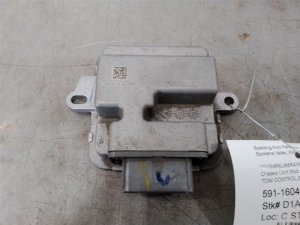
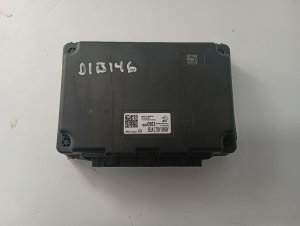
Used OEM Parts in Stock
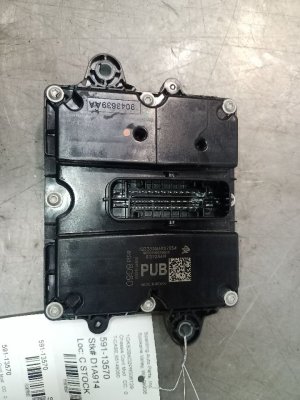
New Aftermarket Parts Available

The information in this article is provided for general reference and educational purposes only. Vehicle specifications, procedures, and part compatibility can vary by production date, trim level, and region. Always consult your vehicle's factory service manual and verify part numbers before purchasing or performing repairs. Safety-critical components such as airbags, seat belts, and braking systems should be installed by a qualified professional.
- Gmc YUKON XL:
- 🧭 Diagnostic Flowchart
- 🎬 Helpful Videos
- 🛍️ Shop This Part
- What's Unique About the 2023-2025 Gmc YUKON XL
- Symptoms You May Notice
- Most Likely Causes
- Rare But Worth Checking
- Diagnosis Steps
- Parts You'll Likely Need
- Related Codes That Often Appear With This One
- Technical Service Bulletins (TSBs) & Recalls
- Platform-Specific Known Issues
- Scan Tool Commands That Help
- Wiring & Ground Locations
- Real Owner Repair Stories
- When the Usual Fixes Don't Work
- 🎟️ Get 5% Off