

B3060 on 2024-2025 Buick ENVISION: Security Fault, No Start Causes & Fixes
Code B3060 on a 2024-2025 Buick Envision typically means a security system fault is preventing the engine from starting and illuminating the security light. The most common fix is an immobilizer relearn procedure performed by a dealer or qualified shop, not a part replacement. Before seeking service, remove all other electronic fobs and cards from the keychain to rule out radio frequency interference (RFI), a very common cause noted in GM service bulletins.
- B3060 is a security code, not an engine or starter problem. The primary symptom is the vehicle refusing to start, with the security light on.
- Before seeking professional help, try simple fixes: use your spare key, replace the key fob battery, and remove other electronic devices from your keychain.
- A fix almost always requires a dealer or a well-equipped independent shop to perform a security relearn procedure with a GM-specific scan tool.
- This issue is documented in a manufacturer TSB (PIC5650M), indicating it's a recognized problem on these vehicles.
- Do not replace parts like the starter or battery before properly diagnosing this security code.
What's Unique About the 2024-2025 Buick ENVISION
For the 2024-2025 Buick Envision, which utilizes GM's latest Vehicle Intelligence Platform (VIP) or 'Global B' architecture, this code is specifically mentioned in a long-running Technical Service Bulletin (TSB PIC5650 series) related to intermittent no-start or stalling issues. This suggests a known sensitivity in the platform's security communication protocol. Unlike older vehicles where a mechanical ignition switch was a common failure point or where a DIY '30-minute key relearn' was possible, on this modern platform the issue is more likely related to module communication, key fob signal integrity, or the need for a software-based relearn procedure using dealer-level tools. Any BCM replacement requires mandatory programming tied to the VIN.
Diagnostic Flowchart
Tap your situation to follow the diagnostic path that matches what you're seeing on this vehicle.
Symptoms You May Notice
- Engine will not crank
- Engine cranks but will not start
- Engine starts and immediately stalls.
- Security indicator light is on or flashing on the dashboard.
- A 'Theft Deterrent System' or 'Service Theft Deterrent System' message may appear on the driver information center.
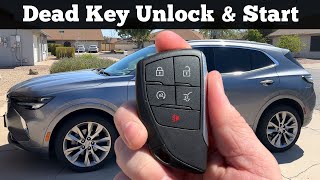
- A 'No Fob Detected' message may appear, but the vehicle may still start if the fob is placed in the designated transmitter pocket. 🎬 Watch: How to start your Envision with a dead fob
- Replacing the starter motor without checking for security codes first.
- Replacing the 12V battery without confirming it has failed a load test.
- Replacing the Body Control Module (BCM) before thoroughly investigating and eliminating Radio Frequency Interference (RFI) as the cause.
Most Likely Causes
- Immobilizer System Requires Relearning 🔴 High Probability As noted in TSB PIC5650M, intermittent communication issues can cause the system to lose sync. This can also happen after a battery replacement or if the vehicle's battery voltage drops too low. Sometimes this is due to a software glitch that requires a dealer to reflash the BCM with an updated calibration, not just relearn the keys.
How to confirm: A technician with a GM-specific scan tool (GDS2) can check the immobilizer status and see if a key relearn procedure is required.
Typical fix: Perform the security system relearn procedure using a compatible scan tool. This reprograms the BCM to recognize the existing keys.
Est. part cost: $0 - Radio Frequency Interference (RFI) 🔴 High Probability The immobilizer system operates at a low frequency (125 kHz) and can be disrupted by other electronic devices. TSB PIC5650M specifically calls this out as a primary diagnostic step. Common sources include other key fobs, building access cards, gas station speed passes, aftermarket phone chargers, and even some aftermarket LED lights plugged into the vehicle.
How to confirm: Remove all other keys and electronic devices from the keychain with the Envision fob. Also unplug any aftermarket devices 🎬 See this guide on fixing 'No Fob Detected' errors from USB or 12V ports. Try starting the vehicle with the isolated key. If it starts, RFI was the cause.
Typical fix: Keep the vehicle's key fob separate from other electronic devices to prevent signal interference.
Est. part cost: $0 - Weak or Dead Key Fob Battery 🟡 Medium Probability → Shop Vehicle Battery A weak battery may not provide enough power for the key's transponder to communicate effectively with the vehicle's security module.
How to confirm: Try using the spare key fob. If the vehicle starts with the spare key, the battery in the primary key is the culprit. Many modern GM vehicles, including the Envision, have a designated pocket in the center console or steering column to place a fob with a dead battery to allow the car to start; if this works, it confirms a fob battery issue.
Typical fix: Replace the battery in the key fob, which is typically a CR2032.
Est. part cost: $5-$15 - Low Vehicle Battery Voltage ⚪ Low Probability → Shop Vehicle Battery Low system voltage during a start attempt can cause communication errors between various modules, including the BCM and ECM, leading to erroneous security codes. This can also cause a key relearn procedure to fail.
How to confirm: Test the vehicle's main 12V battery with a multimeter or battery tester. Voltage should be above 12.4V with the engine off.
Typical fix: Recharge or replace the vehicle's 12V battery.
Est. part cost: $180-$350 - Faulty Body Control Module (BCM) ⚪ Low Probability → Shop Body Control Module The BCM manages the anti-theft system. While uncommon, an internal failure of the BCM can cause this code. TSBs advise against replacing the BCM until all other possibilities are exhausted.
How to confirm: This is a diagnosis of exclusion. If all other causes (key, battery, wiring, RFI, programming) are ruled out, the BCM is the likely suspect. A technician can perform advanced diagnostics on the BCM itself.
Typical fix: Replace the Body Control Module and program the new module to the vehicle, which requires dealer-level tools and software.
Est. part cost: $400-$700
Rare But Worth Checking
- Faulty Immobilizer Antenna: → Shop Antenna
Diagnosis Steps
- Verify the complaint: Confirm the no-crank/no-start condition and check if the security light is illuminated or flashing.
- Scan for Codes: Use an OBD-II scanner capable of reading Body (B) codes to confirm B3060 and check for other related codes in all modules (BCM, ECM, etc.).
- Isolate the Key Fob: Remove all other keys, fobs, access cards, and electronic devices from the keychain. Unplug any aftermarket phone chargers or dash cams. Attempt to start the vehicle. This is the primary step recommended by GM TSBs.
- Test the Spare Key: Attempt to start the vehicle with a known-good spare key fob. If it works, the issue is with the primary fob.
- Test the Transmitter Pocket: If a weak fob battery is suspected, place the fob in the designated transmitter pocket (location is in the owner's manual, usually in the center console or cubby) and attempt to start. If it starts, replace the fob battery.
- Check Key Fob Battery: If the spare key works or the transmitter pocket works, replace the battery (typically CR2032) in the non-working key.
- Check Vehicle Battery: Test the main 12V vehicle battery's voltage and health. Ensure it is fully charged and has clean terminals. A weak battery can cause random electronic faults.
- Professional Diagnosis: If the above steps fail, the vehicle must be taken to a dealer or qualified shop. They will use a GM GDS2 scan tool to attempt an immobilizer relearn procedure.
- Inspect Wiring: If the problem persists, a technician will inspect the wiring and connectors at the Body Control Module (BCM) for any signs of damage or corrosion, though this is unlikely on a new vehicle.
- Advanced Diagnostics: If all else fails, a technician will need to perform advanced diagnostics on the BCM and related security system components, such as the immobilizer antenna.
Parts You'll Likely Need
- Key Fob Battery
(OEM #CR2032 (typical))— A weak or dead battery is a simple and common reason for the key's transponder to fail to communicate.
Trusted brands: Energizer, Duracell, Panasonic
OEM price range: $5-$15
Aftermarket price range: $2-$10 - Body Control Module (BCM)
(OEM #13537291 (Example for 2021-2024 Envision - Must verify by VIN))— In rare cases where programming fails and all other components are verified, the BCM itself may have an internal fault. Replacement requires VIN-specific programming. 🎬 Watch: Professional walkthrough of the GM BCM replacement process
Trusted brands: ACDelco (OEM)
OEM price range: $400-$700
Aftermarket price range: $300-$550 (Often remanufactured)
Related Codes That Often Appear With This One
- B3055 — This code means 'No Transponder Modulation or No Transponder', indicating the security module received no signal from the key at all, which can occur alongside B3060. It is also listed in TSB PIC5650M.
- B3935 — Means 'Transponder Authentication Failed'. This indicates the module received a signal but couldn't validate it, often set with B3060. It is also listed in TSB PIC5650M.
- C0750, C0755, C0760, C0765, C0775 — These are tire pressure monitor sensor codes also listed in TSB PIC5650M. Their presence alongside B3060 could indicate a broader communication or BCM-related issue, as the same receiver module (RCDLR) often handles both keyless entry and TPMS signals.
Technical Service Bulletins (TSBs) & Recalls
- PIC5650M: Addresses intermittent no crank, no start, or start stall concerns with the security light on. It lists B3060 as a potential DTC and heavily emphasizes checking for Radio Frequency Interference (RFI) from aftermarket devices or other fobs on the keychain as a primary cause before attempting any parts replacement. It also notes that on keyless start vehicles, the car may still start if the fob is placed in the transmitter pocket.
Platform-Specific Known Issues
- TSB PIC5650M: Intermittent No-Start / RFI Sensitivity: A known issue documented in the long-running TSB #PIC5650 series describes an intermittent no crank, no start, or start/stall condition with the security light on, which may log DTC B3060. The bulletin strongly advises technicians to investigate and eliminate all possible sources of Radio Frequency Interference (RFI) before replacing any parts. This includes other fobs on the keychain, aftermarket chargers, and even LED lights. This TSB confirms that the condition is a recognized sensitivity in the vehicle's security system communication.
Hidden / Shadow Codes Worth Checking
- B3060 00: Unprogrammed Transponder Identification Code Received. The '00' is a standard GM symptom code indicating no specific sub-type information is available, meaning the main DTC description is the complete fault. (see via A professional scan tool like the GM GDS2 will display the code with its two-digit symptom byte.)
Scan Tool Commands That Help
- GM GDS2: Module Diagnostics > Remote Control Door Lock Receiver > Configure/Reset Functions > Add/Replace Key Fobs — This function is used to program new or existing keys to the vehicle after a key replacement or if the system has lost synchronization.
- GM GDS2: Service Programming System (SPS) > Immobilizer Learn — This is the master function required when replacing a major security component like the BCM. It involves a 12-13 minute security wait time and configures the new module to the vehicle's existing keys.
- GM GDS2: Module Diagnostics > Body Control Module > Data Display > Immobilizer Data — To view live data related to the security system, such as the number of learned keys, the state of the security system, and the reason for the last security event. This helps determine if the system is failing to see the key or rejecting it.
Wiring & Ground Locations
- K9 Body Control Module (BCM) — Located in the center console, accessible after removing the lower panel on the passenger side footwell.. The BCM is the central module for the vehicle's theft deterrent system. It receives the key data, validates it, and enables the engine to start. All diagnostic paths for this code lead to or from the BCM.
- BCM Connector X1, Pin 21 — On the K9 Body Control Module. This specific pin controls the security indicator light on the dashboard.. A technician can probe this circuit (Wire Color: Gray) to verify if the BCM is actively commanding the security light on, confirming the BCM is aware of the fault. An open or short in this circuit could cause the light to behave incorrectly but would not typically cause the no-start condition itself.
- Immobilizer Antenna — Typically a ring integrated into the push-to-start button assembly or located within the center console in the designated transmitter pocket for starting with a dead fob battery.. This antenna energizes the key fob's transponder and reads its code. A failure of the antenna or its wiring to the BCM will result in a no-start and can set codes B3055 or B3060.
Real Owner Repair Stories
- ? ()
Model Year Variations Within This Range
- 2024-2025: The 2024 model year Envision received a major refresh, moving it to GM's Vehicle Intelligence Platform (VIP), also known as Global B. This is a fundamental electrical architecture change from the 2016-2023 models. Diagnostic procedures, module locations, and programming requirements (requiring GDS2 and SPS2) are completely different and more complex than on pre-2024 models.
Helpful Videos
Used OEM Parts in Stock
New Aftermarket Parts Available

The information in this article is provided for general reference and educational purposes only. Vehicle specifications, procedures, and part compatibility can vary by production date, trim level, and region. Always consult your vehicle's factory service manual and verify part numbers before purchasing or performing repairs. Safety-critical components such as airbags, seat belts, and braking systems should be installed by a qualified professional.
- Buick ENVISION:
- 🧭 Diagnostic Flowchart
- 🎬 Helpful Videos
- 🛍️ Shop This Part
- What's Unique About the 2024-2025 Buick ENVISION
- Symptoms You May Notice
- Most Likely Causes
- Rare But Worth Checking
- Diagnosis Steps
- Parts You'll Likely Need
- Related Codes That Often Appear With This One
- Technical Service Bulletins (TSBs) & Recalls
- Platform-Specific Known Issues
- Hidden / Shadow Codes Worth Checking
- Scan Tool Commands That Help
- Wiring & Ground Locations
- Real Owner Repair Stories
- Model Year Variations Within This Range
- 🎟️ Get 5% Off