

B3060 on 2012-2019 Chevrolet Sonic: Security Light and No-Start Causes
This code means your Sonic's anti-theft system doesn't recognize the key, causing a no-start or stall. The most common causes are radio frequency interference from other devices on your keychain or a faulty key. Try starting the car with the key isolated from other fobs or devices first.
- B3060 means your Sonic's anti-theft system has locked you out, usually due to a key recognition issue.
- Before spending any money, try starting the car with the key completely isolated from any other keys, fobs, or electronic cards.
- If a spare key works, the problem is your primary key. If neither key works, the issue is likely with the car's battery, reader coil, or BCM.
- Fixing this code almost always requires programming, either for a new key or a new module, which necessitates a visit to a professional with the right tools.
What's Unique About the 2012-2019 Chevrolet SONIC

The Chevrolet Sonic, along with many other GM vehicles from the same era built on the Gamma II platform, uses a Passkey III+ immobilizer system. This system is known to be sensitive to radio frequency (RF) interference. A GM Technical Service Bulletin (PIC5650M) specifically mentions that devices like gas station speed-pass fobs, workplace ID cards, or even other vehicle keys on the same keychain can interfere with the key's 125 kHz signal, leading to intermittent no-start conditions and setting code B3060.
Diagnostic Flowchart

Tap your situation to follow the diagnostic path that matches what you're seeing on this vehicle.
Symptoms You May Notice

- Engine will not crank or start.
- Engine starts and immediately stalls.
- Security indicator light is illuminated or flashing on the dashboard.
- Intermittent starting problems, may work fine one day and not the next.
- On vehicles with keyless access, a "No Remote/Fob Detected" message may appear on the Driver Information Center (DIC).
- Replacing the starter motor when the no-crank condition is actually caused by the security system disabling the starter relay.
- Replacing the ECM (Engine Control Module) when the issue is within the BCM or the key recognition system.
Most Likely Causes

- Radio Frequency (RF) Interference 🔴 High Probability As noted in GM TSBs PIC5650B/M, the Passkey system is sensitive to other RFID devices (like speed-pass fobs, work badges, other car keys) on the keychain which can block or corrupt the key's signal.
How to confirm: Remove all other keys, fobs, and electronic devices from the keychain. Try starting the vehicle with only the single Sonic key. If the car starts, RF interference was the cause.
Typical fix: Keep the vehicle key on a separate ring from other RFID-emitting devices. No parts are required.
Est. part cost: $0 - Defective Ignition Key 🟡 Medium Probability → Shop Ignition Switch The transponder chip inside the key can be damaged from being dropped, getting wet, or simply failing over time. The internal battery of the key fob can also become weak, preventing the signal from being transmitted.
How to confirm: Try starting the vehicle with a spare key. If the spare key works reliably, the primary key is faulty. If the key fob battery is suspect, replace it first as it's the cheapest option.
Typical fix: Replace the faulty key and have the new key programmed to the vehicle by a dealer or qualified locksmith. Sometimes, a simple key relearn procedure can work.
Est. part cost: $75-$200 - Weak or Failing Vehicle Battery 🟡 Medium Probability → Shop Vehicle Battery Low system voltage during startup can cause communication errors between the Theft Deterrent Module, BCM, and ECM, leading to false anti-theft codes. Owners on forums have noted that strange electrical issues are often traced back to a failing battery.
How to confirm: Test the battery voltage with a multimeter. A healthy battery should read approximately 12.6 volts with the engine off and above 10 volts during cranking. Many auto parts stores will test your battery for free.
Typical fix: Replace the vehicle's 12V battery.
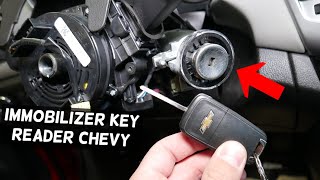
Est. part cost: $150-$250 - Faulty Ignition Lock Cylinder/Reader Coil ⚪ Low Probability → Shop Ignition Switch The exciter coil (antenna) that surrounds the ignition lock cylinder energizes the key's transponder. If this coil fails or has a wiring issue, it cannot read the key's chip. The part itself is relatively inexpensive but requires disassembling the steering column covers.
How to confirm: This typically requires a professional scan tool to check for signals from the Theft Deterrent Module. If neither the primary nor spare key works, and RF interference is ruled out, the reader coil is a likely suspect.
Typical fix: Replace the ignition lock cylinder and its associated reader coil, followed by a key relearn procedure.
Est. part cost: $100-$300 - Body Control Module (BCM) Failure ⚪ Low Probability → Shop Body Control Module The BCM is the central computer for the security system. Software glitches or internal hardware failure can prevent it from recognizing a valid key. This is a known, though less common, failure point on Sonics.
How to confirm: This is a diagnosis of exclusion after all other causes (key, battery, wiring, reader) have been ruled out. A professional scan tool is needed to attempt communication with and diagnosis of the BCM. A telltale sign can be multiple, unrelated electrical issues occurring simultaneously.
Typical fix: The BCM may need to be reprogrammed or, in severe cases, replaced. Replacement BCMs must be programmed to the vehicle's VIN. Some services offer to clone your original BCM's data to a replacement unit, avoiding a trip to the dealer.
Est. part cost: $400-$800
Rare But Worth Checking
- Wiring Harness Issues:
Diagnosis Steps
- Check the dashboard for an illuminated or flashing security light.
- Remove all other fobs, keys, and RFID cards from the keychain and try starting the car with just the Sonic key to rule out RF interference.
- If you have a spare key, try to start the vehicle with it. If it works, the original key is likely faulty.
- Test the vehicle's main 12V battery to ensure it has adequate voltage (at least 12.4V). Low voltage can cause module communication errors.
- Perform the '30-Minute Vehicle Key Relearn' procedure. Turn the key to the 'ON' position (don't start) and wait for the security light to turn off (approx. 10 minutes). Turn the key off for 5 seconds. Repeat this process two more times for a total of three 10-minute cycles. After the third cycle, turn the key off and then try to start the engine. This can sometimes resynchronize the key and module.
- Inspect the wiring and connectors at the ignition switch and Body Control Module (BCM) for any visible damage or loose connections.
- If the above steps do not resolve the issue, use a professional-grade scan tool to read live data from the Body Control Module and Theft Deterrent Module to check key status and look for other related fault codes.
Parts You'll Likely Need
- Ignition Key with Transponder — The transponder chip in the original key may have failed or been damaged.
Trusted brands: ACDelco
OEM price range: $100-$200
Aftermarket price range: $50-$120 - Body Control Module (BCM)
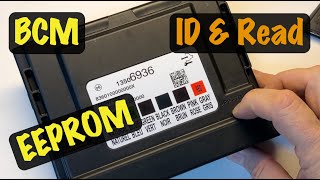
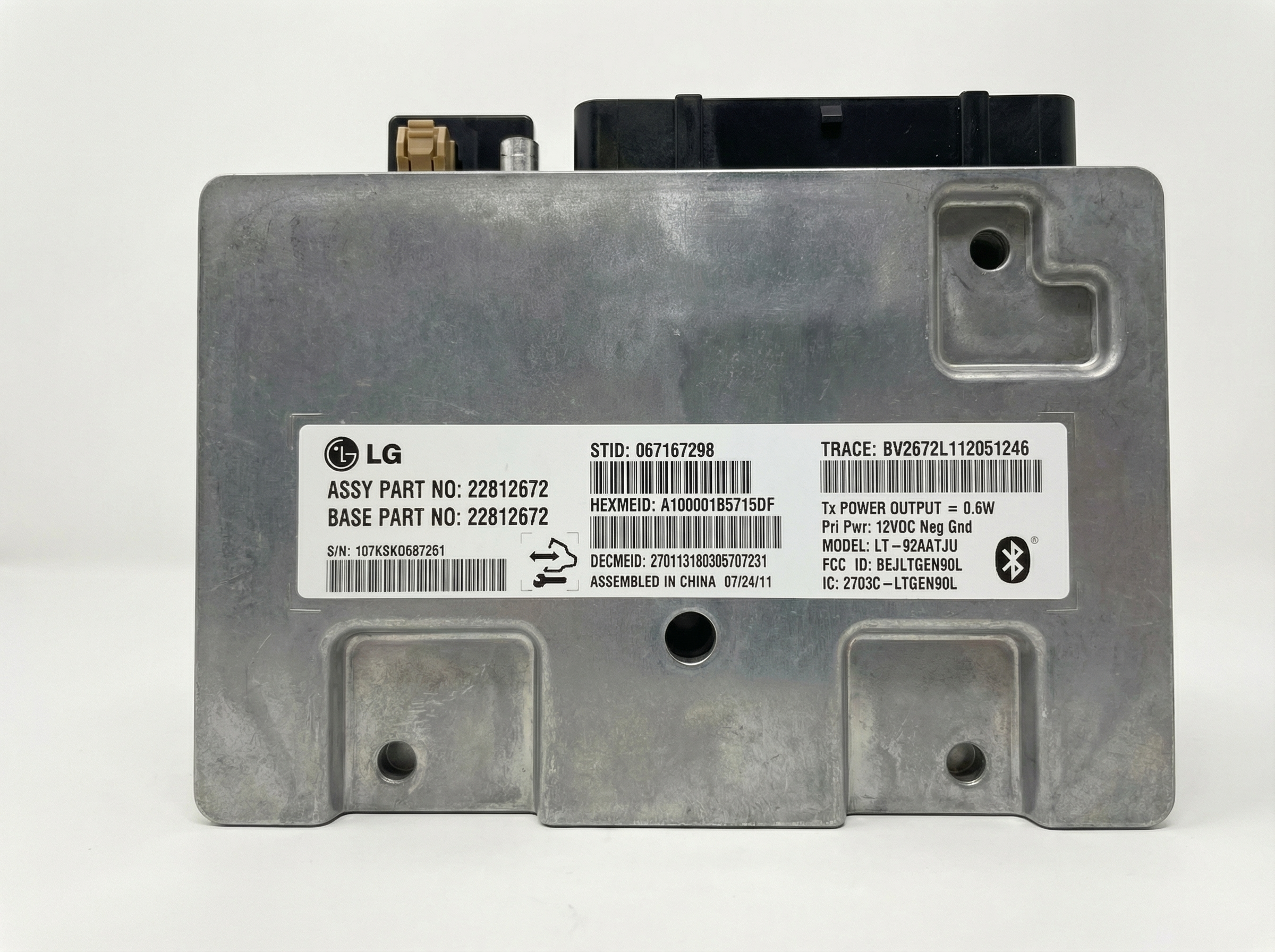
(OEM #13582620 (2012-2015), 13506936 (2015-2019))— In less common cases, the BCM itself fails and can no longer recognize valid keys, requiring replacement and programming.
Trusted brands: ACDelco (GM Genuine)
OEM price range: $400-$600
Aftermarket price range: $250-$450 - Ignition Lock Cylinder with Reader
(OEM #ACDelco D1464G)— The antenna coil around the ignition cylinder that reads the key's chip can fail, preventing communication.
Trusted brands: ACDelco, Standard Motor Products, Wells
OEM price range: $60-$90
Aftermarket price range: $30-$55
Related Codes That Often Appear With This One
- B3055 — Relates to a problem with the key transponder. Often set together with B3060 as part of the same security system fault.
- B3935 — Another transponder circuit malfunction code, indicating an incorrect key or signal issue, often cited alongside B3060 in TSBs.
Technical Service Bulletins (TSBs) & Recalls
- PIC5650M: Addresses intermittent no crank, no start, or start stall concerns with the security light on, potentially caused by RF interference, and lists DTCs B3055, B3060, and B3935 among others. It applies to a wide range of GM vehicles, including the 2012-2015 Sonic.
- PIE0232: An engineering information bulletin for early model year vehicles (not specifically Sonic, but relevant) to gather data on the root cause of no-start conditions with codes B3055, B3060, or B3935, highlighting that GM was actively investigating this issue.
Platform-Specific Known Issues
- A Technical Service Bulletin (PIC5650M) confirms that intermittent no-crank/no-start conditions with the security light on and code B3060 can be caused by Radio Frequency Interference from devices on the keychain.
- Owners on forums like ChevySonic.org and Reddit frequently report strange electrical gremlins, including no-start conditions, that are ultimately traced back to a weak or failing battery or a bad negative battery cable.
Mechanic-Grade Diagnostic Values
- Immobilizer LIN Bus Voltage — expected: Pulsing data signal, not a steady voltage. Requires an oscilloscope for accurate viewing.. Failure: No signal or a flat line indicates a break in the wire or a fault in the BCM or immobilizer antenna.
- Ignition Switch Voltage (Accessory) — expected: 12V+ on Purple/Yellow wire at BCM green 25-pin plug, pin 5, when key is in ACC/ON position.. Failure: No voltage suggests a faulty ignition switch or wiring, which can interrupt the key read sequence.
- Ignition Switch Voltage (Ignition) — expected: 12V+ on Purple/Black wire at BCM green 25-pin plug, pin 6, when key is in ON/RUN position.. Failure: No voltage suggests a faulty ignition switch or wiring, which can prevent the BCM from powering up correctly.
Hidden / Shadow Codes Worth Checking
- Symptom Byte (e.g., B3060 02): GM often appends a two-digit symptom byte to DTCs that provides more specific information about the failure type (e.g., 'Signal Invalid', 'Circuit Short to Ground'). This provides much deeper insight than the code alone. (see via A professional GM-specific scan tool like the MDI/MDI2 running GDS2 software is required to view these symptom bytes.)
Scan Tool Commands That Help
- GDS2: Immobilizer Learn / Key Learn — This function is required after replacing an ignition key or the Body Control Module (BCM) to program the new component's security information into the vehicle's immobilizer system.
- GDS2 (via TIS2Web/SPS): BCM Programming and Setup — When installing a brand new ('virgin') BCM, this Service Programming System (SPS) function loads the correct vehicle-specific software and configuration, including the VIN.
- GDS2: Output Control Functions (e.g., Exterior Lighting, Windows) — If a BCM is suspected of failure, a technician can use these bidirectional commands to test other BCM-controlled systems. If other outputs fail to respond, it strengthens the diagnosis of a failed BCM.
- GDS2: Setup SDM Primary Key in BCM — This specific procedure is used to resolve an airbag warning light (DTC B1001) that can sometimes appear after replacing and programming a BCM, by re-syncing the BCM with the Sensing and Diagnostic Module (SDM).
Wiring & Ground Locations
- BCM — Under the driver's side dashboard, to the left of the steering column, often accessible after removing the fuse panel access cover.. The BCM is the central module for the immobilizer system. All relevant wiring for the key, antenna, and ECM communication terminates here.
- G103 / G307 — G103 is reportedly on the cowl in the engine compartment, above the brake booster. G307 is located in the driver's side kick panel area.. These are primary ground points for the BCM. A loose or corroded ground at these locations can cause intermittent BCM power loss and communication errors, leading to false B3060 codes.
- Immobilizer LIN Bus Wire — A Green/Purple wire running from the immobilizer module/antenna at the ignition switch to the BCM (green 25-pin plug, pin 2).. This is the direct data line the BCM uses to receive the transponder code from the key reader. A break or short in this specific wire will prevent the key signal from ever reaching the BCM, directly causing a B3060.
- G100 — Located at the left front corner of the engine compartment, often near the battery tray.. This is a major chassis and engine ground point. While not a direct ground for the BCM, a poor connection here can affect the main battery ground and cause system-wide low voltage and electrical noise, indirectly triggering security codes.
Real Owner Repair Stories
- GM Technical Service Bulletin PIC5650M (2012-2015 Chevrolet Sonic (and other GM models)) — Intermittent no crank, no start, or a start-and-stall condition. The security light is illuminated.
❌ Tried (didn't work) Replacing keys, Replacing BCM, Replacing ignition switch
✅ What actually fixed it Removing all other Radio Frequency (RF) emitting devices from the key ring, such as other vehicle fobs, workplace ID badges, or gas station payment fobs. The RF interference was blocking the signal from the vehicle's actual key transponder.
OEM Part Supersession History
13506936→13587704, 13594764— Standard part revision and consolidation by the manufacturer.
Heads up: While the newer part numbers supersede the old one, a replacement BCM must be for the correct vehicle platform. A used BCM cannot be programmed with a scan tool and must have its internal EEPROM chip cloned or physically swapped from the original module.13582620→Unknown— This part number was used on earlier models (approx. 2012-2015).
Heads up: This earlier BCM is not interchangeable with the later 13506936 and its successors. Using the wrong hardware generation will result in system incompatibility.
Model Year Variations Within This Range
- 2012-2015 vs 2015-2019: The Body Control Module (BCM) hardware changed around the 2015 model year. Early models use part number 13582620, while later models use 13506936 (which was later superseded). The parts are not interchangeable.
- 2017-2019: The 2017 model year facelift introduced optional Keyless Open and Start. Vehicles with this feature have a different security architecture (using a push-button start and fob detection) compared to the standard blade key with an embedded transponder. While the BCM is still central, diagnostics for a no-start may involve different components like the keyless entry antenna.
Helpful Videos

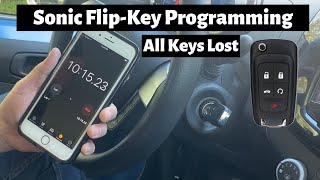
We Have This Part in Stock
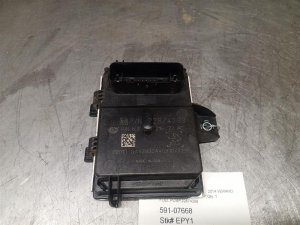
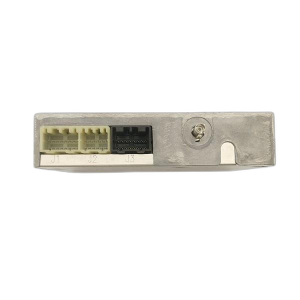
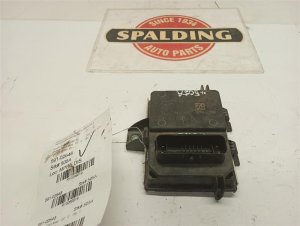

The information in this article is provided for general reference and educational purposes only. Vehicle specifications, procedures, and part compatibility can vary by production date, trim level, and region. Always consult your vehicle's factory service manual and verify part numbers before purchasing or performing repairs. Safety-critical components such as airbags, seat belts, and braking systems should be installed by a qualified professional.
- Chevrolet SONIC:
- 🧭 Diagnostic Flowchart
- 🎬 Helpful Videos
- 🛍️ Shop This Part
- What's Unique About the 2012-2019 Chevrolet SONIC
- Symptoms You May Notice
- Most Likely Causes
- Rare But Worth Checking
- Diagnosis Steps
- Parts You'll Likely Need
- Related Codes That Often Appear With This One
- Technical Service Bulletins (TSBs) & Recalls
- Platform-Specific Known Issues
- Mechanic-Grade Diagnostic Values
- Hidden / Shadow Codes Worth Checking
- Scan Tool Commands That Help
- Wiring & Ground Locations
- Real Owner Repair Stories
- OEM Part Supersession History
- Model Year Variations Within This Range
- 🎟️ Get 5% Off