

B3926 on 2018-2024 Chevrolet Traverse: No Start, 'No FOB Detected' Causes and Fixes
On a 2018-2024 Traverse, code B3926 almost always means a Body Control Module (BCM) software glitch occurred after a battery change or jump-start, causing a no-start condition. The fix is NOT parts replacement; it requires a dealer to reprogram the BCM according to GM TSB #23-NA-163, which typically costs 1-2 hours of labor.
- If your Traverse won't start and shows 'No FOB Detected' right after a battery change or jump-start, the cause is almost certainly the software glitch described in TSB #23-NA-163.
- Do NOT waste money on a new battery, key fobs, or a BCM. The problem is software, not hardware.
- The vehicle is not drivable and must be towed to a Chevrolet dealer or a qualified shop with GM programming capabilities.
- Inform the service advisor about TSB #23-NA-163 to ensure they perform the correct, cost-effective reprogramming procedure instead of attempting expensive and unnecessary parts replacement. Mentioning the TSB by number can save significant time and money.
What's Unique About the 2018-2024 Chevrolet TRAVERSE
The GM C1XX platform used for the second-generation Traverse and its cousins (Acadia, Enclave, XT5, XT6) has a known issue documented in Technical Service Bulletin #23-NA-163. The specific 'GEN3R' Body Control Module (BCM) used in these vehicles is sensitive to low voltage events like a battery replacement or jump-start. This can corrupt a specific memory area in the BCM, triggering B3926 and a host of similar codes, leading to a 'no-start' condition that can only be fixed with a specific dealer reprogramming procedure, not by replacing parts.
Diagnostic Flowchart
Tap your situation to follow the diagnostic path that matches what you're seeing on this vehicle.
Symptoms You May Notice
- No Crank, No Start
- Engine starts but immediately stalls
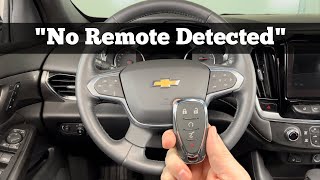
- "No FOB Detected" message on the driver information center
- Key fobs are completely inoperative (cannot lock/unlock doors)
- Service Keyless Entry System message
- Push start button does nothing; no clicking sound from the starter.
- Replacing the vehicle battery
- Replacing the key fob or its battery
- Replacing the Body Control Module (BCM) without attempting reprogramming
- Replacing the starter
- Replacing a supposedly 'bad' ECM fuse.
Most Likely Causes
- Body Control Module (BCM) Memory Corruption After Low Voltage Event 🔴 High Probability → Shop Body Control Module This is a well-documented issue in GM TSB #23-NA-163. The 'GEN3R' BCM is susceptible to memory corruption following a jump-start, battery replacement, or a deeply discharged battery. This is the most common cause by a wide margin.
How to confirm: Confirm that the no-start issue began immediately after a low-voltage event. A professional technician will use a scan tool to verify that code B389A is present along with three or more codes from the B3924-B3928 range. The TSB explicitly states to check for B389A, and if it's not present, to disconnect and reconnect the battery for 30 seconds to see if it appears.
Typical fix: A technician must perform a specific BCM reprogramming procedure as outlined in TSB #23-NA-163. This is a software-only fix and does not involve replacing the BCM. The procedure is labeled in the GM SPS software as "Programming A Per Bulletin 23-NA-163 and 23-NA-165 Only".
Est. part cost: $0
Rare But Worth Checking
- Faulty Passive Entry Antenna or Wiring: → Shop Antenna While the BCM software issue is most common for this code cluster, a single B3926 code without the others could indicate a hardware problem with an individual keyless entry antenna or its wiring harness. This is highly unlikely if the problem occurred after a battery event.
- Faulty Body Control Module (BCM): → Shop Body Control Module True hardware failure of the BCM is rare. This should only be considered after the reprogramming procedure from TSB #23-NA-163 has been attempted and failed. Dealers may incorrectly suggest this first, costing over $1,000, when the actual fix is a software reflash.
Diagnosis Steps
- Question the driver: Ask if the problem started immediately after the battery was replaced, jump-started, or went dead. This is the most critical diagnostic question.
- Scan the Body Control Module (BCM) for codes with a professional-grade scan tool.
- Confirm the presence of DTC B389A along with three or more codes from the B3924-B3928 range. If B389A is not present, disconnect the battery for at least 30 seconds, reconnect, and check again.
- If the code cluster and history align with a low-voltage event, proceed directly to the fix outlined in TSB #23-NA-163.
- DO NOT replace parts or perform a standard immobilizer relearn before following the TSB procedure. The TSB explicitly warns against this.
- A technician will connect a GM-approved programming tool (like a VX GM nano or MDI 2) with a Techline Connect/SPS subscription.
- The technician must select the special programming function named "Programming A Per Bulletin 23-NA-163 and 23-NA-165 Only" for the K9 Body Control Module.
- After reprogramming, clear all codes and verify that the vehicle starts and all key fob functions are restored.
Parts You'll Likely Need
- BCM Reprogramming Service
(OEM #Labor Op: 2889808)— This is not a physical part, but a required labor procedure. The BCM's memory is corrupted, and it needs to be reprogrammed by a dealer to restore function per TSB #23-NA-163. The unique labor operation code for this procedure is 2889808.
OEM price range: $150-$400
Aftermarket price range: $150-$400
Related Codes That Often Appear With This One
- B389A — This is the primary 'parent' code for an Environment Identification fault. TSB #23-NA-163 states this code will be current when the issue is present.
- B3924, B3925, B3927, B3928 — These are sibling codes to B3926, each indicating an incorrect identifier from a different module (e.g., HVAC, EBCM). The TSB notes that three or more of these will be set together.
- P0513 — This code for 'Invalid Immobilizer Key' is set by the Engine Control Module (ECM) because the BCM has told it that the vehicle's security check has failed. It is a direct result of the BCM fault.
Technical Service Bulletins (TSBs) & Recalls
- 23-NA-163: No Crank, No Start, Quick Start/Stall, No FOB Detected, Key FOBs Inoperative, B3924 00, B3925 00, B3926 00, B3927 00, B3928 00 Set. This is the primary document describing the cause and the specific software repair procedure. It has been revised multiple times, with updates in August 2024 and March 2025 to add more vehicles and clarify procedures.
Platform-Specific Known Issues
- The 2018-2024 Traverse may be equipped with a 'GEN3R' Body Control Module that is susceptible to memory corruption from low voltage events, as documented in GM TSB #23-NA-163. A list of affected BCM part numbers (BMPNs) is included in the TSB, such as 13518569, 13529492, 13533817, and others.
Scan Tool Commands That Help
- GDS2/SPS: K9 Body Control Module “Programming A Per Bulletin 23-NA-163 and 23-NA-165 Only” — This is the primary software fix for the memory corruption issue as specified by TSB #23-NA-163.
- GDS2/SPS: K9 Body Control Module “Programming B Per Bulletin 23-NA-163 Only” — This is a secondary procedure to be used ONLY if the 'Programming A' function was performed and did not fix the no-start condition, particularly if an immobilizer learn had been attempted before the TSB was followed.
- GDS2/SPS: Immobilizer procedure “Engine Control Module and Body Control Module IMMO Learn.” — This immobilizer relearn must be performed after running the 'Programming B' function to re-establish the security handshake between the ECM and the newly reprogrammed BCM. 🎬 Watch: How to perform a GM immobilizer relearn procedure
- GDS2: Clear GDS2 Session History — In some cases, after programming a BCM or adding accessories, GDS2 may fail to perform a setup or configuration. Deleting the vehicle's session history from GDS2 can resolve these communication failures.
Wiring & Ground Locations
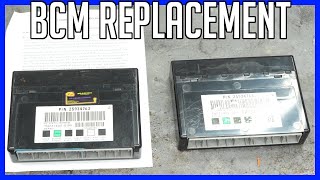
- K9 Body Control Module (BCM) — On 2018-2023 models, the BCM is located on the passenger side of the center console, next to the fuse box. The console side cover must be removed for access.. 🎬 See this walkthrough on how to access and replace the BCM Knowing the physical location is necessary for visual inspection, checking connector integrity, or replacement. A loose connection or corrosion at the BCM could cause a low voltage condition, which is the root trigger for the software corruption that sets B3926.
OEM Part Supersession History
Multiple (see note)→N/A (Software Fix)— The issue is resolved by a software update, not a hardware replacement. TSB 23-NA-163 lists specific GEN3R BCM part numbers that are affected and eligible for the reprogramming fix.
Heads up: Eligible BMPNs (Base Model Part Numbers) include 13518569, 13519619, 13529492, 13533817, and others listed in the bulletin. If the BCM is not one of these GEN3R modules, the TSB does not apply.
Model Year Variations Within This Range
- 2024: The 2024 model year is a split generation. The TSB for B3926 applies to the outgoing second-generation Traverse (C1 platform). An all-new, completely redesigned third-generation Traverse was also released for 2024 with a new turbocharged 4-cylinder engine and different electronics (Global B architecture), to which this specific TSB does not apply.
Helpful Videos
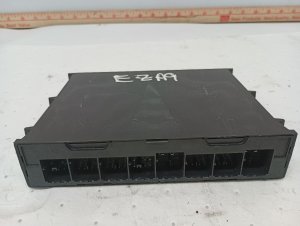
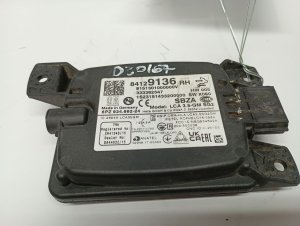
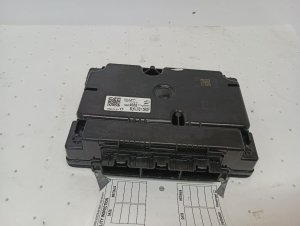
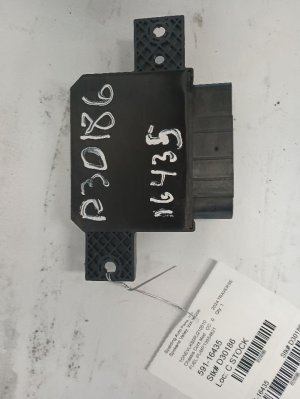
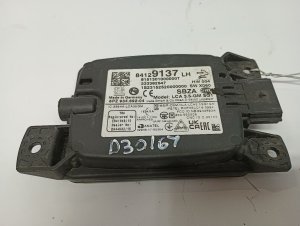
We Have This Part in Stock

The information in this article is provided for general reference and educational purposes only. Vehicle specifications, procedures, and part compatibility can vary by production date, trim level, and region. Always consult your vehicle's factory service manual and verify part numbers before purchasing or performing repairs. Safety-critical components such as airbags, seat belts, and braking systems should be installed by a qualified professional.
- Chevrolet TRAVERSE:
- 🧭 Diagnostic Flowchart
- 🎬 Helpful Videos
- 🛍️ Shop This Part
- What's Unique About the 2018-2024 Chevrolet TRAVERSE
- Symptoms You May Notice
- Most Likely Causes
- Rare But Worth Checking
- Diagnosis Steps
- Parts You'll Likely Need
- Related Codes That Often Appear With This One
- Technical Service Bulletins (TSBs) & Recalls
- Platform-Specific Known Issues
- Scan Tool Commands That Help
- Wiring & Ground Locations
- OEM Part Supersession History
- Model Year Variations Within This Range
- 🎟️ Get 5% Off