

B3980 on 2018-2022 Chevrolet Traverse: Causes, Fixes, and BCM Issues
Code B3980 on a 2018-2022 Traverse indicates a serious communication failure between the Body Control Module (BCM) and the instrument cluster. This often causes a no-start or stalls, with a dead instrument panel. The two most common causes are water damage to the BCM from a leaking HVAC drain or a software glitch requiring a dealer visit for reprogramming.
- B3980 is a network communication code, not a simple part failure.
- Symptoms are often widespread and seem unrelated, such as a dead instrument cluster and a no-start condition.
- The two most likely causes are water damage to the BCM (from a known HVAC leak) or a software glitch after a low-voltage event.
- Always inspect for water damage at the BCM in the passenger footwell before replacing any parts.
- If the issue occurred after a battery change or jump-start, do NOT replace the BCM; it needs to be reprogrammed by a dealer per TSB 21-NA-277.
- Fixing this code correctly often requires professional diagnostic tools for network analysis and module reprogramming.
What's Unique About the 2018-2022 Chevrolet TRAVERSE
The 2018-2022 Traverse is built on GM's C1XX platform, which uses a modern electrical architecture where dozens of modules communicate through a central hub, often the Body Control Module (BCM) or a Serial Data Gateway Module (SDGM). This design makes the vehicle highly susceptible to two specific issues that trigger B3980: water intrusion into the BCM from a known HVAC drain hose leak (per TSB 21-NA-183) and network-wide communication shutdowns caused by low battery voltage, which can corrupt the security data shared between modules. The BCM is physically located behind the right front floor console extension panel in the passenger footwell, placing it directly in the path of the potential water leak.
Diagnostic Flowchart
Tap your situation to follow the diagnostic path that matches what you're seeing on this vehicle.
Symptoms You May Notice
- Engine will not crank, or cranks but fails to start
- Engine starts and immediately stalls
- Instrument panel cluster is dead or flickers
- Multiple warning lights on the dashboard
- Immobilizer or security light is on
- Driver Information Center (DIC) may display 'Service Theft Deterrent System'
- Intermittent or inoperative door locks
- Unwanted horn or hazard flasher operation
- HVAC (climate control) system is inoperative
- Radio display is blank or inoperative
- Replacing the instrument panel cluster without checking for water damage or software issues first.
- Replacing the battery without addressing the underlying software or water issue, which often causes the code to return immediately.
- Replacing the ignition switch or key fob.
Most Likely Causes
- Water Intrusion into Body Control Module (BCM) 🔴 High Probability → Shop Body Control Module As documented in TSB #21-NA-183, the HVAC drain hose can leak water directly onto the BCM and its connectors, causing corrosion and short circuits. The BCM is located in the passenger footwell, directly below the potential leak point.
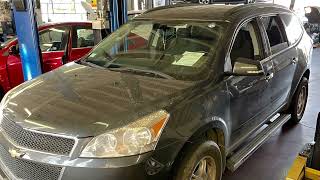
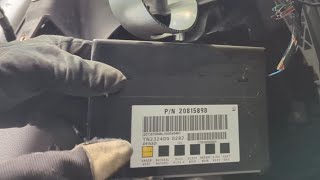
How to confirm: Remove the right front floor console extension panel (passenger side kick panel) and inspect the BCM 🎬 See how to access and remove the BCM in this walkthrough, its X3 connector, and the surrounding carpet and wiring for any signs of water, blue/green staining, or corrosion. The TSB advises running the A/C on high to see if water drips from the hose connection.
Typical fix: If water is found, the source of the leak must be fixed by securing the HVAC drain hose with a tie strap per TSB 21-NA-183. The BCM and its connectors must be dried. If corrosion is present, the BCM will likely need to be replaced and programmed by a dealer. Simply drying a corroded module is often not a permanent fix.
Est. part cost: $0-$600 - BCM/SDGM Software Glitch or Logic Lock-up 🔴 High Probability Modern GM vehicles are highly sensitive to voltage fluctuations. A weak battery, jump-start, or battery replacement can trigger a software glitch, causing modules to lose their security pairing and 'forget' their environment ID.
How to confirm: This is diagnosed when B3980 appears with a cluster of other 'Environment ID' codes (like B3978, B3979, B3981) immediately after a low-voltage event, and there is no evidence of water damage.
Typical fix: Do NOT replace parts first. The official GM procedure is outlined in TSB 21-NA-277, which requires a dealer to use the GM Service Programming System (SPS) to perform a special BCM recovery and reprogram. A 'hard reset' by disconnecting the battery for 30 minutes may temporarily restore function but does not fix the underlying software issue and the code will likely return.
Est. part cost: $0
Rare But Worth Checking
- Loose or Damaged Terminals at SDGM: The Serial Data Gateway Module (SDGM) is the central router for network traffic. While less common than the other causes, loose or corroded pins in its connectors can disrupt all communication and trigger B3980.
- Faulty Instrument Panel Cluster (IPC): In rare cases, the instrument cluster itself can fail internally, preventing it from sending the correct security identifier to the BCM. This is typically diagnosed only after all other causes have been ruled out.
Diagnosis Steps
- Scan for all codes in all modules. Note if B3980 appears with other 'Environment ID' codes (B3978, B3979, B3981), which strongly suggests a software or network-wide issue.
- Question the driver about recent events: Has the battery been replaced, jump-started, or died recently? This points towards the software glitch described in TSB 21-NA-277.
- Following TSB 21-NA-183, remove the right side console trim panel (passenger footwell) to physically inspect the Body Control Module (BCM) and its wiring connectors (especially the X3 connector) for any signs of water intrusion, moisture, or blue/green corrosion.
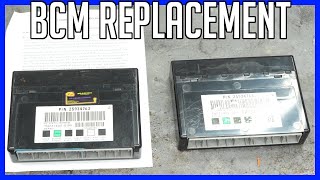
- If water damage is found, address the source (secure the leaking HVAC drain hose with a tie-strap) and replace the BCM. The new BCM will require dealer programming. 🎬 Watch: What to expect when replacing a Body Control Module
- If no water damage is found, and there is a history of a low-voltage event, the issue is almost certainly software-related.
- Attempt a 'hard reset' by disconnecting the negative battery terminal for at least 30 minutes to reset all modules. This is often only a temporary fix.
- If the code returns, the vehicle must go to a dealer or qualified shop with GM programming tools to have the BCM reprogrammed per the special recovery procedure in TSB 21-NA-277. Do not replace the BCM in this case.
- As a final step if reprogramming fails, inspect the wiring and connectors at the Serial Data Gateway Module (SDGM).
Parts You'll Likely Need
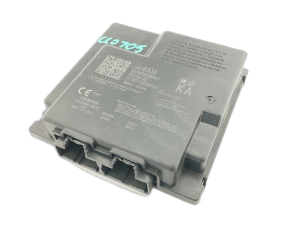
- Body Control Module (BCM)
(OEM #84521191, 85587823, 13524922 (Note: Part number is VIN-specific and must be verified with a dealer.))— This module is the most common point of failure, either from internal water damage or a software corruption that requires replacement if reprogramming fails.
Trusted brands: ACDelco (Genuine GM)
OEM price range: $400-$600
Aftermarket price range: $250-$450
Related Codes That Often Appear With This One
- B3978 — Incorrect Environmental Identifier from the Airbag Module; part of the same network security check.
- B3979 — Incorrect Environmental Identifier from the HVAC Module; part of the same network security check.
- B3981 — Incorrect Environmental Identifier from the Electronic Brake Control Module; part of the same network security check.
- U0155 — Lost Communication With Instrument Panel Cluster (IPC) Control Module; a direct result of the network failure that causes B3980.
- B389A — A general 'Environment Identification' DTC that is often set alongside B3980 during a module communication failure.
Technical Service Bulletins (TSBs) & Recalls
- 21-NA-183: Intermittent Door Locks Inoperative, DTCs B3125, B3130, B3135, B3979, B3980, Various U codes, IP Lamps Illuminate, Immobilizer, Unwanted Horn or Hazard Flasher Operation
- 21-NA-277: Multiple Environment ID DTCs Set After a Low Voltage Event
Platform-Specific Known Issues
- TSB #21-NA-183: HVAC Drain Hose Leak: This bulletin documents a known issue where the HVAC drain hose can leak water onto the BCM, causing a wide range of electrical problems including DTC B3980. The official fix is to inspect for corrosion, replace the BCM if necessary, and secure the drain hose with a simple tie-strap to prevent future leaks.
- TSB #21-NA-277: Low Voltage Event Glitch: This bulletin addresses the condition where B3980 and other related codes appear after a low voltage event, jump start, or battery replacement, confirming this is a known software/logic issue. The bulletin advises against replacing modules and instead calls for a special BCM reprogramming procedure using the dealer's SPS software.
- Real Owner Experience: On traverseforum.com, a 2018 Traverse owner described a no-start condition with a dead instrument panel and multiple warning lights. The dealer found water had leaked from the A/C drain onto the BCM, causing corrosion. The repair involved replacing the BCM and performing the TSB fix to secure the drain hose, which resolved all symptoms.
Mechanic-Grade Diagnostic Values
- High-Speed GMLAN Bus Voltage (Key-On, Engine-Off) — expected: CAN High (Pin 8 on BCM X3 connector, Tan/Black wire): ~2.5V to ground. CAN Low (Pin 9 on BCM X3 connector, Tan wire): ~2.5V to ground.. Failure: During communication (dominant state), CAN High should rise to ~3.5V and CAN Low should drop to ~1.5V. Voltages stuck high, low, or at 0V indicate a bus fault. A short to ground on either wire will pull the bus voltage down, while a short to power will pull it up.
- High-Speed GMLAN Bus Resistance (Battery Disconnected) — expected: Approximately 60 Ohms between CAN High (Pin 8) and CAN Low (Pin 9) at the BCM X3 connector.. Failure: A reading of ~120 Ohms indicates an open circuit or a missing termination resistor (one of the two main modules on the bus is offline). A reading near 0 Ohms indicates a short between the CAN High and CAN Low wires.
Hidden / Shadow Codes Worth Checking
- B3980 00: The symptom byte '00' indicates a 'General Electrical Failure'. When this appears with other environment ID codes (B3978 00, B3979 00), it strongly points to BCM software corruption from a low voltage event, as described in TSB 21-NA-277. (see via GM GDS2 (Global Diagnostic System 2) factory scan tool software.)
- B3980 71: The symptom byte '71' indicates 'Invalid Serial Data Received'. This means the BCM is receiving data from the instrument cluster, but the data is corrupt, incomplete, or fails the security check. This points more toward a data integrity problem than a total loss of communication. (see via GM GDS2 (Global Diagnostic System 2) factory scan tool software.)
Scan Tool Commands That Help
- GDS2 (GM Service Programming System - SPS): BCM Reprogramming / Recovery — This is the specific procedure called for in TSB 21-NA-277 when B3980 and other 'Environment ID' codes are set after a low-voltage event with no water damage found. It performs a special recovery flash to restore the BCM's configuration and security keys.
- GDS2: Immobilizer Learn — This function must be performed after replacing and programming a new Body Control Module. It teaches the new BCM the security information from the vehicle's existing keys, allowing the engine to start.
- GDS2: Module Diagnostics > BCM > Control Functions — To test the functionality of outputs controlled by the BCM, such as lights, locks, and wipers. This helps determine if a symptom (e.g., a light not working) is due to a faulty output from the BCM or a problem with the component/wiring itself.
Wiring & Ground Locations
- BCM — Located in the center console area, accessible from the passenger side footwell, behind the extension panel.. This is the module setting the code and is the primary point of failure due to water intrusion from the HVAC drain or software corruption.
- BCM Connector X3 — A connector on the Body Control Module.. This specific connector contains the High-Speed GMLAN serial data bus wires (Pins 8 & 9) that communicate with the Instrument Panel Cluster. Corrosion or damage here directly causes B3980.
- G303 — A major body ground point located near the base of the left (driver's side) 'B' pillar, behind the kick panel trim.. This ground serves the BCM and Instrument Panel Cluster. A loose or corroded G303 can cause communication errors between the modules, mimicking a module failure.
Real Owner Repair Stories
- traverseforum.com user (2018 Chevrolet Traverse) — Vehicle would not start, instrument panel was dead, multiple warning lights illuminated.
❌ Tried (didn't work) Not specified, but the user took the vehicle to the dealer for diagnosis.
✅ What actually fixed it The dealer diagnosed water intrusion into the Body Control Module (BCM) from the known HVAC A/C drain leak. The final repair was replacing the BCM and implementing the fix from TSB #21-NA-183 (securing the drain hose). This resolved all symptoms.
Model Year Variations Within This Range
- 2022: The 2022 Traverse received a model refresh. While the underlying electrical architecture and BCM remained largely the same, upper trims (Premier and High Country) received a new, larger 8-inch digital driver information center as part of the instrument cluster. This could potentially involve different cluster software or part numbers compared to the 2018-2021 models, though the fundamental cause of B3980 remains the same.
Helpful Videos

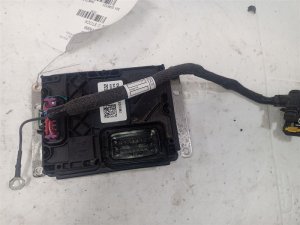
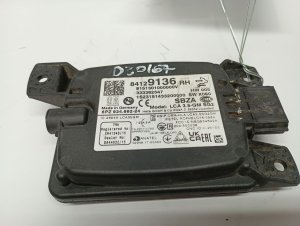
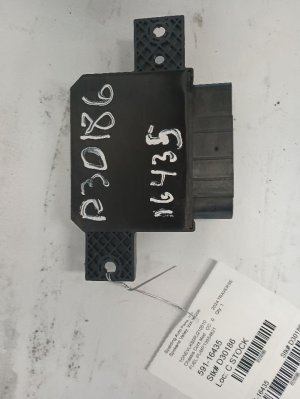
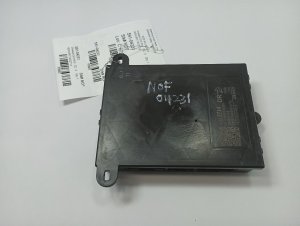
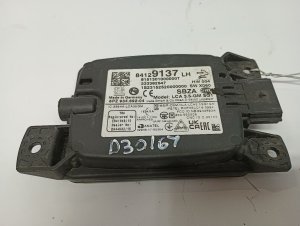
We Have This Part in Stock

The information in this article is provided for general reference and educational purposes only. Vehicle specifications, procedures, and part compatibility can vary by production date, trim level, and region. Always consult your vehicle's factory service manual and verify part numbers before purchasing or performing repairs. Safety-critical components such as airbags, seat belts, and braking systems should be installed by a qualified professional.
- Chevrolet TRAVERSE:
- 🧭 Diagnostic Flowchart
- 🎬 Helpful Videos
- 🛍️ Shop This Part
- What's Unique About the 2018-2022 Chevrolet TRAVERSE
- Symptoms You May Notice
- Most Likely Causes
- Rare But Worth Checking
- Diagnosis Steps
- Parts You'll Likely Need
- Related Codes That Often Appear With This One
- Technical Service Bulletins (TSBs) & Recalls
- Platform-Specific Known Issues
- Mechanic-Grade Diagnostic Values
- Hidden / Shadow Codes Worth Checking
- Scan Tool Commands That Help
- Wiring & Ground Locations
- Real Owner Repair Stories
- Model Year Variations Within This Range
- 🎟️ Get 5% Off