

C0035 on 2005-2010 Chrysler 300: Wheel Speed Sensor Fault Causes and Fixes
Code C0035 on a 2005-2010 Chrysler 300 indicates a fault in a front wheel speed sensor circuit, disabling ABS and traction control. It's most often a failed sensor or its wiring. Crucially, you must use an advanced scan tool to confirm if the issue is on the left or right side before replacing parts, as generic scanners are ambiguous.
- C0035 means a front wheel speed sensor circuit has a problem, which will disable your ABS and traction control.
- DO NOT buy parts until you use a good scan tool to confirm if the fault is on the LEFT or RIGHT side.
- The most likely cause is a bad wheel speed sensor, which is a relatively inexpensive part but can be difficult to remove if corroded.
- Inspect the wiring harness for chafing and the tone ring for cracks before assuming the sensor itself is the only possible failure point.
What's Unique About the 2005-2010 Chrysler 300
The critical issue for the 2005-2010 Chrysler 300 (and related LX platform cars) is the ambiguity of the C0035 code itself. A basic OBD-II scanner may give a generic "C0035" reading, which some sources define as "Left Front Wheel Speed Sensor Circuit" and others as "Right Front Wheel Speed Sensor Supply". For example, on many GM vehicles, C0035 refers to the right front, but on many other makes it refers to the left. Relying on a generic definition can lead to replacing the wrong part. It is essential to use a scan tool that can read Chrysler-specific trouble codes (like a Snap-on, Autel, or the dealer's wiTECH) to definitively identify which side of the vehicle is reporting the fault.
Symptoms You May Notice
- ABS warning light illuminated
- ESP/BAS or traction control warning light illuminated
- Cruise control may be inoperative
- A feeling of brake pedal pulsation at low speeds if the sensor signal is intermittent
- Transmission may exhibit harsh shifts or stay in a single gear (limp mode) as it uses wheel speed data for shift logic.
- Replacing the wrong wheel speed sensor due to the code's ambiguity on generic scanners.
- Replacing the ABS module before thoroughly testing the sensor and its wiring circuit.
- Replacing the wheel speed sensor when the actual fault is a cracked tone ring on the wheel hub.
Most Likely Causes
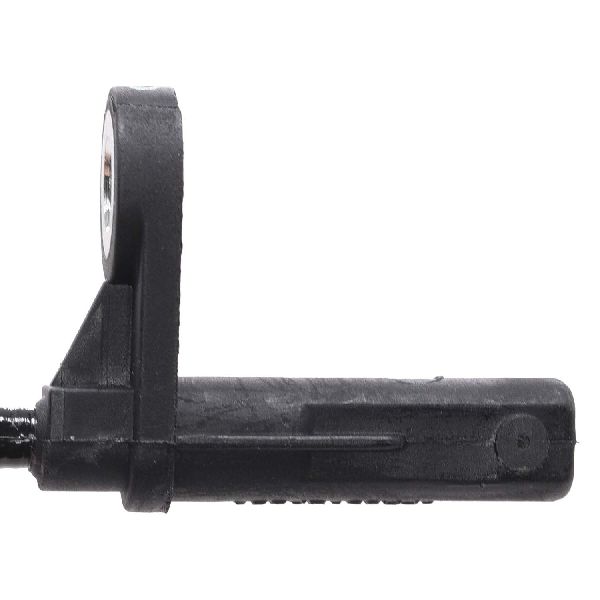
- Failed Front Wheel Speed Sensor 🔴 High Probability → Shop ABS Wheel Speed Sensor The sensor is exposed to harsh conditions (water, salt, debris, heat) at the wheel hub, leading to internal failure over time. Corrosion can also cause the sensor to become seized in the steering knuckle, making removal difficult and prone to breakage.
How to confirm: Use an ABS-capable scan tool to view live wheel speed data. Drive the vehicle slowly and confirm that one front wheel speed sensor reads 0 MPH or has an erratic signal compared to the others. A multimeter can also be used to check for an open circuit (infinite resistance) across the sensor's pins, which indicates an internal break.
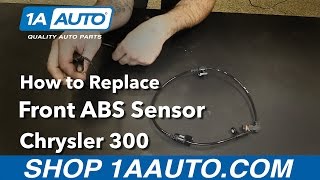
Typical fix: Replace the faulty wheel speed sensor. The sensor and its integrated wiring harness are typically replaced as a single unit. 🎬 See this step-by-step front ABS sensor replacement walkthrough. Soaking the seized sensor with penetrating oil before attempting removal is highly recommended.
Est. part cost: $25-$75 - Damaged Wiring or Connector 🟡 Medium Probability The wiring harness runs from the wheel hub into the fender well and is susceptible to damage from road debris, corrosion, or repeated flexing from steering and suspension movement. A common failure point is where the harness flexes near the upper control arm.
How to confirm: Visually inspect the entire length of the sensor's wiring harness from the hub to the main connector for any signs of chafing, breaks, or corrosion in the connector pins. Perform a continuity test on the wires with a multimeter. Check for 4.5-5.5V at the harness connector with the key on.
Typical fix: Repair the broken section of wire or replace the entire sensor and harness assembly if the damage is close to the sensor. Sometimes just the connector pigtail can be replaced.
Est. part cost: $5-$75 - Damaged or Corroded Tone Ring ⚪ Low Probability The tone ring, which the sensor reads, is part of the wheel hub/bearing assembly. Rust buildup between the hub and tone ring can cause the ring to crack, warp, or swell, leading to an erratic signal or direct contact with the sensor, destroying it.
How to confirm: After removing the wheel speed sensor, visually inspect the tone ring through the sensor mounting hole while slowly rotating the hub. Look for cracks, missing teeth, or significant rust/debris. A cracked ring is a common finding on high-mileage or rust-belt vehicles. 🎬 Watch: A quick guide to replacing a faulty ABS sensor.
Typical fix: The tone ring is typically integrated into the wheel hub bearing. If it is damaged, the entire wheel hub bearing assembly must be replaced.
Est. part cost: $100-$250
Rare But Worth Checking
- Faulty ABS Control Module: → Shop ABS Control Module This is the least likely cause and should only be considered after the sensor, wiring, and tone ring have been definitively ruled out. A faulty module may store codes for multiple sensors or have communication issues. An internal voltage regulator failure inside the module can also trigger this specific code.
Diagnosis Steps
- Connect an ABS-capable scan tool that can read Chrysler-specific codes.
- Read the codes and, crucially, the manufacturer-specific description to confirm if the fault is for the LEFT or RIGHT front wheel.
- Access the live data stream on the scan tool and monitor all four wheel speed sensors while driving slowly (5-10 MPH). Confirm that the suspect sensor is reading incorrectly (e.g., 0 MPH) compared to the others.
- Raise and safely support the vehicle. Remove the wheel on the affected side.
- Visually inspect the wheel speed sensor and its entire wiring harness for any obvious damage, corrosion, or loose connections. Pay close attention to the area where the harness flexes with steering.
- If no visual faults are found, disconnect the sensor and test the sensor's resistance with a multimeter. An open circuit (OL) indicates a failed sensor. Compare to a known good sensor if possible.
- Check for voltage and ground at the sensor connector (harness side) with the ignition on. You should see a reference voltage, typically between 4.5 and 5.5 volts.
- If the sensor and wiring test good, remove the sensor (10mm bolt) and carefully inspect the tone ring on the wheel hub for cracks, damage, or heavy rust/debris.
- If all components test good, the fault may lie within the ABS control module, which requires more advanced diagnostics.
Parts You'll Likely Need
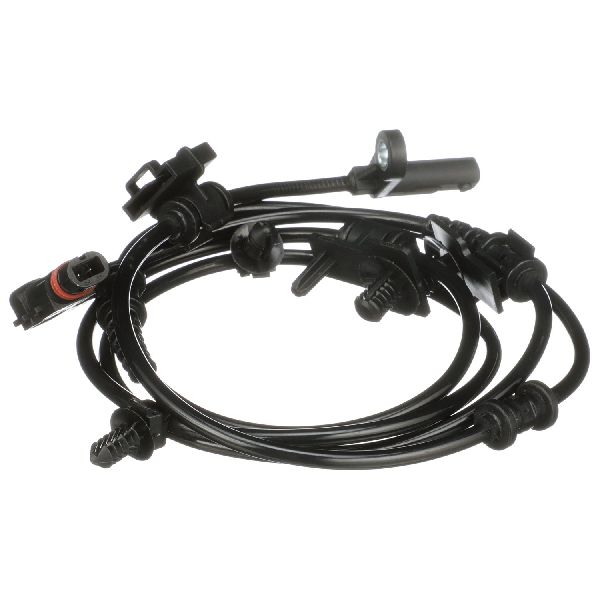
- Front ABS Wheel Speed Sensor
(OEM #Mopar 5143130AA (Check VIN for exact fitment))— This is the most common failure point for code C0035. The sensor and its integrated wiring harness are typically replaced as one assembly.
Trusted brands: Mopar, Bosch, Delphi, Standard Motor Products (SMP), TRQ
OEM price range: $50-$100
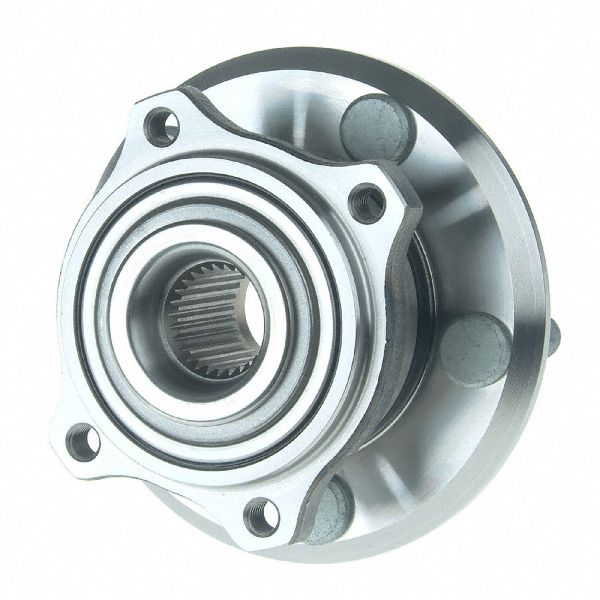
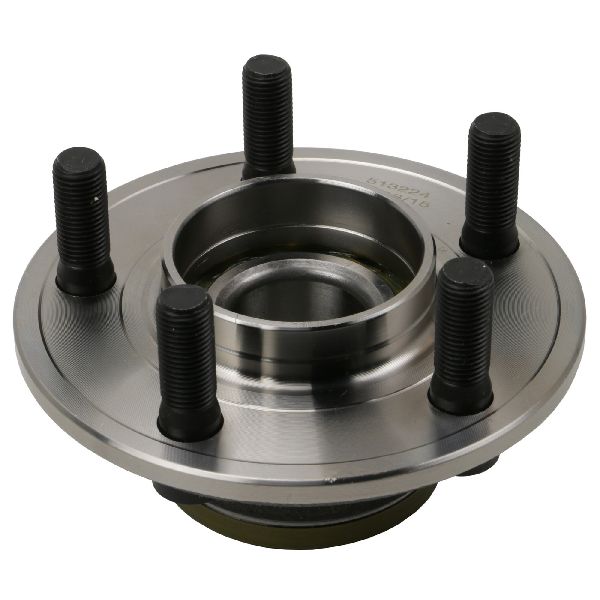
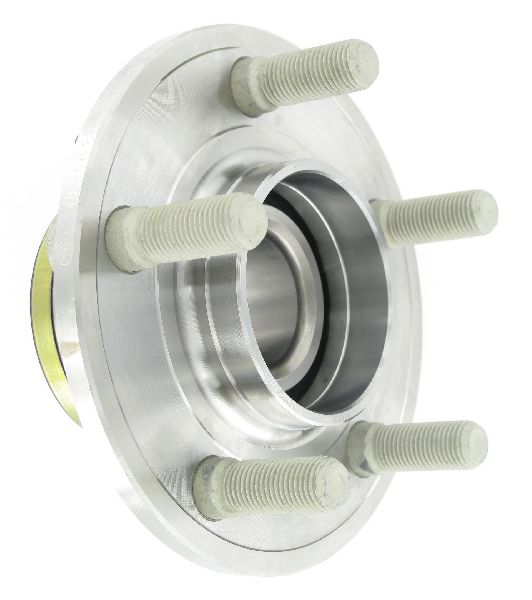
Aftermarket price range: $25-$75 - Front Wheel Hub Bearing Assembly
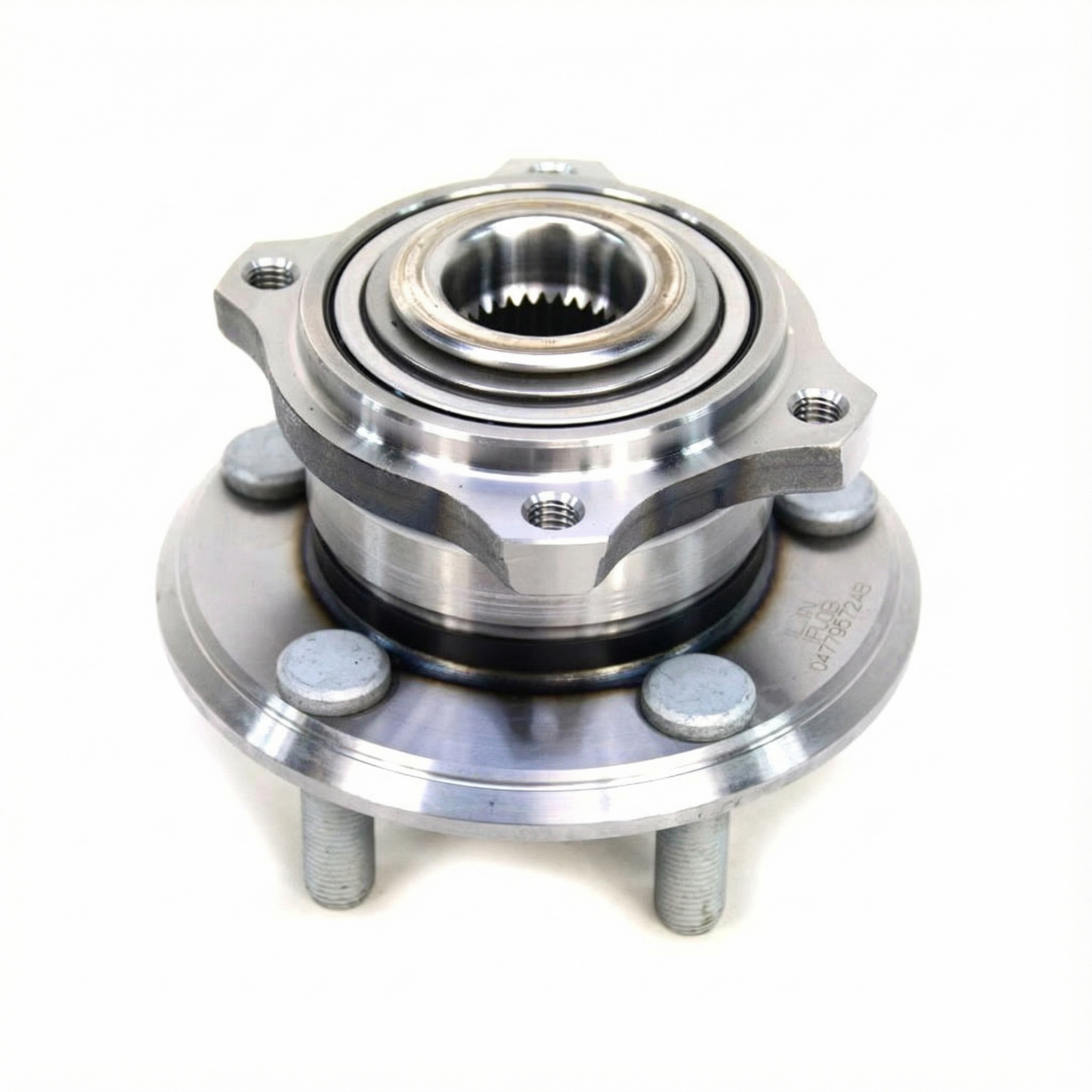
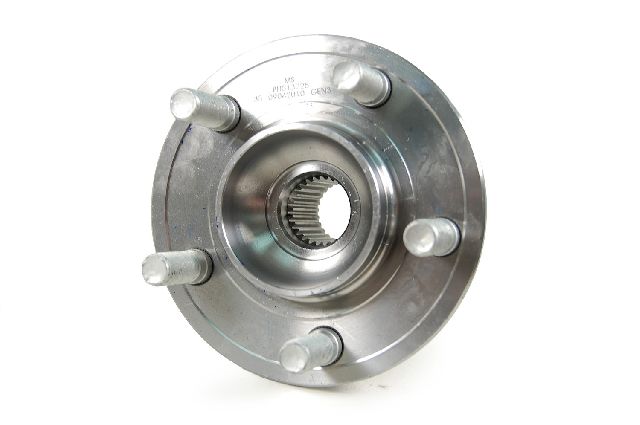
(OEM #Mopar 4779244AD (RWD), 4779418AD (AWD) (Check VIN for exact fitment))— This part is only needed if the integrated tone ring is found to be cracked, warped, or severely corroded, which is a less common cause.
Trusted brands: Mopar, Timken, Moog, SKF
OEM price range: $200-$300
Aftermarket price range: $100-$180
Related Codes That Often Appear With This One
- U1417 — This code for 'Implausible Left Wheel Distance Signal Received' can appear alongside C0035 when the ABS module detects an issue specifically with the left side.
- U1418 — Similar to U1417, this code for 'Implausible Right Wheel Distance Signal Received' can help pinpoint the fault to the right side.
Platform-Specific Known Issues
- A known issue on this platform is the ambiguity of the C0035 code on basic scanners, making it easy to order parts for the wrong side of the vehicle.
- Corrosion can cause the sensor to become seized in the steering knuckle, making removal difficult. It's common for the plastic sensor to break during removal, requiring the leftover piece to be carefully extracted from the knuckle.
- A user on 300CForums.net reported chasing a C0035 code, replacing the sensor twice before realizing the wiring harness was chafing on the tire under full lock, causing an intermittent short.
Mechanic-Grade Diagnostic Values
- Wheel Speed Sensor Resistance — expected: 800-2000 Ω (Ohms). Failure: A reading outside this range, or an open circuit (OL/infinite resistance), indicates a faulty sensor.
- Sensor Supply Voltage at Harness Connector — expected: 4.5 - 5.5 Volts (Key On, Engine Off). Failure: Voltage below 4.0V points to a problem in the wiring or the ABS module's voltage regulator.
- AC Voltage Output (Passive Sensor Test) — expected: Generates an AC voltage that increases with wheel speed, typically >100mV AC when spinning the wheel by hand.. Failure: No voltage or an erratic, inconsistent voltage reading indicates a failed sensor or tone ring issue.
Scan Tool Commands That Help
- Advanced Scan Tool (e.g., Autel, Snap-on, wiTECH): Module Self-Test or Actuator Test — Use this after confirming the sensor and wiring are good. A self-test command can force the ABS module to check its internal circuits, including the voltage regulator. A failure during this test strongly indicates a faulty ABS module is the root cause.
Wiring & Ground Locations
- Front ABS Wheel Speed Sensor Connector — In the front of the wheel well, where the sensor harness connects to the main body harness.. This is the primary connection point to test for voltage and continuity. Corrosion or a loose connection here is a common cause of an intermittent signal.
- G101 — At the right front of the engine compartment, on the frame rail.. This is a major ground point for the Anti-lock Brakes Module. A corroded or loose G101 ground can cause a variety of ABS faults, including sensor codes, due to unstable voltage or poor module grounding.
- Anti-lock Brakes Module — At the right front of the engine compartment, typically part of the hydraulic control unit.. This is the location of the module itself, where the final pin-out testing would be performed if a wiring break between the connector and module is suspected.
Real Owner Repair Stories
- Forum user on 300CForums.net (2006 Chrysler 300C) — ABS, ESP, and BAS lights on. Code C0035 present.
❌ Tried (didn't work) Replacing the wheel speed sensor with an aftermarket part. The lights came back on.
✅ What actually fixed it The user was advised that some aftermarket sensors have quality control issues. He replaced the aftermarket sensor with a genuine Mopar OEM sensor, which resolved the problem permanently. The underlying issue was a poor quality replacement part. - Forum user on LXForums.com (Dodge Magnum (LX Platform sibling)) — ABS/ESP lights on, code C0035.
❌ Tried (didn't work) Initially guessing which side was faulty based on generic code definitions.
✅ What actually fixed it The owner used a more advanced scan tool (AutoEnginuity) to confirm the fault was on the left front wheel. Replacing the left front wheel speed sensor cleared the code and fixed the issue. This highlights the importance of proper diagnosis to identify the correct side.
Model Year Variations Within This Range
- 2005-2010: The front wheel speed sensors and hub assemblies have different part numbers for All-Wheel Drive (AWD) versus Rear-Wheel Drive (RWD) models. The sensors are not interchangeable between the two drivetrain configurations. For example, Mopar part 4779418AD is for AWD hubs, while 4779244AD is for RWD.
Diagnostic Flowchart
Other Known Issues on This Vehicle
Issues unrelated to this code that are worth knowing about as an owner of this generation:
- Shifter Stuck in Park ('Pink Thingy' Failure) 🔴 High — Very common, especially on 2005-2007 models. Can happen at any mileage. (Ref: A small plastic locking piece in the shifter assembly breaks, preventing the car from shifting out of Park. The fix is to replace the plastic piece with a more durable metal aftermarket part (e.g., Dorman 924-706), not the entire shifter.)
- Front Suspension Clunks (Tension Strut Failure) 🟠 Medium — Common after 60,000-80,000 miles. Causes clunking noises over bumps and poor steering feel. (Ref: The fluid-filled bushings on the front lower control arms (tension struts) fail, leading to excessive movement. Replacement of the tension struts is required.)
- Transmission Shudder or Harsh Shifts 🟠 Medium — Can occur at various mileages. Often presents as a shudder during light acceleration or harsh gear changes. (Ref: Often related to software. A dealer can perform a PCM/TCM software update which can resolve the issue. In other cases, it can be a sign of a failing torque converter or valve body.)
- Engine Stalling / Failure (2.7L V6) 🔴 High — A notorious issue for the 2.7L V6 engine. Oil sludge buildup due to poor design can lead to catastrophic engine failure, often before 100,000 miles. (Ref: Not applicable to all engines, but a major concern for the 2.7L V6. Regular, high-quality oil changes are critical to prolonging engine life.)
- Takata Airbag Inflator Recall 🔴 High — Affects millions of vehicles, including 2005-2010 Chrysler 300s. (Ref: Multiple recalls issued. The airbag inflators can rupture during deployment, sending metal fragments into the cabin. This is a critical safety recall that should be addressed immediately.)
Used vs. New Parts: Buying Guide for This Vehicle
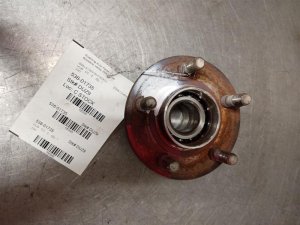
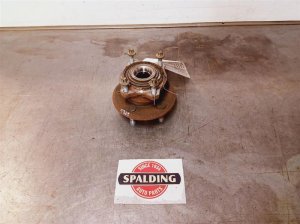
When a used part is the smart pick: A used wheel hub assembly from a low-mileage, non-corroded donor vehicle can be a cost-effective alternative to a new assembly if the tone ring is the point of failure. It is generally not recommended to buy a used ABS sensor by itself due to the high failure rate and difficulty of testing its remaining life.
Donor-vehicle mileage cap: roughly under 60000 miles for the part to have meaningful remaining life.
What to inspect on the donor part:
- Check for minimal rust on the hub surface and tone ring.
- Ensure the donor vehicle was not involved in a front-end collision.
- Spin the hub by hand; it should be smooth with no grinding or excessive play.
- Inspect the sensor wire for any signs of cracking, chafing, or previous repairs.
OEM-only on this vehicle (don't cheap out):
- ABS Control Module - Must be programmed to the vehicle's VIN and configuration, making used modules difficult to implement without dealer tools.
Aftermarket brands forum-validated for this vehicle:
- Hub Assemblies: Timken, Moog, SKF
- Sensors: Mopar (OEM), Bosch, Delphi, Standard Motor Products (SMP)
Brands owners have reported issues with on this vehicle:
- Unbranded, 'white-box' sensors from online marketplaces have a high reported failure rate or can be dead-on-arrival, as noted in forum discussions.
Real Owner Stories
Aggregated from forums and TSBs cited above. Mileages and costs reflect what owners reported in those sources.
2006 Chrysler 300C
Symptoms: ABS and ESP lights illuminated; experienced ambiguity with a basic code reader regarding which side was at fault.
What fixed it: Used a more advanced scanner to identify the correct side and replaced the faulty wheel speed sensor.
Source hint: 300CForums.net thread titled 'C0035 code on 2006 300c'
2005-2010 Chrysler 300
Symptoms: Chased a C0035 code and replaced the sensor twice, but the code kept returning intermittently.
What fixed it: Identified that the wiring harness was chafing on the tire under full lock, causing a short; repaired the wiring.
Source hint: vehicle_specific_issues
2005-2008 Dodge Magnum
Symptoms: ABS/ESP lights on with code C0035.
What fixed it: Confirmed the fault with a better scan tool and replaced the wheel speed sensor.
Source hint: LXForums.com thread titled 'ABS/ESP lights on, code C0035'
Related OBD-II Codes
Frequently Asked Questions
Why is my 2005-2010 Chrysler 300 shifting harshly or stuck in one gear along with the ABS light?
I have a C0035 code; how do I know if it's the left or right side on my Chrysler 300?
Can I just replace the sensor, or do I need a whole new hub for my 300C?
Is there a specific part I should use to fix the 'Stuck in Park' issue often mentioned alongside ABS problems?
What voltage should I see when testing the wheel speed sensor connector on my Dodge Charger or Chrysler 300?
Why did my ABS sensor break while I was trying to remove it from the steering knuckle?
Helpful Videos
Used OEM Parts in Stock
New Aftermarket Parts Available

The information in this article is provided for general reference and educational purposes only. Vehicle specifications, procedures, and part compatibility can vary by production date, trim level, and region. Always consult your vehicle's factory service manual and verify part numbers before purchasing or performing repairs. Safety-critical components such as airbags, seat belts, and braking systems should be installed by a qualified professional.
- Chrysler 300:
- 🧭 Diagnostic Flowchart
- 🎬 Helpful Videos
- 🛍️ Shop This Part
- What's Unique About the 2005-2010 Chrysler 300
- Symptoms You May Notice
- Most Likely Causes
- Rare But Worth Checking
- Diagnosis Steps
- Parts You'll Likely Need
- Related Codes That Often Appear With This One
- Platform-Specific Known Issues
- Mechanic-Grade Diagnostic Values
- Scan Tool Commands That Help
- Wiring & Ground Locations
- Real Owner Repair Stories
- Model Year Variations Within This Range
- Other Known Issues on This Vehicle
- Used vs. New Parts: Buying Guide for This Vehicle
- Real Owner Stories
- 2006 Chrysler 300C
- 2005-2010 Chrysler 300
- 2005-2008 Dodge Magnum
- Related OBD-II Codes
- Frequently Asked Questions
- 🎟️ Get 5% Off