

C0035 on 2008-2023 Dodge Challenger: Left Front Wheel Speed Sensor Fault Causes and Fixes
On a Dodge Challenger, code C0035 indicates a problem with the Left Front Wheel Speed Sensor circuit. The most common fix is replacing the sensor itself, an inexpensive part costing between $20-$70. This is a common DIY repair that takes about an hour.
- C0035 on a Dodge Challenger points directly to an issue with the left front wheel speed sensor circuit.
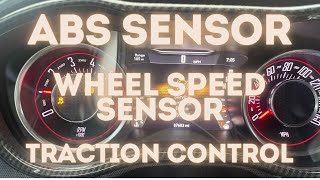
- The most common symptoms are the ABS and Traction Control warning lights.
- The fix is usually a simple and inexpensive replacement of the sensor itself, which is a popular DIY task.
- If the code returns after replacing the sensor, inspect the wiring harness for damage and check the wheel bearing for signs of failure.
- Do not drive for an extended period with this fault, as critical safety systems are disabled.
What's Unique About the 2008-2023 Dodge Challenger
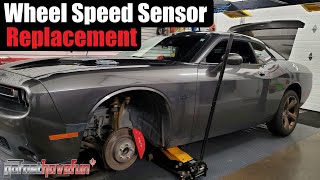
The Dodge Challenger shares its Chrysler LX platform chassis and many components with the Dodge Charger and Chrysler 300, making parts like the ABS wheel speed sensor widely available and affordable. The repair is well-documented in owner forums and videos, and is considered a straightforward DIY job. 🎬 Watch: A complete walkthrough for replacing the front wheel speed sensor. It's important to note that while the 2008-2023 Challenger is one generation (LC), a significant refresh in 2015 means that part numbers for the sensors are often different for pre-2015 and post-2015 models.
Generation note: While the 2008-2023 Dodge Challenger is considered a single generation (LC), it received a major interior and exterior refresh for the 2015 model year. This update also included changes to some electronic components, and front wheel speed sensors often have different part numbers for the 2008-2014 and 2015-2023 model year ranges. Always verify the part number for your specific year, as fitment can vary.
Symptoms You May Notice
- ABS warning light is illuminated on the dashboard.
- Traction Control (TCS) or Electronic Stability Control (ESC) warning light is on.
- ABS, traction control, and stability control systems are inoperative.
- On the dashboard display, you may see messages like "Service ABS System" or "Service Electronic Stability Control".
- Replacing the ABS module when the actual fault is simple wiring damage.
- Replacing only the sensor when the underlying cause is a bad wheel bearing/hub, causing the code to return.
- Confusing the C0035 code's meaning. While it is Left Front for most manufacturers, including Dodge, some GM vehicles use C0035 to indicate the *Right* Front sensor. This is not an issue for a Challenger but can cause confusion on general forums.
Most Likely Causes
- Failed Left Front Wheel Speed Sensor 🔴 High Probability → Shop ABS Wheel Speed Sensor The sensor is exposed to harsh conditions like water, road salt, and debris, leading to internal failure over time. It's a common failure point on many vehicles, including the Challenger.
How to confirm: Use an ABS-capable scan tool to monitor live data; the left front wheel speed should read 0 or be erratic while the other wheels show correct speed. You can also test the sensor's internal resistance with a multimeter, comparing it to the specification or to the working right-side sensor.
Typical fix: Replace the left front wheel speed sensor. This involves removing the wheel, undoing a single 10mm bolt, cleaning the mounting surface, and disconnecting the electrical connector in the wheel well. 🎬 Watch this quick guide on changing the wheel speed sensor.
Est. part cost: $20-$70 - Damaged Wiring or Connector 🟡 Medium Probability The sensor's wiring harness runs down the suspension and can be damaged by road debris, improper jacking, or rubbing against moving parts. The connector can also fill with dirt or water, causing corrosion.
How to confirm: Visually inspect the entire length of the wiring from the sensor to the main harness in the wheel well. Check for breaks, chafing, or green corrosion inside the connector pins. A continuity test with a multimeter from the connector to the ABS module can confirm a wire break.
Typical fix: Repair the broken section of wire or replace the connector pigtail. In severe cases, the entire sensor harness may need replacement. Applying dielectric grease to the new connector can help prevent future corrosion.
Est. part cost: $5-$30 - Failing Wheel Bearing / Hub Assembly ⚪ Low Probability The magnetic tone ring (or reluctor wheel) that the sensor reads is integrated into the wheel hub assembly. If the bearing fails, it can create excessive play, which can damage the tone ring, increase the air gap to the sensor, or cause the ring to fill with metallic debris, leading to an incorrect signal.
How to confirm: Listen for a humming or grinding noise from the front left wheel that changes with speed. Safely jack up the vehicle and check for any play or roughness when spinning the wheel by hand. On some GM vehicles with a similar setup, this is a very common cause for a C0035 code.
Typical fix: Replace the entire front left wheel bearing and hub assembly. It is highly recommended to replace the wheel speed sensor at the same time, even if it tests good, as it may have been stressed or damaged by the failing bearing.
Est. part cost: $80-$200
Rare But Worth Checking
- Faulty ABS Control Module: → Shop ABS Control Module This is very rare. Before condemning the module, all other possibilities (sensor, wiring, hub) must be exhaustively ruled out by a professional. A faulty module might also set other codes or show no communication with a scan tool.
Diagnosis Steps
- Connect an ABS-capable OBD-II scanner to confirm the C0035 code is present and to check for any other related codes.
- Use the scanner to view live data from all four wheel speed sensors. Drive the vehicle slowly (if safe) and observe the reading from the left front sensor. It will likely read 0 or show an erratic signal compared to the others.
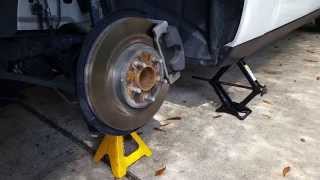
- Raise and secure the front of the vehicle and remove the left front wheel.
- Visually inspect the wheel speed sensor and its wiring harness for any signs of physical damage, such as cracks, chafing, or melting.
- Follow the harness to its connection point in the wheel well. Disconnect it and inspect the pins for corrosion or damage. Clean the connector if dirty.
- Inspect the tone ring on the hub for damage, rust, or debris. It should be clean and have all its 'teeth' intact.
- Check the wheel bearing for excessive play by grabbing the tire (if reinstalled) or hub at the 12 and 6 o'clock positions and trying to wiggle it. Any significant movement points to a bad bearing.
- If wiring and bearing seem okay, the sensor is the most likely culprit. It is held in by a single 10mm bolt.
- After replacing any parts, clear the code with the scan tool and perform a test drive to ensure the warning lights do not return. The lights may go out on their own after a few drive cycles once the system sees a good signal.
Parts You'll Likely Need
- Front Wheel Speed Sensor
(OEM #5105573AA (for 2011-2014), 68199988AD (for 2015+). Always verify by VIN.)— This is the most common failure point for the C0035 code. It is a relatively fragile electronic component exposed to the elements.
Trusted brands: Mopar, Dorman, NGK, Standard Motor Products (SMP)
OEM price range: $50-$90
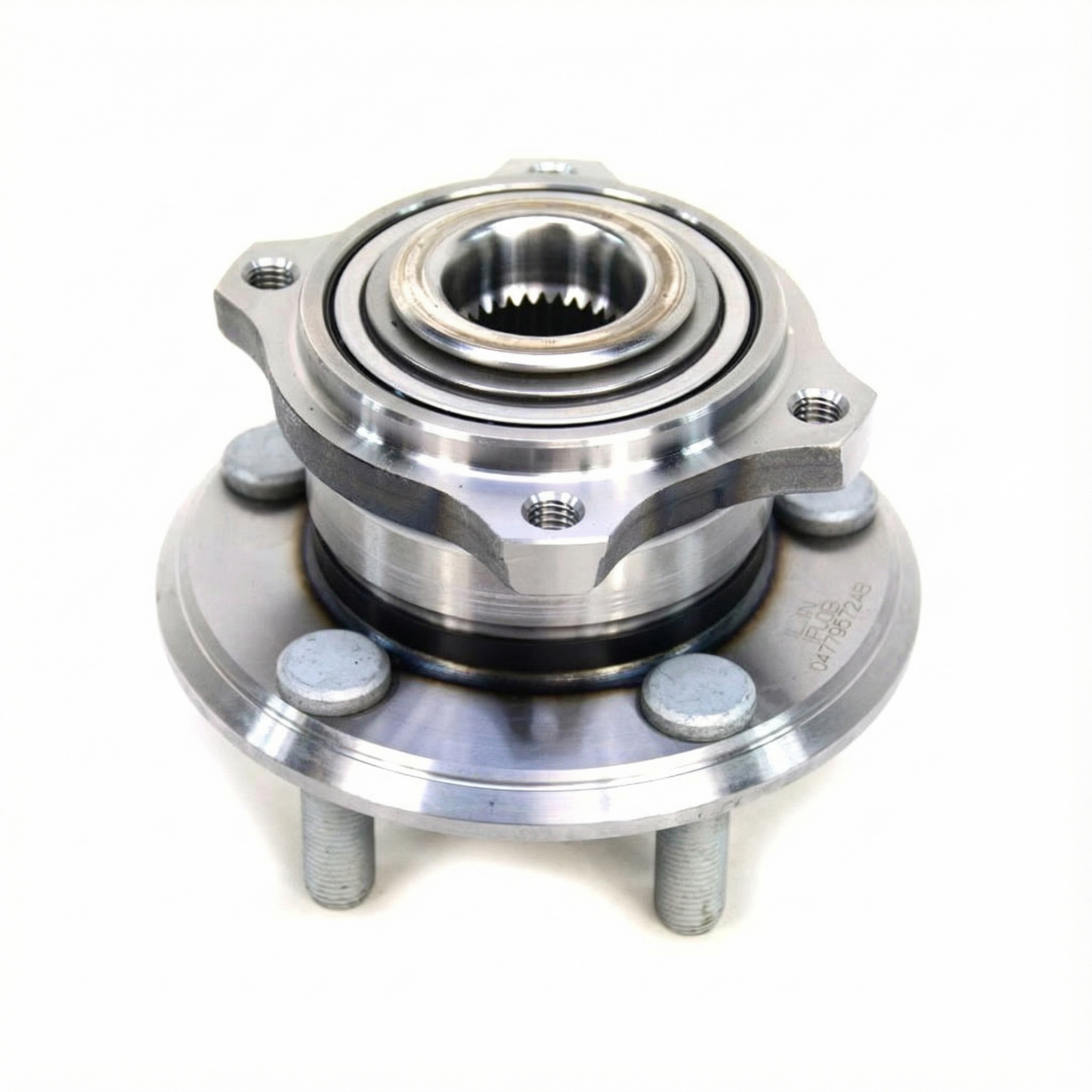
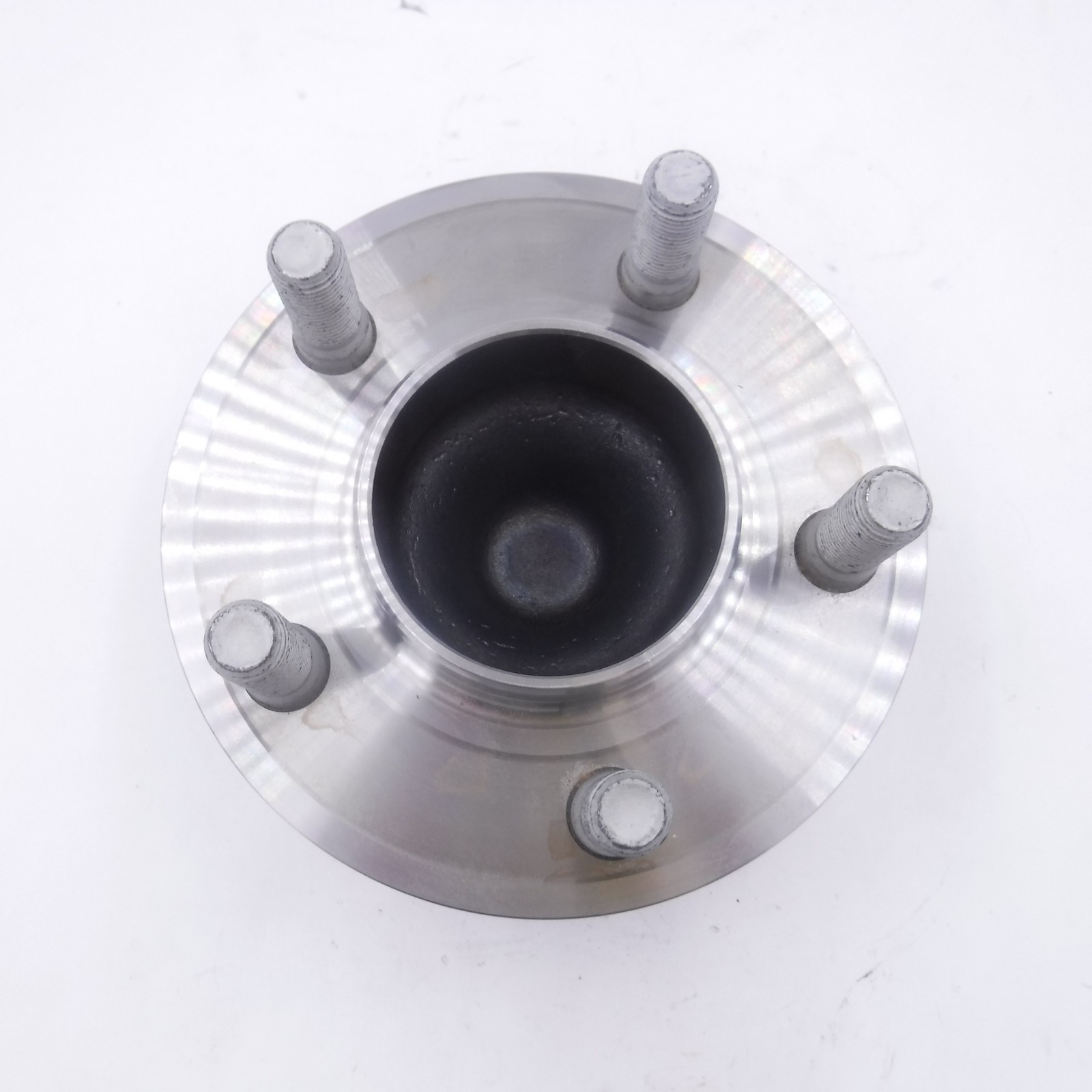
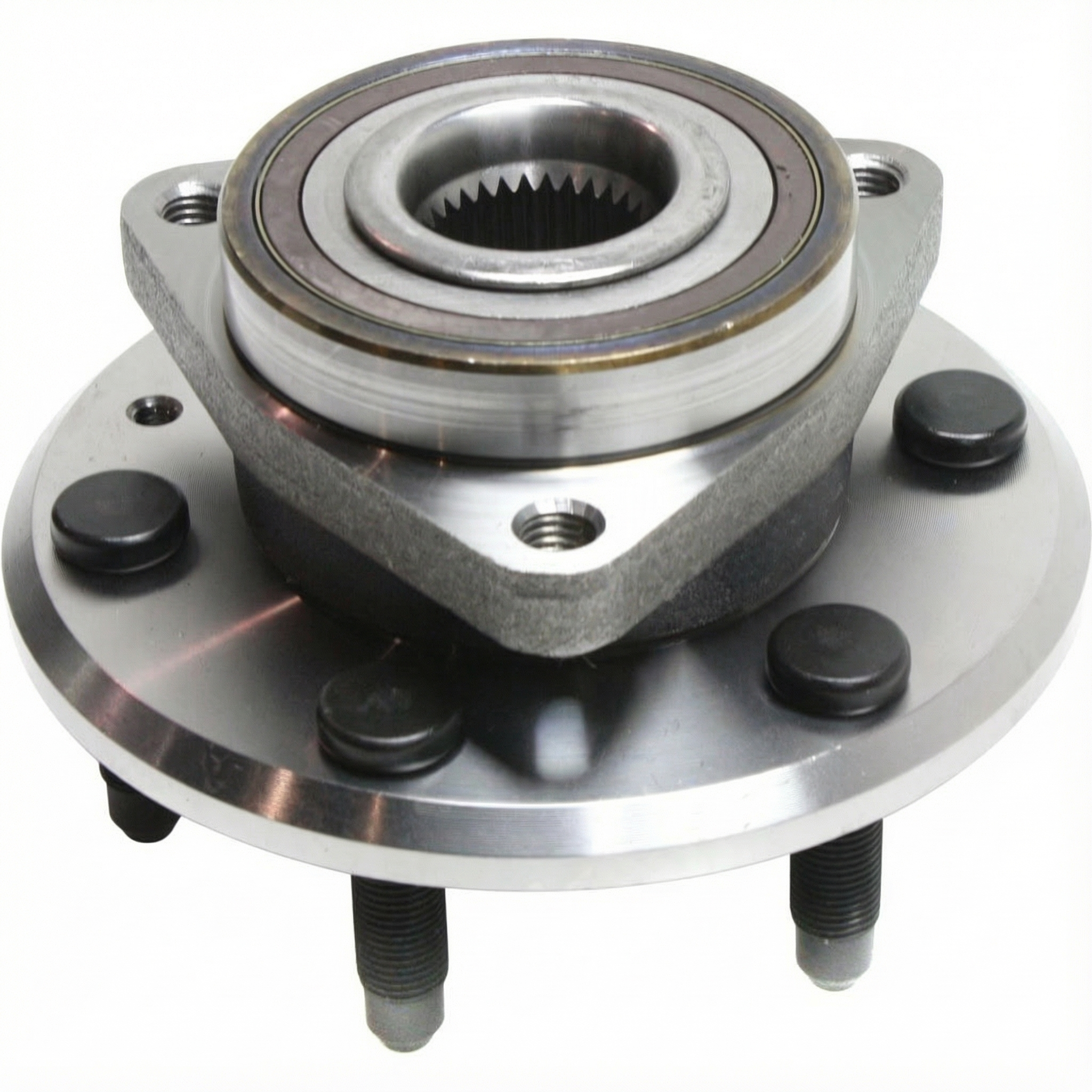
Aftermarket price range: $20-$50 - Front Wheel Bearing and Hub Assembly — Replaced if a bad bearing is the root cause of the sensor signal issue, often indicated by a humming/grinding noise or wheel play.
Trusted brands: Mopar, Timken, MOOG, SKF
OEM price range: $180-$250
Aftermarket price range: $80-$150
Technical Service Bulletins (TSBs) & Recalls
- While no specific TSB for C0035 was found, TSB 0500122 for a 'Front Click Noise at Low Speed Turns' involves work in the same hub area and indicates Chrysler is aware of front-end issues that could potentially affect sensor readings.
Mechanic-Grade Diagnostic Values
- Sensor Supply Voltage (Active Sensor) — expected: 4.5V - 5.5V. Failure: Voltage below 4.0V or absent voltage indicates a problem with the wiring or the ABS module's supply circuit.
- Sensor Resistance (Passive Sensor - for general reference) — expected: 800 - 1500 Ohms (consult vehicle spec). Failure: An open circuit (infinite resistance) or a short (zero resistance) indicates a failed sensor. Note: Challengers use active sensors, but this value is useful for general diagnostics and comparison.
Scan Tool Commands That Help
- Autel MaxiCheck / similar professional scanners: ABS Module Calibration — This function is required after replacing the entire ABS control module, not just a sensor. On some models, it's a simple 5-second automated procedure that does not require a complex drive cycle.
Wiring & Ground Locations
- ABS Control Module/Pump Assembly — In the engine bay on the driver's side, located next to the windshield washer fluid reservoir.. This is the destination for the wheel speed sensor signal. The connector at the module is a key point for testing continuity of the sensor wiring harness.
- ABS Fuses (2018 Model Example) — In the under-hood fuse box (Power Distribution Center). Fuses F05, F06, F36, and F39 are all related to the ABS/Traction Control system.. A blown fuse can cut power to the ABS module or sensor circuits, causing a C0035 code. Checking these fuses is a simple first step before attempting more complex diagnostics.
- Left Front Wheel Speed Sensor Connector — In the left front wheel well, where the sensor pigtail connects to the main chassis harness.. This connector is a common point of failure due to corrosion or physical damage. It's the primary location for back-probing to test voltage and signal from the sensor.
Real Owner Repair Stories
- Reddit user, r/MechanicAdvice (Unknown year, vehicle with separate sensor and hub/tone ring) — ABS light on, C0035 code for left front wheel.
❌ Tried (didn't work) Dealer replaced the left front wheel speed sensor, but the code returned immediately.
✅ What actually fixed it The issue was diagnosed as a faulty hub/tone ring. The user first swapped the left and right front sensors, and the code remained on the left side, correctly proving the sensor itself was not the problem. The dealer's next step was to order a new hub assembly, which was the correct diagnosis.
"I Checked Everything" — The Actual Cause
- A common scenario for a C0035 code is when the sensor and wiring test perfectly fine, but the code persists. The hidden cause is often contamination of the magnetic encoder ring on the back of the wheel hub. Fine metallic particles from brake dust are attracted to the magnet, disrupting the signal read by the sensor. The fix is to remove the sensor and thoroughly clean the encoder ring through the sensor bore using brake cleaner and a brush or compressed air.
OEM Part Supersession History
68199988AA, 68199988AC, 68199988AD→68199988AE— Standard part revision and improvement by the manufacturer.
Heads up: These part numbers are for the post-2015 refresh and are not compatible with 2008-2014 models. The front sensors are interchangeable between left and right sides.
Model Year Variations Within This Range
- All: Front wheel hub assemblies and potentially the sensors are different for Rear-Wheel Drive (RWD) and All-Wheel Drive (AWD) models. It is critical to order the correct part for the vehicle's specific drivetrain.
- 2011+: The 2-wire sensor connector pigtail is available as a separate replacement part (e.g., Standard Motor Products S-824). This indicates the connector itself is a serviceable component and a potential failure point that can be replaced without replacing the entire harness.
Diagnostic Flowchart
Other Known Issues on This Vehicle
Issues unrelated to this code that are worth knowing about as an owner of this generation:
- HEMI Tick (Lifter and Camshaft Failure) 🔴 High — Common across all 5.7L, 6.1L, and 6.4L HEMI engines, particularly noted in 2009-2016 models but can occur at any mileage. Often starts as a light ticking noise that can progress to misfires and catastrophic engine damage. (Ref: No recall, but it is a widely acknowledged issue. Class action lawsuits have been filed regarding this problem.)
- Uconnect 8.4" Screen Delamination 🟠 Medium — Very common on 2017 and newer models equipped with the 8.4-inch screen. The screen adhesive fails, causing bubbling and 'ghost touches' that make the infotainment system unusable. (Ref: No recall has been issued, but it is a widespread complaint. Repair often requires replacing the screen/digitizer or the entire head unit at significant cost.)
- Water Pump Failure 🟠 Medium — Failures are reported at lower-than-expected mileage, sometimes as early as 30,000-50,000 miles. Symptoms include grinding/whining noises from the front of the engine, coolant leaks, and overheating.
- Active Exhaust Valve Squeak/Failure 🟡 Low — Common on models from 2015 onwards equipped with active exhaust. The valves in the exhaust tips can begin to squeak on startup or stick, causing rattling noises. The fix can range from lubrication to replacement or using a bypass module.
- Totally Integrated Power Module (TIPM) Failure 🔴 High — More common on earlier models (pre-2015), the TIPM can fail and cause a wide range of bizarre electrical issues, including no-start conditions, fuel pump problems, and random activation of accessories. (Ref: Subject of lawsuits and some recalls on other Chrysler vehicles, but a known weak point on the Challenger.)
- Cracked Exhaust Manifold Bolts 🟠 Medium — Common on HEMI V8 models. The bolts can break, causing an exhaust leak that presents as a ticking noise, especially when the engine is cold.
Used vs. New Parts: Buying Guide for This Vehicle
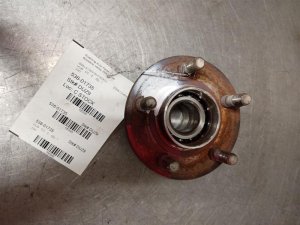
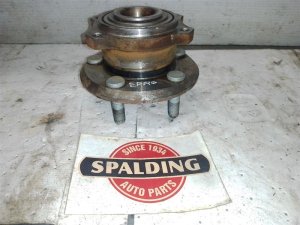
When a used part is the smart pick: A used wheel speed sensor is not recommended as it is an inexpensive electronic wear item. However, if the root cause is a failed wheel bearing, a complete, low-mileage used hub assembly from a reputable salvage yard can be a cost-effective alternative to a new OEM hub.
Donor-vehicle mileage cap: roughly under 50000 miles for the part to have meaningful remaining life.
What to inspect on the donor part:
- Spin the bearing by hand; it must be perfectly smooth with no roughness or grinding noise.
- Attempt to wiggle the hub flange; there should be zero play or wobble.
- Inspect the magnetic encoder ring on the back of the hub. It must be clean, free of cracks, and not covered in metallic debris.
- Ensure the threaded studs are straight and undamaged.
OEM-only on this vehicle (don't cheap out):
- No parts for this specific repair are considered 'OEM-only'; quality aftermarket options are widely available and trusted.
Aftermarket brands forum-validated for this vehicle:
- Sensors: Dorman, NGK/NTK, Standard Motor Products (SMP), Holstein.
- Hub Assemblies: Timken, MOOG, SKF, Dorman.
Real Owner Stories
Aggregated from forums and TSBs cited above. Mileages and costs reflect what owners reported in those sources.
2015 Dodge Challenger
Symptoms: ABS and Traction Control warning lights illuminated on the dashboard.
What fixed it: Replacement of the left front wheel speed sensor after confirming the fault with a BlueDriver scanner.
Source hint: YouTube - How to replace a Wheel Speed sensor, ABS and Traction Control warning lights on a Dodge Challenger (by Ryan's Random Reviews)
2015 Dodge Challenger
Symptoms: ABS and Traction Control lights on; the repair process was noted as being identical to the Charger and Chrysler 300.
What fixed it: Replaced the front wheel speed sensor and applied dielectric grease to the new connector to prevent future corrosion.
Source hint: YouTube - Front Wheel Speed Sensor Replacement Dodge Challenger, Charger & Chrysler 300 (by AnthonyJ350)
Related OBD-II Codes
Frequently Asked Questions
Does TSB 0500122 apply to the front-end noise I'm hearing along with the C0035 code on my Challenger?
I have a 2015 Challenger and my ABS and Traction Control lights are on. Is this a known issue?
Can I use parts from a Dodge Charger or Chrysler 300 to fix the C0035 code on my Challenger?
Is the C0035 code related to the 'HEMI Tick' or water pump issues common in these years?
If I need to replace the hub assembly on my 2008 Challenger to fix C0035, should I replace the sensor too?
Helpful Videos
We Have This Part in Stock

The information in this article is provided for general reference and educational purposes only. Vehicle specifications, procedures, and part compatibility can vary by production date, trim level, and region. Always consult your vehicle's factory service manual and verify part numbers before purchasing or performing repairs. Safety-critical components such as airbags, seat belts, and braking systems should be installed by a qualified professional.
- Dodge Challenger:
- 🧭 Diagnostic Flowchart
- 🎬 Helpful Videos
- 🛍️ Shop This Part
- What's Unique About the 2008-2023 Dodge Challenger
- Symptoms You May Notice
- Most Likely Causes
- Rare But Worth Checking
- Diagnosis Steps
- Parts You'll Likely Need
- Technical Service Bulletins (TSBs) & Recalls
- Mechanic-Grade Diagnostic Values
- Scan Tool Commands That Help
- Wiring & Ground Locations
- Real Owner Repair Stories
- "I Checked Everything" — The Actual Cause
- OEM Part Supersession History
- Model Year Variations Within This Range
- Other Known Issues on This Vehicle
- Used vs. New Parts: Buying Guide for This Vehicle
- Real Owner Stories
- 2015 Dodge Challenger
- 2015 Dodge Challenger
- Related OBD-II Codes
- Frequently Asked Questions
- 🎟️ Get 5% Off