

C0035 on 2006-2010 Dodge Charger: Left Front Wheel Speed Sensor Circuit Fault, Causes and Fixes
This code means a problem with the left front wheel speed sensor circuit. The most common fix is replacing the sensor and its integrated wiring harness. A rusty or cracked tone ring on the axle is another frequent cause. Expect to pay $25-$75 for a sensor and $10-$30 for a tone ring.
- Code C0035 on your 2006-2010 Charger means there's a problem with the left front wheel speed sensor circuit, which disables your ABS and stability control.
- The most likely causes are a bad wheel speed sensor or a cracked/rusted tone ring on the CV axle.
- Use an ABS-capable scan tool to watch live data from the wheel sensors; this is the fastest way to confirm which wheel is faulting.
- Visually inspect the tone ring for rust or cracks before buying parts. This is a common failure point on Chargers and is much cheaper to fix than replacing the wrong component.
- Driving with this code is possible, but your vehicle's safety is compromised. Repair it as soon as possible to restore ABS and traction control functionality.
What's Unique About the 2006-2010 Dodge Charger
On the 2006-2010 Dodge Charger (and its Chrysler 300 / Dodge Magnum platform mates), the C0035 code is frequently caused by one of two main issues: the wheel speed sensor itself or the tone ring it reads. Unlike many vehicles where the tone ring is integrated into the wheel hub assembly, on this platform, it is a separate, press-fit metal ring on the CV axle. These separate rings are known to rust, crack, or swell over time, especially in areas with road salt, which disrupts the sensor's reading and triggers the code. Owners often mistakenly replace the entire CV axle when only the inexpensive tone ring is at fault. Corrosion can also build up underneath the ring, causing it to expand and physically contact the tip of the wheel speed sensor, destroying both parts.
Symptoms You May Notice
- ABS warning light is on
- ESP/BAS warning light is on
- Traction control (TCS) warning light is on
- Anti-lock brakes do not activate during hard braking (wheels may lock and skid)
- Traction control and stability control systems are disabled
- Cruise control may be disabled
- Replacing the entire CV axle when only the tone ring is bad. The tone ring is available separately from aftermarket suppliers like Dorman.
- Replacing the wheel hub bearing when the tone ring or sensor is the actual problem.
- Replacing the ABS module without thoroughly testing the sensor, tone ring, and wiring first.
Most Likely Causes
- Failed Left Front Wheel Speed Sensor 🔴 High Probability → Shop ABS Wheel Speed Sensor The sensor and its wiring are exposed to harsh conditions, including water, road salt, and debris, leading to corrosion and internal failure over time. The wiring harness clip can also break, allowing the connector to come loose or the wiring to chafe on moving parts.
How to confirm: Use an ABS-capable scan tool to monitor live data from all four wheel speed sensors. While driving slowly, the left front sensor will show 0 MPH or an erratic reading compared to the other three. With the vehicle off, you can also test the 2-wire sensor's resistance with a multimeter; an open circuit (infinite resistance) indicates a failed sensor.
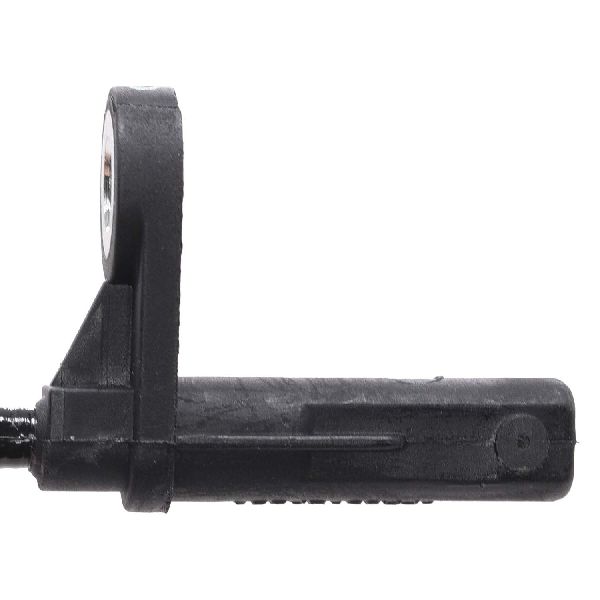
Typical fix: Replace the left front wheel speed sensor. On this platform, the sensor is sold as an assembly with the wiring harness that runs up into the engine bay. Ensure the new sensor is fully seated and the wiring is secured away from suspension and wheel components.
Est. part cost: $25 - $75 - Damaged or Corroded Tone Ring 🔴 High Probability The tone ring is a separate metal ring pressed onto the CV axle. It is highly susceptible to rust, which can cause it to crack, swell, or break apart, leading to an incorrect signal. This is a very common failure point on the LX platform, especially in the salt belt.
How to confirm: Visually inspect the tone ring on the left front CV axle, located behind the wheel hub. Look for cracks, missing teeth, heavy rust buildup, or swelling. A swollen ring may have score marks on it from hitting the sensor, and the sensor tip will also show signs of impact.
Typical fix: Replace the tone ring. This involves removing the wheel, brake caliper, rotor, and axle nut. The hub assembly is then removed to access the axle. The old, cracked ring is broken off with a chisel, the axle surface is cleaned thoroughly with a wire brush or sandpaper, and a new ring is carefully tapped or pressed into place. Some owners use gentle heat on the new ring to help it slide on more easily. 🎬 See this walkthrough for installing new ABS tone rings.
Est. part cost: $10 - $30 - Damaged Wiring or Corroded Connector 🟡 Medium Probability The wiring harness can be damaged by road debris or chafing against suspension components. The connector at the sensor or where it joins the main harness is vulnerable to water intrusion and corrosion. The plastic clips holding the harness can become brittle and break, allowing the wiring to hang loose.
How to confirm: Perform a visual inspection of the entire wiring path from the sensor to the ABS module. Check for breaks, chafing, or green corrosion in the connector pins. Perform a 'wiggle test' on the harness while monitoring live data to check for intermittent faults.
Typical fix: Repair the damaged section of wire with solder and heat shrink. Clean corroded connectors with electrical contact cleaner or replace the connector pigtail if damage is severe. Secure the harness with new clips or zip ties.
Est. part cost: $5 - $25
Rare But Worth Checking
- Failed ABS Control Module: → Shop ABS Control Module While less common for an isolated C0035 code, the ABS module on this platform is a known failure point. It often presents with additional codes, such as C2116 (Pump Motor Fault), and can cause multiple system malfunctions. If the sensor, tone ring, and wiring are confirmed to be good, the module itself may be the issue.
- Failed Wheel Hub Bearing: Excessive play in a worn wheel hub bearing can increase the air gap between the sensor and the tone ring, leading to a weak or inconsistent signal. This is usually accompanied by a grinding or humming noise from the wheel area that changes with speed.
Diagnosis Steps
- Connect an ABS-capable scan tool and verify the C0035 code is present. Check for any other related codes.
- Monitor the live data stream for all four wheel speed sensors while driving the vehicle slowly (under 10 mph). Confirm that the Left Front (LF) wheel speed reading is absent, erratic, or does not match the other wheels.
- Raise and secure the front of the vehicle. Remove the left front wheel.
- Visually inspect the wheel speed sensor and its wiring harness for any obvious signs of damage, chafing, or corrosion. Pay close attention to the connector and its mounting clip.
- Visually inspect the tone ring on the CV axle. Spin the hub and look closely for cracks, heavy rust, swelling, or missing sections. A cracked ring is a very common cause.
- Check for physical contact between the sensor and tone ring. If the ring is swollen with rust, it may hit the sensor, leaving scrape marks on both parts.
- If the tone ring appears damaged, it is the most likely cause. If it looks good, proceed with electrical checks.
- Disconnect the sensor and inspect the connector pins for corrosion. Using a multimeter set to Ohms (Ω), check the resistance across the two pins of the sensor itself. A reading of 'OL' or infinite resistance means the sensor is open and bad. Compare to a known good sensor if possible.
- If electrical tests point to a bad sensor, replace the sensor assembly.
- If the sensor and tone ring appear good, the fault may lie in the wiring harness leading to the ABS module or, rarely, the ABS module itself. Check for continuity and shorts in the harness between the sensor connector and the ABS module connector.
Parts You'll Likely Need
- Front Wheel Speed Sensor
(OEM #4779244AD (supersedes 4779244AC, 4779244AB))— This is the most common failure part for this code. The sensor's electronics fail from heat cycles and exposure to the elements.
Trusted brands: Mopar, Standard Motor Products (ALS1133), Delphi, NTK (AB1833)
OEM price range: $60 - $90
Aftermarket price range: $25 - $50 - ABS Tone Ring — The separate tone ring on the CV axle is a common point of failure due to rust and cracking, specific to this vehicle platform. Not sold separately by OEM, requiring aftermarket purchase.
Trusted brands: Dorman (917-539), TRQ, DIY Solutions
OEM price range: N/A (Not sold separately by OEM)
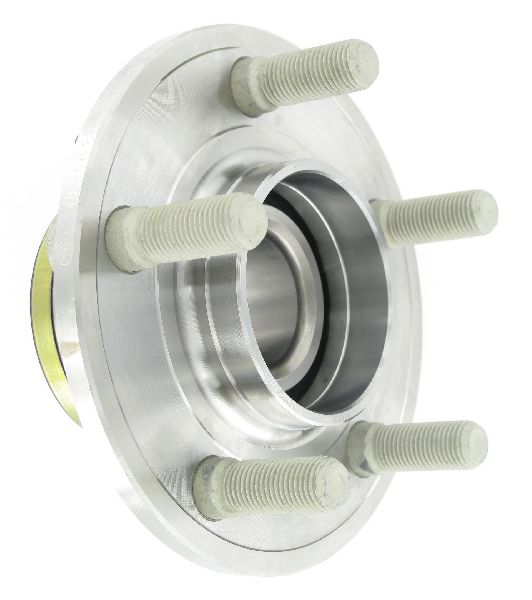
Aftermarket price range: $10 - $30 - Front Wheel Hub Bearing Assembly — Replaced if it has excessive play causing an air gap issue, or if the tone ring is seized and the hub must be removed for access.
Trusted brands: Timken, MOOG, SKF
OEM price range: $150 - $200
Aftermarket price range: $50 - $100
Related Codes That Often Appear With This One
- C2116 — This code for the ABS pump motor can appear if the ABS module itself is failing, which is a known issue on this platform and may occur alongside sensor codes.
- P0300 — While unrelated to the ABS system, this random misfire code can be a symptom of a failing camshaft/lifters in HEMI engines, a common issue on this platform. It is not directly caused by C0035.
Platform-Specific Known Issues
- The separate press-on tone ring is a known weak point. It is often more cost-effective to replace just the ring rather than the entire CV axle, which some shops may recommend.
- Corrosion can build up under the tone ring, causing it to swell and physically contact the tip of the wheel speed sensor, destroying the sensor.
- A YouTube video by 'Installing ABS SENSOR TONE
Mechanic-Grade Diagnostic Values
- Wheel Speed Sensor Resistance (Passive Sensor) — expected: Between 5 MΩ and 7.5 MΩ (Mega-Ohms), reading only in one direction when leads are swapped. Other passive sensors can range from 800 Ω to 2.7 kΩ.. Failure: An open circuit (OL or infinite resistance) or a dead short (0 Ω) indicates a failed sensor. A reading that is drastically different from the sensor on the opposite wheel is also a strong indicator of failure.
- Wheel Speed Sensor AC Voltage Output (Passive Sensor) — expected: Minimum of 100-250 mV AC (0.10-0.25 VAC) when spinning the wheel by hand at about one revolution per second. Voltage should increase with speed.. Failure: No AC voltage or significantly lower voltage than expected while spinning the wheel points to a bad sensor or a problem with the tone ring/air gap.
- Wheel Speed Sensor Supply Voltage (Active Sensor) — expected: 4.5V - 5.5V DC at the sensor connector with the key on, engine off.. Failure: Voltage below 4.0V or no voltage indicates a problem with the wiring or the ABS module's supply circuit, not necessarily the sensor itself.
Scan Tool Commands That Help
- Any ABS-capable scan tool (e.g., Autel, Launch, wiTECH): Live Data > Wheel Speed Sensors — This is the primary diagnostic step. While driving slowly in a straight line, all four wheel speeds should read nearly identically. The sensor that reads 0 MPH or has an erratic/implausible signal compared to the others is the focus of the diagnosis.
- Any ABS-capable scan tool + a magnet: New Sensor Circuit Test (Live Data) — After identifying a faulty sensor signal but before installing the new sensor, plug the new sensor into the harness connector. While watching that wheel's speed on the scan tool's live data, pass a magnet back and forth over the sensor tip. If the scan tool shows a fluctuating speed reading, it confirms the wiring and ABS module are functioning correctly, isolating the fault to the old sensor or tone ring.
Wiring & Ground Locations
- ABS Control Module — In the engine compartment, on the driver's side, mounted to the hydraulic control unit. On some models, the windshield washer fluid reservoir may be in front of it and require loosening or removal for access.. This is where the wheel speed sensor signals are processed. The main connector is the termination point for the sensor wiring and a potential point of failure due to corrosion or loose pins.
- ABS Module Connector (Pins 3 & 4) — On the main electrical connector to the ABS Control Module.. According to a 2008 wiring diagram, Pin 3 is the 'LEFT FRONT WHEEL SPEED SENSOR RETURN' and Pin 4 is the 'LEFT FRONT WHEEL SPEED SENSOR SIGNAL'. These specific pins can be used for advanced continuity and voltage testing of the circuit from the module side.
Real Owner Repair Stories
- 2CarPros Forum User (Vehicle with C0035, likely GM but principle applies directly to Dodge hub/sensor issues.) — ABS light on with code C0035. Live data graph showed no signal from the left front wheel.
❌ Tried (didn't work) Replacing the wheel speed sensor (multiple times with OEM and aftermarket parts)., Replacing the ABS module., Checking wiring continuity from sensor to module (tested good)., Cleaning and inspecting the tone ring.
✅ What actually fixed it The owner discovered a previously installed aftermarket Timken hub assembly (SP580310) had a different physical depth for the sensor. The OEM-spec replacement sensors were too short to get a proper reading from the tone ring inside the aftermarket hub. The problem was an incorrect air gap caused by a parts mismatch, not an electrical fault.
OEM Part Supersession History
4779244AB, 4779244AC→4779244AD— Standard part revision and improvement by the manufacturer.
Heads up: The OEM part itself has no known incompatibilities across the 2006-2010 range. However, an incompatibility exists where using this OEM-spec sensor with certain aftermarket wheel hub assemblies can create an excessive air gap, preventing a signal and keeping the C0035 code active.
Model Year Variations Within This Range
- 2006-2010: No significant variations affecting the diagnosis of C0035 have been identified within this model year range. The core failure points (separate tone ring, sensor, wiring) are consistent across the first generation LX platform.
Diagnostic Flowchart
Other Known Issues on This Vehicle
Issues unrelated to this code that are worth knowing about as an owner of this generation:
- Shifter Stuck in Park ('Pink Thingy' Failure) 🔴 High — Very common, especially on 2005-2007 models. A small pink plastic lever in the shift assembly breaks, preventing the car from being shifted out of Park. (Ref: No recall, but aftermarket metal replacement parts are widely available.)
- Front Tension Strut Failure 🟠 Medium — Common failure item. The fluid-filled bushings on the front tension struts (control arms) fail, causing a clunking or popping noise from the front suspension when braking or going over bumps.
- 5.7L HEMI MDS Lifter Failure ('Hemi Tick') 🔴 High — A well-documented issue, particularly in 2009 and later models but can affect earlier ones. A ticking noise develops, often leading to a misfire (P0300) as the roller on a lifter for the Multi-Displacement System (MDS) fails and damages the camshaft. (Ref: Multiple TSBs exist, such as 09-006-17, which address symptoms and repairs.)
- Alternator Failure 🟠 Medium — Alternators on this platform are a common failure point, often failing without much warning and causing a sudden loss of electrical power.
- Transmission Shift Quality Issues 🟡 Low — Some owners report intermittent hard shifts or gear slippage. Often, this can be resolved with a software update to the Transmission Control Module (TCM) from a dealer.
Used vs. New Parts: Buying Guide for This Vehicle
When a used part is the smart pick: A complete, used OEM CV axle from a low-mileage, dry-climate vehicle can be a good value, as the tone ring will be included and OEM axles are often of higher quality than budget aftermarket units. A used ABS control module can also be a cost-effective option, but ensure the part number matches exactly.
Donor-vehicle mileage cap: roughly under 80000 miles for the part to have meaningful remaining life.
What to inspect on the donor part:
- For a CV axle: Inspect for intact, pliable rubber boots with no cracks or grease leakage. Check for minimal surface rust on the axle and tone ring.
- For an ABS module: Inspect the connector port for any signs of corrosion (green or white powder) or bent pins. Ensure the housing is not cracked.
Aftermarket brands forum-validated for this vehicle:
- Tone Ring: Dorman (specifically part 917-539) is the most commonly cited and reliable aftermarket source.
- Sensor: NTK, Delphi, and Standard Motor Products (SMP) are reputable brands for sensors.
- Hub Assembly: Timken and MOOG are well-regarded brands, but be aware of the potential for sensor length incompatibility if you are not replacing the hub and sensor as a matched set.
Brands owners have reported issues with on this vehicle:
- Be cautious with unbranded, generic 'white-box' electronic parts like wheel speed sensors, as their internal components and durability can be inconsistent.
Real Owner Stories
Aggregated from forums and TSBs cited above. Mileages and costs reflect what owners reported in those sources.
2006 Dodge Charger R/T
Symptoms: Documented the 'pink thingy' shifter failure where the car would not shift out of Park.
What fixed it: Replacement of the small pink plastic lever in the shift assembly with an aftermarket metal part.
Source hint: reddit.com/r/Dodge user report
2006-2010 Dodge Charger
Symptoms: ABS warning light and C0035 code; owner replaced the sensor but the light remained on.
What fixed it: Inspection revealed a cracked front tone ring was the actual culprit.
Source hint: chargerforums.com threads on C0035
Related OBD-II Codes
Frequently Asked Questions
I replaced the left front wheel speed sensor on my Charger, but the C0035 code and ABS light are still there. What else could it be?
Can I just replace the tone ring on my 2007 Dodge Charger, or do I need a whole new CV axle?
Why did my new wheel speed sensor fail immediately after installation?
Is there a trick to getting the new tone ring onto the axle of a 2006-2010 Charger?
Does the C0035 code affect my cruise control or traction control?
Are there any TSBs for the 'Hemi Tick' or misfires on my 2009 Charger?
Helpful Videos
Used OEM Parts in Stock
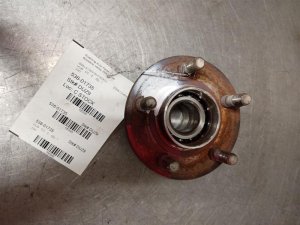
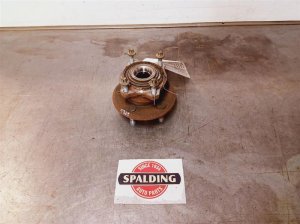
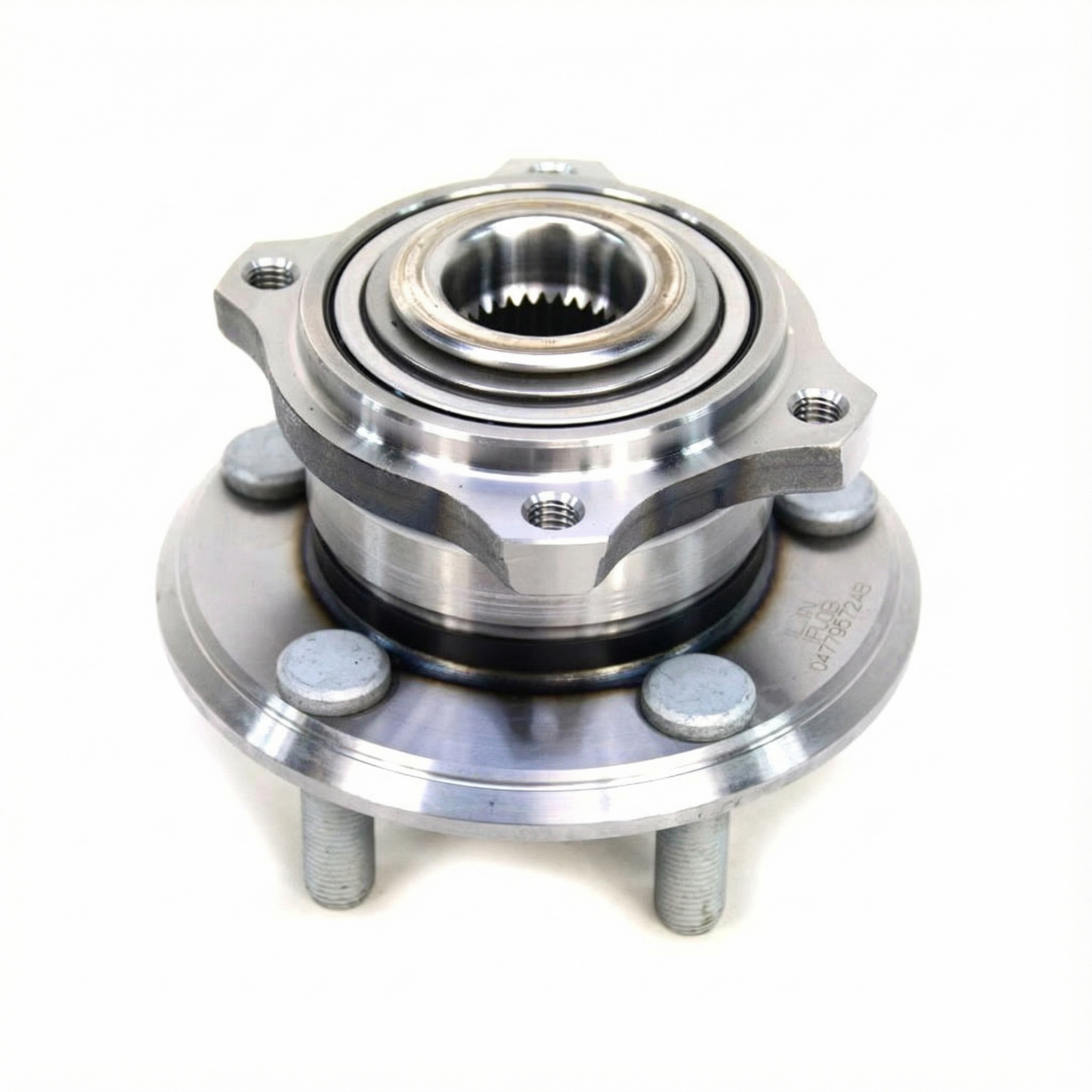
New Aftermarket Parts Available

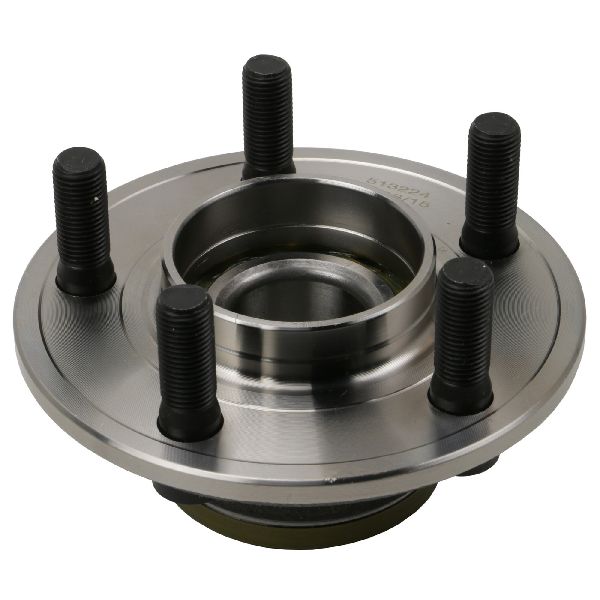

The information in this article is provided for general reference and educational purposes only. Vehicle specifications, procedures, and part compatibility can vary by production date, trim level, and region. Always consult your vehicle's factory service manual and verify part numbers before purchasing or performing repairs. Safety-critical components such as airbags, seat belts, and braking systems should be installed by a qualified professional.
- Dodge Charger:
- 🧭 Diagnostic Flowchart
- 🎬 Helpful Videos
- 🛍️ Shop This Part
- What's Unique About the 2006-2010 Dodge Charger
- Symptoms You May Notice
- Most Likely Causes
- Rare But Worth Checking
- Diagnosis Steps
- Parts You'll Likely Need
- Related Codes That Often Appear With This One
- Platform-Specific Known Issues
- Mechanic-Grade Diagnostic Values
- Scan Tool Commands That Help
- Wiring & Ground Locations
- Real Owner Repair Stories
- OEM Part Supersession History
- Model Year Variations Within This Range
- Other Known Issues on This Vehicle
- Used vs. New Parts: Buying Guide for This Vehicle
- Real Owner Stories
- 2006 Dodge Charger R/T
- 2006-2010 Dodge Charger
- Related OBD-II Codes
- Frequently Asked Questions
- 🎟️ Get 5% Off