

C0035 on 2002-2009 GMC Envoy: Left Front Wheel Speed Sensor Causes and Fixes
On a 2002-2009 GMC Envoy, code C0035 almost always means the left front wheel hub and bearing assembly is failing. The wheel speed sensor is integrated into the hub, making replacement of the complete assembly the most common fix. Other causes include a damaged wiring pigtail or, rarely, a bad EBCM ground. Expect to pay $100-$200 for an aftermarket part and $200+ for an OEM part.
- C0035 on a GMC Envoy means there's a problem with the driver's side front wheel speed sensor circuit.
- Your ABS and traction control will be disabled, so drive with extra caution, especially in poor weather.
- The most common cause is a failed wheel hub assembly, which contains the sensor and its tone ring.
- Before replacing the hub, always perform a thorough visual inspection of the wiring and connector for damage.
- Replacing the entire front-left wheel hub assembly is the most reliable and common repair for this code.
What's Unique About the 2002-2009 GMC Envoy
On the GMT360 platform, which includes the GMC Envoy and its siblings like the Chevrolet TrailBlazer, the front wheel speed sensor and its magnetic tone ring are integrated directly into the sealed wheel hub and bearing assembly. This design means that unlike some vehicles where the sensor is a simple, separate component, a failure of the sensor or the internal magnetic ring requires replacing the entire hub assembly. This makes the repair more involved and costly than just replacing an external sensor.
Symptoms You May Notice
- ABS warning light is on
- Traction Control or StabiliTrak warning light is on
- Service Brake System message on Driver Information Center (DIC)
- Service 4WD light may illuminate
- Cruise control may be disabled
- Unwanted ABS activation at low speeds (a grinding or pulsing from the brakes just before a stop).
- ABS system does not activate during hard braking
- Traction control does not activate on slippery surfaces
- Replacing only the bolt-on ABS sensor when the internal tone ring in the hub is the actual point of failure. While the sensor is available separately, the issue often lies with the hub bearing wear or internal corrosion on this platform.
- Replacing the EBCM without first verifying the integrity of the wiring and ground connections. A bad ground can mimic a failed module.
Most Likely Causes
- Failed Front Wheel Hub & Bearing Assembly 🔴 High Probability → Shop Hub Assembly The wheel speed sensor and magnetic encoder ring are integrated into the hub assembly. Bearing wear introduces play, which can damage the internal sensor. More commonly, corrosion penetrates the assembly, causing the sensor to fail or the magnetic ring to degrade. Rust can also build up under the sensor mounting point ('rust jacking'), increasing the air gap and weakening the signal.
How to confirm: With the vehicle raised, check for any play or roughness when wiggling the wheel from the top and bottom. Use a scan tool with live data to watch the LF wheel speed signal while spinning the wheel; if it's erratic, absent, or drops out at low speed while other wheels read correctly, and the wiring is good, the hub is the culprit.
Typical fix: Replace the entire left front wheel hub and bearing assembly. 🎬 Watch this step-by-step guide on replacing the front hub assembly. This is the most definitive repair as it replaces the bearing, hub, sensor, and tone ring all at once.
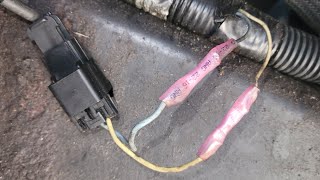
Est. part cost: $100-$270 - Damaged Wiring Harness or Connector 🟡 Medium Probability The sensor wire runs down the suspension and is exposed to road debris, moisture, and constant movement from steering and suspension travel. This can lead to chafing against the frame or suspension components, breaks in the wire, or corrosion in the connector pins where the pigtail meets the main harness.
How to confirm: Visually inspect the entire length of the wiring harness from the back of the hub up to its connection point on the frame. Pay close attention to where it flexes and any clips that hold it in place. Check for breaks, melted spots, or green corrosion inside the connector. Use a multimeter to check for continuity and for shorts to ground on both wires between the EBCM and the sensor plug. 🎬 See how to diagnose a C0035 code using a scan tool.
Typical fix: Repair the damaged section of wire or replace the pigtail connector. The Dorman 970-040 is a commonly used replacement pigtail.
Est. part cost: $15-$40 - Debris or Rust on Sensor Mounting Surface ⚪ Low Probability Rust and metallic dust from brakes can accumulate on the hub's magnetic encoder seal or, more commonly, under the sensor itself. This rust buildup physically pushes the sensor away from the tone ring, increasing the air gap and causing a weak or lost signal, especially at low speeds.
How to confirm: This is often attempted as a first step before replacing the hub. The sensor is unbolted from the knuckle (typically a 5mm Allen bolt), and the mounting surface is inspected for a layer of rust scale. Often, the sensor will be seized and break during removal, necessitating a hub replacement anyway.
Typical fix: Remove the wheel speed sensor from the hub and clean both the sensor tip and the magnetic encoder surface on the hub with a rag or soft brush and brake cleaner. Thoroughly clean the sensor mounting hole in the knuckle to remove all rust. If the sensor is not damaged, reinstalling it on a clean surface may restore the correct air gap and fix the code.
Est. part cost: $0-$10
Rare But Worth Checking
- Poor EBCM Ground Connection: A corroded or loose ground for the Electronic Brake Control Module (EBCM) can cause a variety of strange ABS issues, including communication errors and false sensor codes. TSB 04-05-25-002E addresses this, pointing to the main EBCM ground on the frame rail under the driver's door (Ground 304). Cleaning this ground point should be considered before condemning the EBCM.
- Faulty Electronic Brake Control Module (EBCM): → Shop ABS Control Module This is the least likely cause. An EBCM failure typically triggers multiple codes for different wheels, communication errors (like U-codes), or internal fault codes (like C0265). It should only be considered after the hub assembly, wiring, and EBCM ground have been definitively ruled out. Diagnosis may require an oscilloscope to verify the sensor signal is good at the EBCM connector. Manufacturer TSB Bulletin #PIT5499B notes that technicians should specifically inspect the EBCM connector for water intrusion if codes like C0035 are present.
Diagnosis Steps
- Read the codes with an ABS-capable OBD-II scanner to confirm C0035 is present and check for any other related codes.
- Raise and safely support the front of the vehicle.
- Thoroughly inspect the wheel speed sensor wiring harness from the hub to the frame for any visible damage, chafing, or corrosion at the connector. Unplug the connector and check for bent or corroded pins.
- Grasp the left front tire at the 12 and 6 o'clock positions and attempt to wiggle it. Any noticeable play or a grinding noise when spinning the wheel indicates a bad wheel bearing/hub.
- If you have a capable scan tool, monitor the live data for the Left Front Wheel Speed Sensor while spinning the wheel by hand. Compare its reading to the Right Front wheel. A reading of zero, one that is erratic, or one that cuts out at low speed points to a problem in the circuit or hub.
- If the wiring appears intact and the bearing feels solid, attempt to remove the single 5mm Allen bolt holding the ABS sensor to the steering knuckle. If it removes without breaking, clean the sensor tip, the mounting hole, and the hub's mating surface of all rust and debris.
- If cleaning does not resolve the issue, or if the sensor broke during removal, the wheel hub assembly is faulty and needs to be replaced.
- Before replacing an expensive EBCM, locate and clean the main EBCM ground point on the frame under the driver's door per TSB 04-05-25-002E.
Parts You'll Likely Need
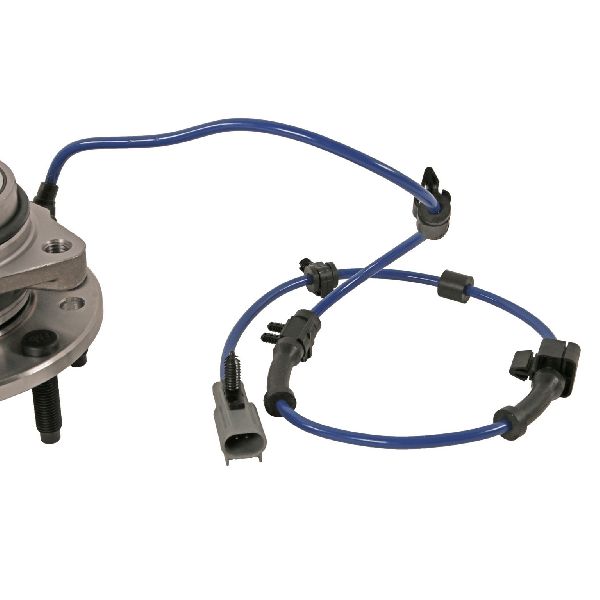
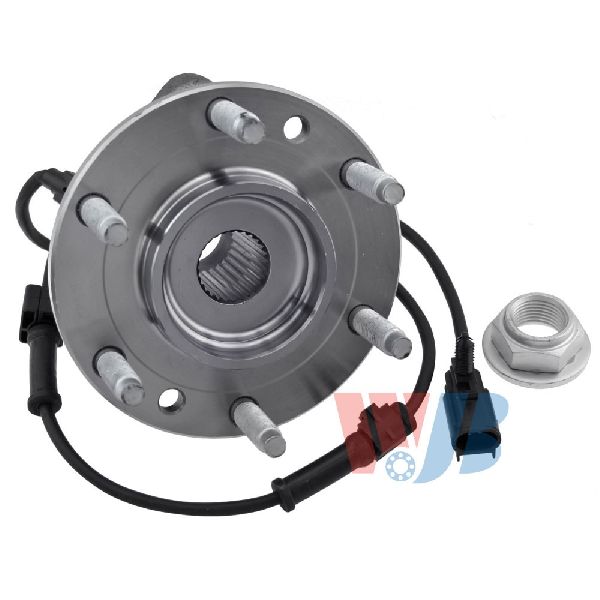
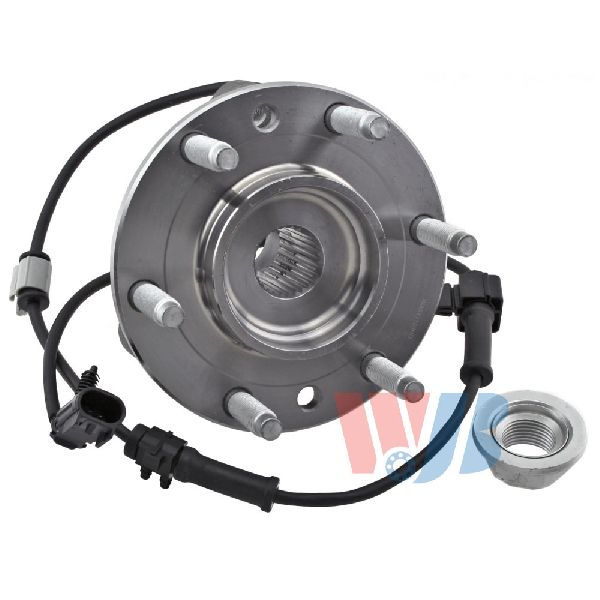
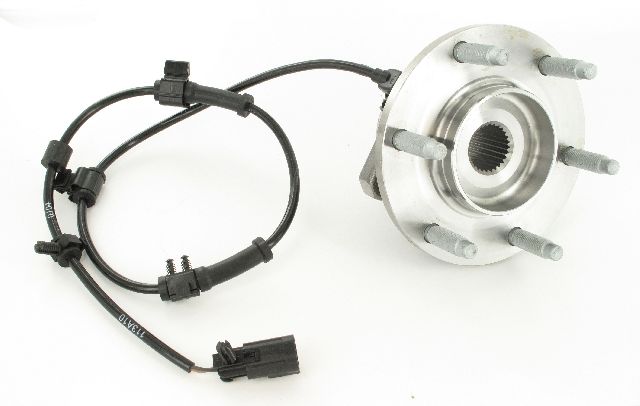
- Front Wheel Hub and Bearing Assembly
(OEM #19259798 (Superseded by ACDelco FW339))— This is the most common failure point. The assembly includes the bearing, hub, integrated magnetic tone ring, and the new wheel speed sensor with its harness.
Trusted brands: ACDelco (OEM), Timken (SP500301), MOOG (513188), SKF
OEM price range: $200-$270
Aftermarket price range: $100-$180 - ABS Wheel Speed Sensor Harness Pigtail
(OEM #Dorman 970-040)— Needed if the connector or the wiring leading to it is damaged or corroded. This part allows you to splice in a new connector without replacing a larger harness section.
Trusted brands: Dorman, ACDelco
OEM price range: $25-$40
Aftermarket price range: $15-$30
Related Codes That Often Appear With This One
- C0040 — This is the code for the Right Front Wheel Speed Sensor. Seeing both C0035 and C0040 together often indicates a common problem affecting both front wheels, such as a wiring issue common to both sides or, more frequently, both front wheel hubs reaching the end of their service life at the same time.
- C0245 — This code indicates a 'Wheel Speed Sensor Frequency Error'. It often appears with C0035 because the EBCM sees a signal from the left front sensor that is implausible or doesn't match the other wheels, which is a direct result of the fault in the C0035 circuit.
Technical Service Bulletins (TSBs) & Recalls
- PIC5428G / 17-NA-047: While not explicitly listing the 2002-2009 Envoy, this GM TSB addresses identical C0035-C0050 codes on many other models caused by metallic debris on the magnetic encoder ring, recommending cleaning as a first step.
- 04-05-25-002E: This TSB is highly relevant as it covers the 2002-2007 Envoy and other GMT360s. It addresses various ABS codes (C0265, C0201) and loss of communication caused by a poor EBCM ground connection on the frame rail. This should be checked before replacing the EBCM for any ABS fault.
- TSB Bulletin #PIC5428G: This manufacturer bulletin notes that the EBCM may have one or more diagnostic trouble codes from C0035-C0050, specifically with symptoms 18, 5A, or 0F, and instructs technicians to gain access to the correct wheel bearing per the code set.
- TSB Bulletin #PIT5499B: A manufacturer service bulletin notes that technicians may find codes C0035, C0040, C0045, or C0050 alongside a "Service Trailer Brake" message or a brake lamp on even when the master cylinder fluid level is full.
Platform-Specific Known Issues
- Low-Speed ABS Activation: A very common owner complaint preceding the C0035 code is unwanted ABS activation at speeds below 10 mph, typically when coming to a stop. This is caused by a weak signal from the failing sensor due to an increased air gap from rust or internal hub failure. The EBCM misinterprets the weak signal as wheel lock-up and pulses the brakes.
- Seized/Broken Sensor During Removal: In regions with rust, the steel body of the sensor often corrodes and seizes within the aluminum steering knuckle. Attempting to remove the 5mm Allen bolt and pry out the sensor frequently results in the sensor breaking, leaving its body stuck in the knuckle. This almost always necessitates replacing the entire hub assembly, as the broken piece is extremely difficult to extract without damaging the hub's internal magnetic ring.
Mechanic-Grade Diagnostic Values
- Wheel Speed Sensor Resistance — expected: 900 - 2000 Ohms. Failure: A reading outside this range, or an open circuit (OL), indicates a failed sensor.
- Wheel Speed Sensor AC Voltage Output — expected: Greater than 100-200 millivolts (0.1-0.2V) AC when spinning the wheel by hand (approx. 1 revolution per second).. Failure: No AC voltage or a very weak/erratic voltage suggests a problem with the sensor or the internal tone ring.
Hidden / Shadow Codes Worth Checking
- C0035 0F: Signal Erratic: The EBCM has detected an erratic wheel speed sensor signal for a very short duration (e.g., 0.17 seconds). This often points to a wiring issue or internal hub problem causing signal dropouts. (see via Professional scan tool (like GM GDS2/Tech2) capable of reading ABS module symptom codes.)
- C0035 18: Low Signal Amplitude: Indicates a missing wheel speed sensor signal is detected for a set time (e.g., 180 seconds) when vehicle speed is above a certain threshold (e.g., 6 mph). This points to a hard failure in the circuit or sensor. (see via Professional scan tool (like GM GDS2/Tech2) capable of reading ABS module symptom codes.)
- C0035 5A: Signal Not Plausible: This means the difference between the fastest and slowest wheel speed is greater than a certain percentage (e.g., 50%) for a set duration. This is the classic code for low-speed false ABS activation, where one wheel appears to stop rotating while the others are still moving. (see via Professional scan tool (like GM GDS2/Tech2) capable of reading ABS module symptom codes.)
Scan Tool Commands That Help
- GM Tech2 / GDS2 (or equivalent high-end scanner): Live Data Graphing - Wheel Speed Sensors — This is the most crucial diagnostic step. Graphing all four wheel speeds simultaneously during a test drive will clearly show if the left front sensor signal drops to zero, becomes erratic, or lags behind the others, confirming the fault location.
- GM Tech2 / GDS2 (or equivalent high-end scanner): Clear DTCs — After a repair, the C0035 code must be manually cleared from the EBCM. The system often disables the 12V driver to the sensor when a fault is detected, and simply cycling the key may not restore function. A manual clear is necessary to re-enable the circuit for testing and confirm the fix.
Wiring & Ground Locations
- G304 — On the outside of the frame rail, below the driver's side door.. This is the primary ground connection for the Electronic Brake Control Module (EBCM). Corrosion or a loose connection at this point can cause a variety of ABS faults, including false wheel speed sensor codes, by creating a floating ground for the module.
- EBCM Connector (C1 or C2 depending on year/module) — On the EBCM, which is attached to the ABS hydraulic block in the engine bay, typically on the driver's side frame rail.. To perform advanced diagnostics, you need to test the sensor circuit at the module. For the Left Front WSS, the two wires are typically a Tan/White wire (Low Reference) and a Light Blue/Black wire (Signal). Pin numbers vary by year and module type (Kelsey-Hayes vs. TRW), so a specific wiring diagram for the vehicle's VIN is essential. For example, on some models, these may be pins 30 and 31 on the main EBCM connector.
Real Owner Repair Stories
- GMTNation Forum (2003 Chevrolet Trailblazer) — Low-speed ABS activation (unwanted braking just before a stop).
❌ Tried (didn't work) The owner continued to drive with the symptom for over a year.
✅ What actually fixed it The issue was a failing wheel bearing. The bearing had not yet become noisy, but the internal wear caused misalignment between the sensor and the internal toothed wheel, resulting in a low voltage signal. Replacing the entire wheel hub assembly solved the problem.
OEM Part Supersession History
15158254, 19259798→ACDelco FW339 (for hub assembly)— Part consolidation and potential minor revisions over the production run.
Heads up: While many aftermarket hubs fit, some ultra-cheap, unbranded units have been reported to fail prematurely or have sensors that are not calibrated correctly, causing the C0035 code to return shortly after installation.
Model Year Variations Within This Range
- 2002-2009: Throughout the GMT360 platform's life, different EBCM modules were used, primarily from Kelsey-Hayes and TRW. While they perform the same function, they may have different internal logic, part numbers, and connector pinouts. For example, early models (approx. 2002-2003) may have different module part numbers than later models (2004-2009). This is critical if considering a used EBCM, as it must be the correct type for the vehicle's year and options (e.g., with or without traction control).
Diagnostic Flowchart
Used vs. New Parts: Buying Guide for This Vehicle
When a used part is the smart pick: A used EBCM (ABS module) from a junkyard can be a cost-effective option if the module itself is confirmed to be faulty. However, it is critical to match the part number exactly and ensure the donor vehicle has the same options (e.g., traction control). Buying a used wheel hub assembly is strongly discouraged.
Donor-vehicle mileage cap: roughly under 80000 miles for the part to have meaningful remaining life.
What to inspect on the donor part:
- For an EBCM: Match the OEM part number on the module case exactly. Check for any signs of water intrusion or corrosion on the connectors. Ensure the donor vehicle was not in a major front-end collision that could have damaged the unit.
- For a wiring pigtail: Look for clean, un-corroded connector pins. Ensure the wiring insulation is flexible and not cracked, brittle, or previously repaired.
Aftermarket brands forum-validated for this vehicle:
- For Wheel Hub Assembly: Timken, MOOG, SKF, and ACDelco (Professional or OE lines) are consistently recommended by mechanics and forum users for their durability and proper sensor function.
- For Wiring Pigtail: Dorman is a widely available and accepted replacement.
Brands owners have reported issues with on this vehicle:
- Avoid unbranded, 'white box' wheel hub assemblies from online marketplaces. While inexpensive, they have a high rate of premature bearing failure and sensor-related issues that can cause the C0035 code to return.
Real Owner Stories
Aggregated from forums and TSBs cited above. Mileages and costs reflect what owners reported in those sources.
2002-2009 GMC Envoy
Symptoms: Unwanted ABS activation at speeds below 10 mph, like a grinding or pulsing from the brakes just before coming to a complete stop, which eventually led to the ABS light coming on.
What fixed it: The root cause was a weak signal from the failing sensor due to an increased air gap from rust or internal hub failure. Replacing the entire wheel hub assembly resolved the issue.
Source hint: vehicle_specific_issues section titled 'Low-Speed ABS Activation'
2002-2009 Chevrolet TrailBlazer
Symptoms: The ABS and Traction Control warning lights were on, and the cruise control was disabled. The code was C0035.
What fixed it: The problem was caused by rust buildup on the sensor mounting surface, which increased the air gap to the tone ring. The owner removed the sensor, thoroughly cleaned all rust from the mounting hole in the knuckle and the sensor itself, and reinstalled it, which restored the signal and cleared the code.
Source hint: TrailVoy.com thread titled 'Simple Fix for ABS Wheel Speed Sensor'
2002-2009 Chevrolet TrailBlazer
Symptoms: The issue started with intermittent, low-speed ABS activation and later progressed to constant C0035 and C0040 codes with the ABS light staying on.
What fixed it: After discussing the 'rust jacking' theory and attempting to clean the sensor, the ultimate cause was determined to be a bad hub. Replacing the front wheel hub assembly was the final repair.
Source hint: GMTNation.com thread titled 'ABS issue development - C0035/C0040'
Related OBD-II Codes
Frequently Asked Questions
My brakes are grinding and pulsing right before I come to a stop. Is this related to the C0035 code and ABS light on my Envoy?
I live in the rust belt. Could corrosion be causing the ABS light on my 2005 Envoy?
I tried to remove the ABS sensor to clean it, but it broke off in the steering knuckle. What should I do now?
Is there a specific TSB I should look at for my Envoy's ABS problems before replacing parts?
My Service 4WD light came on at the same time as my ABS light. Are the two problems connected?
Can I just replace the left front ABS sensor, or do I have to buy the whole wheel hub?
Helpful Videos
We Have This Part in Stock


The information in this article is provided for general reference and educational purposes only. Vehicle specifications, procedures, and part compatibility can vary by production date, trim level, and region. Always consult your vehicle's factory service manual and verify part numbers before purchasing or performing repairs. Safety-critical components such as airbags, seat belts, and braking systems should be installed by a qualified professional.
- GMC Envoy:
- 🧭 Diagnostic Flowchart
- 🎬 Helpful Videos
- 🛍️ Shop This Part
- What's Unique About the 2002-2009 GMC Envoy
- Symptoms You May Notice
- Most Likely Causes
- Rare But Worth Checking
- Diagnosis Steps
- Parts You'll Likely Need
- Related Codes That Often Appear With This One
- Technical Service Bulletins (TSBs) & Recalls
- Platform-Specific Known Issues
- Mechanic-Grade Diagnostic Values
- Hidden / Shadow Codes Worth Checking
- Scan Tool Commands That Help
- Wiring & Ground Locations
- Real Owner Repair Stories
- OEM Part Supersession History
- Model Year Variations Within This Range
- Used vs. New Parts: Buying Guide for This Vehicle
- Real Owner Stories
- 2002-2009 GMC Envoy
- 2002-2009 Chevrolet TrailBlazer
- 2002-2009 Chevrolet TrailBlazer
- Related OBD-II Codes
- Frequently Asked Questions
- 🎟️ Get 5% Off