

C0035 on 2006-2010 Hyundai Sonata: Left Front Wheel Speed Sensor Fault Guide
Code C0035 on a 2006-2010 Hyundai Sonata means there is a fault in the left front (driver's side) wheel speed sensor circuit. The most common fix is replacing the sensor itself or repairing its wiring harness, which often gets damaged. Expect to pay $25-$75 for an aftermarket sensor.
- C0035 on your Sonata points directly to a problem with the driver's side front wheel speed sensor circuit.
- Before buying parts, thoroughly inspect the sensor's wiring harness for any visible damage, as this is a very common point of failure.
- Use a multimeter to test the sensor's resistance; a good one should be between 1100 and 1400 ohms.
- Check if your vehicle has had the critical ABS module and rear subframe recalls performed by a Hyundai dealer.
What's Unique About the 2006-2010 Hyundai Sonata
The 2006-2010 Sonata (NF generation) is subject to two major safety recalls that highlight systemic weaknesses. The first, NHTSA campaign 13V-354, addresses severe corrosion of the rear subframe in salt-belt states, which could cause a control arm to detach and affect vehicle handling. The second, NHTSA campaign 18V-368, involves the ABS module, which can internally leak brake fluid, leading to an electrical short and potential fire risk. While neither recall directly causes the C0035 sensor code, they underscore known vulnerabilities in the chassis and ABS system. A compromised ABS module, though rare, could be an underlying cause of various system faults.
Symptoms You May Notice
- ABS warning light is illuminated on the dashboard
- Traction Control (TCS) or Electronic Stability Control (ESC) warning light is on
- ABS system does not activate during hard braking (wheels may lock up)
- Traction control system is disabled
- Brake pedal may feel different or pulse unexpectedly at low speeds before the light comes on
- Replacing the wheel hub/bearing when only the sensor is bad. On this generation, the sensor is a separate, bolt-on part, not integrated into the hub.
- Replacing the sensor when the actual fault is a broken wire or corroded connector further up the harness.
Most Likely Causes
- Damaged Wheel Speed Sensor Wiring Harness 🔴 High Probability → Shop ABS Wheel Speed Sensor The wiring is exposed in the wheel well and can be damaged by road debris, or it can chafe against suspension components or the tire itself if mounting clips break. Corrosion at the connector where it joins the main harness is also a very common failure point.
How to confirm: Visually inspect the entire length of the wire from the sensor to its connection point inside the fender liner. Look for breaks, chafing, or green/white corrosion on the connector pins. Perform a 'wiggle test' on the harness while monitoring live data on a scan tool to see if the signal cuts out. A poor previous repair is also a possibility.
Typical fix: Repair the broken section of wire with solder and heat shrink, or replace the entire sensor and harness assembly if the damage is severe or close to the sensor. Clean corroded connectors with a contact cleaner and apply dielectric grease.
Est. part cost: $0 (for repair) - $75 - Failed Left Front Wheel Speed Sensor 🔴 High Probability → Shop ABS Wheel Speed Sensor The sensor is an electronic component located in a harsh environment behind the brake rotor, subject to heat, moisture, and vibration, leading to eventual internal failure of its wire coil.
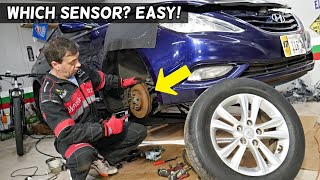
How to confirm: Using a scan tool with live data, observe the wheel speed reading for the left front wheel while driving. If it reads 0 MPH or is erratic while other wheels read correctly, the sensor is likely bad. 🎬 Watch: How to identify which ABS sensor is failing. You can also test the sensor's internal resistance with a multimeter. Disconnect the sensor and measure across its two pins. A good sensor for this vehicle should read between 1.1 and 1.4 kΩ (1100-1400 ohms). An open circuit (infinite resistance) or a reading far outside this range indicates failure.
Typical fix: Replace the left front wheel speed sensor. The sensor is typically held in by a single 10mm bolt that can be heavily rusted, so applying penetrating oil beforehand is recommended.
Est. part cost: $25-$75 - Damaged or Debris-Covered Tone Ring ⚪ Low Probability The tone ring (or reluctor ring), which the sensor reads, is part of the CV axle. While durable, it can be damaged during other repairs (like axle replacement) or become obstructed by heavy rust scale or metallic debris that sticks to the magnetic sensor tip.
How to confirm: Visually inspect the toothed ring that the sensor points at. Check for cracked or missing teeth, heavy rust buildup, or embedded metallic debris that could disrupt the magnetic signal. Ensure the air gap between the sensor and ring is minimal and consistent.
Typical fix: Clean the tone ring with a wire brush and brake cleaner. If the ring is cracked or has missing teeth, the CV axle will need to be replaced.
Est. part cost: $100-$250 (for CV axle)
Rare But Worth Checking
- Faulty ABS Control Module: → Shop ABS Control Module This is the least likely cause for a single sensor circuit code. However, given the widespread recalls for ABS module failure on this Sonata generation (NHTSA 18V-368), it's a possibility if the sensor and wiring are confirmed to be good. A faulty module often presents with multiple wheel speed sensor codes or communication errors with the scanner.
Diagnosis Steps
- Connect an ABS-capable OBD-II scanner and confirm C0035 is the active code.
- Access the live data stream on the scanner and monitor the speeds of all four wheels while driving slowly. Confirm that the Left Front wheel speed reads 0 MPH or is erratic compared to the others.
- Raise and safely support the front of the vehicle. Remove the left front wheel.
- Visually inspect the wheel speed sensor wiring harness. Follow it from the sensor on the knuckle up into the fender well. Look for any signs of physical damage, chafing, melting, or corrosion at the connector.
- If wiring looks good, disconnect the sensor and use a multimeter to check for resistance across the two pins on the sensor side. A normal reading for a 2006-2010 Sonata is specifically in the range of 1.1-1.4 kΩ (1100-1400 ohms). 🎬 See this guide on testing wheel speed sensor resistance. A reading of infinite resistance (OL) or near zero ohms indicates the sensor has failed.
- Inspect the tone ring on the CV axle for damage, missing teeth, or heavy contamination. Clean any debris from the magnetic tip of the sensor.
- If the sensor tests good, check the wiring harness for continuity from the sensor connector to the ABS module connector. A 'wiggle test' can help identify intermittent breaks.
- If the sensor and wiring test good, the final step would be to test for a proper signal at the ABS control module connector to rule out a module fault, which is best left to a professional.
Parts You'll Likely Need
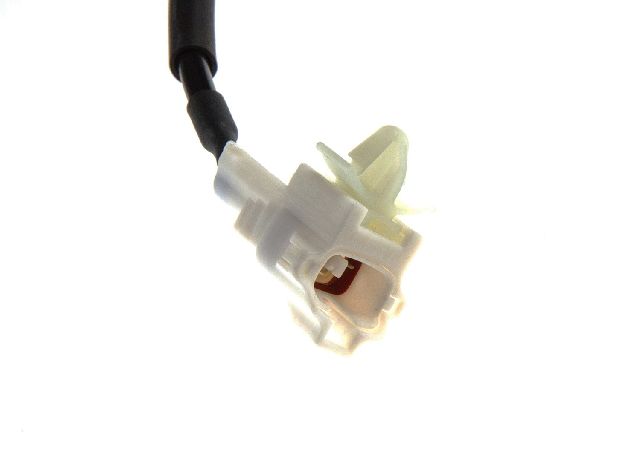
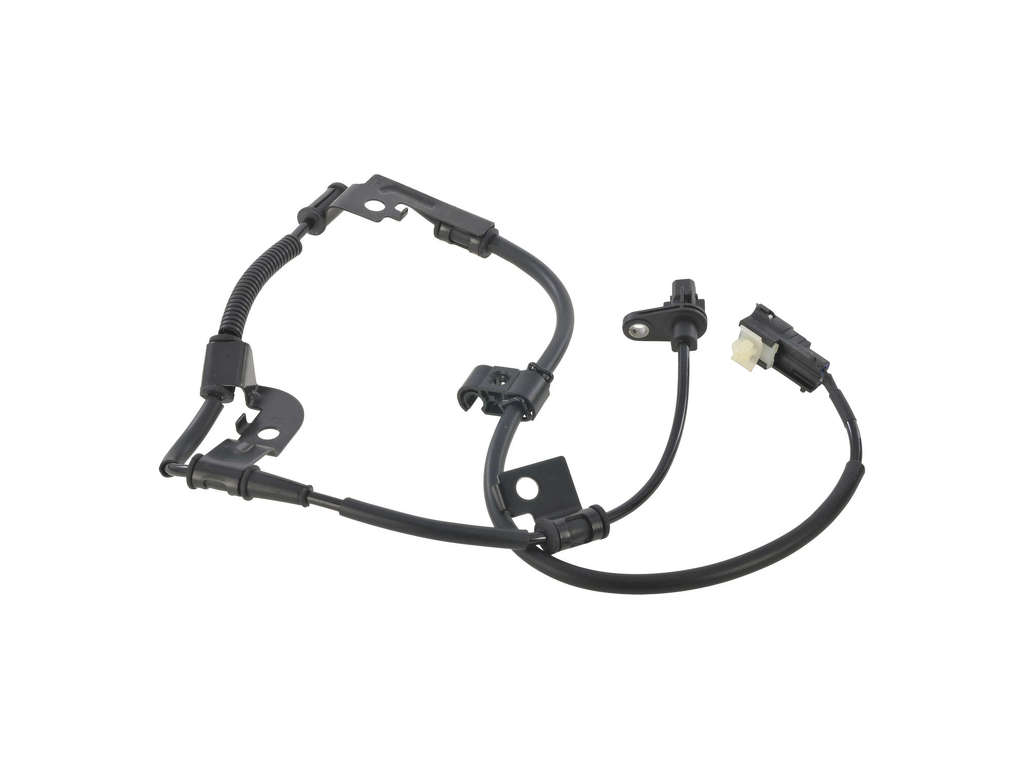
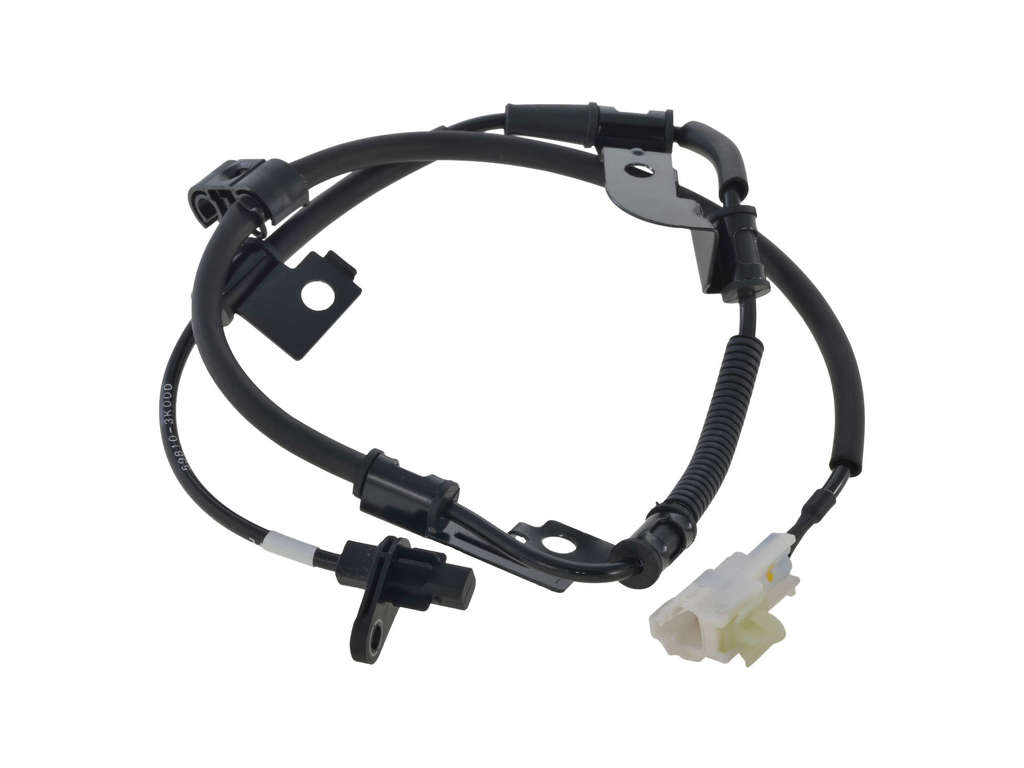
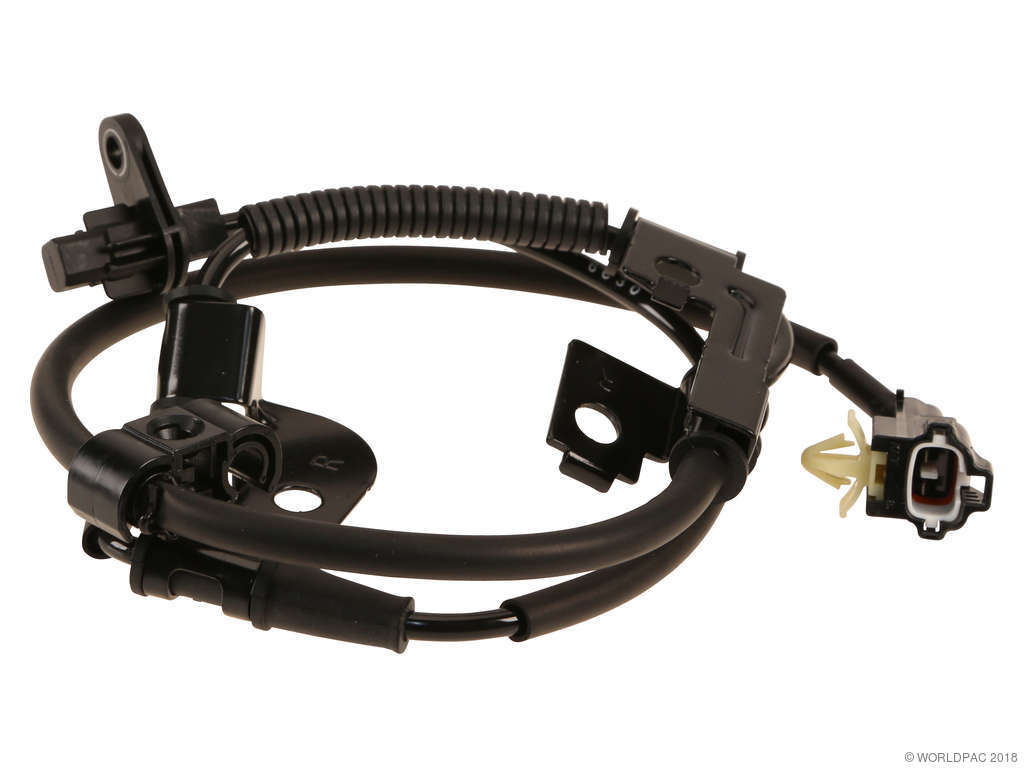
- Front Left ABS Wheel Speed Sensor
(OEM #59810-3K000)— This is the most common failure point for code C0035. The sensor or its integrated wiring harness fails from heat, vibration, or physical damage.
Trusted brands: Hyundai (Genuine), Bosch (p/n 0986594536), Delphi, Standard Motor Products (SMP) (p/n ALS1657) 🎬 Watch: A quick walkthrough of the sensor replacement process., NTK
OEM price range: $70-$100
Aftermarket price range: $25-$75
Platform-Specific Known Issues
- Safety Recall for ABS Module (NHTSA 18V368000): Hyundai recalled 2006-2011 Sonatas and Azeras because the ABS module can leak brake fluid internally, causing an electrical short and increasing the risk of an engine compartment fire, even when the car is off. This is a critical safety issue for the platform.
- Safety Recall for Rear Subframe Corrosion (NHTSA 13V354000): In salt-belt states, the rear subframe can corrode to the point where a rear control arm mount can fail, causing a sudden change in wheel alignment and loss of vehicle control. This recall involved inspection and either rust-proofing or replacement of the subframe.
Mechanic-Grade Diagnostic Values
- Passive Sensor AC Voltage Output — expected: 0.5 - 1.0 VAC when spinning the wheel by hand (approx. 1 revolution per second).. Failure: A reading of 0V or significantly less than 0.2 VAC indicates a failed sensor, even if resistance is within spec.
Hidden / Shadow Codes Worth Checking
- Symptom Byte (e.g., 0F, 18, 5A): While not specific to Hyundai, many modern ABS modules append a 2-digit symptom byte to the main DTC for more precise diagnosis. Examples include '0F' for an Erratic Signal, '18' for Signal Circuit Open/Shorted, or '5A' for Signal Not Plausible. This can help differentiate between a wiring fault and a faulty sensor reading. (see via A professional-grade scan tool capable of reading manufacturer-specific codes, such as the Hyundai GDS.)
Scan Tool Commands That Help
- Hyundai GDS (or equivalent advanced scanner): ABS/ESC Module Self-Test — Use this function when the sensor and wiring have both been tested and confirmed to be good. A self-test failure can point towards an internal fault in the ABS control module, which would prevent it from correctly processing the incoming wheel speed signal.
Real Owner Repair Stories
- Reddit user in r/Hyundai (Hyundai Sonata (NF generation implied)) — ABS and ESC lights were on for over a year. Pedal would shudder when first starting to move.
❌ Tried (didn't work) Replacing the wheel speed sensor did not solve the problem.
✅ What actually fixed it The tone ring on the CV axle was found to be broken/rusted. Since Hyundai does not sell the tone ring separately, the owner purchased a used OEM CV axle from eBay for $90 and had a mechanic swap just the tone ring onto the original axle. This resolved the codes.
OEM Part Supersession History
59810-3K000→N/A— No supersession found in searches. This part number appears to be stable for the 2006-2010 model years.
Model Year Variations Within This Range
- 2006-2010: The 2009-2010 models were part of a mid-cycle refresh, but the front wheel speed sensor (59810-3K000) remained the same across the entire 2006-2010 (NF) generation, indicating no significant changes to this specific part or its common failures.
Diagnostic Flowchart
Other Known Issues on This Vehicle
Issues unrelated to this code that are worth knowing about as an owner of this generation:
- Rear Subframe Corrosion 🔴 High — Common in 'salt belt' regions, leading to a major safety recall. (Ref: NHTSA Campaign ID: 13V354000)
- Peeling White Paint 🟡 Low — Widespread cosmetic issue, particularly on white-painted vehicles, where the clear coat and color coat delaminate. (Ref: Hyundai extended warranties for this issue on later models, but it's a known problem for this generation.)
- Theta II Engine Failure (2.4L) 🔴 High — Though more prominent in the 2011+ models, the underlying issue of manufacturing debris causing bearing wear can affect later models of this generation. Leads to knocking, seizing, and potential engine failure. (Ref: Multiple recalls and a class-action lawsuit, primarily for 2011+ models, but the engine family is the same.)
- ABS Module Internal Short Circuit 🔴 High → Shop ABS Control Module — Affects enough vehicles to warrant a major safety recall due to fire risk. (Ref: NHTSA Campaign ID: 18V368000)
- Faulty Accelerator Pedal Position Sensor 🟠 Medium — Some owners report the ESC light activating and the car losing power or entering a limp mode, traced to a faulty accelerator pedal position sensor.
Used vs. New Parts: Buying Guide for This Vehicle
When a used part is the smart pick: A used part is a smart choice for the CV axle if you only need to harvest the tone ring, as Hyundai does not sell the ring separately. A used wiring harness pigtail can also be a cost-effective way to repair a damaged connector.
Donor-vehicle mileage cap: roughly under 100000 miles for the part to have meaningful remaining life.
What to inspect on the donor part:
- For a CV axle (tone ring donor): Inspect the ring for zero cracks, no missing teeth, and minimal surface rust.
- For a wiring pigtail: Ensure the connector's locking tab is intact, the plastic is not brittle or cracked, and there is no sign of corrosion on the pins.
OEM-only on this vehicle (don't cheap out):
- ABS Control Module: Due to the high risk of fire from internal shorts (NHTSA recall 18V-368) and complex programming requirements, only a new Genuine Hyundai part or a unit from a highly reputable remanufacturer should be used.
Aftermarket brands forum-validated for this vehicle:
- Bosch
- Delphi
- Standard Motor Products (SMP)
- NTK
Real Owner Stories
Aggregated from forums and TSBs cited above. Mileages and costs reflect what owners reported in those sources.
2008 Hyundai Sonata
Symptoms: The owner was troubleshooting ABS-related codes C0035 and C0040. Upon testing, the failed sensors showed resistance readings over 3.0 kΩ.
What fixed it: Replacing the wheel speed sensors resolved the issue, as the new sensors provided the correct 1.1-1.4 kΩ resistance.
Source hint: AliExpress Review / Guide
2006-2010 Hyundai Sonata
Symptoms: The vehicle experienced a C0035 code that was not caused by a faulty sensor or module, but rather a failure in the wiring itself.
What fixed it: The issue was traced to a poor previous wiring repair that had corroded; the fix requires checking the full length of the harness for old repairs and ensuring proper solder and heat shrink are used.
Source hint: ALLDATA Tech-Assist Case Study
Related OBD-II Codes
Frequently Asked Questions
Is there a safety recall for the ABS system on my 2006-2010 Hyundai Sonata?
What is the correct resistance for a new left front wheel speed sensor on this model?
My ESC light is on and the car feels like it has no power; is this related to C0035?
Can I just clean the sensor to fix the C0035 code?
Does the rear subframe recall affect my ABS system?
What part number do I need for the left front wheel speed sensor?
Helpful Videos
We Have This Part in Stock


The information in this article is provided for general reference and educational purposes only. Vehicle specifications, procedures, and part compatibility can vary by production date, trim level, and region. Always consult your vehicle's factory service manual and verify part numbers before purchasing or performing repairs. Safety-critical components such as airbags, seat belts, and braking systems should be installed by a qualified professional.
- Hyundai Sonata:
- 🧭 Diagnostic Flowchart
- 🎬 Helpful Videos
- 🛍️ Shop This Part
- What's Unique About the 2006-2010 Hyundai Sonata
- Symptoms You May Notice
- Most Likely Causes
- Rare But Worth Checking
- Diagnosis Steps
- Parts You'll Likely Need
- Platform-Specific Known Issues
- Mechanic-Grade Diagnostic Values
- Hidden / Shadow Codes Worth Checking
- Scan Tool Commands That Help
- Real Owner Repair Stories
- OEM Part Supersession History
- Model Year Variations Within This Range
- Other Known Issues on This Vehicle
- Used vs. New Parts: Buying Guide for This Vehicle
- Real Owner Stories
- 2008 Hyundai Sonata
- 2006-2010 Hyundai Sonata
- Related OBD-II Codes
- Frequently Asked Questions
- 🎟️ Get 5% Off