

C0035 on 2016-2021 Hyundai Tucson: Wheel Speed Sensor Circuit Fault Causes and Fixes
This code typically points to a problem with a wheel speed sensor circuit, most likely the left front. The most common fix is replacing the faulty wheel speed sensor, which is a relatively inexpensive part. However, wiring damage is also a frequent culprit and should be inspected thoroughly.
- C0035 on a 2016-2021 Tucson most likely points to a fault with the front left wheel speed sensor circuit.
- The most common fix is replacing the faulty sensor, but the wiring harness is a close second and should be thoroughly inspected for corrosion or damage.
- Driving with this code is possible but not recommended, as your ABS and stability control will not function.
- Always confirm the specific wheel location with a quality scan tool before buying parts, as generic definitions can be misleading.
- Consider using OEM or high-quality OE-equivalent sensors to avoid compatibility issues seen with some aftermarket parts.
What's Unique About the 2016-2021 Hyundai Tucson
For the third-generation (2016-2021) Tucson, the wheel speed sensors and their wiring are exposed to road debris and moisture, which can lead to premature failure or corrosion in the connectors. While the issue is not unique, owners in regions with heavy rain or road salt usage may experience this fault more frequently. A notable issue on this platform is the potential for the wiring harness leading to the sensor to become damaged or corroded, sometimes even being mistaken for a faulty sensor initially. There are no major recalls for this specific code, but a large recall (NHTSA #20V-520, Hyundai #195) exists for the ABS Hydraulic Electronic Control Unit (HECU) which can corrode internally and cause a fire, though it doesn't typically present with a C0035 code.
Symptoms You May Notice
- ABS warning light is illuminated on the dashboard
- Traction Control or Electronic Stability Control (ESC) light is on
- ABS may not activate during hard braking (wheels may lock up)
- Traction control may not function correctly
- In some cases, the Blind Spot Detection (BSD) system warning light may also illuminate, as it relies on wheel speed data.
- Replacing the wrong wheel speed sensor due to a generic code definition. Always use a scanner that provides manufacturer-specific code descriptions.
- Replacing the ABS module before confirming the sensor and wiring are good.
- Replacing the sensor when the actual fault is a broken wire or corroded connector pin further up the harness.
Most Likely Causes
- Faulty Left Front Wheel Speed Sensor 🔴 High Probability → Shop ABS Wheel Speed Sensor The sensor is an electronic component exposed to harsh conditions like water, dirt, and road salt, which can cause internal failure over time.
How to confirm: Use a multimeter to check the sensor's resistance; it should be within the manufacturer's specified range (typically 800-2000Ω). An open circuit (infinite resistance) indicates a failed sensor. Alternatively, use a scan tool to monitor live data from the sensor while spinning the wheel; the reading should be smooth, consistent, and match the other wheels.
Typical fix: Replace the left front wheel speed sensor.
Est. part cost: $40-$90 - Damaged Wiring or Connector 🟡 Medium Probability Wires can be damaged by road debris, improper repairs, or chafing against suspension components. The connector pins can corrode due to moisture intrusion, a known issue with some Hyundai harnesses. Sometimes the plastic clip holding the connector can break, allowing it to come unplugged.
How to confirm: Visually inspect the wiring harness from the sensor to the main chassis connector for any cuts, abrasions, or signs of corrosion. Check the connector for bent, corroded, or loose pins. Perform a 'wiggle test' on the connector and wiring while monitoring live data to see if the signal drops out.
Typical fix: Repair the damaged section of wire with solder and heat-shrink tubing or replace the connector pigtail. If corrosion is extensive, a section of the harness may need replacement.
Est. part cost: $10-$50 for a pigtail, potentially more for harness repair. - Contaminated or Damaged Tone Ring ⚪ Low Probability The tone ring, which is a magnetic encoder integrated into the wheel hub/bearing assembly on this model, can accumulate metallic debris or rust. It can also be damaged during other services like wheel bearing replacement.
How to confirm: Visually inspect the magnetic encoder on the face of the wheel hub assembly after removing the sensor. Look for cracks, heavy contamination, or physical damage that could interfere with the sensor's reading.
Typical fix: Clean the magnetic encoder ring. If it is damaged, the entire wheel hub/bearing assembly will need to be replaced.
Est. part cost: $150-$400
Rare But Worth Checking
- Faulty ABS Control Module: → Shop ABS Control Module This is the least likely cause and should only be considered after thoroughly ruling out the sensor, wiring, and tone ring. A failure of the module itself is rare but possible. A recall for the HECU module exists but is for a different fire-risk issue and not typically linked to this code.
- Defective Aftermarket Sensor: A user on the Hyundai Tucson Forum reported that a newly installed aftermarket sensor registered a different speed than the OEM sensors, causing the fault to persist. Using genuine OEM or high-quality OE-equivalent parts is recommended to avoid compatibility issues.
Diagnosis Steps
- Connect an OBD-II scanner capable of reading ABS codes to confirm C0035 is present and to check for any other codes.
- Verify the code's definition with the scan tool. A good tool will specify 'Front Left Wheel Speed Sensor Circuit'.
- Monitor the live data from all four wheel speed sensors while driving or spinning the wheels. The left front sensor will likely show an erratic, incorrect, or zero MPH reading compared to the others.
- Raise and safely support the vehicle. Visually inspect the left front wheel speed sensor and its wiring harness for any obvious damage, corrosion, or loose connections. Check that the connector is fully seated.
- If no visual faults are found, disconnect the sensor and use a multimeter to test its internal resistance. Compare the reading to the manufacturer's specification (typically 800-2000 Ω).
- If the sensor tests good, inspect the wiring harness for continuity and shorts from the sensor connector back to the ABS module. A 'wiggle test' can help identify intermittent breaks.
- Inspect the wheel hub's magnetic encoder ring for debris or damage.
- If an aftermarket sensor was installed, verify it is compatible. In one forum case, an aftermarket sensor read a different speed, causing continued faults.
- If the sensor, wiring, and tone ring are all confirmed to be good, the issue may lie with the ABS control module, which requires advanced diagnostics.
Parts You'll Likely Need
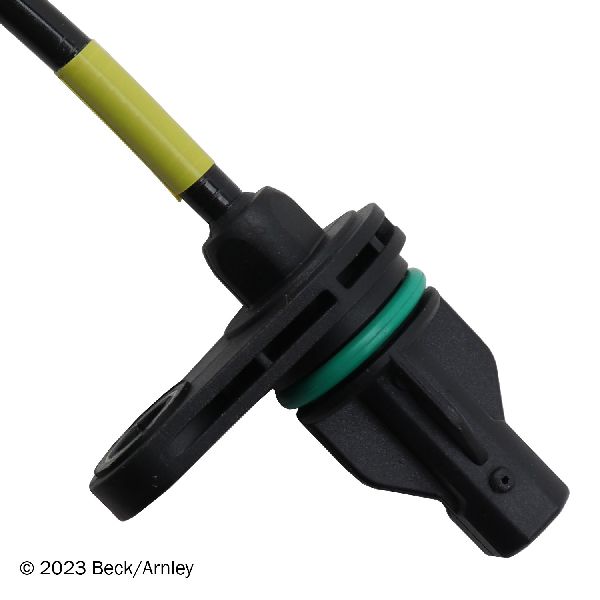
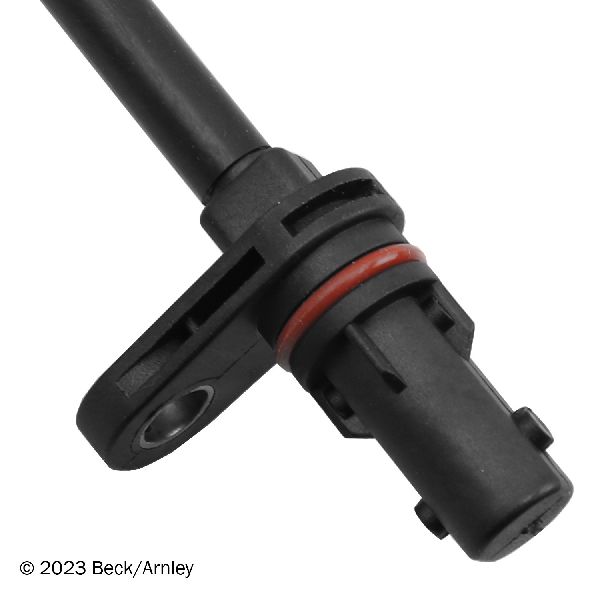
- Front Left ABS Wheel Speed Sensor
(OEM #95670-D3000)— This is the most common failure point for a C0035 code, as it is an electronic component exposed to the elements.
Trusted brands: Hyundai (Genuine OE), Mando, Standard Motor Products (SMP), Delphi, Continental
OEM price range: $70-$170
Aftermarket price range: $40-$75 - ABS Sensor Connector Pigtail — If the connector itself is corroded or the locking tab is broken, replacing the pigtail is often necessary.
Trusted brands: Dorman, Standard Motor Products (SMP)
OEM price range: N/A
Aftermarket price range: $15-$40
Platform-Specific Known Issues
- Wiring Harness Corrosion: A Reddit user with a 2018 Tucson detailed a lengthy battle with a sensor issue that turned out to be a corroded wiring harness. The dealer initially replaced the sensor, but the problem persisted. The corrosion was not covered under warranty, leading to a dispute. This highlights the importance of checking the full length of the wiring for damage before assuming the sensor is the only problem.
Mechanic-Grade Diagnostic Values
- Active Sensor Voltage Supply — expected: Approximately 10.5V - 12V DC with key on, engine off, measured at the harness-side connector.. Failure: Voltage below 10V or 0V indicates a problem with the wiring or the ABS module's power supply, not the sensor itself.
- Active Sensor Signal (Lab Scope) — expected: A repeating digital square wave (or teardrop shape) that increases in frequency as the wheel is spun. The voltage will typically switch between a low (near 0V) and high state (e.g., 5V or 12V).. Failure: A flat line (no signal), a noisy/erratic signal, or a signal that does not change with wheel rotation indicates a faulty sensor or a problem with the tone ring.
Scan Tool Commands That Help
- Hyundai GDS (Global Diagnostic System) or equivalent professional scanner: Variant Coding — This procedure is mandatory after replacing the ABS/ESC control module. It programs the new module to the specific configuration of the vehicle (e.g., FWD/AWD, engine type). Failure to perform variant coding will result in a non-functional ABS system and may set a C1702 fault code.
- Hyundai GDS (Global Diagnostic System) or equivalent professional scanner: ABS/ESC Purge/Bleed — This function is used after replacing the HECU (Hydraulic Unit) or opening the brake hydraulic system. It cycles the internal pump and valves to ensure all air is removed from the ABS block, which cannot be done with a manual bleed alone.
Wiring & Ground Locations
- Front Wheel Speed Sensor Harness — The wiring runs from the wheel hub, typically secured to the suspension knuckle and strut, then up into the engine bay to connect to the main harness leading to the ABS module.. This harness is subject to constant movement and flexing with the suspension. A common failure point is an internal wire break within the insulation, often 6-12 inches from the sensor connector, where the harness flexes most. This type of break is not visually apparent and requires a 'wiggle test' or continuity check while flexing the wire.
- ABS Module Ground — Typically located on the chassis frame rail or inner fender near the ABS module itself. Look for a bolt with one or more black wires attached directly to the painted metal body.. A corroded or loose main ground for the ABS module can cause a variety of erratic faults, including wheel speed sensor codes. The module may misinterpret normal sensor signals due to an unstable ground reference.
Real Owner Repair Stories
- Hyundai-Forums user (2017 Hyundai Tucson) — ABS, traction control, downhill assist, and auto hold warning lights all illuminated.
❌ Tried (didn't work) Replacing the left front wheel speed sensor with an aftermarket part., Replacing the sensor a second time with a genuine Hyundai OEM part.
✅ What actually fixed it A technician found a broken wire inside the insulation of the wiring harness leading to the sensor. The wire appeared visually undamaged from the outside but had an internal break. Repairing the broken wire resolved the issue. - Reddit r/Hyundai user (2018 Hyundai Tucson) — ABS warning light on.
❌ Tried (didn't work) Dealer replaced the wheel speed sensor, but the light came back on.
✅ What actually fixed it The root cause was found to be a corroded wiring harness. The dealer had to replace a section of the harness to fix the problem permanently. This highlights that corrosion can occur further up the harness, not just at the connector.
Documented NHTSA Reports
While the following reports originate from other manufacturers, they demonstrate how C0035 is interpreted across the industry and reinforce common failure points for this circuit:
- A manufacturer service bulletin, #PIT3460N, notes that an ABS light may illuminate with DTC C0035, C0040, or C0220 (NHTSA ODI #10273914).
- An owner reported that after experiencing an ABS fault, they found a bad wheel hub on the left side and replaced both the hub and the ABS sensor to address codes C0035 and C0040 (NHTSA ODI #10287028).
- In another instance, a dealer estimated a repair at $762.00 to replace a sensor and hub after reading codes C0035 and C0220 (NHTSA ODI #10442197).
- NHTSA ODI #10440851 describes a "Left Front Wheel Sensor Circuit Malfunction" specifically associated with code C0035.
- A diagnostic report for a vehicle with multiple illuminated indicators showed C0035 appearing alongside several communication codes such as U0126 and U0401 (NHTSA ODI #11228687).
OEM Part Supersession History
95670-D3000 (Front Left)→95670-D3500 (Front Left)— Part change for model year refresh.
Heads up: The sensor for 2016-2018 models (95670-D3000) is different from the sensor for 2019-2021 models (95670-D3500). They are likely not interchangeable. Always verify the part number with the vehicle's VIN.95671-D3000 (Front Right)→95671-D3500 (Front Right)— Part change for model year refresh.
Heads up: The sensor for 2016-2018 models (95671-D3000) is different from the sensor for 2019-2021 models (95671-D3500). They are likely not interchangeable. Always verify the part number with the vehicle's VIN.
Model Year Variations Within This Range
- 2016-2018: Uses Front Left wheel speed sensor part number 95670-D3000.
- 2019-2021: Following the 2019 model year facelift, the Front Left wheel speed sensor part number changed to 95670-D3500.
Diagnostic Flowchart
Other Known Issues on This Vehicle
Issues unrelated to this code that are worth knowing about as an owner of this generation:
- Engine Failure (Theta II, Nu) 🔴 High — Widespread enough to trigger multiple recalls (e.g., NHTSA #21V720000) and class-action lawsuits. Affects 2.0L Nu and 2.4L Theta II engines. Premature connecting rod bearing wear can lead to engine seizure and potential fire. (Ref: Recall 209 (NHTSA #21V720000), TSB 22-01-023H-2)
- 7-Speed Dual-Clutch Transmission (DCT) Hesitation/Failure 🔴 High — Very common on models equipped with the 1.6T engine, particularly 2016-2017 models. Symptoms include hesitation from a stop, shuddering, and complete loss of movement. (Ref: Recall 149 (NHTSA #16V628000), TSB 16-01-038, TSB 20-AT-025H)
- ABS Module (HECU) Fire Risk 🔴 High → Shop ABS Control Module — Affects a large number of 2016-2021 models. The Hydraulic Electronic Control Unit (HECU) can short circuit internally, even when the car is off, posing a significant fire risk. (Ref: Recall 195 (NHTSA #20V520000))
- Excessive Oil Consumption 🟠 Medium — Reported in various engines for this generation, often a precursor to the more severe engine bearing failure.
Used vs. New Parts: Buying Guide for This Vehicle
When a used part is the smart pick: For this repair, a used part is only recommended for the connector pigtail. If the original connector is broken or corroded, a pigtail cut from a junkyard vehicle harness is a viable and cost-effective repair, provided the used connector and wires are in excellent condition.
Donor-vehicle mileage cap: roughly under 80000 miles for the part to have meaningful remaining life.
What to inspect on the donor part:
- For a wiring pigtail, inspect for any signs of corrosion (green crust) on the pins.
- Ensure the plastic locking tab is intact and not brittle.
- Check that the wires are flexible and the insulation is not cracked or hardened.
- Ensure you get at least 6-8 inches of wire to make splicing easy.
OEM-only on this vehicle (don't cheap out):
- ABS Control Module (HECU): Strongly recommend OEM. While used modules are available, they are often VIN-locked and require dealer-level 'Variant Coding' to function, which can negate any initial cost savings.
- Wheel Speed Sensor: While not strictly 'OEM-only', using a genuine Hyundai/Kia or a known OE supplier like Mando is highly recommended. Cheap aftermarket sensors are a common source of continued problems due to incorrect signal output, as documented in forums.
Aftermarket brands forum-validated for this vehicle:
- Mando (Often the Original Equipment supplier for Hyundai)
- Standard Motor Products (SMP)
- Delphi
- Continental/VDO
Brands owners have reported issues with on this vehicle:
- Unbranded, 'white-box' sensors from online marketplaces. Forum stories frequently cite these as reading incorrect speeds compared to the other wheels, causing the fault to persist.
Real Owner Stories
Aggregated from forums and TSBs cited above. Mileages and costs reflect what owners reported in those sources.
2019 Hyundai Tucson — 50000 miles
Symptoms: ABS shaking in brake pedal when decelerating with no lights in dash. Couple weeks later abs, traction control, front collision sensor and other lights lit up on dash.
What fixed it: Replaced a bad driver-side drive shaft. The owner also had pads and rotors done at the same time.
Cost: $1200
Source hint: r/HyundaiTucson owner report
2018 Hyundai Tucson
Symptoms: ABS sensor light was illuminated. Dealer initially replaced the sensor but the light persisted.
What fixed it: Repair of a corroded wiring harness which was the actual cause of the signal failure.
Source hint: Reddit r/AskMechanics
2016 Hyundai Tucson
Symptoms: Persistent ABS/ESC/BSD lights after replacing a sensor with an aftermarket part; live data showed the new sensor reading twice the speed of OEM sensors.
What fixed it: Replacing the incompatible aftermarket sensor with a compatible unit that matches OEM speed readings.
Source hint: Hyundai Tucson Forum
Related OBD-II Codes
Frequently Asked Questions
Is there a recall for the ABS system on my 2016-2021 Hyundai Tucson that might be related to code C0035?
Can I use an aftermarket wheel speed sensor to fix the C0035 code on my Tucson?
Why is my Blind Spot Detection (BSD) light on along with the ABS light?
My dealer says I need a new wiring harness for my 2018 Tucson, but I thought it was just a sensor. Is this common?
Does the Kia Sportage have the same front left wheel speed sensor issues as my Tucson?
What is the resistance specification for testing the front left wheel speed sensor on this vehicle?
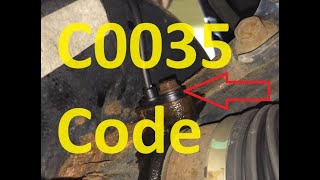
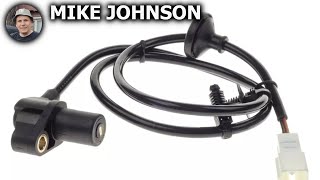
Helpful Videos

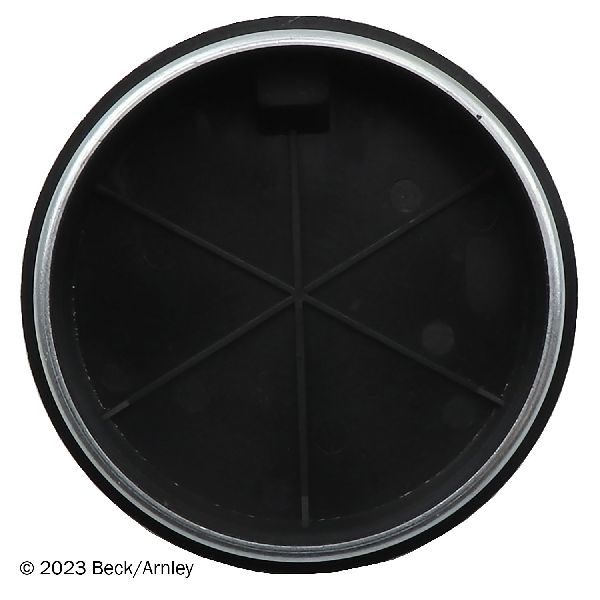
We Have This Part in Stock

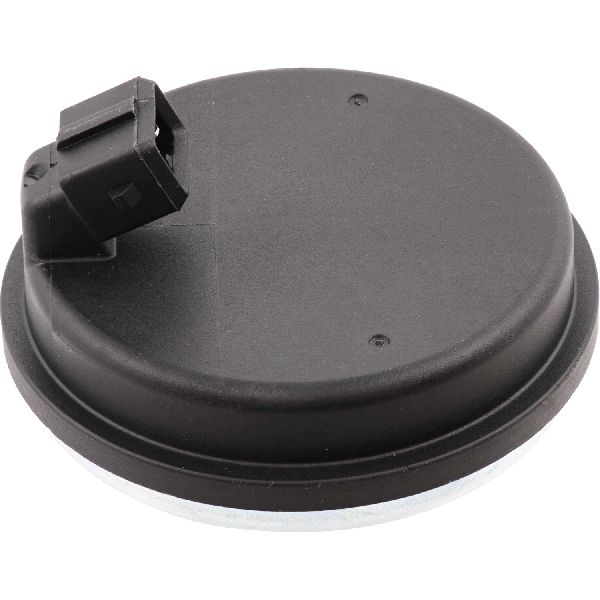

The information in this article is provided for general reference and educational purposes only. Vehicle specifications, procedures, and part compatibility can vary by production date, trim level, and region. Always consult your vehicle's factory service manual and verify part numbers before purchasing or performing repairs. Safety-critical components such as airbags, seat belts, and braking systems should be installed by a qualified professional.
- Hyundai Tucson:
- 🧭 Diagnostic Flowchart
- 🎬 Helpful Videos
- 🛍️ Shop This Part
- What's Unique About the 2016-2021 Hyundai Tucson
- Symptoms You May Notice
- Most Likely Causes
- Rare But Worth Checking
- Diagnosis Steps
- Parts You'll Likely Need
- Platform-Specific Known Issues
- Mechanic-Grade Diagnostic Values
- Scan Tool Commands That Help
- Wiring & Ground Locations
- Real Owner Repair Stories
- Documented NHTSA Reports
- OEM Part Supersession History
- Model Year Variations Within This Range
- Other Known Issues on This Vehicle
- Used vs. New Parts: Buying Guide for This Vehicle
- Real Owner Stories
- 2019 Hyundai Tucson — 50000 miles
- 2018 Hyundai Tucson
- 2016 Hyundai Tucson
- Related OBD-II Codes
- Frequently Asked Questions
- 🎟️ Get 5% Off