

C0035 on 2014-2018 Subaru Forester: Right Front Wheel Speed Sensor Fault Explained
C0035 on a 2014-2018 Forester indicates a fault with the Right Front (Passenger Side) Wheel Speed Sensor circuit. While generic definitions are conflicting, Subaru-specific data points to the right side. This fault will disable ABS, VDC, and Hill Assist. The most common fix is replacing the faulty sensor and its integrated wiring harness, which is prone to damage.
- C0035 means there is a fault in a front wheel speed sensor circuit, which will disable your ABS and VDC systems.
- You MUST use an ABS-capable scan tool to determine if the fault is on the left or right side before buying parts. Do not guess.
- The most common cause is a failed sensor or damaged wiring harness near the wheel.
- The repair is DIY-friendly for those with basic tools, involving removing the wheel and replacing the sensor, which is held by one or two small bolts and a wiring connector.
What's Unique About the 2014-2018 Subaru Forester
On many modern vehicles, including the Subaru Forester, a single wheel speed sensor fault will disable multiple, seemingly unrelated, safety systems. Owners are often surprised to see the ABS, Vehicle Dynamics Control (VDC), and sometimes Hill Start Assist lights all illuminate from this one code. This is normal behavior, as all these systems rely on accurate speed data from all four wheels to function correctly. Unlike some generic powertrain codes, this chassis code's specific meaning (left vs. right) is not standardized across all manufacturers, but for the SJ generation Forester, evidence strongly points to C0035 being the right front sensor.
Symptoms You May Notice
- ABS warning light is on
- Traction control / Vehicle Dynamics Control (VDC) warning light is on
- Hill Start Assist warning light may be on
- Cruise control is disabled
- Brake pedal may feel different or harder during stops
- Replacing the wrong side wheel speed sensor. Because generic definitions for C0035 often say 'Left Front', a common mistake is to replace the driver's side sensor when the fault is actually on the passenger side for this Subaru.
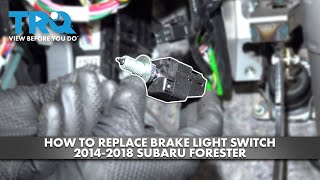
- Replacing the sensor for a faulty brake light switch. A bad brake light switch can also illuminate the ABS/VDC/Hill Assist lights simultaneously and is a common failure item. If no wheel speed sensor codes are stored, this switch should be investigated. 🎬 See how to replace a faulty brake light switch yourself.
Most Likely Causes
- Damaged or Corroded Sensor Wiring 🔴 High Probability The wiring harness runs down the suspension and is exposed to road debris, salt, moisture, and constant movement. The plastic clips holding the wire can break, allowing the wire to rub against the tire or suspension components, or the connector itself can corrode from water intrusion.
How to confirm: Visually inspect the entire length of the sensor's wire from the wheel hub into the engine bay. Look for breaks, chafing, melted spots, or green/white corrosion on the connector pins. A multimeter can be used to check for continuity from the ABS module connector to the sensor connector if a wiring diagram is available.
Typical fix: Replace the wheel speed sensor, which includes the pigtail harness. Splicing these shielded wires is not recommended as it can alter the signal and cause repeat issues.
Est. part cost: $60-$150 - Failed Front Wheel Speed Sensor 🔴 High Probability → Shop ABS Wheel Speed Sensor
How to confirm: After confirming the wiring is intact, use a multimeter to check the sensor's resistance (if specs are available) or swap the left and right sensors to see if the fault code follows the sensor to the other side. An ABS scan tool can also graph the live speed data from the sensor while spinning the wheel; a dead or erratic signal confirms failure.
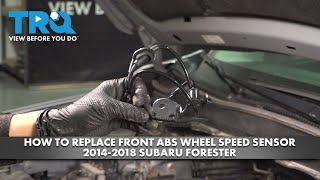
Typical fix: Replace the failed wheel speed sensor assembly. 🎬 Watch: Step-by-step guide to replacing the front wheel speed sensor.
Est. part cost: $60-$150 - Failing Wheel Hub/Bearing Assembly ⚪ Low Probability → Shop Hub Assembly The magnetic reluctor ring that the sensor reads is integrated into the wheel hub assembly. Subarus of this era have a higher-than-average rate of wheel bearing failure. A worn, loose bearing can create excessive play, which can damage the tip of the sensor or cause an erratic signal as the distance between the sensor and ring fluctuates.
How to confirm: Check for a humming or grinding noise from the wheel that changes with speed or while turning. Safely jack up the vehicle and check for any play or wobble in the wheel by grabbing it at 12 and 6 o'clock. A 'whirring' or 'card in spokes' sound when spinning the wheel by hand is also an indicator.
Typical fix: Replace the entire wheel hub and bearing assembly.
Est. part cost: $120-$250
Rare But Worth Checking
- Faulty ABS Control Module: → Shop ABS Control Module This is very uncommon and should only be considered after the sensor, wiring, and wheel hub have been ruled out. This failure is often accompanied by other communication codes (like U0121) or codes for multiple sensors at once.
Diagnosis Steps
- Connect an OBD-II scanner capable of reading ABS/Chassis codes to the vehicle's diagnostic port.
- Read the codes from the ABS control module. Confirm C0035 is present. Check the scanner's specific description; for Subaru, it should indicate 'Right Front'.
- Use the scan tool to monitor live data from all four wheel speed sensors. Spin the right front wheel by hand and observe the speed reading. It should increase smoothly and match the other side. If it reads 0, is erratic, or doesn't change, the problem is on that corner.
- Safely raise and support the vehicle.
- Visually inspect the right front sensor's wiring harness from the wheel hub up into the engine compartment. Look for any signs of physical damage, chafing against suspension components, broken retaining clips, or corrosion at the connector.
- If wiring looks good, disconnect the sensor and check for resistance across its pins with a multimeter. Compare the reading to the known-good sensor on the left side. A reading of 'OL' (open loop) or a significant deviation indicates a failed sensor.
- If the sensor and wiring test good, check the wheel for any play (by rocking it at 12 and 6 o'clock) or grinding noises that would indicate a bad wheel bearing/hub assembly.
Parts You'll Likely Need
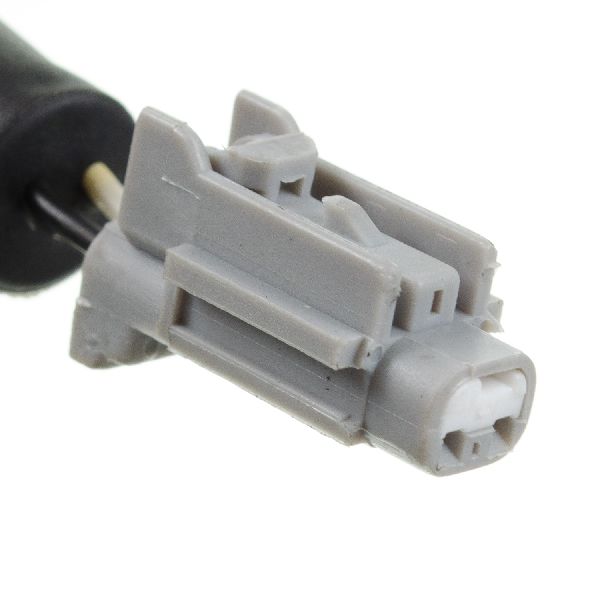
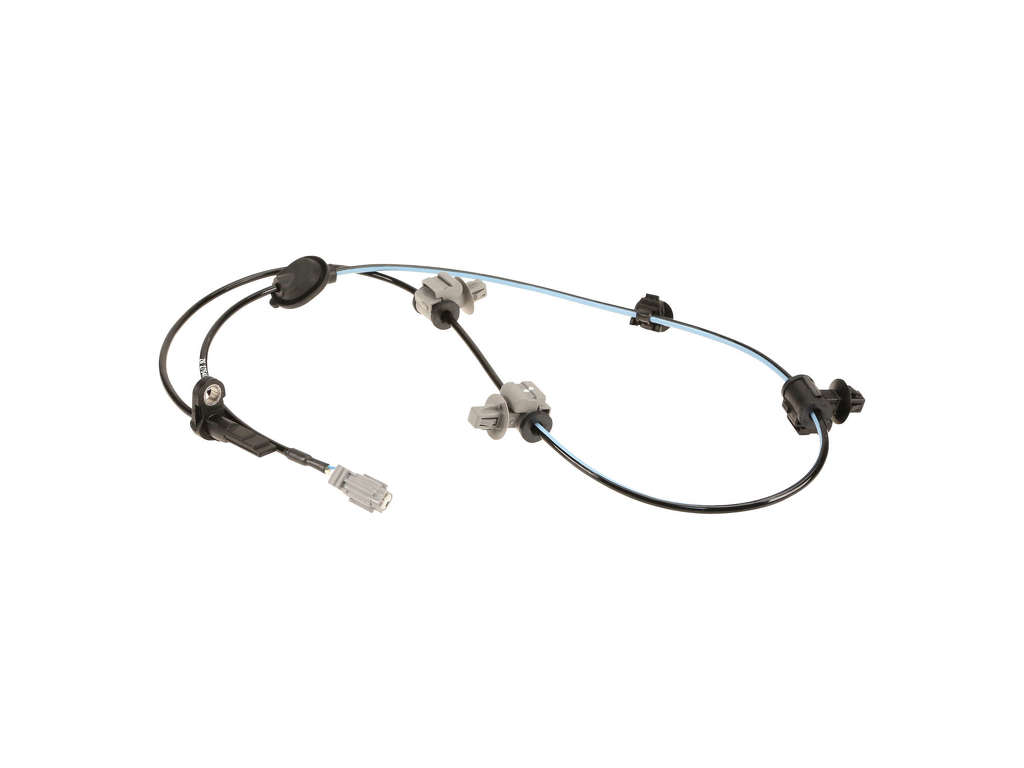
- Front Right Wheel Speed Sensor
(OEM #27540SG000)— This is the most likely part that has failed, triggering code C0035 on this vehicle. It is sold as an assembly with the wiring pigtail.
Trusted brands: Subaru (OEM), Bosch, NTK, Standard Motor Products (SMP)
OEM price range: $120-$180
Aftermarket price range: $60-$110 - Front Left Wheel Speed Sensor
(OEM #27540SG011)— This is the part for the driver's side, which can be confused with the right side due to generic code definitions. It is a potential point of misdiagnosis.
Trusted brands: Subaru (OEM), Bosch, NTK, Standard Motor Products (SMP)
OEM price range: $120-$180
Aftermarket price range: $60-$110
Related Codes That Often Appear With This One
- C0031 — This is the corresponding code for the Left Front wheel speed sensor. Seeing both C0035 and C0031 together could indicate a wiring issue common to both sides or a problem with the ABS module itself.
- U0121 — This code means 'Lost Communication With ABS Control Module'. If seen with C0035, it points to a more serious issue like a faulty ABS module or a power/ground problem for the entire system, rather than just a single sensor.
Technical Service Bulletins (TSBs) & Recalls
- While no TSB directly addresses C0035, owners often misdiagnose the issue as a faulty brake light switch, which can cause identical warning lights (ABS, VDC, Hill Assist). Subaru has issued TSBs for other models (e.g., 06-53-16 for Legacy/Outback) for related brake system components, highlighting the sensitivity of the VDC system to various inputs.
- A manufacturer bulletin, #PIT3460N, noted in NHTSA ODI #10273914, describes how the ABS and brake lights may illuminate at times when DTC C0035 is present, though this was documented on a different manufacturer's platform.
Platform-Specific Known Issues
- A common failure point is the wiring harness becoming detached from its mounting clips on the strut, allowing it to rub against the tire or CV axle boot, eventually wearing through the insulation and causing a short or open circuit.
- Owners in rust-prone areas report that the 10mm bolt holding the sensor into the knuckle can seize or break off during removal, requiring drilling and extraction.
- Water intrusion into the main harness connector for the sensor, located in the engine bay near the strut tower, can cause corrosion and intermittent signal loss.
Documented NHTSA Reports
While C0035 is a standard code, its interpretation can vary by manufacturer. For example, NHTSA ODI #10440851 and NHTSA ODI #10442197 both describe C0035 as a "Left Front" sensor malfunction on other vehicle makes, which reinforces why Subaru owners must be careful not to rely on generic scan tool definitions that might point to the wrong side of the vehicle.
In other documented cases, such as NHTSA ODI #10287028, an owner found a bad wheel hub on the side associated with the C0035 code and replaced both the hub and sensor to resolve the fault. Additionally, NHTSA ODI #11228687 shows that C0035 can appear alongside a long list of communication codes (U-codes), suggesting that if multiple lights are on, the issue could range from a simple sensor to a broader electrical fault.
Mechanic-Grade Diagnostic Values
- Wheel Speed Sensor Internal Resistance — expected: 800 - 2,000 Ω (Ohms). Failure: A reading of 'OL' (Open Loop / infinite resistance) or near 0 Ω indicates a failed sensor.
- Voltage Supply at Sensor Connector — expected: 4.5 - 5.5 V DC (with key on, engine off). Failure: A reading below 4.0 V DC points to a problem in the wiring harness or the ABS control module, not the sensor itself.
- Sensor AC Voltage Output (Passive Sensor Test) — expected: Voltage should generate and increase smoothly as the wheel is spun by hand (e.g., starting around 0.2V AC and rising).. Failure: No AC voltage generated, or an erratic/jumpy signal while spinning the wheel at a steady speed, indicates a failed sensor or damaged tone ring.
Scan Tool Commands That Help
- Subaru Select Monitor (SSM) or equivalent: Current Data Display & Save — This is the primary diagnostic step. It allows a technician to view and graph the live speed signal from all four wheels at once to confirm the right front sensor is the one reading 0, erratically, or differently from the others.
- Subaru Select Monitor (SSM) or equivalent: Clear Memory Mode — After the physical repair (e.g., sensor replacement) is complete, this function must be used to erase the stored C0035 code from the ABS module and extinguish the warning lights on the dashboard.
- Subaru Select Monitor (SSM) or equivalent: Each System Check — A general command to initiate a self-check of the VDC/ABS system and retrieve any stored Diagnostic Trouble Codes (DTCs).
Wiring & Ground Locations
- Front Right WSS Connector (Engine Bay) — Under the hood, located on the passenger side strut tower, directly underneath the brake master cylinder.. This is the main connection point between the sensor's pigtail and the main body harness. It's a key location to check for corrosion or damage and to perform continuity tests back to the ABS module.
- ABSCM&H/U Ground Bolt (GB-5) — The main ground for the ABS Control Module and Hydraulic Unit is typically located on the chassis near the module itself.. A corroded or loose main ground can cause a variety of strange electrical issues within the ABS system, including sensor circuit voltage faults like C0035, even if the sensor and its wiring are perfectly fine.
Real Owner Repair Stories
- Reddit user comment in r/SubaruForester (2015 Subaru Forester) — ABS, Hill Assist, and Traction Control lights all came on intermittently.
❌ Tried (didn't work) The owner did not report trying other fixes first.
✅ What actually fixed it The issue was a faulty brake light switch. The service writer at the shop knew the problem immediately from the combination of warning lights, even without a specific code being thrown at the time. This highlights a very common point of misdiagnosis where symptoms perfectly match a C0035 fault, but the cause is unrelated to the wheel speed sensor. - Subaru Forester Club forum user (2011 Subaru Forester (SJ generation predecessor, but highly relevant diagnostic path)) — ABS light on, scanner showed an open circuit for the LH rear ABS sensor.
❌ Tried (didn't work) Replacing the ABS sensor did not fix the problem.
✅ What actually fixed it The user diagnosed a broken wire between the ABS module and the sensor connector by confirming there was no voltage at the sensor plug and no continuity along the wire. The final repair was not posted, but the story confirms that replacing the sensor is not always the fix and that a wiring break is a real possibility that must be tested for.
OEM Part Supersession History
27540SG000→Current— No supersession information found. This part number appears to be the correct and current number for the entire 2014-2018 generation.
Model Year Variations Within This Range
- 2017-2018: The Forester received a facelift for the 2017 model year. While the base wheel speed sensor part number remained the same, models with the EyeSight Driver Assist system have more complex ABS/VDC module programming that integrates pre-collision braking. Turbocharged (2.0XT) models also gained a brake-based torque vectoring system. This makes using the correct ABS module for the vehicle's specific options critical if the module is suspected to be the cause.
Diagnostic Flowchart
Other Known Issues on This Vehicle
Issues unrelated to this code that are worth knowing about as an owner of this generation:
- CVT Transmission Failure/Malfunction 🔴 High — Common enough that Subaru extended the powertrain warranty to 10 years/100,000 miles for these models. Failures can occur at various mileages. (Ref: Warranty Extension (not a TSB number, but a formal program))
- Excessive Oil Consumption 🔴 High — Primarily affects 2014 models with the 2.5L FB25 engine due to piston ring issues. A class-action lawsuit was settled regarding this problem. (Ref: Resulted in a class-action lawsuit and warranty extensions for affected vehicles.)
- Premature Wheel Bearing Failure 🟠 Medium — Higher than average failure rate, particularly for rear wheel bearings, leading to a loud humming or grinding noise that changes with speed.
- Sagging Rear Springs 🟡 Low — The stock rear springs are known to be soft and can sag over time, especially when carrying cargo, leading to a 'bottomed out' feel.
- Brake Light Switch Failure 🟡 Low — A faulty brake light switch can cause the ABS, VDC, and Hill Assist lights to illuminate without setting a wheel speed sensor code. This is a common point of misdiagnosis. (Ref: Subaru has issued service bulletins for similar models regarding this switch.)
- Catalytic Converter Failure 🟠 Medium — Can fail prematurely, often triggering a P0420 code. This can sometimes be a consequence of the excessive oil consumption issue.
Used vs. New Parts: Buying Guide for This Vehicle
When a used part is the smart pick: A used part is generally not recommended for the wheel speed sensor itself, as it is an electronic wear item. However, if the cause of the C0035 code is a failed wheel bearing that has damaged the sensor, a complete, low-mileage used steering knuckle/hub assembly from a reputable salvage yard can be a cost-effective repair, as it includes the hub, bearing, and sometimes the sensor.
Donor-vehicle mileage cap: roughly under 60000 miles for the part to have meaningful remaining life.
What to inspect on the donor part:
- For a used hub/bearing assembly, ensure there is zero vertical or horizontal play (wobble) in the bearing.
- Spin the hub by hand; it should be silent and smooth, with no grinding, clicking, or 'card in spokes' noises.
- Visually inspect the magnetic tone ring (if visible) for cracks, missing teeth, or heavy rust.
- Check the donor vehicle's history for front-end collision damage.
OEM-only on this vehicle (don't cheap out):
- ABS Control Module. Due to VIN-specific programming and critical integration with systems like EyeSight and VDC, using a new OEM module programmed by a dealer or qualified shop is strongly advised. Used or aftermarket modules frequently cause communication and compatibility issues.
Aftermarket brands forum-validated for this vehicle:
- Bosch
- NTK / NGK
- Standard Motor Products (SMP)
Real Owner Stories
Aggregated from forums and TSBs cited above. Mileages and costs reflect what owners reported in those sources.
2018 Subaru Forester
Symptoms: Simultaneous illumination of the ABS, Hill Assist, and Traction Control lights.
What fixed it: While often misdiagnosed as a wheel speed sensor, the solution for this specific symptom set is frequently a faulty brake light switch.
Source hint: Reddit r/SubaruForester - Thread 'ABS, Hill Assist and Traction Control Lights' (2018)
2015 Subaru Forester
Symptoms: ABS, VDC, and Hill Assist lights came on.
What fixed it: A loose wiring connection near the front of the car.
Source hint: Reddit r/SubaruForester - Thread 'ABS, VDC, Hill Assist lights came on - 2015 Forester' (2021)
Related OBD-II Codes
Frequently Asked Questions
Why are my ABS, Traction Control, and Hill Start Assist lights all on at the same time in my 2014-2018 Forester?
Can I just splice the broken wire on my front wheel speed sensor to save money?
Is there a TSB for the C0035 code on my 2014 Forester?
Could a humming noise from my front wheel be related to the C0035 code?
I'm having trouble removing the sensor on my 2015 Forester; any tips?
Does the 2014-2018 Forester share this ABS sensor issue with the Crosstrek?
Helpful Videos
We Have This Part in Stock


The information in this article is provided for general reference and educational purposes only. Vehicle specifications, procedures, and part compatibility can vary by production date, trim level, and region. Always consult your vehicle's factory service manual and verify part numbers before purchasing or performing repairs. Safety-critical components such as airbags, seat belts, and braking systems should be installed by a qualified professional.
- Subaru Forester:
- 🧭 Diagnostic Flowchart
- 🎬 Helpful Videos
- 🛍️ Shop This Part
- What's Unique About the 2014-2018 Subaru Forester
- Symptoms You May Notice
- Most Likely Causes
- Rare But Worth Checking
- Diagnosis Steps
- Parts You'll Likely Need
- Related Codes That Often Appear With This One
- Technical Service Bulletins (TSBs) & Recalls
- Platform-Specific Known Issues
- Documented NHTSA Reports
- Mechanic-Grade Diagnostic Values
- Scan Tool Commands That Help
- Wiring & Ground Locations
- Real Owner Repair Stories
- OEM Part Supersession History
- Model Year Variations Within This Range
- Other Known Issues on This Vehicle
- Used vs. New Parts: Buying Guide for This Vehicle
- Real Owner Stories
- 2018 Subaru Forester
- 2015 Subaru Forester
- Related OBD-II Codes
- Frequently Asked Questions
- 🎟️ Get 5% Off