

C0035 on 2010-2015 Toyota Prius: ABS Wheel Speed Sensor Causes and Fixes
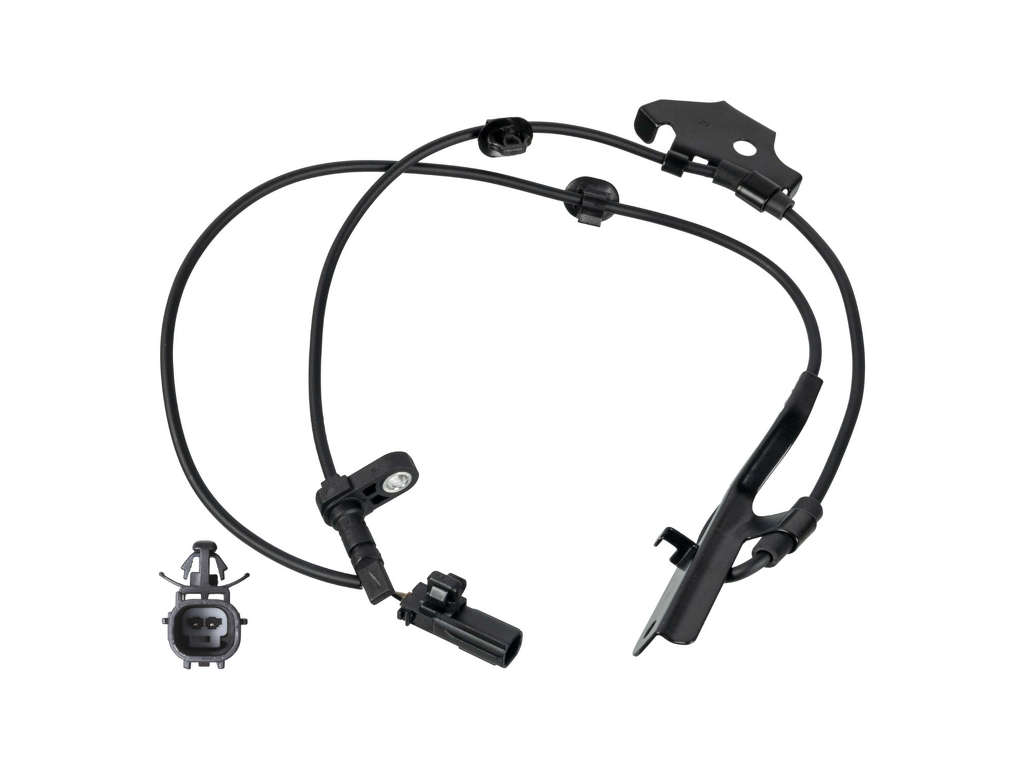
This code usually points to a problem with the left front wheel speed sensor or its wiring. The most common fix is replacing the sensor's wire harness, which gets damaged in the wheel well. Expect to pay $40-$80 for a new harness and about an hour of labor.
- C0035 on a Prius means you have a problem with the front left wheel speed sensor system, which will disable ABS, stability control, and regenerative braking.
- Before buying a new sensor, carefully inspect the wiring harness in the wheel well, as it is the most common part to fail.
- The actual Toyota fault code is likely C0205 or C1236. Using a scan tool that can read these codes is beneficial.
- The repair is DIY-friendly for those comfortable with removing a wheel and basic hand tools. The sensor is held by a single 10mm bolt.
- If you have other random electrical codes, check the health of your 12V auxiliary battery before chasing ABS parts.
What's Unique About the 2010-2015 Toyota Prius
On the third-generation Prius, a wheel speed sensor failure has a noticeable impact on the hybrid system, as it disables regenerative braking. This means you'll experience less efficient braking and reduced battery charging when you lift off the accelerator. Unlike the rear wheels where the sensor is integrated into the hub assembly, the front sensor is a separate, bolt-in component, making it and its wiring harness common failure points.
Symptoms You May Notice
- ABS warning light is on
- Traction control (slip indicator) light is on
- Brake system warning light is on
- Regenerative braking is disabled
- Cruise control does not work
- Speedometer may behave erratically or stop working at higher speeds
- A 'whirring' or 'buzzing' noise from the brake actuator pump cycling more frequently
- Replacing the wheel bearing. On the front of a Gen 3 Prius, the wheel speed sensor is separate from the wheel bearing/hub assembly. Replacing the bearing will not fix a sensor or wiring issue unless the bearing is so worn that it causes excessive wobble, which would have other obvious symptoms like grinding noises.
Most Likely Causes
- Damaged or Corroded Wheel Speed Sensor Wiring Harness 🔴 High Probability → Shop ABS Wheel Speed Sensor The harness is routed in the exposed wheel well, making it vulnerable to damage from road debris, ice buildup, and chafing against suspension parts. The wires are thin and can break internally even when the outer sheathing looks intact. Corrosion at the connectors is also common in areas with road salt.
How to confirm: Visually inspect the entire length of the wire from the sensor to its connection point in the engine bay. Look for breaks, chafing, or green/white corrosion on the connector pins. Wiggle the harness while monitoring live sensor data with a scan tool to see if the signal drops out. A common failure point is where the harness flexes near the strut.
Typical fix: Replace the entire front left ABS wire harness. 🎬 See how to diagnose and fix a bad speed sensor cable Splicing the shielded wires is possible but often unreliable and not recommended. The OEM part is the most reliable replacement.
Est. part cost: $40-$80 - Failed Front Left Wheel Speed Sensor 🟡 Medium Probability → Shop ABS Wheel Speed Sensor The sensor can fail internally from age and heat cycles. More commonly, rust can build up on the steering knuckle underneath the sensor's mounting point, increasing the air gap to the tone ring and causing a weak signal.
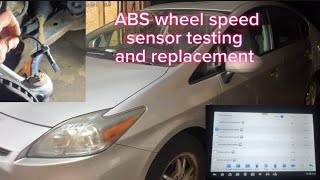
How to confirm: Remove the 10mm bolt holding the sensor. Check the sensor's magnetic tip for metal debris (which triggers C1236). Test the sensor's resistance with a multimeter; 🎬 Watch: How to test and replace the sensor on a 2010 Prius it should be approximately 1.4-1.8 kΩ. If you have a capable scan tool, watch the live data from the sensor while spinning the wheel; the reading should be smooth and consistent.
Typical fix: Clean the sensor tip and mounting surface on the knuckle. If the sensor tests bad or cleaning doesn't resolve the issue, replace the sensor.
Est. part cost: $30-$150 - Debris on Sensor or Damaged Tone Ring ⚪ Low Probability The sensor is magnetic and can attract metallic brake dust or rust flakes from the rotor/axle, which can disrupt the signal and specifically trigger code C1236.
How to confirm: Remove the sensor and inspect the tip for attached debris. Visually inspect the toothed tone ring on the CV axle through the sensor mounting hole. Look for heavy rust, cracks, or damaged/missing teeth.
Typical fix: Clean the sensor tip and the tone ring with a brush and brake cleaner. If the tone ring is cracked or severely damaged, the CV axle must be replaced.
Est. part cost: $5-$10 for cleaning supplies, $100-$300 for a CV axle if needed.
Rare But Worth Checking
- Failing 12V Auxiliary Battery: A weak 12V battery can cause a cascade of seemingly unrelated electronic fault codes in a Prius. If you have other codes like C1241 (Low Voltage) along with the speed sensor code, test the 12V battery first. This is a very common issue across all Prius generations.
- Faulty ABS Actuator / Skid Control ECU: This is the control module for the brake system. It is an expensive part and rarely the cause for a single wheel speed sensor code. This should only be considered after the sensor, wiring, and tone ring have all been confirmed to be in good condition. Failure of this unit usually presents with multiple codes like C1252, C1256, or C1391.
Diagnosis Steps
- Read the trouble codes with an OBD-II scanner capable of accessing the ABS module.
- Confirm if Toyota-specific codes like C0205 or C1236 🎬 Watch this walkthrough for fixing the C0205 front speed sensor error are present.
- Turn the steering wheel fully to the right to get access to the left front wheel well.
- Visually inspect the ABS wire harness from the sensor up to where it enters the body. Look for cracks, chafing, or signs of impact. Pay close attention to the section that flexes with steering.
- Disconnect the sensor and inspect the connector pins for corrosion.
- Remove the 10mm bolt securing the wheel speed sensor to the steering knuckle.
- Gently twist and pull the sensor out. Inspect the magnetic tip for metal shavings or debris and clean it.
- Inspect the tone ring on the CV axle for damage or heavy rust.
- If no visible issues are found, use a multimeter to test the resistance of the sensor. Compare it to the specification (typically 1.4-1.8 kΩ).
- For intermittent issues, use a scan tool to graph the live wheel speed data from all four wheels while driving. Look for dropouts or erratic readings from the left front sensor.
Parts You'll Likely Need
- Front Left ABS Wheel Speed Sensor
(OEM #89543-47030)— This is the sensor that provides the wheel speed reading. It can fail internally or its signal can be blocked by debris.
Trusted brands: Toyota (OEM), Denso, Standard Motor Products (ALS2322), NTK (AB1831)
OEM price range: $120-$180
Aftermarket price range: $30-$90 - Front Left ABS Wheel Speed Sensor Wire Harness
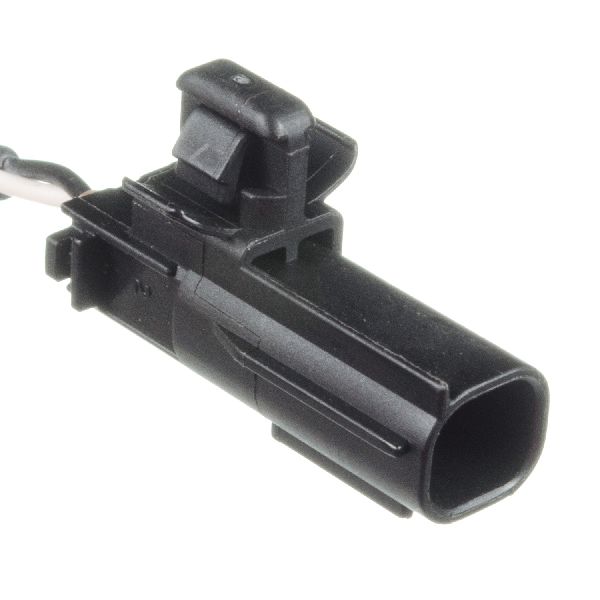
(OEM #89516-47050)— This is the most common point of failure due to its exposed location. The wires inside can break even if the outer insulation looks intact. Note: Some parts catalogs list this for the rear; confirm fitment with VIN before purchase.
Trusted brands: Toyota (OEM), Dorman (970-020), Standard Motor Products (ALS2583)
OEM price range: $60-$100
Aftermarket price range: $40-$80
Related Codes That Often Appear With This One
- C0205 — This is the Toyota-specific code for a 'Left Front Wheel Speed Sensor Signal Malfunction'. C0035 is the generic equivalent.
- C1236 — This is the Toyota-specific code indicating 'Foreign Object is Attached on Tip of Front Speed Sensor LH'. It often appears with C0205 if the signal is erratic due to debris.
- C1241 — This code indicates a problem with the 12V power supply. If seen with ABS codes, it strongly suggests the 12V auxiliary battery is failing and may be the root cause of the electronic faults.
Platform-Specific Known Issues
- Real Owner Experience: Intermittent ABS/VSC Lights: A user on PriusChat with code C0205 (the Toyota-specific equivalent) confirmed their issue was intermittent. Using Toyota's Techstream software, they graphed the wheel speeds while driving and saw intermittent signal drops from the front left sensor, confirming a fault in the circuit or sensor itself before replacing parts.
Mechanic-Grade Diagnostic Values
- Front Left Wheel Speed Sensor Resistance — expected: 1.4 kΩ - 1.8 kΩ. Failure: An open circuit (infinite resistance) or a short (near zero resistance) indicates a failed sensor.
- Front Left Wheel Speed Sensor AC Voltage Output — expected: Generates a low AC voltage signal that increases in frequency and amplitude as the wheel spins.. Failure: No voltage signal when the wheel is spinning, or an erratic/inconsistent signal compared to the other wheels, indicates a fault in the sensor or tone ring.
- Continuity Test at Skid Control ECU Connector A58 — expected: Resistance should be 1.4 - 1.8 kΩ between pin 32 (FL+) and pin 18 (FL-).. Failure: Resistance outside this range indicates a problem in the wiring harness or the sensor itself.
Hidden / Shadow Codes Worth Checking
- C1272: Low Output Signal of Front Speed Sensor LH (Test Mode DTC). This code is more specific than C0035/C0205 and indicates the signal amplitude is weak, which can point to an excessive air gap or internal sensor fault. (see via This code is typically only output when the ABS/VSC system is put into a special 'Test Mode' using a capable scan tool like Toyota Techstream or by bridging specific pins on the DLC3 connector.)
Scan Tool Commands That Help
- Toyota Techstream: Data List for ABS/VSC/TRAC — This is the most critical diagnostic step. Use it to view and graph the live speed readings from all four wheels simultaneously while driving. An intermittent dropout, lag, or erratic reading from the 'Front Speed Sensor LH' pinpoints the faulty circuit.
- Toyota Techstream: Active Test — While not for direct sensor diagnosis, active tests can command the ABS motor and solenoids to operate. This is useful for ruling out a faulty Skid Control ECU if you suspect a larger system failure beyond a single sensor circuit.
- Toyota Techstream: Utility -> Zero Point Calibration — This is NOT used for a simple sensor replacement. However, if the ABS Actuator (Skid Control ECU) is replaced, this calibration is mandatory to synchronize the steering angle sensor and G-sensors with the new module.
Wiring & Ground Locations
- A58 (Skid Control ECU) — Behind the left side of the dashboard, typically requiring removal of the lower dash panel for access.. This is the ABS control module. Testing the sensor circuit directly at this connector's pins can definitively isolate a fault to the wiring/sensor versus a problem with the ECU itself.
- A58, Pin 32 (FL+) — Pin 32 on the main connector for the Skid Control ECU.. This is the positive signal wire from the front left wheel speed sensor. A wiring diagram shows this is a Pink wire running from the sensor connector to the ECU.
- A58, Pin 18 (FL-) — Pin 18 on the main connector for the Skid Control ECU.. This is the negative/ground signal wire from the front left wheel speed sensor. A wiring diagram shows this is a Blue wire running from the sensor connector to the ECU.
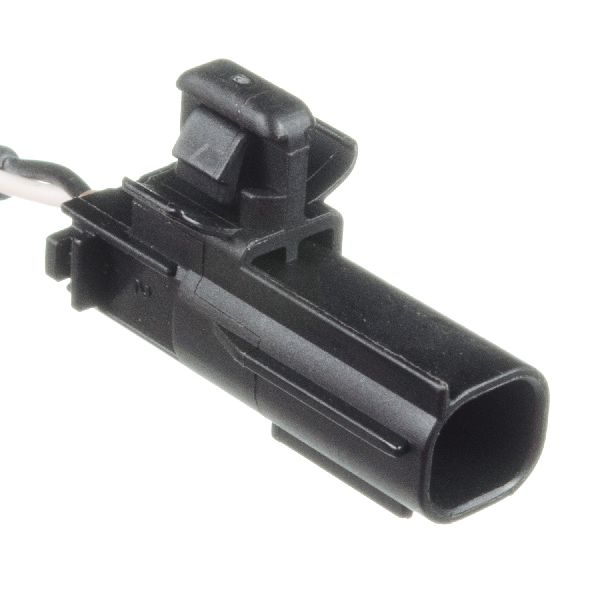
- A34 — The intermediate connector where the front left wheel speed sensor pigtail connects to the main body harness.. This connector, located in the engine bay near the wheel well, is a common point for corrosion or loose pins. Checking for signal on both sides of this connector can quickly determine if the fault is in the sensor pigtail or the harness going to the ECU.
Real Owner Repair Stories
- PriusChat Forum User '1954oval' (2012 Toyota Prius) — Intermittent VSC, ABS, and Brake warning lights.
❌ Tried (didn't work) Cleaning the original sensor and tone ring., Replacing the sensor with a used part from a junkyard.
✅ What actually fixed it Found a subtle, intermittent break in the sensor wiring harness where it was secured by a clamp in the wheel well. The damage was not obvious on first inspection. Repairing the wire resolved the C1236 code. - YouTube Channel 'Gari Auto Care' (Toyota Harrier (uses a similar ABS system)) — ABS light on, code C0205 (Front speed sensor left hand circuit).
❌ Tried (didn't work) Initial diagnosis pointed to either the sensor or actuator.
✅ What actually fixed it A visual inspection revealed a messy, damaged wiring harness for the sensor. The mechanic identified an open circuit in the wires. Repairing the harness and clearing the codes permanently fixed the issue, confirmed by watching live data on a scan tool.
OEM Part Supersession History
89516-47050→N/A— N/A
Heads up: Extreme caution required. This part number is for the 'Skid Control Sensor Wire'. However, many online catalogs incorrectly list it for the Gen 3 Prius front, while others show it fits the Gen 2 Prius rear. Always verify the correct part number for the front harness with a Toyota dealer using your vehicle's VIN before purchasing to avoid getting the wrong part.
Diagnostic Flowchart
Other Known Issues on This Vehicle
Issues unrelated to this code that are worth knowing about as an owner of this generation:
- Excessive Oil Consumption 🔴 High — Common on higher-mileage (100k+ miles) 2010-2014 models. Caused by clogged piston rings. Models from 2015 have updated piston/ring designs that are less prone to this. (Ref: Toyota issued TSBs (e.g., T-SB-0169-16 in some regions) outlining a consumption test and potential piston/ring replacement, but this was not a recall.)
- Brake Booster / Actuator Assembly Failure 🔴 High — A well-documented issue where an internal leak in the brake booster pump assembly leads to a loss of braking assist, frequent pump cycling, and warning lights. It is an expensive repair. (Ref: Toyota issued a Customer Support Program (ZJB) extending the warranty for this component to 10 years or 150,000 miles for certain model years, but many vehicles are now outside this window.)
- Clogged EGR (Exhaust Gas Recirculation) System 🟠 Medium — The EGR valve, cooler, and intake manifold passages are prone to clogging with carbon buildup, typically around 80,000-120,000 miles. This can lead to engine knocking, rough idle, and eventually head gasket failure if not addressed. (Ref: No recall, but it is a widely recognized maintenance item. Cleaning the EGR circuit is a common preventative repair.)
- Hybrid Inverter Failure 🔴 High — The Intelligent Power Module (IPM) within the inverter can fail due to thermal stress, causing the vehicle to stall or enter a low-power 'limp-home' mode. (Ref: Subject to multiple recalls (e.g., 18V684000, 20TA10) and a class-action lawsuit. The fix involved software updates and, in some cases, inverter replacement.)
- Headlight Wiring / Bulb Burnout 🟡 Low — Some 2010-2012 models experienced frequent headlight bulb burnout or melting of the wiring harness. (Ref: Toyota issued a recall/warranty extension for some vehicles to replace the headlight wiring harness.)
Used vs. New Parts: Buying Guide for This Vehicle
When a used part is the smart pick: For this repair, both the wheel speed sensor and the wiring harness are good candidates for used parts from a reputable auto recycler. They are not high-wear items and can offer significant savings.
Donor-vehicle mileage cap: roughly under 120000 miles for the part to have meaningful remaining life.
What to inspect on the donor part:
- Source from a vehicle from a dry, salt-free climate to minimize risk of corrosion.
- Visually inspect the wiring harness for any cracks, chafing, brittleness, or previous tape/repairs.
- Check the sensor and harness connectors for any green or white corrosion on the pins.
- Avoid parts from a vehicle that had a significant front-end or side collision near the wheel in question.
OEM-only on this vehicle (don't cheap out):
- ABS Actuator / Skid Control ECU. Due to the complexity, failure rate of used units, and requirement for software calibration, it is highly recommended to use a new OEM part or one from a highly reputable specialist rebuilder.
Aftermarket brands forum-validated for this vehicle:
- Denso (often the OEM supplier)
- NTK
- Standard Motor Products (SMP)
Brands owners have reported issues with on this vehicle:
- Be cautious with unbranded, generic sensors from online marketplaces. While inexpensive, they can have inconsistent signal quality which may cause the code to return or create other ABS/VSC performance issues.
Real Owner Stories
Aggregated from forums and TSBs cited above. Mileages and costs reflect what owners reported in those sources.
2010-2015 Toyota Prius
Symptoms: Intermittent ABS/VSC lights. The owner used Techstream software to graph wheel speeds while driving and observed intermittent signal drops from the front left sensor.
What fixed it: Confirmed a fault in the circuit or sensor itself through live data graphing before replacing parts.
Source hint: PriusChat: Real Owner Experience: Intermittent ABS/VSC Lights
2010-2015 Toyota Prius
Symptoms: Multiple ABS codes including C0205 and C1241.
What fixed it: Replacing the failing 12V auxiliary battery.
Source hint: Reddit r/prius
Gen II Toyota Prius (Similar System)
Symptoms: Intermittent signal dropout detected via live wheel speed monitoring.
What fixed it: Used Techstream to monitor live wheel speeds to find the specific intermittent dropout point.
Source hint: PriusChat: A detailed diagnostic thread from 2015
Related OBD-II Codes
Frequently Asked Questions
Is there a Toyota-specific code that corresponds to C0035 on my Prius?
Does the 2010-2015 Prius require a full hub assembly replacement to fix a bad wheel speed sensor?
Could my ABS and traction control lights be caused by the 12V battery instead of the sensor?
Is there a warranty extension for the brake actuator if it's making a buzzing noise along with this code?
Can I use parts from a Lexus CT200h to fix my Prius wheel speed sensor issue?
Why did my regenerative braking stop working when the ABS light came on?
Helpful Videos
We Have This Part in Stock


The information in this article is provided for general reference and educational purposes only. Vehicle specifications, procedures, and part compatibility can vary by production date, trim level, and region. Always consult your vehicle's factory service manual and verify part numbers before purchasing or performing repairs. Safety-critical components such as airbags, seat belts, and braking systems should be installed by a qualified professional.
- Toyota Prius:
- 🧭 Diagnostic Flowchart
- 🎬 Helpful Videos
- 🛍️ Shop This Part
- What's Unique About the 2010-2015 Toyota Prius
- Symptoms You May Notice
- Most Likely Causes
- Rare But Worth Checking
- Diagnosis Steps
- Parts You'll Likely Need
- Related Codes That Often Appear With This One
- Platform-Specific Known Issues
- Mechanic-Grade Diagnostic Values
- Hidden / Shadow Codes Worth Checking
- Scan Tool Commands That Help
- Wiring & Ground Locations
- Real Owner Repair Stories
- OEM Part Supersession History
- Other Known Issues on This Vehicle
- Used vs. New Parts: Buying Guide for This Vehicle
- Real Owner Stories
- 2010-2015 Toyota Prius
- 2010-2015 Toyota Prius
- Gen II Toyota Prius (Similar System)
- Related OBD-II Codes
- Frequently Asked Questions
- 🎟️ Get 5% Off