

C0045 on 2010-2016 Buick LaCrosse: Left Rear Wheel Speed Sensor Circuit Causes and Fixes
On a 2010-2016 LaCrosse, code C0045 almost always points to a problem with the left rear wheel hub's magnetic encoder ring, which has either corroded, broken, or is covered in metallic debris. The fix is usually replacing the entire rear wheel hub assembly, which costs around $100-$250 for a quality aftermarket part. Before replacement, always inspect and clean the ring as per GM TSB PIC5428G.
- Code C0045 on a 2010-2016 LaCrosse disables your ABS and StabiliTrak safety systems.
- The most likely cause is NOT the wheel speed sensor, but the magnetic ring on the wheel hub assembly which is either dirty or broken.
- Always inspect the left rear wheel hub's magnetic ring for debris or damage before buying any parts.
- If the ring is just dirty, cleaning it may fix the problem for free. If it's cracked, you must replace the entire wheel hub assembly.
- You will need an OBD-II scanner that can read ABS codes to diagnose and clear this fault.
What's Unique About the 2010-2016 Buick LaCrosse
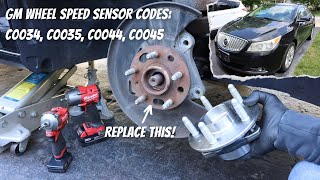
For this generation of Buick LaCrosse and other contemporary GM vehicles on the Epsilon II platform, the C0045 code is very frequently caused by a failure of the magnetic encoder ring that is integrated into the wheel bearing and hub assembly, rather than a failure of the wheel speed sensor itself. This encoder ring is exposed to the elements and is prone to corrosion, cracking, or accumulating metallic debris, which disrupts the signal. GM issued a technical service bulletin (PIC5428, with latest revision G) acknowledging this widespread issue across many models, including the LaCrosse, advising technicians to clean the ring before replacing parts.
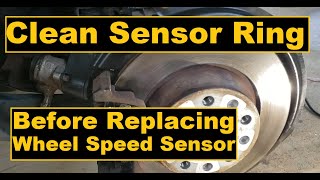
🎬 Watch: How to properly clean the magnetic encoder ring.Symptoms You May Notice
- ABS warning light illuminated
- StabiliTrak or Traction Control warning light illuminated
- "Service StabiliTrak" or "Service Traction Control" message on the driver information center
- Disabled Anti-lock Braking System (ABS)
- Disabled Traction Control System (TCS)
- A grinding, clicking, or ratchet-like noise from the rear at low speeds, sometimes with a flashing traction light.
- Heavier steering feel at low speeds if equipped with electric power steering, possibly with a U0415 code stored in the Power Steering Control Module.
- Replacing the wheel speed sensor when the actual problem is the magnetic encoder ring on the wheel hub assembly. It is critical to inspect the hub first on these vehicles.
Most Likely Causes
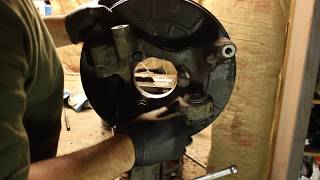
- Damaged or Debris-Covered Magnetic Encoder Ring on Hub 🔴 High Probability The design of the hub assembly leaves the magnetic encoder ring exposed to road grime, moisture, and metallic brake dust. Over time, this leads to corrosion that can crack the ring or debris accumulation that blocks the sensor's view. A video of a similar GM vehicle shows how the magnetic strip physically breaks apart.
How to confirm: Visually inspect the back of the left rear wheel hub assembly. Look for cracks, missing sections, or a build-up of metallic 'fuzz' on the magnetic ring. A scan tool showing C0045 with symptom byte '0F' (Signal Erratic) is a strong indicator of this issue.
Typical fix: If the ring is just dirty, cleaning it with a soft brush and brake cleaner may resolve the issue as per TSB PIC5428G. If the ring is cracked or damaged, the entire wheel hub and bearing assembly must be replaced.
Est. part cost: $100 - $250 - Faulty Left Rear Wheel Speed Sensor 🟡 Medium Probability → Shop ABS Wheel Speed Sensor While less common than hub failure on this platform, the sensor itself can fail electronically or suffer physical damage. Manufacturer bulletin #16-NA-248 notes that sensors can become internally shorted due to moisture, leading to DTCs like C0045.
How to confirm: After confirming the hub's encoder ring is clean and intact, test the sensor. Use a multimeter to check for resistance (compare to spec) or an oscilloscope to view the signal waveform while spinning the wheel. A scan tool with live data can also show if the sensor is reading '0' while others are reporting speed.
Typical fix: Replace the left rear wheel speed sensor. The sensor is typically held in by a single 10mm bolt.
Est. part cost: $30 - $80 - Wiring or Connector Issues ⚪ Low Probability The wiring harness leading to the wheel speed sensor is exposed and can become damaged, corroded, or chafed. The connector pins themselves can also spread or corrode, causing a poor connection even after parts are replaced.
How to confirm: Visually inspect the wiring harness from the sensor to the main vehicle body for any signs of damage. Unplug the connector and check for corrosion, moisture, or spread/loose pins. A continuity test can verify the integrity of the wires back to the EBCM.
Typical fix: Repair the damaged section of wire or replace the pigtail connector. In some cases, carefully re-tensioning the female pins in the connector can restore the connection.
Est. part cost: $15 - $50
Rare But Worth Checking
- Faulty Electronic Brake Control Module (EBCM): → Shop ABS Control Module This is very rare and should only be considered after all other possibilities (hub, sensor, wiring) have been exhaustively ruled out. An EBCM failure is expensive and unlikely to be the root cause.
Diagnosis Steps
- Connect an OBD-II scanner capable of reading ABS codes to confirm C0045 is present. Check for symptom bytes (e.g., 0F, 18, 5A) for more specific clues.
- Use the scanner's live data function to monitor all four wheel speeds while driving slowly. Confirm the left rear wheel speed sensor reads 0 MPH or has an erratic signal compared to the other three.
- Safely raise and support the vehicle. Remove the left rear wheel.
- Visually inspect the magnetic encoder ring on the inboard side of the wheel hub assembly. Look for rust, cracks, missing pieces, or a build-up of metallic debris ('fuzz').
- If debris is found, clean it off gently with a soft nylon brush and brake cleaner. Reassemble and test drive to see if the code returns.
- If the encoder ring is cracked or damaged, the entire wheel hub assembly must be replaced.
- If the encoder ring is clean and intact, inspect the wheel speed sensor itself. Check for physical damage, debris on the sensor tip, or signs of 'rust jacking' on its mounting surface.
- Inspect the wheel speed sensor wiring harness and connector for any signs of chafing, breaks, or corrosion. Unplug it and check for bent or spread pins.
- If no visual faults are found, test the sensor's circuit for proper voltage and ground, and test the sensor's signal output with a multimeter (AC voltage) or oscilloscope while spinning the hub.
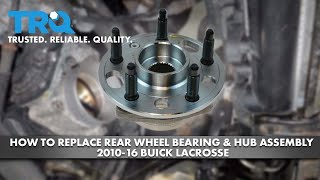
- Replace parts based on your findings, starting with the most likely cause (the hub assembly). After replacement, ensure all bolts are torqued to specification. The rear axle nut torque sequence is critical: tighten to 111 ft-lbs, loosen 45 degrees, then re-tighten to 185 ft-lbs. 🎬 Follow this walkthrough to replace the rear hub assembly.
Parts You'll Likely Need
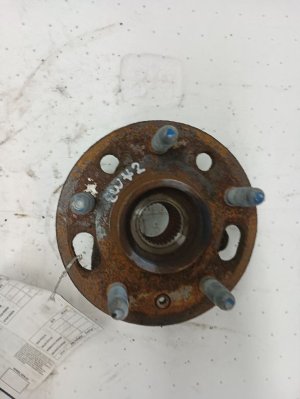
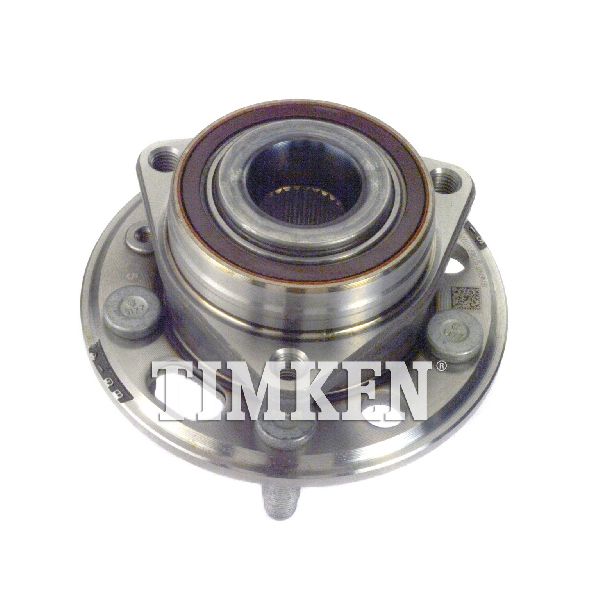
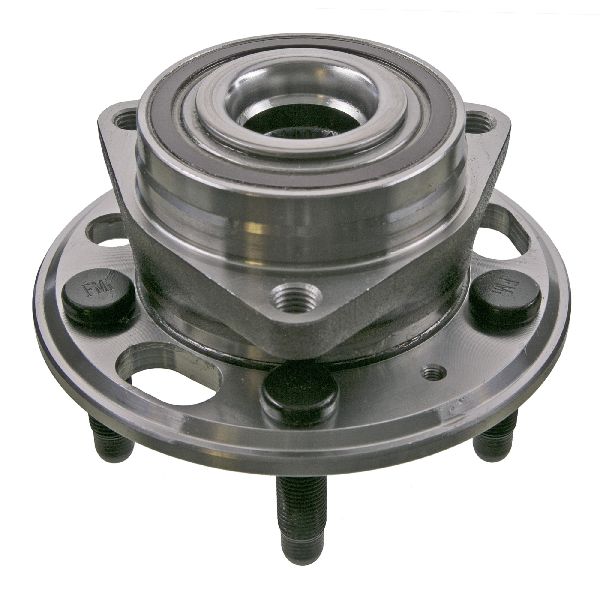
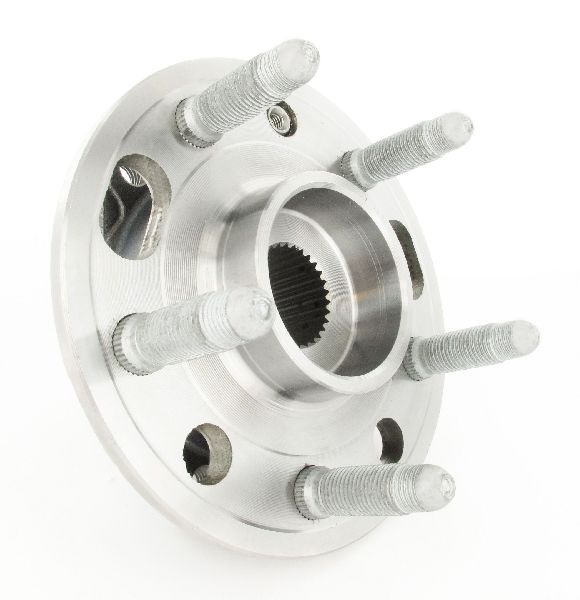
- Rear Wheel Bearing and Hub Assembly
(OEM #ACDelco FW401 (GM 25950332))— This is the most common failure for code C0045 on this vehicle, as the integrated magnetic encoder ring cracks or corrodes, disrupting the wheel speed signal.
Trusted brands: ACDelco (OEM supplier, often uses Timken bearings), MOOG (512440), Timken, Dorman
OEM price range: $180-$280
Aftermarket price range: $100-$200 - Rear ABS Wheel Speed Sensor
(OEM #ACDelco 22818134)— If the hub assembly and its encoder ring are in good condition, the sensor itself may have failed electronically.
Trusted brands: ACDelco, Standard Motor Products (SMP), Delphi
OEM price range: $50-$90
Aftermarket price range: $30-$60
Related Codes That Often Appear With This One
- C0045 0F — This code with the '0F' symptom byte specifically indicates an 'Erratic Signal', which is the most common presentation for a contaminated or cracked encoder ring on the hub.
- C0050 — This is the code for the Right Rear Wheel Speed Sensor. If both rear sensors fail, it might point to a shared wiring harness issue or EBCM problem, but it's more likely two separate hub failures occurring around the same time.
- U0415 — Invalid Data Received From Electronic Brake Control Module. This code can be set by the Power Steering Control Module as a normal default action when it loses the wheel speed signal from the EBCM, often resulting in a 'Service Steering' message and increased steering effort at low speeds.
- C0800 sym 07 — Per TSB Bulletin #PIC5837, a technician may find this code along with C0045 when the ABS lamp is illuminated and a "Service Stability" message is displayed; the bulletin advises following standard diagnostics for C0045 first.
Technical Service Bulletins (TSBs) & Recalls
- PIC5428G / 17-NA-047 - EBCM Wheel Speed Sensor Diagnostic Aid for ABS Message, Service Traction/Stabilitrak Message. This TSB directly addresses the common cause of C0045 being debris on the magnetic encoder ring.
- 16-NA-348 - Recommends installing updated dust deflectors when replacing rear hubs to prevent repeat failures.
- Bulletin #PIC5837 - Addresses conditions where the ABS lamp is illuminated and a "Service Stability" message is displayed, potentially involving C0045 and C0800.
- Bulletin #16-NA-248 - Notes that DTC C0045 can be set due to wheel speed sensors becoming internally shorted due to moisture.
Platform-Specific Known Issues
- GM issued Technical Service Bulletin PIC5428G which covers the 2010-2016 LaCrosse. It details that DTCs C0035, C0040, C0045, and C0050 are often caused by ferrous metallic debris accumulating on the magnetic encoder ring of the wheel bearing hub. The bulletin advises cleaning the debris as the primary fix before replacing parts. This TSB has been superseded by 17-NA-047 but the diagnostic advice remains relevant.
- A separate TSB, #16-NA-348, recommends installing improved dust deflectors during any rear hub replacement to help prevent future contamination of the encoder ring.
Mechanic-Grade Diagnostic Values
- Active Wheel Speed Sensor Current Draw — expected: The sensor is an active type that generates a digital square wave. The signal switches between a 'Low' state of approximately 7mA and a 'High' state of approximately 14mA DC current.. Failure: A signal that is stuck high or low, or does not produce a clean switch between the two current values when the wheel is spun, indicates a fault in the sensor or its circuit.
- Wheel Speed Sensor Resistance — expected: Not specified for this active sensor type. While passive sensors have a defined resistance range (often 800-2000 Ohms), testing resistance on this vehicle's active sensor is not a reliable diagnostic method.. Failure: An open or shorted reading might indicate a total failure, but the current draw or oscilloscope test is the correct procedure.
Hidden / Shadow Codes Worth Checking
- C0045 06: Indicates a 'Low Voltage/Open' condition in the Left Rear Wheel Speed Sensor Circuit. This points to a likely wiring break, connector issue, or a completely failed sensor. (see via GM-specific scan tool (e.g., GDS2, Tech2) or high-end professional scanner.)
- C0045 18: Indicates 'Low Signal Amplitude'. The EBCM is receiving a signal, but it is too weak. This can be caused by an excessive air gap between the sensor and ring, a damaged magnetic encoder ring, or an internal sensor fault. (see via GM-specific scan tool (e.g., GDS2, Tech2) or high-end professional scanner.)
- C0045 5A: Indicates 'Signal Plausibility Failure'. The signal from the sensor doesn't make sense compared to the other wheel speeds or vehicle speed. This is a strong indicator of a contaminated or cracked magnetic encoder ring providing an inconsistent reading. (see via GM-specific scan tool (e.g., GDS2, Tech2) or high-end professional scanner.)
Scan Tool Commands That Help
- GDS2 (GM Global Diagnostic System 2): Build vehicle as a 2013 model year. — On 2014 models, if you are unable to communicate with the K17 Electronic Brake Control Module (EBCM), a software issue may be preventing access. Building the vehicle as a 2013 in the scan tool is a known workaround to establish communication and read/clear codes.
- GDS2 or equivalent: Live Data > EBCM > Wheel Speed Sensors — This is the primary diagnostic function. While driving slowly in a straight line, all four wheel speed sensors should read within 1-2 MPH of each other. The failing sensor will typically read 0 MPH or jump erratically.
Wiring & Ground Locations
- EBCM Connector (X1) Pins 19 & 20 — The EBCM is located on the driver's side of the engine bay, attached to the ABS hydraulic block.. These are the specific pins for the left rear wheel speed sensor. Pin 19 (Yellow wire) is the sensor signal, and Pin 20 (Blue wire) is the sensor low reference. These pins can be back-probed to test for signal continuity and shorts directly at the control module.
- Engine Harness Chafe Point — The engine wiring harness may chafe against the top front of the transmission case, directly below the EBCM.. GM TSB 19-NA-225 identifies this as a potential chafe point that can cause an open or short in the wheel speed sensor circuits, leading to codes like C0045. This should be inspected if the sensor, hub, and connector at the wheel appear to be in good condition.
- EBCM Ground — Typically located on the frame rail near the EBCM itself in the engine bay.. A poor ground for the EBCM can cause numerous erratic faults. While it would likely trigger more than just a single wheel speed sensor code, it's a foundational check for any electrical issue with the ABS system.
Real Owner Repair Stories
- YouTube channel 'blu's garage' (2010 Buick LaCrosse CXL) — ABS and Stabilitrak lights on, code C0045-0F (Signal Erratic) and C0040-06.
❌ Tried (didn't work) The video focuses on diagnosis rather than failed parts, but the clear implication is that simply clearing the code does not work.
✅ What actually fixed it The diagnosis points directly to a faulty left rear wheel hub assembly. The video shows the erratic signal on the scan tool and the physical condition of the hub, confirming the common failure pattern. The fix is the replacement of the hub assembly.
"I Checked Everything" — The Actual Cause
- This is an electrical fault, so a smoke test is not applicable. The equivalent scenario is when a visual inspection of the hub and sensor at the wheel reveals no issues. In this case, the actual cause could be a hidden wiring problem, such as the engine harness chafing on the transmission case per TSB 19-NA-225.
OEM Part Supersession History
N/A→Updated Dust Deflectors— To better protect the magnetic encoder ring from debris and moisture.
Heads up: GM TSB 16-NA-348 recommends installing these improved deflectors whenever a rear hub is replaced on 2013-2014 models (and by extension, others in the range) to prevent repeat failures. This is an improvement, not a direct supersession of the hub itself.
Model Year Variations Within This Range
- 2014: A software glitch in the GDS2 scan tool can prevent communication with the EBCM. The official workaround is to identify the vehicle as a 2013 model year in the tool to proceed with diagnostics.
- 2013-2014: TSB 17-NA-047 specifically calls out these model years, instructing technicians to also follow TSB 16-NA-348 (installing improved dust deflectors) if the hub requires replacement, suggesting the issue was particularly prevalent or first addressed during this period.
Diagnostic Flowchart
Other Known Issues on This Vehicle
Issues unrelated to this code that are worth knowing about as an owner of this generation:
- Premature Timing Chain Stretch (2.4L & 3.6L) 🔴 High — Common on both 2.4L and 3.6L engines, often appearing after 70,000 miles. Lack of regular oil changes with dexos-spec oil is a major contributor. (Ref: GM Special Coverage #12313C for 2010-2011 2.4L (LAF) engines, extending warranty for balance shaft chain failure to 10 years/120k miles.)
- Throttle Body Assembly Failure (P2135) 🟠 Medium — A common issue where internal sensors in the throttle body fail, causing a check engine light and sometimes reduced power mode. Cleaning does not fix it; replacement is required.
- Carbon Buildup on Intake Valves (Direct Injection Engines) 🟠 Medium — Affects direct injection engines (both 2.4L and 3.6L), leading to cold start misfires and rough idling. Typically requires chemical cleaning procedures.
- Door Lock Actuator Failure 🟡 Low — A common annoyance where one or more door lock actuators fail, preventing locking/unlocking via remote or interior buttons.
- Corroded/Fractured Rear Toe Links 🔴 High — Primarily affects vehicles in the 'Salt Belt' states. Insufficient corrosion protection can lead to the toe link fracturing, causing a loss of vehicle control. (Ref: GM Recall N202307200 / NHTSA 20V811)
- Engine Oil Leaks (3.6L V6) 🟠 Medium — Leaks from the engine oil filter adapter and front engine cover are known issues. (Ref: GM TSB PI0913)
Used vs. New Parts: Buying Guide for This Vehicle
When a used part is the smart pick: For this repair, using used parts is strongly discouraged for the wheel hub assembly. The primary failure mode is corrosion and wear of the exposed magnetic ring, so a used part from a salvage yard is likely to have the same issue or a very short remaining life. A used wheel speed sensor or wiring pigtail could be a viable option if it passes a thorough visual inspection for corrosion, cracks, or damage.
Donor-vehicle mileage cap: roughly under 40000 miles for the part to have meaningful remaining life.
What to inspect on the donor part:
- For a wiring pigtail: Check for flexible, uncracked insulation and clean, uncorroded connector pins.
- For a sensor: Ensure the mounting tab is intact and there are no signs of physical damage or 'rust jacking' swelling.
- Avoid any parts from vehicles that show heavy underbody corrosion, especially if from a 'salt belt' region.
OEM-only on this vehicle (don't cheap out):
- No parts are strictly OEM-only, but the quality of the wheel hub assembly is critical to a long-lasting repair.
Aftermarket brands forum-validated for this vehicle:
- Timken: Widely regarded as a top-tier bearing manufacturer and is sometimes the OEM supplier for ACDelco.
- MOOG: Known for quality chassis parts, often with 'problem-solver' design improvements.
- ACDelco: The OEM parts supplier, offering both OE and professional-grade lines.
Brands owners have reported issues with on this vehicle:
- Unbranded 'white box' parts: These often have lower quality bearings and seals, leading to premature failure (noise, looseness) or repeat ABS faults.
- Budget brands like Detroit Axle may be a viable short-term fix, but some owners report a shorter service life compared to premium brands.
Real Owner Stories
Aggregated from forums and TSBs cited above. Mileages and costs reflect what owners reported in those sources.
2010-2016 Buick LaCrosse
Symptoms: ABS warning light and StabiliTrak light illuminated with a 'Service StabiliTrak' message; a grinding or clicking noise was heard from the rear at low speeds with a flashing traction light.
What fixed it: Cleaning ferrous metallic debris off the magnetic encoder ring of the wheel bearing hub as per TSB PIC5428G.
Source hint: TSB PIC5428G / 17-NA-047 and vehicle_specific_issues
Related OBD-II Codes
Frequently Asked Questions
My 2012 Buick LaCrosse has a 'Service StabiliTrak' message and code C0045. Does GM have a diagnostic aid for this?
The shop says I need a new hub for my C0045 code, but can I just clean it?
Why is my steering feeling heavier at low speeds along with the ABS light?
Is there a way to prevent the rear hub encoder ring from getting dirty again after I fix it?
What is the specific torque requirement for the rear axle nut on the LaCrosse?
Could a wiring issue cause C0045 even if the sensor is new?
Helpful Videos
Used OEM Parts in Stock
New Aftermarket Parts Available



The information in this article is provided for general reference and educational purposes only. Vehicle specifications, procedures, and part compatibility can vary by production date, trim level, and region. Always consult your vehicle's factory service manual and verify part numbers before purchasing or performing repairs. Safety-critical components such as airbags, seat belts, and braking systems should be installed by a qualified professional.
- Buick LaCrosse:
- 🧭 Diagnostic Flowchart
- 🎬 Helpful Videos
- 🛍️ Shop This Part
- What's Unique About the 2010-2016 Buick LaCrosse
- Symptoms You May Notice
- Most Likely Causes
- Rare But Worth Checking
- Diagnosis Steps
- Parts You'll Likely Need
- Related Codes That Often Appear With This One
- Technical Service Bulletins (TSBs) & Recalls
- Platform-Specific Known Issues
- Mechanic-Grade Diagnostic Values
- Hidden / Shadow Codes Worth Checking
- Scan Tool Commands That Help
- Wiring & Ground Locations
- Real Owner Repair Stories
- "I Checked Everything" — The Actual Cause
- OEM Part Supersession History
- Model Year Variations Within This Range
- Other Known Issues on This Vehicle
- Used vs. New Parts: Buying Guide for This Vehicle
- Real Owner Stories
- 2010-2016 Buick LaCrosse
- Related OBD-II Codes
- Frequently Asked Questions
- 🎟️ Get 5% Off