

C0045 on 2006-2011 Buick Lucerne: Left Rear Wheel Speed Sensor Circuit Causes and Fixes
Code C0045 on a 2006-2011 Buick Lucerne almost always means the left rear wheel hub assembly is failing or the wiring to it is damaged. Expect to replace the entire hub assembly, which includes the integrated magnetic sensor ring. An aftermarket hub costs around $80-$150, while the wiring pigtail is about $20-$40.
- C0045 on a Buick Lucerne means there's a fault with the left rear wheel speed signal.
- Before buying parts, visually inspect the wiring for damage and the back of the wheel hub for a cracked or debris-covered magnetic ring.
- The most probable cause is a faulty wheel hub assembly, not just the sensor itself. Replacing the entire hub is the most reliable fix.
- This is a safety-critical repair. Driving without ABS and StabiliTrak significantly compromises vehicle safety in emergency situations.
- You will need an ABS-capable scan tool to read this code and diagnose it properly; a basic engine code reader will not see 'C' codes.
What's Unique About the 2006-2011 Buick Lucerne
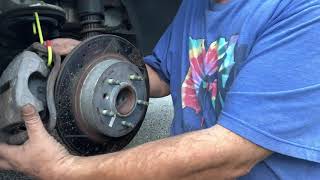
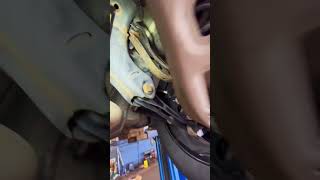
On the Buick Lucerne, like many GM vehicles from this era built on the W-body and related platforms, the wheel speed sensor's target—a magnetic encoder ring—is integrated directly into the wheel hub and bearing assembly. This design makes the system susceptible to issues where the magnetic ring itself cracks, corrodes, or gets covered in metallic debris, causing signal dropouts. As a result, C0045 is very often a 'hub problem' rather than just a 'sensor problem', leading to frequent misdiagnosis if only the standalone sensor pigtail is replaced. A video on a similar Cadillac CTS clearly shows how this magnetic ring breaks apart, 🎬 Watch how a damaged magnetic ring causes these sensor codes. causing the code.
Symptoms You May Notice
- ABS warning light is illuminated on the dashboard.
- Traction Control or StabiliTrak warning light is on.
- "Service StabiliTrak" or "Service Traction Control" message appears in the Driver Information Center.
- ABS may activate unnecessarily at low speeds.
- Cruise control may be disabled.
- In some cases, the odometer display may go blank, as it relies on wheel speed data.
- Replacing only the wheel speed sensor pigtail when the underlying cause is a damaged magnetic ring on the wheel hub assembly. This will result in the code returning quickly.
Most Likely Causes
- Failed Rear Wheel Hub & Bearing Assembly 🔴 High Probability → Shop Hub Assembly The magnetic encoder ring is integrated into the hub assembly. This ring is exposed to the elements and is known to crack, corrode, or accumulate metallic debris ('fuzz'), which corrupts the signal the wheel speed sensor reads. This is the most common point of failure for this code on this platform.
How to confirm: Visually inspect the magnetic ring on the inboard side of the hub for cracks, missing chunks, or a heavy buildup of metallic 'fuzz'. Spin the wheel while observing live data on an ABS-capable scan tool; the left rear reading will be zero, erratic, or will not match the other wheels. A YouTube video by FrugalPrepper's Garage & Garden shows the replacement process on a 2006 Lucerne. 🎬 Watch this step-by-step guide to replacing the rear wheel hub.
Typical fix: Replace the entire left rear wheel hub and bearing assembly. This part contains a new bearing and a new magnetic encoder ring.
Est. part cost: $80-$200 - Damaged Wheel Speed Sensor Wiring or Connector 🟡 Medium Probability → Shop ABS Wheel Speed Sensor The wiring harness leading to the wheel hub is subject to stress from suspension movement, water intrusion, and road debris. The plastic connector at the hub can become brittle and disintegrate, causing poor pin contact. Wires can also break internally or corrode at the connector pins. Manufacturer Bulletin #16-NA-248 notes that sensors can become internally shorted due to moisture, leading to intermittent Traction and Stabilitrak disabled messages.
How to confirm: Perform a wiggle test on the harness while watching live wheel speed data. Visually inspect the connector for green corrosion, pushed-out pins, or physical damage. A user on YouTube demonstrated a temporary fix by inserting small strands of copper wire into the connector to restore contact, confirming the connector was the issue. 🎬 See this clever hack to fix a loose sensor connector. Use a multimeter to check for continuity and shorts on the wires between the sensor connector and the EBCM.
Typical fix: Repair the broken wire or replace the connector pigtail. Ensure the harness is properly routed and secured away from moving parts. Dorman part 970-040 is a common aftermarket pigtail for this application.
Est. part cost: $20-$40 - Failed Wheel Speed Sensor ⚪ Low Probability → Shop ABS Wheel Speed Sensor While the sensor itself can fail, it is less common than hub or wiring issues. The sensor is a simple magnetic pickup and is often replaced with the wiring pigtail as a single unit.
How to confirm: After confirming the hub's magnetic ring and wiring are good, this becomes the likely culprit. The sensor's resistance can be tested with a multimeter (typically 850-1350 ohms for similar GM sensors). A more effective test is to swap the left and right rear sensors (if they are interchangeable) and see if the code follows the sensor, changing to C0050.
Typical fix: Replace the left rear wheel speed sensor. On this vehicle, the sensor is often sold as a pigtail that connects to the hub assembly.
Est. part cost: $30-$70
Rare But Worth Checking
- Faulty Electronic Brake Control Module (EBCM): → Shop ABS Control Module This is the computer that interprets the sensor signals. It is expensive and rarely the cause. Only consider this after definitively ruling out the hub, sensor, and wiring. Corrosion in the main EBCM connector can also cause issues and should be checked. Manufacturer Bulletin #PIC5837 notes that technicians may find code C0800 sym 07 alongside C0045, and should follow standard diagnostics for the wheel speed sensor first.
Diagnosis Steps
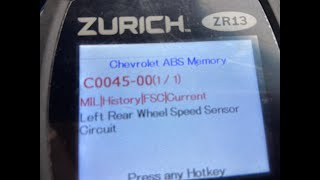
- Connect an ABS-capable scan tool. Confirm C0045 is present and check for any other codes.
- View the live data stream for all four wheel speed sensors. While driving straight at a low speed (5-10 mph), observe the reading from the left rear sensor. It will likely read 0 mph or show erratic values compared to the other three.
- Safely raise and support the rear of the vehicle. Remove the left rear wheel.
- Thoroughly inspect the wiring harness that runs from the chassis to the wheel hub. Look for any chafing, breaks, melting, or corrosion. Pay close attention to the connector at the hub, checking for broken plastic or corroded pins.
- Visually inspect the inboard side of the wheel hub assembly. Look at the dark magnetic ring. Check for cracks, missing sections, or a build-up of metallic debris. If debris is present, try cleaning it off with a rag or soft brush. If the ring is damaged, the hub must be replaced.
- If the magnetic ring looks good and the wiring appears intact, perform a wiggle test on the harness while a helper watches the live data on the scan tool to see if the signal cuts in and out.
- If possible, use a multimeter to check the resistance of the wheel speed sensor through its connector pins. A reading between 850 and 1350 Ohms is typical for a good sensor on similar GM platforms.
- If the hub, wiring, and sensor resistance are confirmed to be good, the fault may lie with the EBCM or its connector, though this is rare.
Parts You'll Likely Need
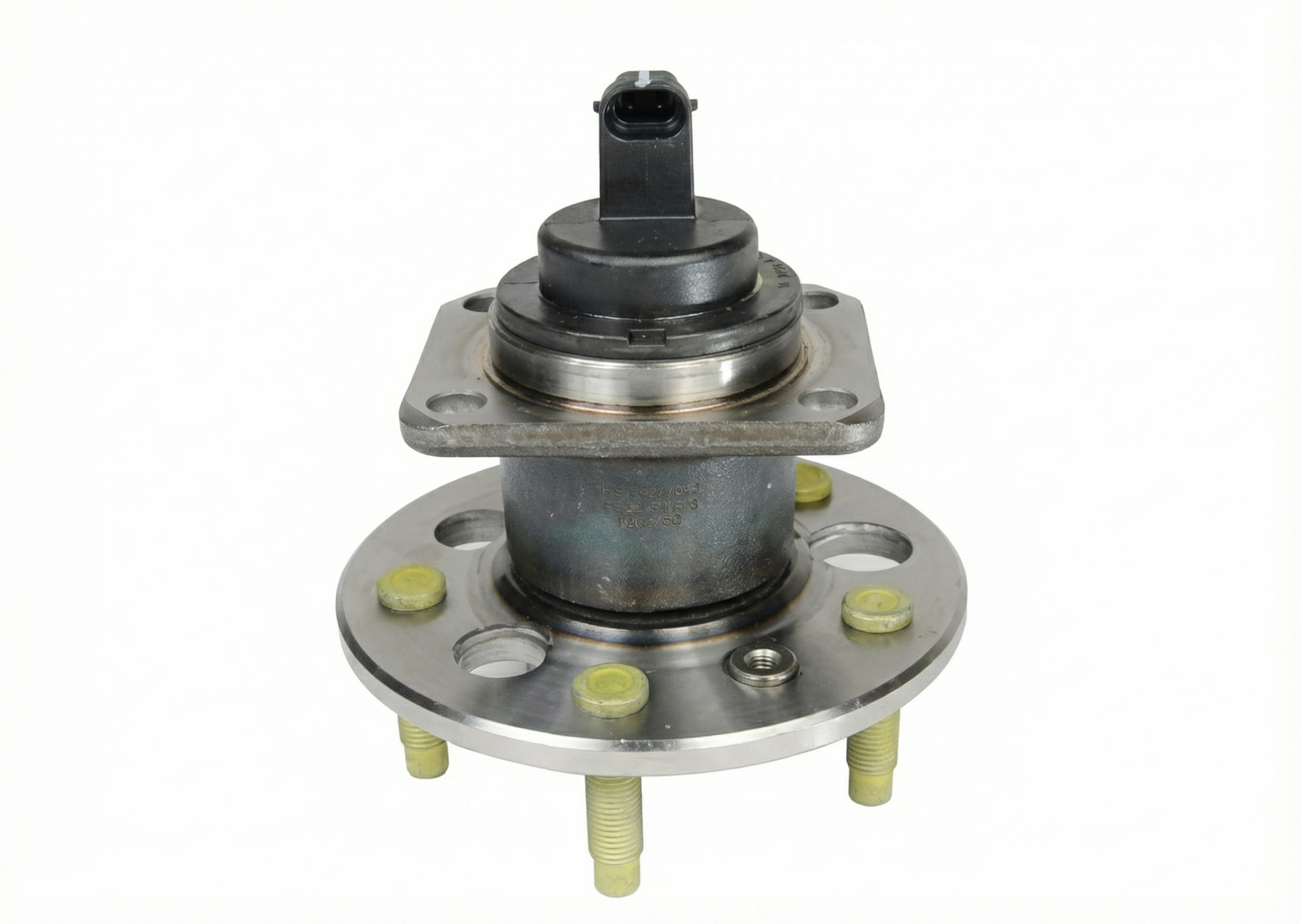
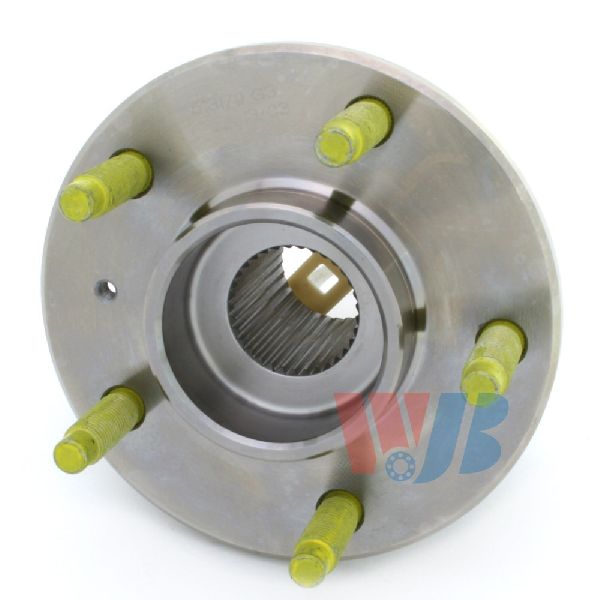
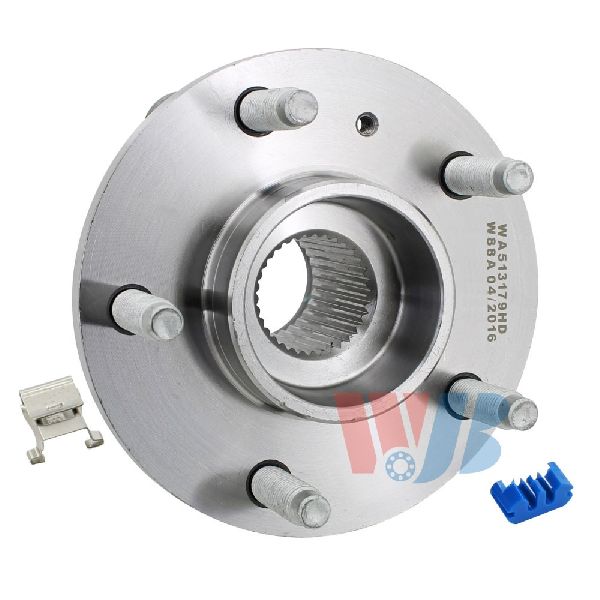
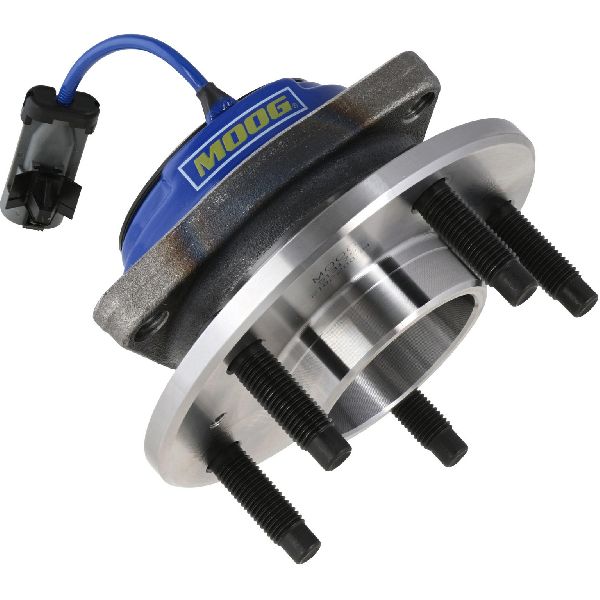
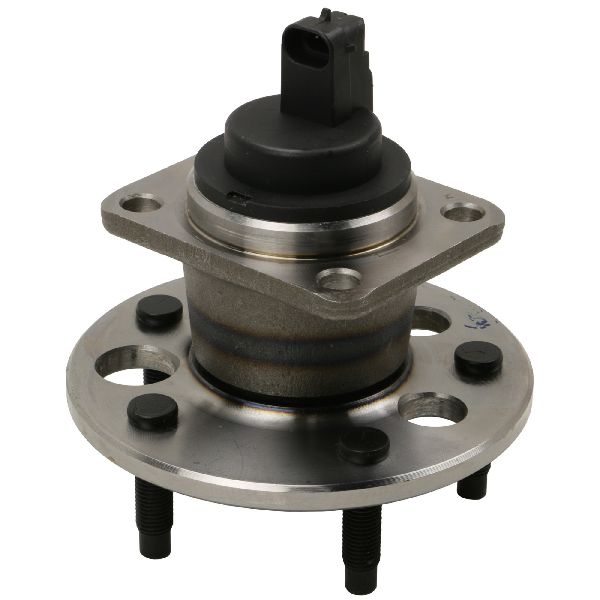
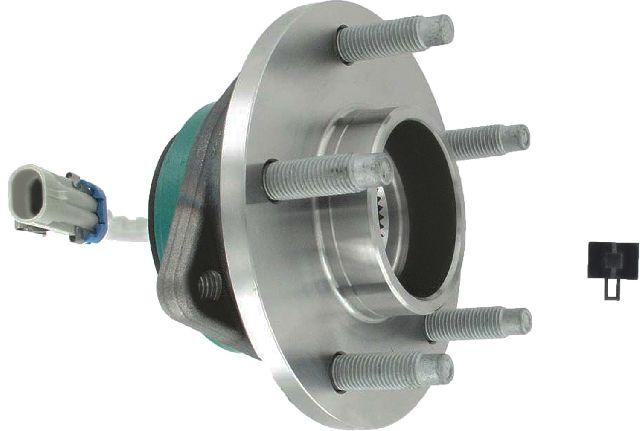
- Rear Wheel Hub and Bearing Assembly
(OEM #ACDelco FW411 (GM 15770321))— This is the most common failure. The integrated magnetic encoder ring cracks or corrodes, causing the C0045 code. Replacing the assembly provides a new bearing and a new magnetic ring.
Trusted brands: ACDelco, Timken, Moog, SKF
OEM price range: $180-$250
Aftermarket price range: $80-$150 - ABS Wheel Speed Sensor Connector Pigtail
(OEM #ACDelco PT2298 (GM 19115818))— If the wiring is found to be damaged or the connector is corroded/disintegrated, this pigtail allows for a direct repair without replacing a larger, more expensive harness.
Trusted brands: ACDelco, Dorman (p/n 970-040)
OEM price range: $40-$60
Aftermarket price range: $20-$40
Related Codes That Often Appear With This One
- C0050 — This is the code for the Right Rear Wheel Speed Sensor. If both appear together, it strongly suggests a wiring or connector issue common to both rear sensors, a problem with the EBCM, or that both hub magnetic rings have failed, which is common on high-mileage or rust-belt vehicles.
- C0046 — This code indicates a 'Range/Performance' issue with the same sensor, rather than a complete circuit failure. It often points directly to a contaminated or damaged magnetic ring on the hub that is providing an erratic but not completely absent signal.
Technical Service Bulletins (TSBs) & Recalls
- Special Coverage 18226-01: While not directly for code C0045, this TSB addresses an issue on 2008-2011 Lucernes where the rear seat bracket can contact the Rear Electrical Center (REC), causing various electrical issues including battery drain or stalling. This highlights a known area of electrical vulnerability in the rear of the vehicle.
- Bulletin #16-NA-248: This manufacturer bulletin describes a condition where moisture causes wheel speed sensors to short internally, setting codes C0035, C0040, C0045, or C0050 and triggering "Traction and AWD Disabled" messages.
- Bulletin #PIC5837: This bulletin notes that a "Service Stability" message and ABS lamp may be accompanied by DTC C0800 sym 07 in addition to wheel speed sensor codes like C0045.
Mechanic-Grade Diagnostic Values
- Wheel Speed Sensor Resistance — expected: 850-1350 Ohms across the sensor's two pins (when disconnected).. Failure: A reading of OL (infinite) or near zero ohms indicates a failed sensor.
- Wheel Speed Sensor AC Voltage Output — expected: Greater than 100 mV AC when spinning the wheel by hand (approx. 1 revolution per second).. Failure: No voltage or significantly lower voltage suggests a failed sensor or magnetic ring.
- Circuit Test at EBCM Connector — expected: On key-on, the EBCM sends a brief 12V pulse to the sensor circuit to check for integrity.. Failure: This test requires an oscilloscope to see the pulse. Its absence can point to an EBCM issue or a complete open/short in the harness, but is an advanced diagnostic step.
Hidden / Shadow Codes Worth Checking
- C0045 06: Left Rear Wheel Speed Sensor Circuit Low Voltage/Open. This sub-code points specifically to an open wire, a short to ground, or a complete connector failure. (see via GM Tech2, GDS2, or other professional scan tool capable of reading manufacturer-specific symptom bytes.)
- C0045 0F: Left Rear Wheel Speed Sensor Circuit Signal Erratic. This often points to a contaminated or physically damaged magnetic encoder ring on the hub, or a chafed wire causing intermittent contact. (see via GM Tech2, GDS2, or other professional scan tool capable of reading manufacturer-specific symptom bytes.)
- C0045 18: Left Rear Wheel Speed Sensor Circuit Low Signal Amplitude. The signal from the sensor is too weak, often caused by an excessive air gap or a failing magnetic ring. (see via GM Tech2, GDS2, or other professional scan tool capable of reading manufacturer-specific symptom bytes.)
- C0045 5A: Left Rear Wheel Speed Sensor Circuit Not Plausible. The EBCM is receiving a signal, but it is illogical compared to the other wheel speed sensors (e.g., showing 5 mph when others show 50 mph). (see via GM Tech2, GDS2, or other professional scan tool capable of reading manufacturer-specific symptom bytes.)
Scan Tool Commands That Help
- GDS2 / Tech2: Antilock Brake System Automated Bleed — This service function is required after replacing the Electronic Brake Control Module (EBCM) or opening the hydraulic brake system to ensure all air is purged from the ABS pump and valve body.
- GDS2 / Tech2: Program EBCM — When a new EBCM is installed, it must be programmed with the vehicle's specific configuration and VIN. Failure to do so will result in a no-communication or functionality error.
Wiring & Ground Locations
- EBCM — Located in the left front corner of the engine compartment, below the radiator surge tank.. This module receives and interprets the signal from the left rear wheel speed sensor. Its connector is a potential point of failure due to corrosion or loose pins.
- G112 / G114 — Lower left rear of the engine.. These are the primary ground points for the EBCM according to wiring diagrams. A loose or corroded ground here can cause erratic behavior and false trouble codes for the entire ABS system.
- Rear Fuse Block — Located under the rear seat, on the left side.. The wiring for the rear wheel speed sensors passes through this area. While less common, issues in the rear fuse block or its connectors could potentially affect the circuit.
Real Owner Repair Stories
- YouTube channel 'OldGuyDIY' (2013 Chevrolet Impala LTZ (W-Body platform mate)) — ABS and Traction Control lights on, code C0045 present.
❌ Tried (didn't work) Replacing the entire left rear wheel hub and bearing assembly.
✅ What actually fixed it The plastic connector for the wheel speed sensor had disintegrated and was making poor contact. The code was cleared by inserting small strands of copper wire into the female side of the connector to ensure a tight fit with the pins on the new hub, confirming the connector pigtail was the true point of failure.
OEM Part Supersession History
GM 15882697→GM 25881054 (which itself superseded 25864051)— Part revision and consolidation by the manufacturer.
Heads up: The EBCM for 2006-2007 models is different from the one used on 2008-2011 models. They are not interchangeable.
Model Year Variations Within This Range
- 2006-2007 vs 2008-2011: The Electronic Brake Control Module (EBCM) part number and potentially its internal logic changed for the 2008 model year. Part number 15882697 is for 2006-2007, while 25881054 is for 2008-2011 models.
Diagnostic Flowchart
Other Known Issues on This Vehicle
Issues unrelated to this code that are worth knowing about as an owner of this generation:
- Oil Leaks (V6 & V8) 🟠 Medium — Common across all model years, particularly from the front crankshaft seal and oil pan gasket. Can start at moderate mileage (e.g., 60k+ miles).
- Power Steering Hose Leaks 🟠 Medium — Hoses, particularly the pressure and return lines, are prone to leaking due to age or rubbing. V8 models had a specific recall for this. (Ref: Recall 10V553000 for 2010-2011 V8 models where the starter cable could rub through the power steering line. Recall 06026 for 2006 V8 models for inadequately crimped hose connectors.)
- Fuel Pump / Rear Electrical Center Failure 🔴 High — A failing fuel pump or issues within the Rear Electrical Center (REC) can cause stalling or no-start conditions. (Ref: Special Coverage 18226-01 for 2008-2011 models where the rear seat bracket can damage the REC, potentially causing overheating, battery drain, or stalling.)
- Remote Start / Keyless Entry Malfunction 🟡 Low — Owners report intermittent or complete failure of the remote start and keyless entry systems. This is often linked to a failing Body Control Module (BCM) or issues with the radio frequency receiver.
- Transmission Shifting Issues 🟠 Medium → Shop Transmission Assembly — Some owners report harsh shifting or hesitation, particularly in earlier model years.
Used vs. New Parts: Buying Guide for This Vehicle
When a used part is the smart pick: A wiring connector pigtail or a section of the body harness from a junkyard vehicle can be a cost-effective repair for damaged wiring. An EBCM can be sourced used, but it is a gamble and will likely require dealer programming to function.
Donor-vehicle mileage cap: roughly under 120000 miles for the part to have meaningful remaining life.
What to inspect on the donor part:
- For wiring, ensure the insulation is still flexible and not brittle or cracked.
- Check connectors for intact locking tabs and no signs of green or white corrosion on the pins.
- Source parts from vehicles in dry climates to minimize corrosion risk.
- Avoid parts from vehicles that show signs of flood or fire damage.
OEM-only on this vehicle (don't cheap out):
- While not strictly 'OEM-only', using a genuine ACDelco or a high-quality OEM-supplier (Timken, SKF, Moog) for the wheel hub assembly is strongly recommended. Cheap, no-name hubs often have poor quality bearings or magnetic rings that fail prematurely.
Aftermarket brands forum-validated for this vehicle:
- Hub Assemblies: Timken, SKF, Moog, ACDelco
- Connector Pigtails: Dorman, ACDelco
Brands owners have reported issues with on this vehicle:
- Unbranded, low-cost wheel hub assemblies from online marketplaces are frequently reported by mechanics to have short lifespans and cause repeat failures.
Real Owner Stories
Aggregated from forums and TSBs cited above. Mileages and costs reflect what owners reported in those sources.
2006 Buick Lucerne
Symptoms: ABS and Traction Control lights on; C0045 code present.
What fixed it: Replacement of the left rear wheel hub and bearing assembly due to a failed magnetic encoder ring.
Source hint: YouTube video by FrugalPrepper's Garage & Garden
2013 Chevrolet Impala (Platform Mate)
Symptoms: C0045 code persisted even after the wheel hub was replaced.
What fixed it: Replacement of the sensor pigtail connector, which was found to be deformed and disintegrated.
Source hint: YouTube - 'OldGuyDIY Hack Clear GM Code C 0045'
2006-2011 Buick Lucerne
Symptoms: The C0045 code returned shortly after the wheel speed sensor was replaced.
What fixed it: Cleaning metallic particles and debris off of the magnetic encoder ring.
Source hint: Reddit r/AskMechanics - 'C0045 code after changing speed sensor already?'
Related OBD-II Codes
Frequently Asked Questions
I have a 2008 Buick Lucerne; does the Special Coverage 18226-01 apply to my ABS issues?
Why is my Lucerne's odometer display blank along with the Service StabiliTrak message?
Can I just clean the sensor on my 2006 Lucerne to fix C0045?
Is there a specific wiring repair kit for the Lucerne's rear wheel speed sensor?
My 2010 Lucerne V8 has a power steering leak; could this be related to the C0045 code?
What is the typical resistance for a Lucerne wheel speed sensor?
Helpful Videos
Used OEM Parts in Stock
New Aftermarket Parts Available


The information in this article is provided for general reference and educational purposes only. Vehicle specifications, procedures, and part compatibility can vary by production date, trim level, and region. Always consult your vehicle's factory service manual and verify part numbers before purchasing or performing repairs. Safety-critical components such as airbags, seat belts, and braking systems should be installed by a qualified professional.
- Buick Lucerne:
- 🧭 Diagnostic Flowchart
- 🎬 Helpful Videos
- 🛍️ Shop This Part
- What's Unique About the 2006-2011 Buick Lucerne
- Symptoms You May Notice
- Most Likely Causes
- Rare But Worth Checking
- Diagnosis Steps
- Parts You'll Likely Need
- Related Codes That Often Appear With This One
- Technical Service Bulletins (TSBs) & Recalls
- Mechanic-Grade Diagnostic Values
- Hidden / Shadow Codes Worth Checking
- Scan Tool Commands That Help
- Wiring & Ground Locations
- Real Owner Repair Stories
- OEM Part Supersession History
- Model Year Variations Within This Range
- Other Known Issues on This Vehicle
- Used vs. New Parts: Buying Guide for This Vehicle
- Real Owner Stories
- 2006 Buick Lucerne
- 2013 Chevrolet Impala (Platform Mate)
- 2006-2011 Buick Lucerne
- Related OBD-II Codes
- Frequently Asked Questions
- 🎟️ Get 5% Off