

C0045 on 2011-2017 Buick Regal: Left Rear Wheel Speed Sensor Circuit Causes and Fixes
Code C0045 on a 2011-2017 Buick Regal almost always points to an issue with the magnetic ring on the left rear wheel hub, not the sensor itself. This is a well-documented issue covered by GM TSB PIC5428G. Inspect and clean the ring first; if it's cracked or damaged, you must replace the entire wheel hub assembly. The part costs about $80 for aftermarket to $250 for OEM.
- Code C0045 on your Regal is most likely caused by a dirty or damaged magnetic ring on the left rear wheel hub, not a bad sensor.
- Before buying any parts, remove the sensor (one bolt) and visually inspect the magnetic ring for metallic debris or cracks.
- Cleaning the ring may be a free fix. If the ring is cracked, you must replace the entire wheel hub assembly.
- This is a safety-critical repair. Driving with this code means your ABS and StabiliTrak are disabled.
What's Unique About the 2011-2017 Buick Regal
For the 2011-2017 Buick Regal, which is built on the GM Epsilon II platform, this code is frequently misdiagnosed. A specific GM Technical Service Bulletin (PIC5428G) applies to this vehicle and points to the true culprit: the magnetic encoder ring integrated into the wheel hub assembly. This ring, which is a magnetized nitrile rubber seal, is prone to collecting ferrous metallic debris or cracking from corrosion. This disrupts the sensor's reading. Owners and shops often mistakenly replace the sensor when the hub assembly is the actual point of failure. This issue is common across many GM vehicles from this era using the same hub design.
Symptoms You May Notice
- ABS warning light is on
- Traction Control or StabiliTrak warning light is on
- "Service StabiliTrak" or "Service Traction Control" message on the driver information center 🎬 Watch: A breakdown of C0045 causes and common fixes
- Cruise control may not work
- Potential for hard or erratic transmission shifting
- In rare cases, a heavier steering feel at low speeds if equipped with electric power steering
- A clicking or grinding noise from the wheel area at low speeds
- Replacing the wheel speed sensor without first inspecting the magnetic encoder ring on the wheel hub assembly. The hub is the most frequent cause of the problem on this vehicle, a fact supported by GM's own service bulletin.
Most Likely Causes
- Debris on or Damage to the Rear Hub Magnetic Encoder Ring 🔴 High Probability As documented in GM TSB PIC5428G, the design of the hub-integrated magnetic ring makes it susceptible to contamination from metallic road debris, especially in regions that use road salt. Corrosion can form under the seal, causing the ring to swell, crack, and delaminate.
How to confirm: Remove the left rear wheel speed sensor (one T30 Torx or 10mm bolt). Use a light and mirror to visually inspect the dark brown magnetic ring on the inboard side of the hub. Look for metallic 'fuzz' or shavings, rust buildup, cracks, or missing chunks. A Reddit user with a 2011 Equinox (a platform mate) confirmed this exact issue and fix.
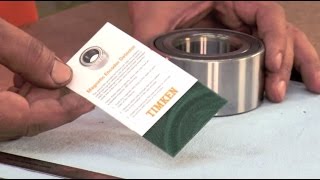
Typical fix: If only debris is present, clean the ring thoroughly with a dry, soft nylon brush and brake cleaner 🎬 See how to properly handle and clean active seal encoders, clear the codes, and test drive. Do not use harsh tools that could scratch the ring. If the ring is cracked or physically damaged, the entire wheel hub and bearing assembly must be replaced.
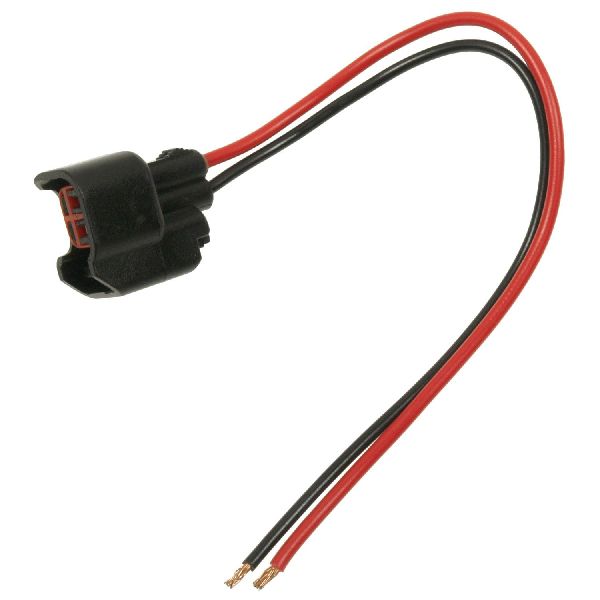
Est. part cost: $80-$200 for a hub assembly - Damaged Wiring or Corroded Connector 🟡 Medium Probability The wiring harness runs in an exposed area near the wheel, making it vulnerable to damage from road debris, moisture, and suspension movement. Connectors can accumulate moisture and corrode, causing a poor signal. This is a common failure point on many vehicles.
How to confirm: Visually inspect the wiring harness from the sensor pigtail up into the wheel well. Check for chafed wires, breaks, or signs of melting. Unplug the connector at the sensor and the next intermediate connector, and check for green or white corrosion on the pins. Use a multimeter to check for continuity and shorts to ground.
Typical fix: Repair the broken section of wire with a weatherproof butt connector and heat shrink. If the connector itself is corroded or damaged, replace the pigtail connector.
Est. part cost: $15-$40 for a pigtail connector - Failed Left Rear Wheel Speed Sensor ⚪ Low Probability → Shop ABS Wheel Speed Sensor While sensors can fail from heat and vibration over time, it is far less common on this platform than hub or wiring issues. However, manufacturer service bulletin #16-NA-248 notes that sensors can become internally shorted due to moisture, leading to DTC C0045 and disabled AWD or Stabilitrak messages.
How to confirm: If the hub's magnetic ring is clean and intact and the wiring tests good for continuity, the sensor itself is the likely culprit. It can be tested with a multimeter for resistance (if specs are known) or by swapping it with the right-side sensor to see if the code follows to C0050.
Typical fix: Replace the left rear wheel speed sensor. It is typically held in by a single T30 Torx or 10mm bolt.
Est. part cost: $20-$50
Rare But Worth Checking
- Failed Electronic Brake Control Module (EBCM): → Shop ABS Control Module This is extremely rare and should only be considered after all other possibilities (hub, sensor, and wiring) have been definitively ruled out through proper testing.
Diagnosis Steps
- Connect an ABS-capable scan tool and confirm C0045 is the active code. Note any symptom bytes (e.g., 18, 5A, 0F).
- Using the scan tool, view the live data for all four wheel speed sensors. While driving slowly or spinning the wheel by hand, verify that the left rear sensor reads 0 MPH or shows an erratic/jumpy signal compared to the other three.
- Safely raise and support the vehicle and remove the left rear wheel.
- Locate the wheel speed sensor on the back of the knuckle. It is held in by a single 10mm or T30 Torx bolt. Remove the bolt and gently pull the sensor out.
- Thoroughly inspect the brown magnetic encoder ring on the inboard side of the hub assembly. Use a strong light. Look for metallic debris stuck to the ring, as well as any cracks, swelling, or missing sections.
- If debris is found, clean it off with brake cleaner and a soft, non-metallic brush. Reinstall the sensor, clear the codes, and test drive to see if the fault returns.
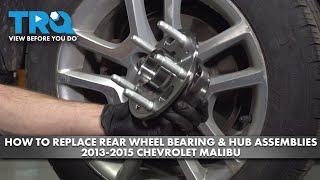
- If the ring is cracked or damaged, the entire wheel hub and bearing assembly must be replaced. Torque for the hub mounting bolts is critical and often specified as a torque value plus an angle (e.g., 66 ft-lbs + 75 degrees), so consult a service manual. 🎬 Watch this step-by-step rear wheel hub replacement walkthrough
- If the ring is clean and intact, inspect the sensor's wiring harness from the connector back as far as possible for any signs of physical damage, chafing, or corrosion.
- If no visible issues are found with the hub or wiring, consider swapping the left and right rear wheel speed sensors. If the code changes to C0050, the sensor is faulty and should be replaced.
- If the problem persists after replacing the hub and/or sensor, perform detailed circuit testing (checking for voltage, ground, and signal at the EBCM connector) before considering a faulty EBCM.
Parts You'll Likely Need
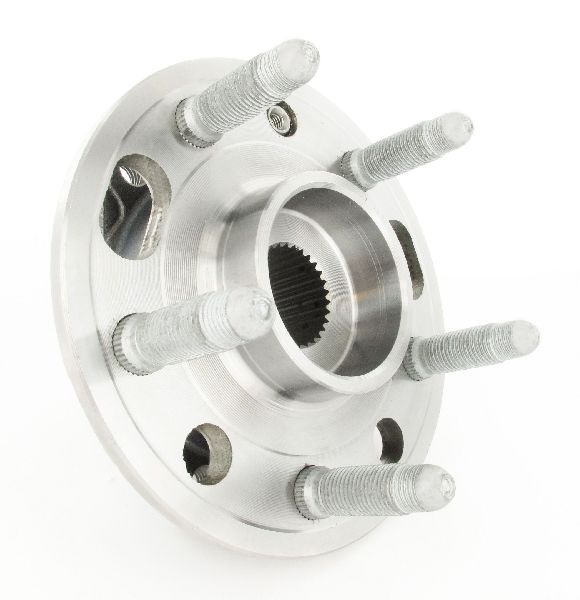
- Rear Wheel Hub and Bearing Assembly
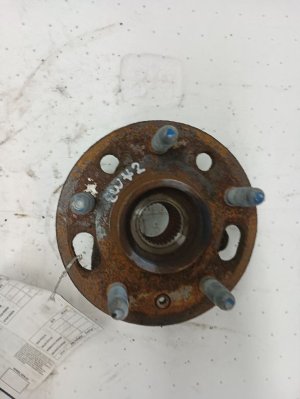
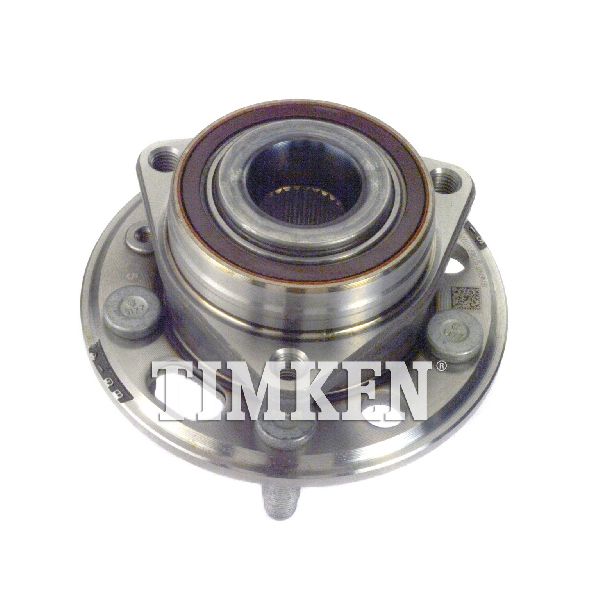
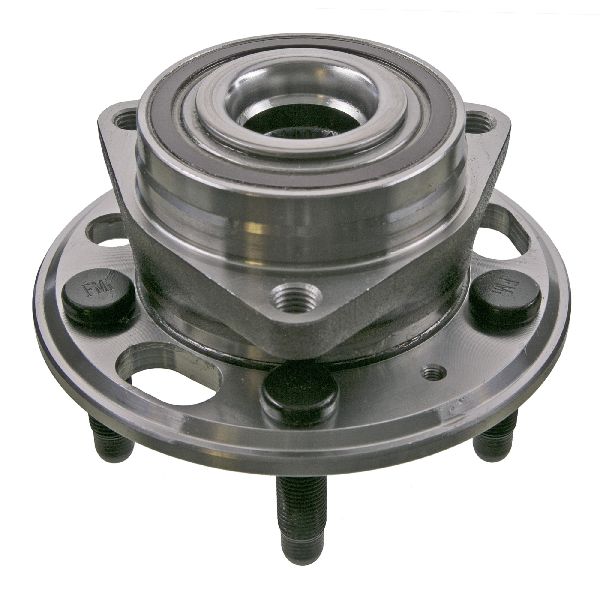
(OEM #GM 13589521 (FWD), GM 13589522 (AWD) - Note: Part numbers can change, verify with VIN.)— This is the most common fix because the integrated magnetic encoder ring cracks or gets contaminated, which is the root cause of the faulty signal per GM TSB PIC5428G.
Trusted brands: ACDelco (GM Genuine FW458, Gold 512458), MOOG (512458), Timken, SKF
OEM price range: $150-$250
Aftermarket price range: $80-$200 - Rear ABS Wheel Speed Sensor
(OEM #23483153)— This is the second most likely part to fail, either due to internal failure or if it's damaged during a separate repair. It is often replaced when the hub is the real problem.
Trusted brands: ACDelco, Delphi, Dorman, Standard Motor Products (SMP)
OEM price range: $25-$45
Aftermarket price range: $20-$40
Related Codes That Often Appear With This One
- C0050 — This is the code for the right rear wheel. If both C0045 and C0050 appear together, it strongly suggests a shared wiring or connector problem, or an issue with the EBCM, rather than two simultaneous hub failures. However, it could also indicate both rear hubs have failed, which is possible on high-mileage vehicles in harsh climates.
- U0415 — This code for 'Invalid Data Received From EBCM' may be set in the Power Steering Control Module. It is a secondary code that appears because the power steering system relies on wheel speed data; it does not indicate a separate fault.
- C0800 — Per TSB Bulletin #PIC5837, a technician may find DTC C0800 sym 07 set alongside C0045. The bulletin advises following the standard service diagnostics for the wheel speed sensor code first.
Technical Service Bulletins (TSBs) & Recalls
- PIC5428G: Addresses ABS/Stabilitrak lights and DTCs C0035, C0040, C0045, or C0050 caused by ferrous debris on the wheel speed sensor magnetic encoder ring. It advises cleaning the ring before replacing parts.
- 17-NA-047: This bulletin supersedes PIC5428G and contains the most current information regarding this issue across a wide range of GM vehicles, including the
- Bulletin #16-NA-248: Describes a procedure to replace the wheel speed sensor to correct Stabilitrak, Traction, and AWD Disabled messages that occur intermittently when sensors become internally shorted due to moisture.
- Bulletin #PIC5837: Notes that the ABS lamp may illuminate with a "Service Stability" message when C0045 is present, sometimes accompanied by system voltage code C0800.
Platform-Specific Known Issues
- The 2011-2017 Buick Regal is explicitly mentioned in GM Technical Service Bulletin PIC5428G, which identifies metallic debris on the hub's magnetic encoder ring as a primary cause for C0045, often leading to unnecessary sensor replacement.
- This TSB has been updated several times, with the latest version being 17-NA-047, which supersedes PIC5428G but contains the same core diagnostic advice.
- Owner forums for the Regal and its platform mates (Malibu, LaCrosse) are filled with threads where users initially replaced the sensor, only to find the true cause was the hub's magnetic ring, corroborating the TSB's guidance.
Mechanic-Grade Diagnostic Values
- Wheel Speed Sensor Resistance — expected: 850-1350 Ohms (for passive sensors). Another method is to compare the resistance to the sensor on the opposite wheel; they should be within 1% of each other.. Failure: A reading of 'OL' (Open Limit) or near 0 Ohms indicates a failed sensor.
- Wheel Speed Sensor AC Voltage Output (Passive Sensor) — expected: Greater than 100mV AC while spinning the wheel by hand.. Failure: No voltage or very low voltage indicates a problem with the sensor or the magnetic ring.
- Wheel Speed Sensor Supply Voltage (Active Sensor) — expected: Approximately 12V at the sensor connector with the key on.. Failure: No voltage indicates a wiring or EBCM issue upstream of the sensor.
Hidden / Shadow Codes Worth Checking
- C0045 0F: Indicates the wheel speed sensor signal is erratic. This strongly points to a contaminated or damaged magnetic encoder ring causing inconsistent readings. (see via A professional scan tool capable of reading GM-specific symptom bytes, such as a GM GDS2 or equivalent.)
- C0045 18: Indicates the wheel speed sensor circuit has low signal amplitude. This can be caused by an excessive air gap between the sensor and ring, metallic debris weakening the magnetic field, or an internal sensor fault. (see via A professional scan tool capable of reading GM-specific symptom bytes, such as a GM GDS2 or equivalent.)
- C0045 5A: Indicates a 'Plausibility Failure.' The EBCM is receiving a signal, but it doesn't match the data from the other wheel speed sensors or vehicle speed. This is highly indicative of a damaged/cracked encoder ring sending a distorted but present signal. (see via A professional scan tool capable of reading GM-specific symptom bytes, such as a GM GDS2 or equivalent.)
Scan Tool Commands That Help
- GM GDS2 (or equivalent high-level scanner): Live Data > EBCM > Wheel Speed Sensors — This is the primary diagnostic step. While driving slowly in a straight line, all four sensors should read nearly identically. The faulty sensor will read 0, lag behind, or jump erratically. This confirms which corner is having the issue before any parts are removed.
- GM GDS2 (or equivalent high-level scanner): Module Diagnostics > EBCM > Bi-Directional Controls — While there are no specific bidirectional commands to test the sensor itself, this area allows a technician to activate ABS solenoids and the pump motor to verify the EBCM is functioning after other repairs have been made.
Wiring & Ground Locations
- EBCM Connector (X1) — The Electronic Brake Control Module (EBCM) is located on the driver's side frame rail, typically below the driver's door area.. This is the termination point for the sensor circuit. For C0045, the Left Rear WSS Signal and Low Reference wires can be tested for continuity and shorts here. On some GM platforms, the signal is on Pin 2 and the low reference is on Pin 3. A wiring diagram for the specific year is required for confirmation.
- G401 / G402 — On some Regal models, these grounds are located inside the rear compartment (trunk), below the left (G401) and right (G402) side trim panels near the window.. These are major chassis ground points for rear body components. While not the direct ground for the EBCM, poor grounding here can introduce electrical noise that may affect sensitive sensor signals routed nearby.
- Intermediate Connector X411 — On some related GM platforms, a large intermediate connector designated X411 is located near the fuel tank area.. This connector is a common point for corrosion and wiring issues as it's exposed to the elements. If the sensor and hub are good, this connector is the next logical place to check for problems before tracing wires all the way to the EBCM.
Real Owner Repair Stories
- Reddit user on r/AskMechanics (2011 Chevy Equinox 3.0 FWD (Epsilon II platform mate), 175k miles) — ABS and traction control lights on, code C0045.
❌ Tried (didn't work) Replaced the left rear wheel speed sensor.
✅ What actually fixed it The code returned after a few months. The final confirmed fix was not posted, but the high-probability cause identified by other technicians was metallic debris on the magnetic ring of the wheel bearing, a known GM issue. - OldGuyDIY on YouTube (2013 Chevy Impala (W-body, but similar ABS components)) — C0045 code persisted even after replacing the entire left rear hub assembly.
❌ Tried (didn't work) Replacing the wheel hub assembly.
✅ What actually fixed it The plastic pigtail connector at the sensor had been damaged/deformed when the old hub failed, causing a poor pin connection. The pins inside the connector were no longer making proper contact. A temporary fix was made by inserting strands of copper wire into the connector to ensure a tight connection, which immediately cleared the warning lights. The permanent fix is to replace the pigtail connector.
OEM Part Supersession History
23227008, 23210878, 23227588, 23383118, 23444530, 84107111→85148429— Standard part evolution and consolidation for the EBCM (ABS Control Unit).
Heads up: These part numbers are for the EBCM itself, which is rarely the cause. Always verify the correct module part number with the vehicle's VIN before ordering, as programming is required.
Model Year Variations Within This Range
- 2014-2017: The Buick Regal received a significant refresh for the 2014 model year, including new front and rear styling, a revised interior, and updated technology like a new IntelliLink system. While the underlying ABS components and the C0045 fault cause remain the same, some modules and wiring connectors may have changed. For example, some EBCM part numbers are specific to 2014 and newer models.
Diagnostic Flowchart
Other Known Issues on This Vehicle
Issues unrelated to this code that are worth knowing about as an owner of this generation:
- Premature Timing Chain Stretch/Failure (2.0L & 2.4L Ecotec) 🔴 High — Common, especially on 2011-2013 models, often appearing between 70,000-120,000 miles. Can be accelerated by infrequent oil changes. (Ref: PIP3535B addresses a related whine noise, but no single recall covers the main failure.)
- Intake Valve Carbon Buildup (Direct Injection Engines) 🟠 Medium — Inevitable on GDI engines (2.0L Turbo LHU/LTG). Performance degradation can be noticed as early as 50,000 miles, requiring cleaning by 100,000 miles.
- Excessive Oil Consumption (2.4L Ecotec) 🟠 Medium — Widespread issue, particularly on earlier 2.4L engines, often linked to piston ring design. (Ref: GM had a special coverage adjustment for some vehicles related to PCV systems that contribute to this, but the root cause is often the piston rings.)
- Turbocharger Failure (2.0L Turbo) 🔴 High — Can occur due to oil starvation from clogged feed lines or oil coking. Not exceptionally common but a very expensive repair.
- Stalling due to MAF or Crankshaft Position Sensor Failure 🟠 Medium — Reported across various model years, can cause dangerous stalling situations.
Used vs. New Parts: Buying Guide for This Vehicle
When a used part is the smart pick: A used wiring harness pigtail from a junkyard is a perfectly acceptable and cost-effective repair if your original connector is damaged. A used wheel speed sensor can also be a viable option if it comes from a low-mileage vehicle and is tested for correct resistance before installation.
Donor-vehicle mileage cap: roughly under 70000 miles for the part to have meaningful remaining life.
What to inspect on the donor part:
- For a hub assembly: Spin the bearing by hand; it should be completely silent and smooth with zero play. Visually inspect the magnetic encoder ring for any cracks, rust bubbling under the surface, or missing chunks. Avoid parts from heavily rusted vehicles.
- For a wiring pigtail: Inspect for any corrosion (green or white powder) on the pins. Ensure the plastic locking tabs are intact and the wires are not brittle or cracked.
OEM-only on this vehicle (don't cheap out):
- Electronic Brake Control Module (EBCM): Due to the necessity of VIN-specific programming, it is highly recommended to use a new, correct OEM part if the module is ever condemned.
Aftermarket brands forum-validated for this vehicle:
- Wheel Hub Assembly: Timken, MOOG, and SKF are consistently cited as high-quality, reliable aftermarket brands, often considered equivalent or superior to the ACDelco Professional (Gold) line.
- Wheel Speed Sensor: Delphi, Standard Motor Products (SMP), and Holstein are reputable brands for sensors.
Brands owners have reported issues with on this vehicle:
- Unbranded/White-Box Hubs: Avoid the cheapest, no-name hub assemblies found on sites like Amazon or eBay. Forum and user reviews frequently report premature failure within a few thousand miles due to poor quality bearings and materials.
Real Owner Stories
Aggregated from forums and TSBs cited above. Mileages and costs reflect what owners reported in those sources.
2011 Chevrolet Equinox (Platform Mate)
Symptoms: ABS/Stabilitrak lights remained on even after the wheel speed sensor was replaced.
What fixed it: Cleaning metallic debris and 'fuzz' off the magnetic encoder ring that the owner had initially overlooked.
Source hint: Reddit - r/AskMechanics thread titled 'C0045 code after changing speed sensor already?'
2008 Trailblazer
Symptoms: Experiencing a 'drag' sensation along with codes C0045 and C0050 appearing simultaneously.
What fixed it: Discussion focused on shared wiring harness issues versus coincidental hub failures common in rust-belt regions.
Source hint: GMTNation Forums thread titled 'Drag, C0045 and C00560'
Related OBD-II Codes
Frequently Asked Questions
Does GM TSB PIC5428G apply to my 2011-2017 Buick Regal regarding the C0045 code?
Can I just clean the magnetic ring on my Regal's rear hub instead of replacing the whole assembly?
Why is my Buick Regal's steering feeling heavier at low speeds when the ABS light is on?
Is it common for the wheel speed sensor itself to fail on this platform?
What should I look for when inspecting the rear hub on my 2011 Regal?
Will a C0045 code affect my cruise control?
Helpful Videos
Used OEM Parts in Stock
New Aftermarket Parts Available


The information in this article is provided for general reference and educational purposes only. Vehicle specifications, procedures, and part compatibility can vary by production date, trim level, and region. Always consult your vehicle's factory service manual and verify part numbers before purchasing or performing repairs. Safety-critical components such as airbags, seat belts, and braking systems should be installed by a qualified professional.
- Buick Regal:
- 🧭 Diagnostic Flowchart
- 🎬 Helpful Videos
- 🛍️ Shop This Part
- What's Unique About the 2011-2017 Buick Regal
- Symptoms You May Notice
- Most Likely Causes
- Rare But Worth Checking
- Diagnosis Steps
- Parts You'll Likely Need
- Related Codes That Often Appear With This One
- Technical Service Bulletins (TSBs) & Recalls
- Platform-Specific Known Issues
- Mechanic-Grade Diagnostic Values
- Hidden / Shadow Codes Worth Checking
- Scan Tool Commands That Help
- Wiring & Ground Locations
- Real Owner Repair Stories
- OEM Part Supersession History
- Model Year Variations Within This Range
- Other Known Issues on This Vehicle
- Used vs. New Parts: Buying Guide for This Vehicle
- Real Owner Stories
- 2011 Chevrolet Equinox (Platform Mate)
- 2008 Trailblazer
- Related OBD-II Codes
- Frequently Asked Questions
- 🎟️ Get 5% Off