

C0045 on 2005-2010 Chevrolet Cobalt: Left Rear Wheel Speed Sensor Causes and Fixes
This code means there's a fault in the left rear wheel speed sensor circuit, which will disable your ABS and traction control. The most common causes are a failed wheel speed sensor (which is part of the hub assembly) or a broken wire in the harness leading to it. Expect to pay $70-$150 for a new hub assembly.
- Code C0045 on a 2005-2010 Cobalt means your ABS and traction control are disabled due to a fault with the left rear wheel speed signal.
- Before buying any parts, thoroughly inspect the wiring harness running to the left rear wheel for breaks, especially along the rear axle. A simple wire repair is cheaper than a new hub.
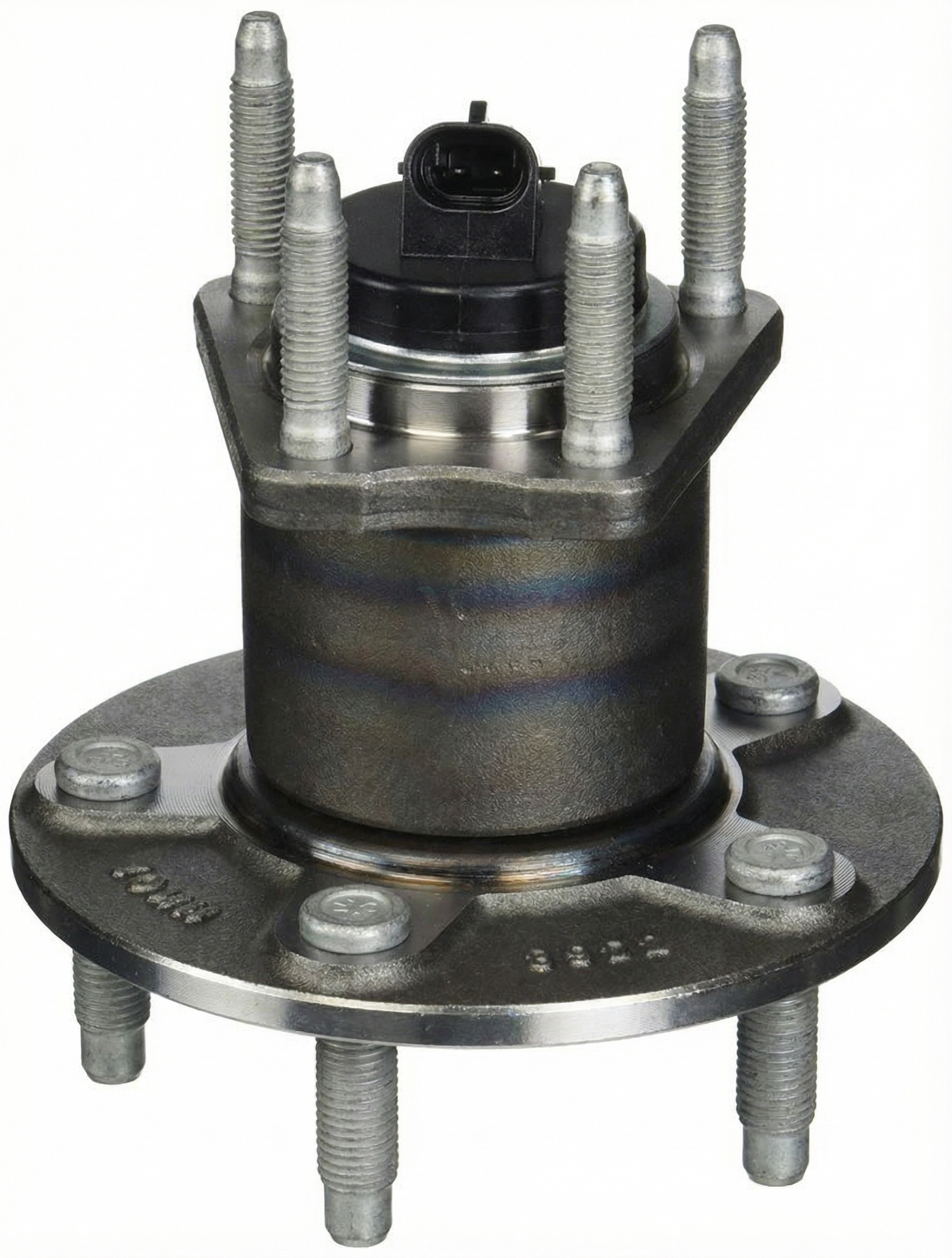
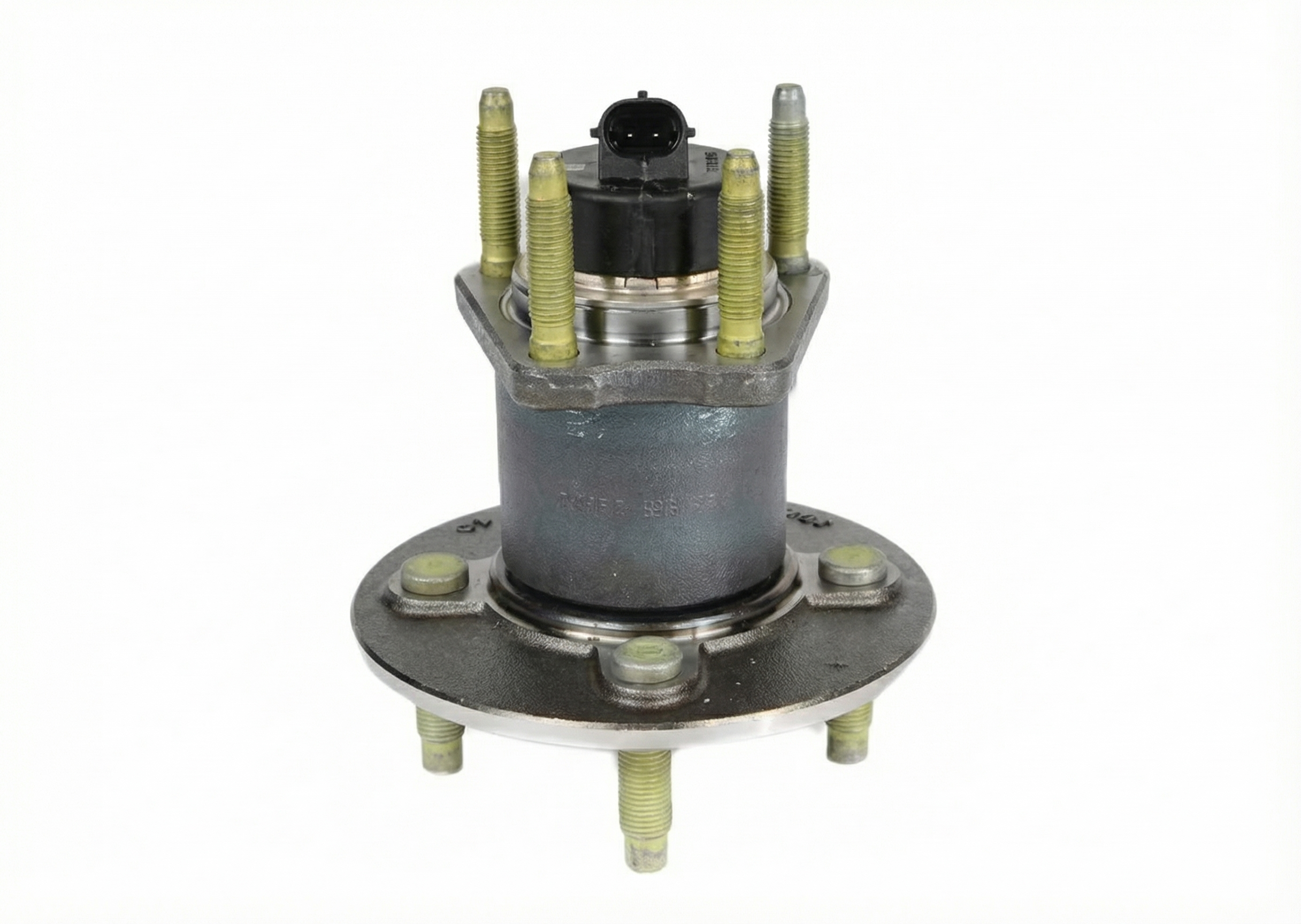
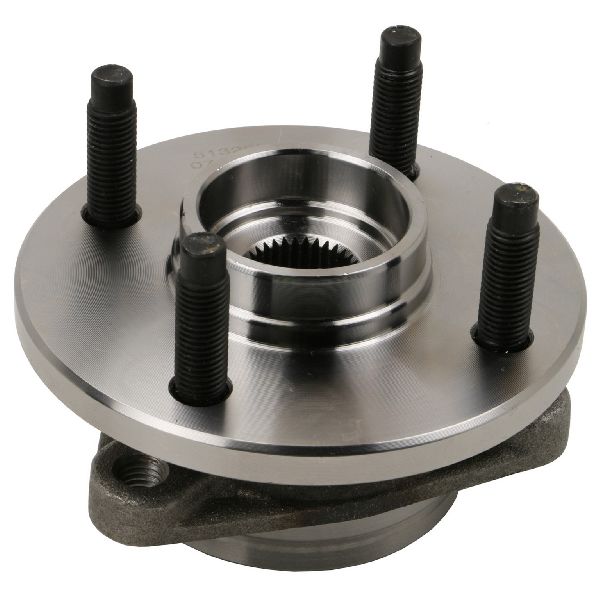
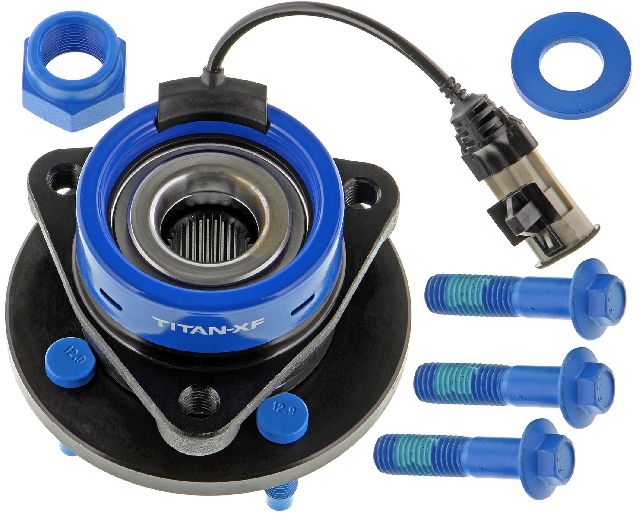
- The wheel speed sensor is part of the rear wheel hub assembly. If the sensor has failed, the entire hub must be replaced.
- This is a safety-related repair. While DIY is possible for those with experience, professional service is recommended to ensure the braking system functions correctly.
What's Unique About the 2005-2010 Chevrolet Cobalt
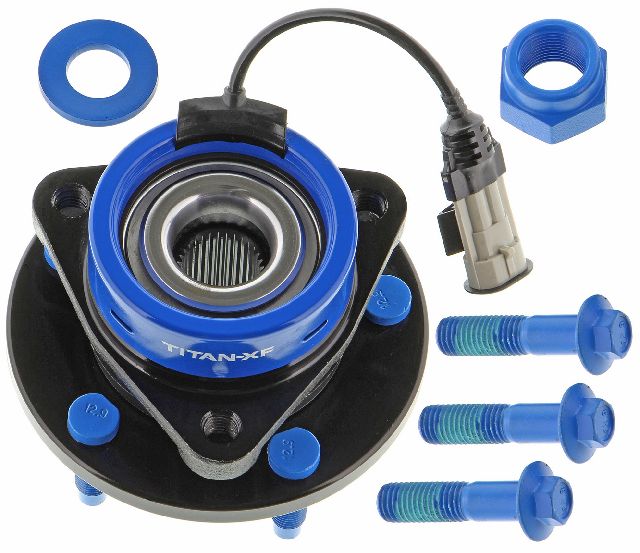
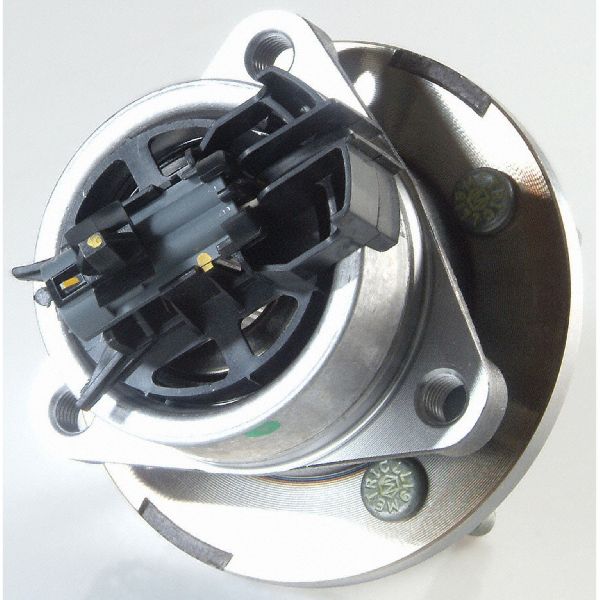
On the 2005-2010 Cobalt and its GM Delta platform mates, the wheel speed sensor is not a separate part; it is integrated into the rear wheel hub and bearing assembly. This means that if the sensor itself fails, the entire hub must be replaced. However, before replacing the hub, it's crucial to inspect the wiring harness. These cars are known for issues with broken or corroded wires in the harness that runs along the rear axle beam, which can get brittle and break, mimicking a sensor failure.
Symptoms You May Notice
- ABS warning light is on
- Traction Control System (TCS) or StabiliTrak warning light is on
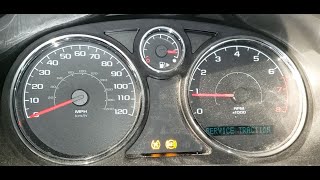
- "Service Traction Control" message on the driver information center 🎬 Watch: How to fix common traction and ABS warning messages
- Cruise control is disabled
- A grinding or clicking noise from the rear wheel if the bearing is also failing
- A "Service Trailer Brake" message may appear on the Driver Information Center in some GM vehicles equipped with this system (as noted in TSB Bulletin #PIT5499B)
- Replacing the wheel hub assembly when the actual problem is a simple broken wire. A thorough inspection of the wiring harness first can save significant money and effort.
Most Likely Causes
- Failed Left Rear Wheel Hub Assembly (Integrated Sensor) 🔴 High Probability → Shop Hub Assembly The wheel speed sensor is integrated into the hub, which is a moving part exposed to heat, moisture, and vibration. The internal magnetic encoder ring (tone ring) can become damaged, contaminated with metallic debris, or the sensor windings can fail.
How to confirm: After confirming the wiring is intact, this is the most likely component failure. A diagnostic scanner monitoring live data may show an erratic or 0 MPH signal from the left rear wheel while the others read normally. A multimeter check on the sensor pins should show resistance between 850-1350 ohms.
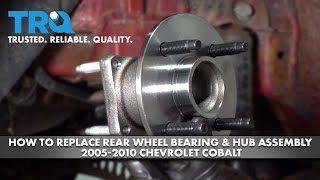
Typical fix: Replace the entire left rear wheel hub and bearing assembly. 🎬 See this step-by-step guide for replacing the rear hub assembly
Est. part cost: $70-$150 - Broken or Corroded Wiring Harness 🔴 High Probability The wiring harness to the rear wheels is exposed under the car and can become brittle, chafed, or broken, especially where it is clipped to the rear axle or flexes with suspension movement. Forum posts for Cobalts and HHRs frequently cite this as the root cause, often breaking near the connector or at a clip point.
How to confirm: Visually inspect the entire length of the wiring harness from the left rear wheel towards the front of the car. Pay close attention to the connector at the hub and any points where the harness is secured. Wiggle the harness while monitoring live data on a scan tool. Check for continuity with a multimeter 🎬 Watch: Basic electrical testing for Cobalt ABS malfunctions between the hub connector and the EBCM connector.
Typical fix: Repair the broken wire using a weatherproof butt connector and heat shrink tubing. If the damage is at the connector, a new pigtail may be required.
Est. part cost: $5-$25 - Corroded or Damaged Connector 🟡 Medium Probability The connector at the wheel hub is exposed to water, salt, and road debris, which can lead to corrosion inside the plug, causing a poor connection. Manufacturer service bulletin #PIT5499B suggests technicians specifically inspect the Electronic Brake Control Module connector for water intrusion or corrosion when C0045 is present.
How to confirm: Unplug the connector at the left rear wheel hub and inspect the pins for green or white corrosion, or any bent or broken pins. Ensure the connector is fully seated.
Typical fix: Clean the connector pins with a specialized contact cleaner. If corrosion is severe, the connector pigtail may need to be replaced. Applying dielectric grease can prevent future issues.
Est. part cost: $5-$25
Rare But Worth Checking
- Faulty Electronic Brake Control Module (EBCM): → Shop ABS Control Module This is the least likely cause. Only consider this after definitively ruling out the hub assembly and the entire wiring circuit. This is an expensive part and rarely the point of failure for a single-wheel code.
- Metallic Debris on Magnetic Encoder Ring: Sometimes, metallic debris from brake jobs or road grime can stick to the magnetic encoder ring inside the hub, disrupting the signal. GM issued TSB 17-NA-047 describing how to clean this ring, though it's often simpler to replace the hub.
- X411 Connector Damage: According to TSB Bulletin #PIT5427B, technicians should inspect the X411 connector for damage, which can lead to C0045 and other stability control codes.
Diagnosis Steps
- Connect an ABS-capable scan tool to read the code and confirm C0045 is the primary fault.
- Use the scan tool's live data function to monitor the speeds of all four wheels while driving slowly in a straight line. Confirm that the Left Rear (LR) wheel speed reads 0 mph or is erratic while the other three wheels report speed correctly.
- Safely raise and support the vehicle. Thoroughly inspect the wiring harness leading to the left rear wheel hub. Look for any visible breaks, chafing against suspension components, or signs of heat damage. Wiggle the harness at common failure points (near the connector, at clips on the axle) and watch the live data for changes.
- Disconnect the electrical connector at the left rear hub. Inspect both the harness side and the hub side for corrosion, moisture, or bent/damaged pins.
- If the wiring and connector appear intact, use a multimeter to check for continuity on the two wires in the harness between the hub connector and the EBCM connector. A wiring diagram is essential for this step.
- With the hub connector unplugged, test the sensor itself. Set a multimeter to Ohms and check the resistance between the two pins on the hub. A good sensor should read between 850 and 1350 Ohms. An open circuit (OL) or short (0 Ohms) indicates a failed sensor.
- If the wiring and connector test good, and the sensor resistance is out of spec, the fault is the wheel speed sensor, which is integrated into the hub.
- Replace the left rear wheel hub assembly.
- Clear the trouble codes with the scan tool and perform a test drive to ensure the warning lights do not return.
Parts You'll Likely Need
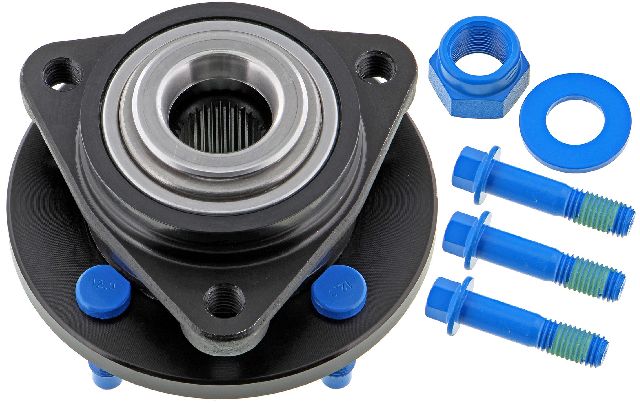
- Rear Wheel Hub and Bearing Assembly
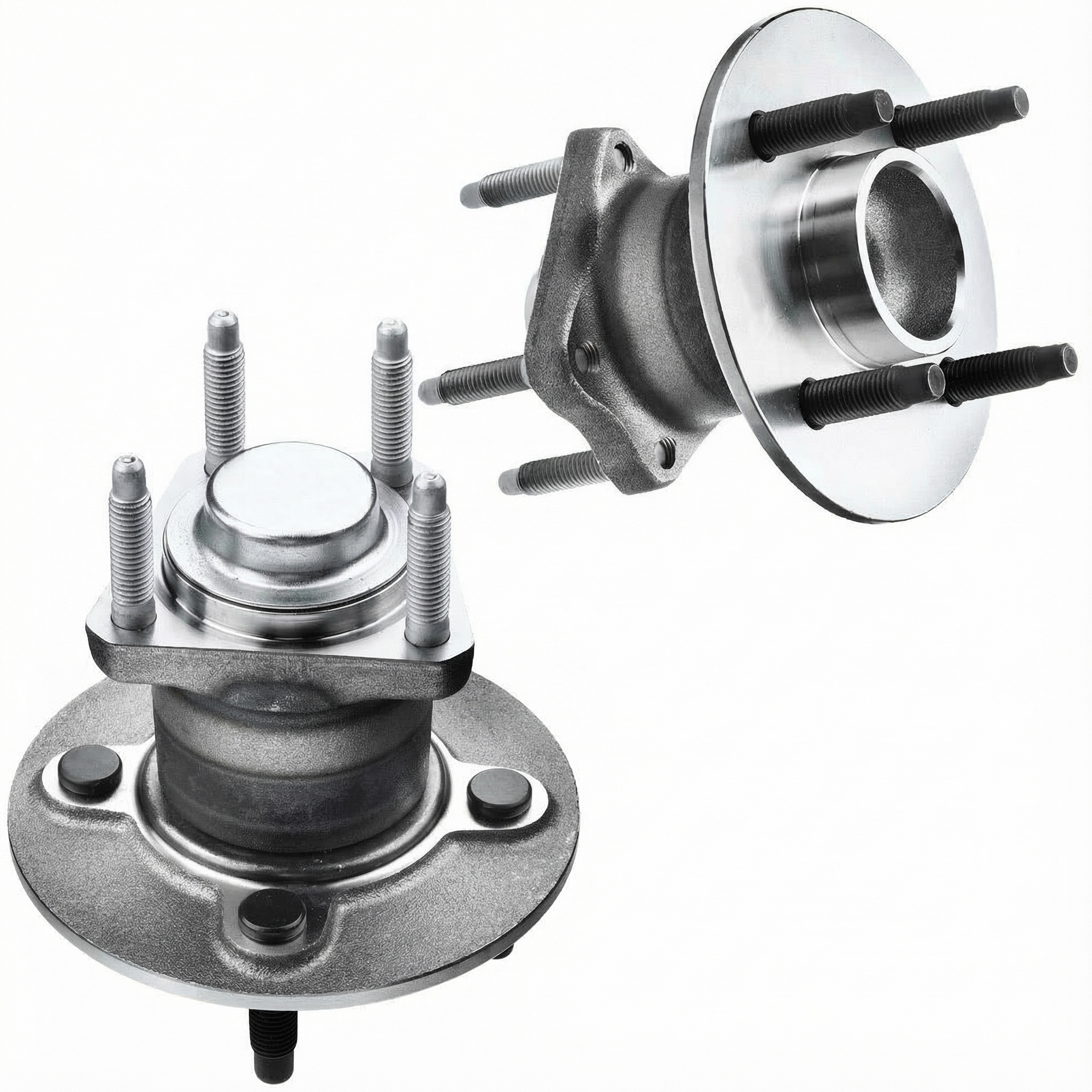
(OEM #GM 22715555 (Interchange part number 512250))— This is the most common fix for code C0045 on a Cobalt when the wiring is confirmed to be good, as the wheel speed sensor is built into this assembly.
Trusted brands: ACDelco (FW305 or 512250), MOOG (512250), Timken (HA590088), SKF (BR930488)
OEM price range: $120-$180
Aftermarket price range: $70-$130 - ABS Wheel Speed Sensor Connector Pigtail
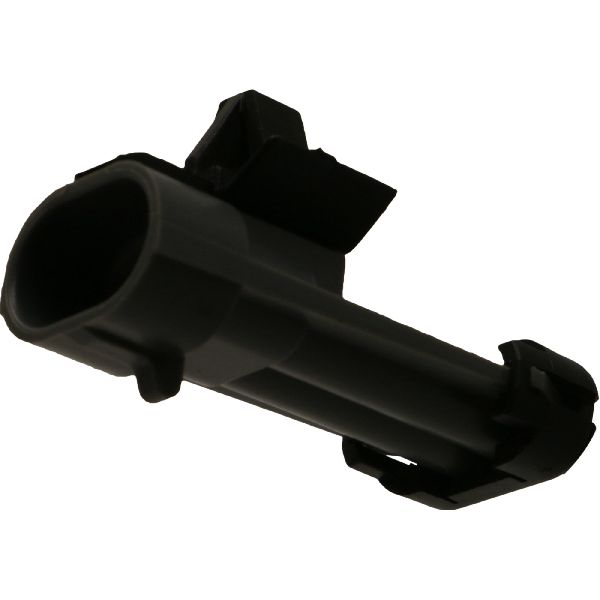
(OEM #ACDelco PT2298)— If the connector at the hub is damaged or corroded, replacing the pigtail is necessary to ensure a solid connection to the new hub.
Trusted brands: ACDelco, Dorman (645-134)
OEM price range: $25-$40
Aftermarket price range: $15-$30
Related Codes That Often Appear With This One
- C0050 — This is the code for the Right Rear Wheel Speed Sensor. If wiring is damaged in a central location on the rear axle, it's possible to affect both rear sensors simultaneously.
- C0035 — This is the code for the Left Front Wheel Speed Sensor. Seeing multiple wheel speed sensor codes may point towards a systemic issue like a problem with the EBCM or its power/ground connections, rather than multiple individual sensor failures.
- C0040 — This is the code for the Right Front Wheel Speed Sensor. Similar to C0035, it suggests a wider problem if it appears alongside C0045.
- P0463 and P069E — An owner reported these fuel-related codes appearing simultaneously with C0045 in NHTSA ODI #11399819.
Technical Service Bulletins (TSBs) & Recalls
- TSB 17-NA-047: Describes a diagnostic aid for wheel speed sensor codes caused by metallic debris on the magnetic encoder ring and provides a procedure for cleaning it.
- TSB Bulletin #PIE0533A: Notes that field information is no longer required for inoperative wheel speed sensors associated with DTC C0045.
- TSB Bulletin #PIT5499B: Advises technicians to check for water intrusion in the EBCM connector when C0045 is present, especially if "Service Trailer Brake" messages appear.
- TSB Bulletin #PIT5427B: Highlights that C0045 can be stored alongside stability control and steering codes, requiring an inspection of the X411 connector.
Platform-Specific Known Issues
- The wiring harness for the rear wheel speed sensors is known to be a failure point, often breaking or chafing where it runs along the rear crossmember.
- Forum members have noted that hitting a significant pothole can sometimes cause an immediate failure of the sensor within the hub assembly.
- A user on CobaltSS.net reported their ABS and TC lights would come on after hitting a bump; the dealer diagnosed a bad hub and bearing causing an erratic signal for code C0045.
Mechanic-Grade Diagnostic Values
- Wheel Speed Sensor Resistance — expected: 850 - 1350 Ohms. Failure: An open circuit (OL) or a reading of 0 Ohms indicates a failed sensor.
- Wheel Speed Sensor Signal (Active Sensor) — expected: DC square wave signal visible on an oscilloscope when the wheel is spun. The sensor receives a voltage supply (typically 12V) from the EBCM and returns this pulsed signal.. Failure: A flat line, erratic waveform, or no signal when the wheel is spinning indicates a failed sensor or wiring issue.
Hidden / Shadow Codes Worth Checking
- C0045 06: Left Rear Wheel Speed Sensor Circuit Low Voltage/Open. This points specifically to an open wire, a short to ground, or a bad connector. (see via GM Tech2, GDS2, or other professional scan tool capable of reading manufacturer symptom bytes (sub-codes).)
- C0045 0F: Left Rear Wheel Speed Sensor Circuit Signal Erratic. This often indicates a damaged magnetic encoder ring, debris on the sensor, or a chafed wire causing intermittent contact. (see via GM Tech2, GDS2, or other professional scan tool capable of reading manufacturer symptom bytes (sub-codes).)
- C0045 18: Left Rear Wheel Speed Sensor Circuit Low Signal Amplitude / Missing Signal. This suggests a weak signal or complete signal loss, often from a failing sensor or a significant air gap. (see via GM Tech2, GDS2, or other professional scan tool capable of reading manufacturer symptom bytes (sub-codes).)
- C0045 5A: Left Rear Wheel Speed Sensor Circuit Not Plausible. The EBCM is receiving a signal that doesn't make sense compared to the other wheel speeds, which could be from an incorrect part or severe tone ring damage. (see via GM Tech2, GDS2, or other professional scan tool capable of reading manufacturer symptom bytes (sub-codes).)
Scan Tool Commands That Help
- GDS2/Tech2: Live Data - Wheel Speed Sensors — This is the primary diagnostic step to compare the signal from the faulty left rear sensor to the other three working sensors while the vehicle is in motion. A reading of 0 or an erratic value while others are reporting speed confirms the fault location.
- GDS2/Tech2: Clear DTCs — Used after the repair is complete to extinguish the ABS/TCS warning lights. A test drive is required to confirm the code does not return as a current fault.
- GDS2/Tech2 with SPS: EBCM Programming — This is required if the Electronic Brake Control Module (EBCM) is replaced with a new unit. It configures the new module to the vehicle's specific options.
Wiring & Ground Locations
- EBCM Connector Pin 13 — At the main connector for the Electronic Brake Control Module (EBCM), located in the engine compartment.. This is the specific pin for the 'Wheel Speed Sensor Signal Left Rear'. It is a Tan wire. Testing for the square wave signal at this pin can confirm if the signal is reaching the module.
- EBCM Connector Pin 12 — At the main connector for the Electronic Brake Control Module (EBCM), located in the engine compartment.. This is the 'Wheel Speed Sensor Low Reference' for the left rear sensor. It is an Orange wire. This is the ground reference side of the sensor circuit provided by the EBCM.
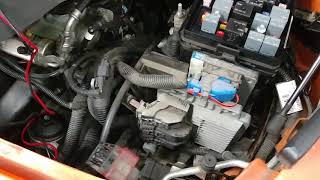
- EBCM Ground (G103/G105) — Common ground points are located in the engine compartment. G103 is often on the cowl above the brake booster, and G105 is behind the cooling fan relays. A video shows a key ground on the driver's side behind the fuse panel.. A corroded or loose ground for the EBCM can cause a variety of erratic ABS codes, including C0045. Cleaning these grounds is a crucial step if multiple, seemingly unrelated electrical issues are present.
- Harness Chafe Point — The wiring harness that runs along the rear axle beam, especially where it is clipped to the chassis or flexes with suspension travel.. This is the most common location for wire breaks on the Cobalt. The wires become brittle and can break internally with no visible damage to the outer loom. Wiggling the harness in this area while monitoring live data is a key diagnostic step.
Real Owner Repair Stories
- SureTrack Community Real Fix (2006 Chevrolet Express G3500 6.0L (Similar GM ABS system)) — ABS light on, codes C0040 and C0045 present.
❌ Tried (didn't work) Initial visual inspection of the wiring harness showed no obvious faults.
✅ What actually fixed it While monitoring the 12V supply to the left rear sensor with a multimeter, a technician manipulated the harness and found the voltage was intermittent. Opening the harness insulation revealed broken wires inside. The fix was to replace the faulty section of the ABS wheel speed sensor wiring harness. - NHTSA ODI #11165895 — An owner reported that the duration of the warning message varied from seconds to minutes. A service center confirmed code C0045 and recommended replacing the L/R hub bearing assembly.
Diagnostic Flowchart
Other Known Issues on This Vehicle
Issues unrelated to this code that are worth knowing about as an owner of this generation:
- Electric Power Steering (EPS) Failure 🔴 High — Very common. A recall (GM Safety Recall 14115) was issued to replace the EPS motor. (Ref: Recall 14115)
- Ignition Switch Failure 🔴 High — Extremely widespread and dangerous, leading to a massive recall. The switch can move out of the 'Run' position, disabling the engine, power systems, and airbags. (Ref: Recall 14V047)
- Fuel Leak from Cracked Fuel Pump Module 🔴 High — Common enough to warrant a safety recall. The plastic ports on the fuel pump module can crack, causing a dangerous fuel leak. (Ref: Recall 090226 / 12190B)
- Key Stuck in Ignition 🟡 Low — A very common annoyance, often caused by a failed shifter cable or solenoid. Many owners report this issue.
- Failed Timing Chain Tensioner 🟠 Medium — A known issue, particularly on the 2.2L and 2.4L engines, that can cause a rattling noise on startup. If ignored, it can lead to chain failure and engine damage.
Used vs. New Parts: Buying Guide for This Vehicle
When a used part is the smart pick: A used part is a reasonable choice for the wiring harness connector pigtail or a complete section of harness from a junkyard, provided the wires and connector are in good physical condition. A used Electronic Brake Control Module (EBCM) can also be a cost-effective option, but it is critical to match the part number exactly to avoid communication issues and the need for programming.
Donor-vehicle mileage cap: roughly under 80000 miles for the part to have meaningful remaining life.
What to inspect on the donor part:
- For wiring: Check for flexibility, no cracking in the insulation, and clean, corrosion-free connector pins.
- For EBCM: Match the OEM part number exactly. Inspect the connector for any bent or corroded pins. Look for signs that the module has been previously opened or tampered with.
- Avoid vehicles from the salt belt if possible to minimize corrosion risk.
OEM-only on this vehicle (don't cheap out):
- While not strictly 'OEM-only', using a very cheap, no-name brand wheel hub assembly is a significant risk. They are known for premature bearing failure or early sensor failure, leading to the job being done twice.
Aftermarket brands forum-validated for this vehicle:
- ACDelco (OEM supplier)
- Timken
- MOOG
- SKF
Brands owners have reported issues with on this vehicle:
- Unbranded, 'white box' parts from online marketplaces with no warranty or reputation. One user reported a Mevotech hub failing in less than a year and 5,000 miles on a similar GM vehicle.
Real Owner Stories
Aggregated from forums and TSBs cited above. Mileages and costs reflect what owners reported in those sources.
2006 Chevrolet Cobalt SS
Symptoms: The ABS and Traction Control (TC) lights would illuminate specifically after hitting a bump in the road.
What fixed it: The dealer diagnosed a bad hub and bearing assembly that was producing an erratic signal, leading to the replacement of the hub.
Source hint: CobaltSS.net - 'ABS light problems?' (https://www.cobaltss.net/forums/problems-service-maintenance-59/abs-light-problems-120619/)
2008 Chevrolet HHR (Platform Mate)
Symptoms: ABS Light on with code C0045 stored.
What fixed it: Replacement of the rear wheel hub assembly, as the sensor is integrated into the unit and is a common failure point on this chassis.
Source hint: Chevy HHR Network - 'ABS Light - C0045 code' (https://www.chevyhhr.net/forums/problems-service-repairs-42/abs-light-c0045-code-36932/)
Documented NHTSA Reports
GM Delta Platform Vehicle
Symptoms: An owner reported that they had two fuel level sensors installed with no luck in keeping the check engine light from returning, with C0045 appearing alongside P0463 and P069E.
Source: NHTSA ODI #11399819
Related OBD-II Codes
Frequently Asked Questions
Can I just replace the sensor on my Cobalt's left rear wheel, or do I need the whole hub?
Is there a TSB for cleaning the sensor if I get a C0045 code?
My ABS and Traction Control lights come on after I hit a bump; is this related to C0045?
What should the resistance be for the left rear wheel speed sensor on a Cobalt?
Could the C0045 code be caused by the wiring instead of the hub?
Does the Cobalt's Electric Power Steering recall affect the ABS system?
Helpful Videos
Used OEM Parts in Stock
New Aftermarket Parts Available

The information in this article is provided for general reference and educational purposes only. Vehicle specifications, procedures, and part compatibility can vary by production date, trim level, and region. Always consult your vehicle's factory service manual and verify part numbers before purchasing or performing repairs. Safety-critical components such as airbags, seat belts, and braking systems should be installed by a qualified professional.
- Chevrolet Cobalt:
- 🧭 Diagnostic Flowchart
- 🎬 Helpful Videos
- 🛍️ Shop This Part
- What's Unique About the 2005-2010 Chevrolet Cobalt
- Symptoms You May Notice
- Most Likely Causes
- Rare But Worth Checking
- Diagnosis Steps
- Parts You'll Likely Need
- Related Codes That Often Appear With This One
- Technical Service Bulletins (TSBs) & Recalls
- Platform-Specific Known Issues
- Mechanic-Grade Diagnostic Values
- Hidden / Shadow Codes Worth Checking
- Scan Tool Commands That Help
- Wiring & Ground Locations
- Real Owner Repair Stories
- Other Known Issues on This Vehicle
- Used vs. New Parts: Buying Guide for This Vehicle
- Real Owner Stories
- 2006 Chevrolet Cobalt SS
- 2008 Chevrolet HHR (Platform Mate)
- Documented NHTSA Reports
- GM Delta Platform Vehicle
- Related OBD-II Codes
- Frequently Asked Questions
- 🎟️ Get 5% Off