

C0045 on 2011-2016 Chevrolet Cruze: Left Rear Wheel Speed Sensor Circuit Causes and Fixes
Code C0045 on a 2011-2016 Cruze most often means the left rear wheel speed sensor has failed or its wiring is damaged. A thorough cleaning of the magnetic ring on the hub should be attempted before replacing parts. A new sensor costs between $25 and $60.
- Before buying any parts for a C0045 code, inspect and clean the magnetic ring on the back of the left rear wheel hub; it often collects metallic debris that disrupts the sensor signal.
- The most common failed part is the wheel speed sensor itself, which is relatively inexpensive and can be replaced with basic tools.
- Always inspect the wiring harness leading to the sensor for damage or corrosion, as this is another frequent cause of the fault.
- This code disables your ABS and StabiliTrak, so it's a safety-related repair that should be addressed promptly.
What's Unique About the 2011-2016 Chevrolet Cruze
On the first-generation Cruze, this code is frequently caused by one of three issues: the sensor itself failing, the wiring harness to the sensor becoming damaged, or metallic debris accumulating on the magnetic encoder ring that is part of the wheel hub assembly. General Motors has issued a Technical Service Bulletin (PIC5428G, now superseded by 17-NA-047) acknowledging that debris on this magnetic ring can cause erratic signals, and often a simple cleaning can resolve the code without replacing any parts. This issue is common across many GM platforms from this era that use the same hub design.
Generation note: The 2011-2016 year range covers the first generation of the Chevrolet Cruze. In 2016, an all-new second generation was introduced, but the first generation model continued to be sold as the 'Cruze Limited'. The information in this guide applies to all 2011-2015 models and the 2016 Cruze Limited.
Symptoms You May Notice
- ABS warning light is on
- Traction Control (TC) or StabiliTrak/ESC warning light is on
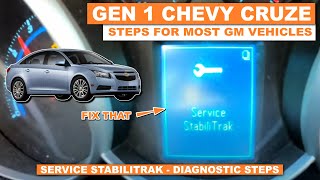
- "Service StabiliTrak" or "Service Traction Control" message on the driver information center
- Cruise control may be disabled
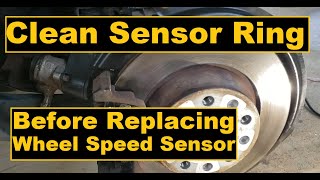
- Replacing the wheel speed sensor without first inspecting and cleaning the magnetic encoder ring on the hub. Debris on the ring is a very common cause and cleaning it is free. 🎬 See how to clean the magnetic ring before buying parts.
- Replacing the entire wheel hub assembly when only the separate, less expensive wheel speed sensor has failed.
Most Likely Causes
- Debris on Magnetic Encoder Ring 🔴 High Probability A GM Technical Service Bulletin (PIC5428G) specifically identifies that ferrous metallic debris can stick to the magnetic encoder ring on the hub assembly, causing erratic signals. This is a common issue across many GM platforms from this era.
How to confirm: Visually inspect the magnetic ring on the inboard side of the left rear wheel hub for metallic shavings or rust buildup. A professional scan tool may show a symptom byte like '5A' (Signal Plausibility Failure), which strongly points to this issue. The ring is a dark, rubber-like seal on the hub.
Typical fix: Gently clean the magnetic encoder ring with a dry, soft nylon bristle brush. Do not use harsh chemicals or metallic brushes that could damage the seal or the magnetic surface. In many cases, this resolves the issue without part replacement.
Est. part cost: $0 - Failed Left Rear Wheel Speed Sensor 🔴 High Probability → Shop ABS Wheel Speed Sensor The sensor is exposed to the elements under the vehicle and can fail over time due to heat cycles, moisture, and vibration. It is a common replacement part.
How to confirm: After cleaning the encoder ring, if the code persists, test the sensor. Use a scan tool to monitor live data from the left rear wheel speed sensor while driving; it should match the other sensors. If the signal is missing or erratic, the sensor is likely bad. You can also test for proper voltage and ground at the sensor connector.
Typical fix: Replace the left rear wheel speed sensor. It is typically held in by a single Torx bolt (T30) and has a wiring harness that unplugs nearby. On models with rear drum brakes, access can be tight and may require removing other components.
Est. part cost: $25-$60 - Damaged Wiring Harness or Connector 🟡 Medium Probability The wiring harness runs along the suspension and can be damaged by road debris, improper servicing, or corrosion over time. Wires can break internally near the connector from suspension movement.
How to confirm: Visually inspect the entire length of the wiring from the sensor to the main body harness. Look for chafing, cuts, or corrosion. Gently tug on the wires near the connector; a 'stretchy' feeling indicates an internal break. Check the connector pins for corrosion or a loose fit.
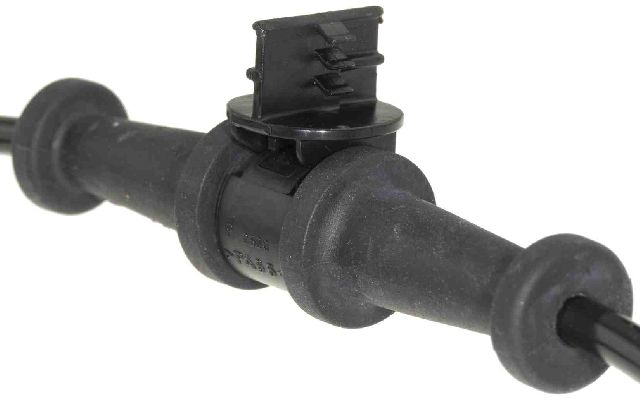
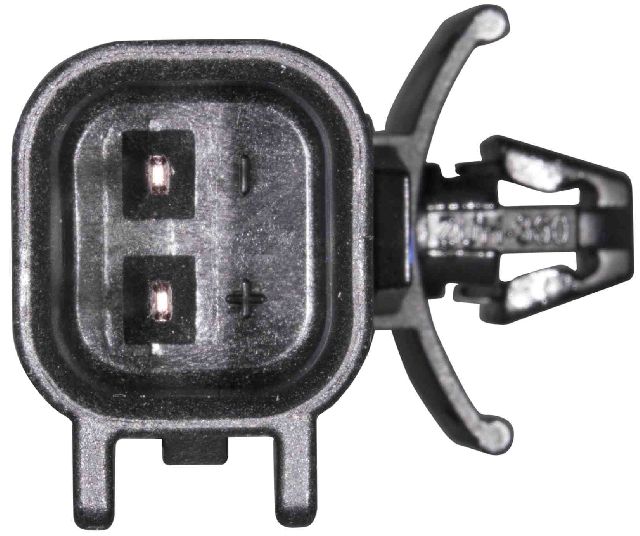
Typical fix: Repair the broken wire(s) using solder and heat shrink tubing or replace the connector pigtail if it is damaged. Ensure the harness is properly secured away from moving parts. Pigtail kits often come with butt splices.
Est. part cost: $15-$30 for a pigtail connector
Rare But Worth Checking
- Damaged Wheel Hub / Bearing Assembly: → Shop Hub Assembly While debris on the hub's encoder ring is common, the ring itself can crack or be damaged, or the wheel bearing can develop excessive play, causing an inconsistent air gap with the sensor. If cleaning the ring doesn't work and the sensor/wiring are good, the hub is the next likely culprit.
- Faulty Electronic Brake Control Module (EBCM): → Shop ABS Control Module This is the least likely cause. The EBCM is the computer that processes the sensor signals. It should only be considered after all other possibilities (sensor, wiring, hub) have been definitively ruled out through proper testing. A manufacturer service bulletin for another GM model, Bulletin #PIT5499B, suggests that technicians should also inspect the EBCM connector for water intrusion or corrosion when C0045 is present.
- Loose or Corroded Negative Battery Cable: → Shop Vehicle Battery A known issue on 2011-2015 Cruzes is a faulty negative battery cable, which can cause widespread, random electrical issues, including ABS and Stabilitrak warning lights. GM issued a special coverage program (14311B) for this problem. While it may not directly cause an isolated C0045, it can contribute to EBCM malfunctions and should be checked if multiple, seemingly unrelated electrical faults are present.
Diagnosis Steps
- Connect a scan tool capable of reading ABS codes to confirm C0045 is the active code. Note any symptom bytes (e.g., 06, 0F, 5A) if your scanner displays them. Symptom byte 5A indicates a 'Signal Plausibility Failure', often related to debris.
- Raise and safely support the rear of the vehicle. Remove the left rear wheel.
- Locate the wheel speed sensor mounted on the rear of the knuckle/hub carrier and the magnetic encoder ring on the inboard side of the wheel hub assembly.
- Thoroughly inspect the magnetic encoder ring for any metallic debris, rust, or physical damage like cracks.
- Clean the encoder ring using a soft, dry nylon brush.
- Inspect the wheel speed sensor wiring harness for any signs of damage, chafing, or corrosion from the sensor to its connection point in the wheel well. As noted in Bulletin #PIT5427B for related GM platforms, technicians should also inspect the X411 connector for damage if multiple chassis codes are present.
- If a scan tool with live data is available, monitor the left rear wheel speed signal while spinning the wheel by hand. Compare its reading to the right rear wheel. A lack of signal or an erratic signal points towards a bad sensor or wiring.
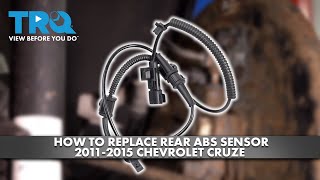
- If the visual inspection and cleaning do not resolve the issue, replace the left rear wheel speed sensor. 🎬 Watch this step-by-step guide to replacing the rear ABS sensor.
- If the code returns after replacing the sensor, perform a continuity and resistance test on the wiring harness between the sensor connector and the EBCM.
- If wiring and sensor are confirmed good, the issue likely lies with a damaged encoder ring (requiring hub replacement) or, in rare cases, the EBCM itself.
Parts You'll Likely Need
- Rear Wheel Speed Sensor
(OEM #13470640 (ACDelco))— This sensor is the most common part to fail, causing a direct circuit malfunction code. It is a separate component from the hub on this vehicle.
Trusted brands: ACDelco, Duralast, Holstein
OEM price range: $45-$70
Aftermarket price range: $25-$50 - Rear Wheel Hub and Bearing Assembly
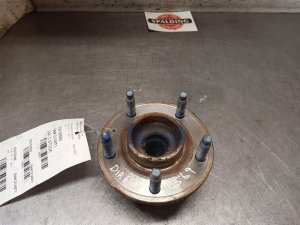
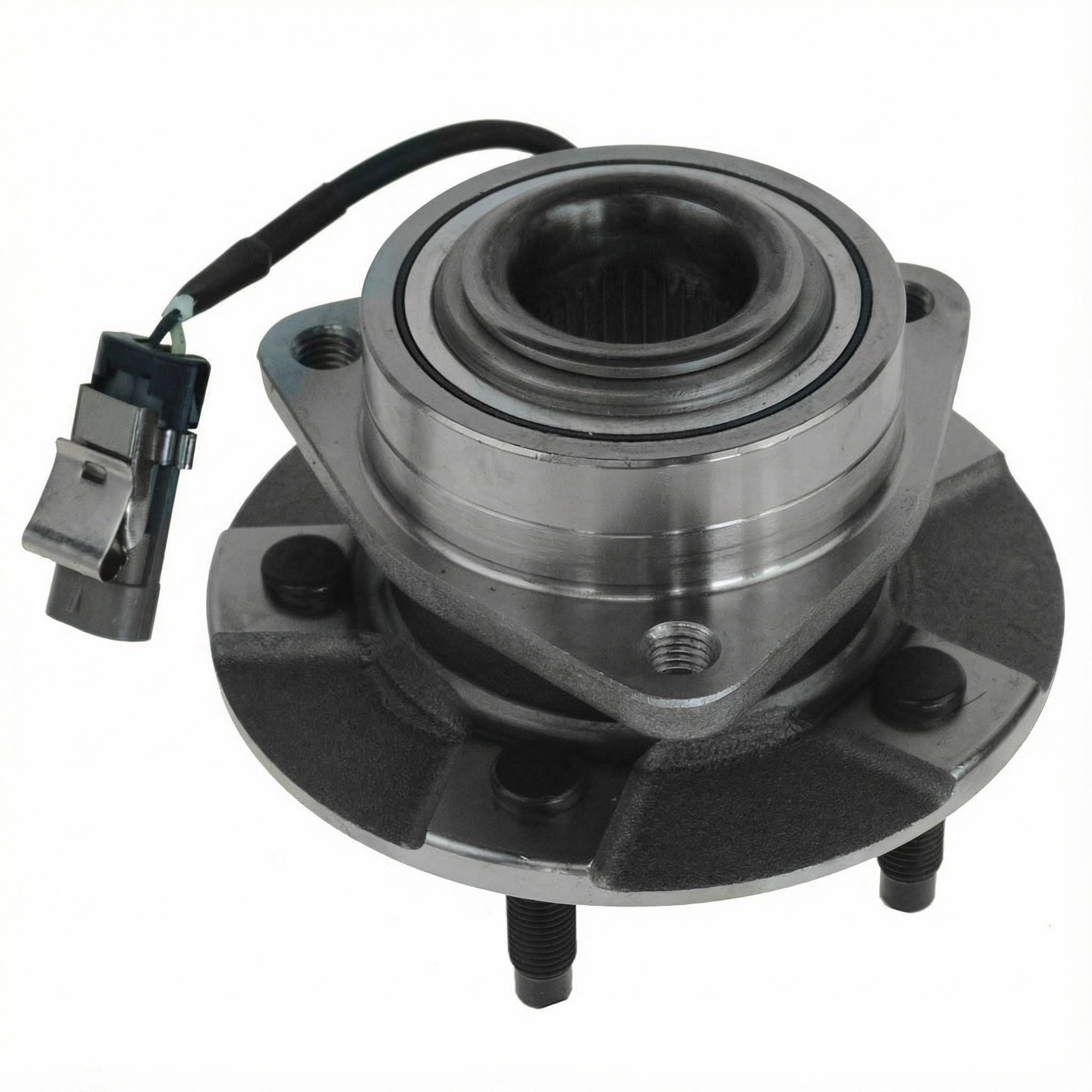
(OEM #13583478 (ACDelco))— Required if the magnetic encoder ring on the hub is cracked or damaged, or if the wheel bearing has failed, causing excessive play.
Trusted brands: ACDelco, Timken, MOOG, Duralast
OEM price range: $150-$250
Aftermarket price range: $80-$150 - Wheel Speed Sensor Connector Pigtail
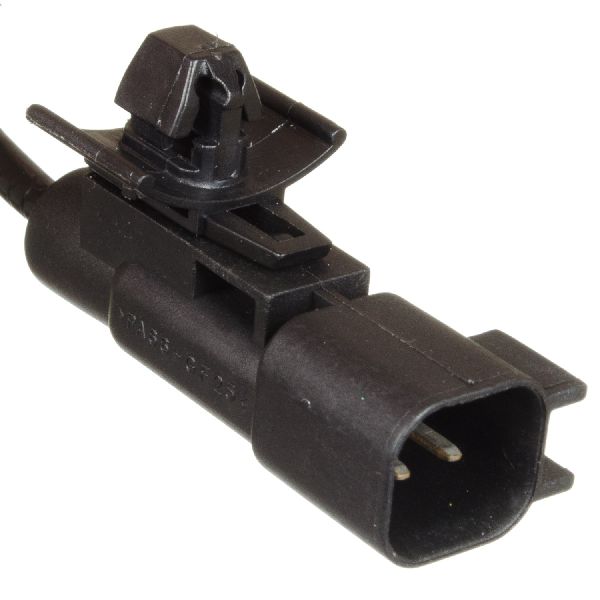
(OEM #PT2160 (ACDelco))— Necessary if the connector itself is corroded, or if the wires are broken right at the connector body where a simple splice is not possible.
Trusted brands: ACDelco, Standard Motor Products (S-824), Dorman
OEM price range: $25-$40
Aftermarket price range: $10-$25
Related Codes That Often Appear With This One
- C0050 — This is the code for the 'Right Rear Wheel Speed Sensor Circuit'. It's common to see issues with both rear sensors around the same time due to similar age and exposure to the elements, or a shared wiring fault.
- U0415 — This code for 'Invalid Data Received From EBCM' can be set by the Power Steering Control Module. When the EBCM loses a valid wheel speed signal, it can't provide necessary data to the power steering system, which may result in heavier steering feel at low speeds. This is a secondary code caused by the C0045 fault.
Technical Service Bulletins (TSBs) & Recalls
- PIC5428G — Original bulletin describing the issue of debris accumulating on the magnetic wheel speed sensor encoder ring, causing various ABS/Stabilitrak messages. This has been superseded.
- Bulletin #PIE0533A — A manufacturer bulletin noting that engineering information (EI) revisions have ended the need for field data regarding inoperative wheel speed sensors associated with DTC C0045.
- Bulletin #PIT5499B — Notes that C0045 may be found alongside "Service Trailer Brake" messages and suggests inspecting the EBCM connector for water intrusion.
- Bulletin #PIT5427B — Describes conditions involving hard steering or suspension service messages where C0045 is stored; recommends inspecting the X411 connector for damage.
Platform-Specific Known Issues
- A GM Technical Service Bulletin (PIC5428G) directly addresses this code on the 2011-2015 Cruze, noting that debris on the hub's magnetic encoder ring is a primary cause and should be cleaned before parts are replaced.
Mechanic-Grade Diagnostic Values
- Wheel Speed Sensor Circuit Voltage — expected: The sensor is an active (magnetoresistive) type. One wire should have a power voltage (often 12V) and the other is a signal/ground return to the EBCM. A forum user reported a known-good sensor showing ~11.1V between the two pins and ~4V on the feed wire to body ground.. Failure: Low voltage (e.g., 1.49V) or zero voltage on the feed wire points to a wiring problem or a faulty EBCM. A symptom code of C0045-06 specifically indicates a Low Voltage/Open circuit condition.
Hidden / Shadow Codes Worth Checking
- C0045 06: Indicates Left Rear Wheel Speed Sensor Circuit Low Voltage/Open. This points specifically to an open wire, a poor connection, or a short to ground. (see via A professional scan tool like the GM GDS2 or Tech2 that can read ABS symptom bytes (sub-codes).)
- C0045 0F: Indicates Left Rear Wheel Speed Sensor Circuit Signal Erratic. This often points to a damaged magnetic encoder ring on the hub, debris on the sensor, or electrical interference. (see via A professional scan tool like the GM GDS2 or Tech2 that can read ABS symptom bytes.)
- C0045 18: Indicates Left Rear Wheel Speed Sensor Circuit Low Signal Amplitude. This suggests a very weak or missing signal, often due to a completely failed sensor or a total circuit break. (see via A professional scan tool like the GM GDS2 or Tech2 that can read ABS symptom bytes.)
- C0045 5A: Indicates Left Rear Wheel Speed Sensor Circuit Not Plausible. The EBCM is receiving a signal that doesn't make sense compared to the other wheel speeds, often caused by debris on the encoder ring or a failing bearing. (see via A professional scan tool like the GM GDS2 or Tech2 that can read ABS symptom bytes.)
Scan Tool Commands That Help
- GDS2: Module Diagnostics > EBCM > Diagnostic Data Display — This function allows for real-time monitoring of all four wheel speed sensor signals simultaneously. It is the primary method for confirming if the left rear sensor is providing no signal, an erratic signal, or a signal that does not match the other wheels while driving or spinning the wheel by hand.
- GDS2: Clear DTCs — After performing a repair, such as cleaning the encoder ring or replacing a part, this function is used to clear the C0045 code from the EBCM's memory. The fault must be corrected for the code to stay cleared after a drive cycle.
Wiring & Ground Locations
- K17 — The Electronic Brake Control Module (EBCM) is located in the engine compartment, near the brake master cylinder and fluid reservoir.. This module receives and interprets the signal from the left rear wheel speed sensor. All wiring tests for continuity or shorts will terminate at the connector for this module.
- K17 EBCM Connector — 38-way connector (P/N 13664198) at the EBCM.. The left rear wheel speed sensor wires connect here. Pin 11 (GY/BK wire) is the Low Reference and Pin 12 (VT/GY wire) is the Signal from the left rear sensor. Testing at these pins can confirm if the signal is reaching the module, isolating the fault to the wiring or the module itself.
- G103 / G120 — Main chassis ground points located on the left shock tower in the engine compartment.. The EBCM relies on a solid ground connection to function properly. While a bad ground here would likely cause multiple system faults (not just C0045), it's a critical location to check for corrosion or looseness if multiple ABS or communication codes are present.
Real Owner Repair Stories
- ScannerDanner Forum user (2011 Chevrolet Cruze w/1.8L engine) — ABS and Stabilitrak lights on. Codes C0050-5A (Right Rear Plausibility), then later C0050-06 (RR Low Voltage/Open) and C0045-06 (LR Low Voltage/Open).
❌ Tried (didn't work) Initial diagnosis pointed to the right rear sensor, but further issues arose.
✅ What actually fixed it The user found broken wires inside the insulation for both the left and right rear wheel speed sensor harnesses in the wheel well area. After repairing the broken wires, the codes were resolved. The user noted the wires can feel 'stretchy' when broken internally. - NHTSA ODI #11165895 — An owner reported that their service center recommended replacing the hub bearing assembly to resolve a C0045 code, though they noted that online references suggested solutions for this code vary significantly.
- NHTSA ODI #11399819 — A report mentions C0045 appearing in conjunction with fuel level sensor codes P0463 and P069E, illustrating how this code can sometimes appear alongside unrelated system faults.
OEM Part Supersession History
12125649→12167120— Standard part number update/revision.
Heads up: This is for the wiring harness connector, not the sensor itself. Both part numbers should be compatible.
Model Year Variations Within This Range
- 2011-2016 (with rear drum brakes): On some models, particularly the passenger side, the brake line bracket can interfere with removing the wheel speed sensor bolt. A video guide notes that on the driver's side, the bolt has clearance, but on the passenger side, the brake line may need to be temporarily unbolted and moved to gain access to the sensor bolt, which could introduce the need to bleed the brakes if the line is opened.
Diagnostic Flowchart
Other Known Issues on This Vehicle
Issues unrelated to this code that are worth knowing about as an owner of this generation:
- PCV System Failure (1.4L Turbo) 🔴 High — Extremely common. A torn diaphragm in the valve cover or a failed check valve in the intake manifold can cause vacuum leaks, oil consumption, and rough idle.
- Coolant Leaks (1.4L Turbo) 🔴 High — Very common. Leaks frequently occur from the water pump, thermostat housing, and coolant outlet. Can lead to overheating if not addressed. (Ref: 14371B (Special Coverage for Water Pump))
- Negative Battery Cable Fault 🟠 Medium → Shop Vehicle Battery — Widespread on 2011-2015 models. A poor crimp on the negative battery cable causes intermittent electrical issues, including non-start conditions and random warning lights. (Ref: 14311B (Special Coverage Adjustment))
- Automatic Transmission Problems 🟠 Medium → Shop Transmission Assembly — Common on early first-generation models. Issues include harsh shifting, slipping, and failures related to leaking transmission cooler lines or internal seals.
Used vs. New Parts: Buying Guide for This Vehicle
When a used part is the smart pick: A used wiring harness pigtail from a junkyard is an excellent, cost-effective choice if your connector is damaged or wires are broken near the connector body. A complete hub assembly could be considered if from a low-mileage, rust-free donor vehicle, but the risk of a worn bearing or damaged encoder ring is higher.
Donor-vehicle mileage cap: roughly under 60000 miles for the part to have meaningful remaining life.
What to inspect on the donor part:
- For a hub assembly, check for zero play or roughness when spinning the bearing by hand.
- Inspect the magnetic encoder ring for any cracks, deep gouges, or signs of separation from the hub body.
- For a wiring pigtail, ensure the connector pins are clean and straight, and that there is at least 6-8 inches of wire with no visible damage, stretching, or previous repairs.
Aftermarket brands forum-validated for this vehicle:
- For hub assemblies: Timken, MOOG, and SKF are reputable brands with a history of quality bearings.
- For sensors: ACDelco (OEM), Holstein, and Standard Motor Products (SMP) are reliable choices.
Brands owners have reported issues with on this vehicle:
- Avoid unbranded, 'white-box' wheel speed sensors and hub assemblies from online marketplaces. Failure rates are high, and they often cause immediate or premature issues with signal plausibility.
Real Owner Stories
Aggregated from forums and TSBs cited above. Mileages and costs reflect what owners reported in those sources.
2011-2015 Chevrolet Cruze
Symptoms: The owner experienced a C0045 code shortly after having already replaced the other rear hub assembly, noting that rear-end ABS issues seem common on this platform.
What fixed it: The discussion suggests that cleaning the magnetic encoder ring or replacing the sensor/hub is the standard path, as these components frequently fail or collect debris.
Source hint: Reddit: r/cruze - Code C0045
2011-2015 Chevrolet Cruze
Symptoms: The owner replaced the wheel speed sensor but the C0045 code persisted.
What fixed it: The resolution involves checking for metallic debris on the magnetic ring (a common misdiagnosis) or performing advanced testing for wiring continuity and shorts to ground.
Source hint: Reddit: r/AskMechanics - C0045 code after changing speed sensor already?
Related OBD-II Codes
Frequently Asked Questions
Does TSB PIC5428G apply to my 2011-2015 Chevrolet Cruze?
My scanner shows code C0045 with symptom byte 5A; what does that mean for my Cruze?
Can I use a wire brush to clean the magnetic encoder ring on my rear hub?
Is the C0045 code related to the 'Service StabiliTrak' message on my dashboard?
Could my Cruze's intermittent ABS light be caused by the negative battery cable?
What is the estimated part cost if I need to replace the left rear wheel speed sensor?
Helpful Videos
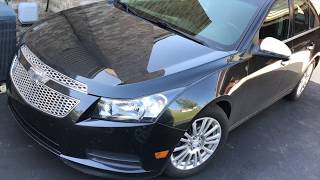
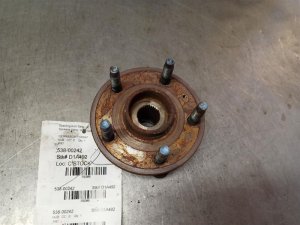
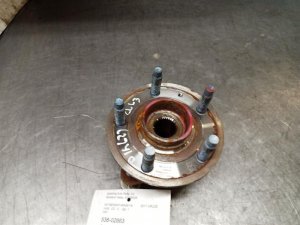
Used OEM Parts in Stock
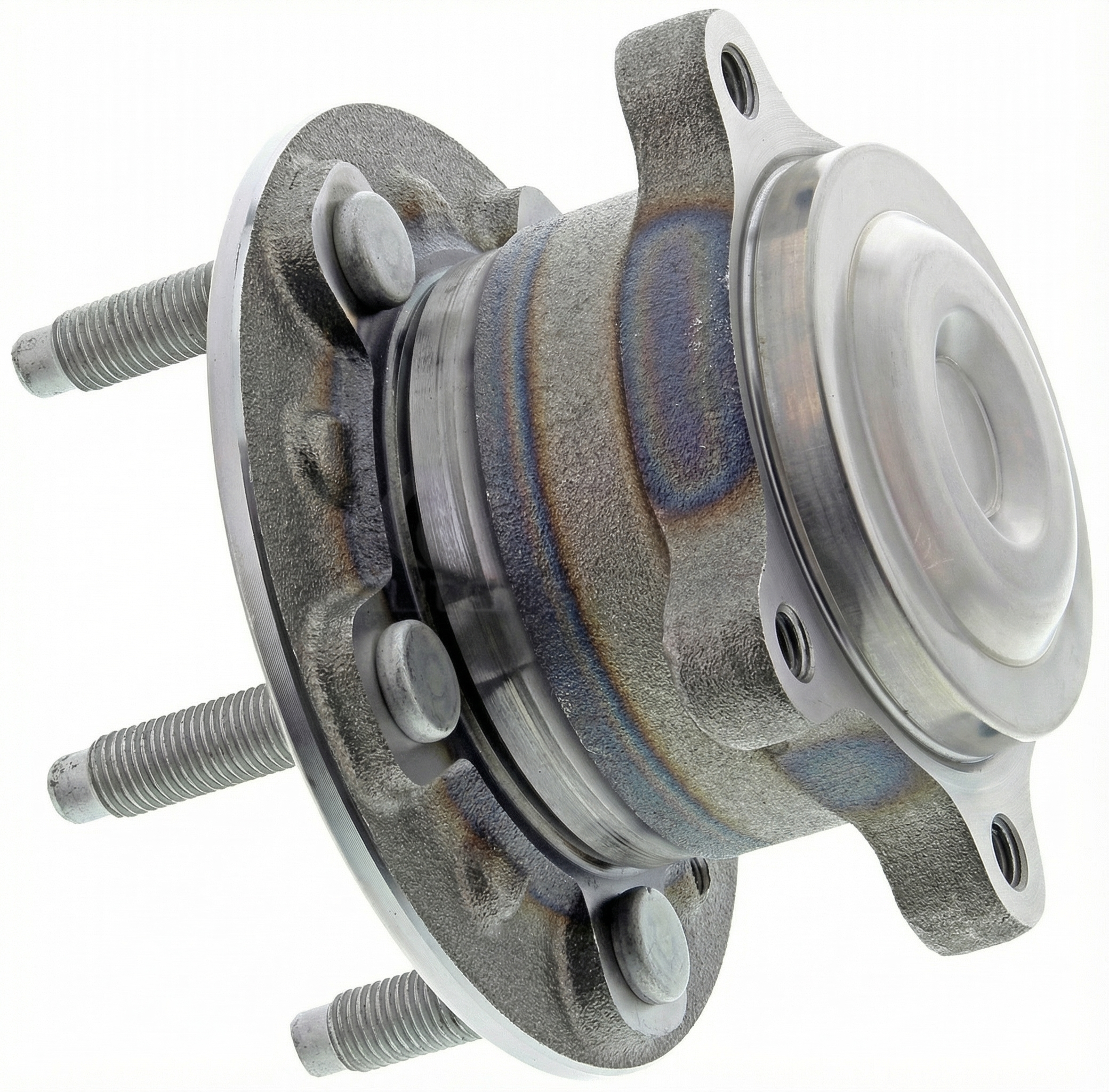
New Aftermarket Parts Available



The information in this article is provided for general reference and educational purposes only. Vehicle specifications, procedures, and part compatibility can vary by production date, trim level, and region. Always consult your vehicle's factory service manual and verify part numbers before purchasing or performing repairs. Safety-critical components such as airbags, seat belts, and braking systems should be installed by a qualified professional.
- Chevrolet Cruze:
- 🧭 Diagnostic Flowchart
- 🎬 Helpful Videos
- 🛍️ Shop This Part
- What's Unique About the 2011-2016 Chevrolet Cruze
- Symptoms You May Notice
- Most Likely Causes
- Rare But Worth Checking
- Diagnosis Steps
- Parts You'll Likely Need
- Related Codes That Often Appear With This One
- Technical Service Bulletins (TSBs) & Recalls
- Platform-Specific Known Issues
- Mechanic-Grade Diagnostic Values
- Hidden / Shadow Codes Worth Checking
- Scan Tool Commands That Help
- Wiring & Ground Locations
- Real Owner Repair Stories
- OEM Part Supersession History
- Model Year Variations Within This Range
- Other Known Issues on This Vehicle
- Used vs. New Parts: Buying Guide for This Vehicle
- Real Owner Stories
- 2011-2015 Chevrolet Cruze
- 2011-2015 Chevrolet Cruze
- Related OBD-II Codes
- Frequently Asked Questions
- 🎟️ Get 5% Off