

C0045 on 2006-2016 Chevrolet Impala: Left Rear Wheel Speed Sensor Circuit Fault Explained
On a 2006-2016 Impala, code C0045 almost always points to a faulty left rear wheel hub and bearing assembly, as the sensor is integrated. Before replacing the hub (approx. $100-$250), thoroughly inspect the wiring harness and connector for damage, which is the second most common cause. A scan tool symptom byte of '0F' strongly suggests a bad hub, while '00' points more to wiring.
- C0045 on a 2006-2016 Impala means there is a problem with the left rear wheel speed signal.
- This will disable your ABS, Traction Control, and StabiliTrak systems. On 2014+ models, it can also make steering feel heavy.
- The most likely cause is a failed wheel hub assembly, which contains the non-serviceable sensor.
- Before replacing the hub, always inspect the wiring harness and connector for damage, as this is a common and cheaper-to-fix alternative.
- A scan tool that can read ABS live data is the best tool to confirm the fault before you start buying parts.
What's Unique About the 2006-2016 Chevrolet Impala
This year range covers two distinct Impala generations, but for this code, the diagnosis is similar. Both the 9th generation (2006-2013, W-body) and 10th generation (2014-2016, Epsilon II) integrate the wheel speed sensor into the wheel hub and bearing assembly. A key difference is that on the 10th generation models (2014+), which use electric power steering, a C0045 code can also cause the steering to feel noticeably heavy or stiff because the power steering module relies on accurate wheel speed data. GM Technical Service Bulletin (TSB) PIC5428G specifically notes that this condition is normal when a wheel speed sensor DTC is present. Manufacturer Bulletin #PIE0533A further documents that field information was actively collected regarding inoperative wheel speed sensors associated with DTC C0045 across various GM platforms.
Generation note: The 2006-2016 range covers the end of the 9th generation (2006-2013, plus 2014-2016 'Limited' models on the W-body platform) and the beginning of the 10th generation (2014-2016 on the Epsilon II platform). While the root cause (integrated hub/sensor or wiring) is the same for both, the specific part numbers for the wheel hub assembly and wiring harnesses are different between generations. The 9th gen uses rear hub ACDelco FW303 (GM 25909330), while the 10th gen uses ACDelco FW408 (GM 13586564).
Symptoms You May Notice
- ABS warning light is on
- StabiliTrak or Traction Control warning light is on
- Driver Information Center displays messages like 'Service StabiliTrak' or 'Service Traction Control'
- Cruise control is disabled
- On 2014-2016 models, the power steering may feel heavy or stiff
- A 'Service Steering' message may appear on 2014-2016 models
- Replacing the wheel hub assembly when the true fault is a broken wire or corroded connector, which is a cheaper and simpler fix.
- Replacing the EBCM before thoroughly testing the wiring and hub assembly.
Most Likely Causes
- Failed Left Rear Wheel Hub and Bearing Assembly 🔴 High Probability → Shop Hub Assembly The magnetic encoder ring integrated into the hub assembly is exposed to the elements and can crack, rust, or become contaminated with metallic debris over time, disrupting the signal. This is a well-documented issue across many GM platforms. NHTSA ODI #11165895 notes a case where a service center specifically recommended replacing the L/R hub bearing assembly to resolve a C0045 code.
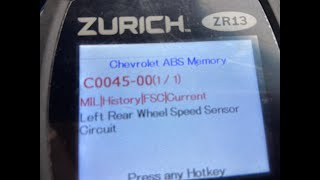
How to confirm: After checking wiring, remove the hub and visually inspect the magnetic ring on the back for cracks, missing chunks, or a coating of metallic 'fuzz'. A scan tool showing an erratic signal (symptom byte 0F) also strongly points to this. 🎬 See how to diagnose a C0045 0F code on a 2015 Impala. If the wheel bearing has play or is noisy, the hub assembly is definitely bad.
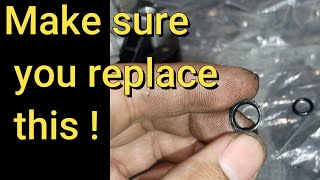
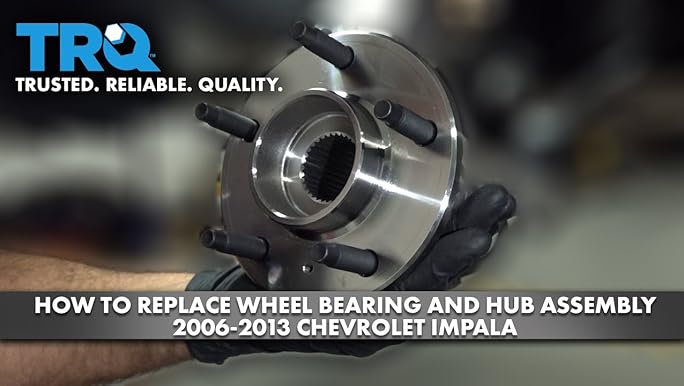
Typical fix: Replace the entire left rear wheel hub and bearing assembly. A video on a 2013 Impala confirms this repair.
Est. part cost: $100-$250 - Damaged Wheel Speed Sensor Wiring or Connector 🟡 Medium Probability → Shop ABS Wheel Speed Sensor The harness is subject to constant movement and exposure. Wires can break internally (often right at the connector) or chafe against suspension or subframe components. The connector at the hub is a common point for corrosion, pin damage, or water intrusion. Manufacturer Bulletin #PIT5499B highlights that technicians should inspect the Electronic Brake Control Module connector for water intrusion or corrosion when C0045 is present.
How to confirm: Visually inspect the entire length of the harness from the wheel to the car's body. Tug gently on wires at the connector to check for looseness or breaks. A scan tool symptom byte of '00' (Open/Short Circuit) points to a wiring issue. A multimeter can be used to check for continuity and shorts between the EBCM and the sensor connector.
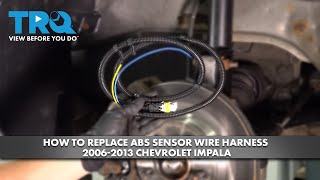
Typical fix: Repair the broken wire or replace the connector pigtail. In some cases, the entire rear ABS harness may need replacement. 🎬 Watch: Step-by-step guide to replacing the ABS sensor wire harness. Dorman 970-040 is a common pigtail for the 9th gen Impala.
Est. part cost: $20-$150 - Metallic Debris on the Magnetic Sensor/Encoder Ring ⚪ Low Probability Brake dust and metallic particles from wear can accumulate on the magnetic ring, interfering with the sensor's reading. GM issued TSB PIC5428G for this exact issue on many vehicles, including the 10th gen Impala.
How to confirm: When the hub or sensor is removed, the magnetic ring will be covered in a layer of dark metallic paste or 'fuzz'.
Typical fix: Clean the debris from the magnetic ring with a cloth or brush. This may be a temporary fix, as excessive debris often indicates the hub bearing is beginning to fail and shedding material.
Est. part cost: $0
Rare But Worth Checking
- Failed Electronic Brake Control Module (EBCM): → Shop ABS Control Module This is highly unlikely. The EBCM should only be considered as the cause after the hub, wiring, and connectors have been 🎬 Watch: A quick hack to clear the C0045 code after repairs. definitively ruled out by professional diagnostic procedures. Manufacturer Bulletin #PIT5427B suggests inspecting the X411 connector for damage when encountering C0045 alongside other communication or suspension codes.
Diagnosis Steps
- Connect a scan tool capable of reading ABS codes. Confirm C0045 is present and check for any specific symptom bytes (e.g., '0F' for erratic signal, '00' for open/short).
- Use the scan tool's live data feature to view the wheel speed of all four wheels while driving slowly in a straight line. Confirm that the Left Rear (LR) wheel speed reads 0 mph or is erratic compared to the other three.
- Raise and secure the vehicle. Perform a thorough visual inspection of the LR wheel speed sensor wiring harness, from the hub to where it enters the vehicle body. Look for chafing, cuts, melting, or corrosion at the connectors. Pay close attention to where the harness may rub on the subframe or suspension components.
- Disconnect the harness at the wheel hub. Inspect the connector pins for corrosion, moisture, or damage. A video of a 2013 Impala shows a damaged connector causing this exact code.
- If wiring/connector look good, spin the wheel by hand while watching live data. If the signal is still erratic or absent, the hub is the likely cause. If the wiring looks suspect, wiggle the harness while spinning the wheel to see if the signal cuts in and out.
- If the wiring and connector appear intact, remove the wheel hub assembly. Inspect the magnetic encoder ring on the back of the hub for cracks, damage, or a heavy buildup of metallic debris.
- If the ring is damaged, replace the hub assembly. If it's only dirty, clean it, reinstall, and re-test. TSB PIC5428G specifically addresses cleaning debris.
- If the hub and wiring look good, use a digital multimeter to test for continuity and shorts to ground on the wiring harness between the EBCM and the wheel sensor connector.
Parts You'll Likely Need
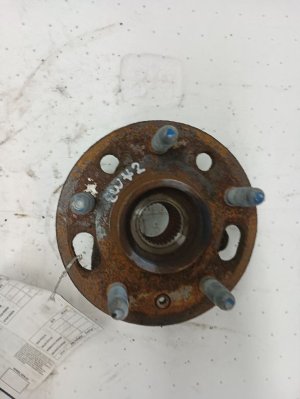
- Left Rear Wheel Hub and Bearing Assembly
(OEM #ACDelco FW303 / GM 25909330 (9th Gen, W-Body); ACDelco FW408 / GM 13586564 (10th Gen, Epsilon II))— This is the most common failure. The wheel speed sensor and its magnetic encoder ring are integrated into this single, non-serviceable unit.
Trusted brands: ACDelco, MOOG, Timken, SKF
OEM price range: $180-$280
Aftermarket price range: $90-$200 - Rear Wheel Speed Sensor Harness Pigtail
(OEM #Dorman 970-040 (9th Gen); ACDelco PT2298)— If the connector at the hub is damaged or corroded, replacing this pigtail is the proper repair instead of replacing the entire hub.
Trusted brands: ACDelco, Dorman
OEM price range: $30-$50
Aftermarket price range: $15-$30
Related Codes That Often Appear With This One
- C0050 — This is the code for the Right Rear Wheel Speed Sensor. If both C0045 and C0050 appear together, it strongly suggests a common wiring or connector issue affecting both sides, or a systemic issue like water intrusion, rather than two simultaneous hub failures.
- U0415 — On 10th gen (2014+) models, this code for 'Invalid Data Received From EBCM' will often be set in the Power Steering Control Module (PSCM). It is a secondary code caused by C0045 and will clear once the wheel speed sensor issue is resolved.
- P0463 / P069E — As noted in NHTSA ODI #11399819, C0045 can sometimes appear alongside fuel system codes, though these are typically separate faults occurring simultaneously.
Technical Service Bulletins (TSBs) & Recalls
- TSB PIC5428G: Addresses metallic debris accumulation on the magnetic encoder ring of the wheel bearing hub, causing various wheel speed sensor codes (C0035-C0050) with symptom bytes 18, 5A, or 0F. The fix is to clean the debris from the ring.
- TSB 16-NA-348: Recommends installing improved dust deflectors (P/N 23203995 Left, 23203996 Right) during any rear hub replacement to prevent future contamination and recurrence of wheel speed sensor codes on 10th Gen models.
- Bulletin #PIE0533A: Documents an engineering investigation into inoperative wheel speed sensors involving DTC C0045.
- Bulletin #PIT5499B: Advises technicians to check the EBCM connector for water intrusion when codes C0035 through C0055 are present.
- Bulletin #PIT5427B: Notes that C0045 may be accompanied by "Hard Steering" or "Service Suspension Control" messages, requiring an inspection of the X411 connector.
Platform-Specific Known Issues
- On 10th generation Impalas (2014-2016), a fault in the wheel speed sensor circuit can cause the electric power steering system to default to a reduced-assistance mode, making the steering wheel feel very heavy.
- The wiring harness for the rear wheel speed sensors is known to be susceptible to chafing and internal wire breaks, particularly near the connector plug itself.
Mechanic-Grade Diagnostic Values
- Wheel Speed Sensor Internal Resistance — expected: 850 - 1350 Ω (across the two pins of the sensor itself). Failure: A reading outside this range, or showing an open circuit (infinite resistance), indicates a failed sensor.
- Wheel Speed Sensor AC Voltage Output (Passive Sensor) — expected: Greater than 100mV AC while spinning the wheel by hand.. Failure: Little to no AC voltage indicates a dead sensor or a problem with the magnetic encoder ring.
- Wheel Speed Sensor Circuit Resistance (at EBCM) — expected: Less than 2.0 Ω. Failure: A reading greater than 2.0 Ω indicates high resistance in the wiring or connectors between the EBCM and the sensor.
- Wheel Speed Sensor Supply Voltage (at sensor connector, key on) — expected: ~12 Volts (for active sensors). Failure: Significantly lower or no voltage points to a wiring issue or a problem with the EBCM power supply.
Hidden / Shadow Codes Worth Checking
- C0045 00: Circuit Malfunction / No Signal. This strongly points to a complete wire break, disconnected plug, or a dead sensor. (see via GM Tech2, GDS2, or other professional scan tool capable of reading symptom bytes.)
- C0045 06: Low Voltage / Open Circuit. This specifically indicates an open wire, poor connection, or a short to ground in the circuit. (see via GM Tech2, GDS2, or other professional scan tool capable of reading symptom bytes.)
- C0045 0F: Signal Erratic. This is the classic symptom of a cracked or debris-contaminated magnetic encoder ring on the hub, or an intermittent wiring break. (see via GM Tech2, GDS2, or other professional scan tool capable of reading symptom bytes.)
- C0045 18: Low Signal Amplitude. The EBCM sees a weak signal, suggesting a large air gap, internal sensor fault, or high resistance in the wiring. (see via GM Tech2, GDS2, or other professional scan tool capable of reading symptom bytes.)
- C0045 5A: Signal Plausibility Failure. The EBCM is receiving a signal, but it's illogical compared to the other wheel speeds, often pointing to a damaged encoder ring sending incorrect pulse counts. (see via GM Tech2, GDS2, or other professional scan tool capable of reading symptom bytes.)
Wiring & Ground Locations
- EBCM Connector — On the Electronic Brake Control Module, located on the ABS hydraulic unit in the engine bay, typically on the driver's side.. This is the termination point for the wheel speed sensor circuit. Technicians test for continuity and shorts here to isolate the problem between the module and the sensor. A poor connection here can cause the code.
- G111 (9th Gen, W-Body) — On the engine block, above the starter motor.. This is a primary engine/chassis ground. While not directly for the WSS, a poor ground here can introduce electrical noise and cause various module communication issues, including potential EBCM faults.
- G102 (9th Gen, W-Body) — In the engine compartment, near the battery.. This is the main ground for the underhood fuse block, which supplies power to the EBCM. A corroded or loose G102 can cause intermittent power loss to the EBCM, triggering faults.
- EBCM Ground (10th Gen, Epsilon II) — The EBCM grounds directly to the chassis via its mounting bolts. The primary ground point is typically located on the driver's side frame rail near the front of the engine cradle.. A clean, tight ground connection is critical for the EBCM to function and accurately read sensor inputs. Corrosion on the frame rail or loose mounting bolts can cause intermittent and difficult-to-diagnose ABS faults.
Real Owner Repair Stories
- YouTube: OldGuyDIY (2013 Chevrolet Impala LTZ) — C0045 code with ABS and Traction Control lights on, even after replacing the left rear hub assembly.
❌ Tried (didn't work) Replacing the entire left rear wheel hub and bearing assembly.
✅ What actually fixed it The plastic connector on the vehicle's wiring harness was deformed and the internal spring clip was weak, preventing a solid connection with the new hub's pins. The final fix was inserting small strands of copper wire into the connector sockets to ensure a tight, permanent connection with the male pins on the sensor. - CorvetteForum user (Chevrolet Corvette (similar GM ABS system)) — Persistent C0045 code after replacing the wheel hub assembly.
❌ Tried (didn't work) Replacing the wheel hub assembly.
✅ What actually fixed it The problem was a corroded intermediate electrical connector (C184) located near the battery on the passenger side firewall. Cleaning the connector with electrical contact cleaner and applying dielectric grease resolved the fault. - YouTube: GusFixIt (2006-2011 Chevrolet Impala (similar W-body)) — Erratic speedometer, harsh shifting, and a speed sensor code (P0722, but diagnosis is identical for C0045 wiring).
❌ Tried (didn't work) Replacing the speed sensor.
✅ What actually fixed it Found two wires in the sensor harness had chafed through their insulation and were touching each other, causing a short. The damage was located where the harness runs close to the transmission. Repairing the wires and protecting them with heat-resistant sheathing fixed the problem. - NHTSA ODI #11165895 — An owner reported that their service center identified code C0045 and replaced the L/R hub bearing assembly, though they noted that online references suggested various other solutions for the same message.
Model Year Variations Within This Range
- 2014-2016: These 10th generation models have electric power steering. A C0045 fault will cause the steering to become heavy and may set a U0415 code in the Power Steering Control Module, which is not a symptom on 2006-2013 models with hydraulic power steering.
- 2014+: TSB 16-NA-348, issued in 2016, recommends installing new, improved dust deflectors (shields) on both rear wheels any time a rear wheel bearing is replaced on 10th gen models to prevent future contamination. This was not a standard procedure or part on earlier models.
Diagnostic Flowchart
Other Known Issues on This Vehicle
Issues unrelated to this code that are worth knowing about as an owner of this generation:
- 4T65-E Transmission Pressure Control (EPC) Solenoid Failure 🔴 High → Shop Transmission Valve Body — Very common on 2006-2011 models. Can cause harsh shifting, slipping, and eventual transmission failure. (Ref: GM TSB #08-07-30-040B describes a related issue of harsh engagement due to weak pan magnets.)
- Intermediate Steering Shaft Clunk 🟠 Medium — Common on 9th gen (2006-2013) models. A clunking or popping noise is heard/felt in the steering wheel during low-speed turns. It is an annoyance but not typically a safety failure. (Ref: Multiple TSBs exist, including #00-02-35-003N, which recommends replacing the shaft.)
- HVAC Blend Door Actuator Failure 🟡 Low — Extremely common on 9th gen models. A repetitive clicking or ticking sound from the dashboard indicates the plastic gears inside the actuator have stripped.
- Intake Manifold Gasket Leaks (3.5L/3.9L V6) 🔴 High — A very common failure on the 2006-2011 V6 engines, leading to coolant leaks (3.5L) and vacuum leaks that can cause misfire codes (P0300).
- Premature Timing Chain Stretch (3.6L LFX V6) 🔴 High — Common on 10th gen (2012-2016) models, especially earlier years, typically between 70k-120k miles. Leads to codes like P0008, P0017, and eventually engine damage if ignored. (Ref: TSB #12-06-01-009F provides updated timing chain kits for the repair.)
Used vs. New Parts: Buying Guide for This Vehicle
When a used part is the smart pick: A used wiring harness pigtail from a junkyard is a viable option if the connector is in good condition (no corrosion, flexible plastic). This can be a cost-effective alternative to buying a new pigtail, especially if you can get a longer section of wire to work with.
Donor-vehicle mileage cap: roughly under 100000 miles for the part to have meaningful remaining life.
What to inspect on the donor part:
- For a wiring pigtail, inspect for cracks in the plastic connector, corrosion on the pins, and ensure the wire insulation is not brittle or stiff.
- Avoid buying used wheel hub assemblies. They are a wear item and it's impossible to know their remaining lifespan. The risk of premature failure outweighs the cost savings.
- If sourcing a used EBCM, ensure the part number matches exactly and be aware that it may require professional programming to your vehicle's VIN.
OEM-only on this vehicle (don't cheap out):
- Electronic Brake Control Module (EBCM). While remanufactured units are available, a new OEM or a professionally remanufactured unit from a reputable source is highly recommended due to the complexity and safety-critical nature of the part.
Aftermarket brands forum-validated for this vehicle:
- For wheel hub assemblies, brands like Timken, SKF, MOOG, and National are consistently recommended by professionals and have a reputation for quality and longevity.
Brands owners have reported issues with on this vehicle:
- Avoid generic, unbranded 'white box' parts or house brands from major parts stores that come with only a 1-year warranty. Brands like Detroit Axle and Mevotech have been cited in forums for premature failure in this application. Cheap hubs from online marketplaces like Amazon or eBay are particularly risky and often fail within months.
Real Owner Stories
Aggregated from forums and TSBs cited above. Mileages and costs reflect what owners reported in those sources.
2013 Chevrolet Impala LTZ
Symptoms: ABS and Traction Control lights were on with code C0045. The owner suspected the hub or the connector.
What fixed it: The owner performed a field repair by adding wire strands to the connector pins to ensure proper contact after replacing the hub assembly (MOOG 512357).
Source hint: YouTube: OldGuyDIY Hack Clear GM Code C 0045 Left Rear Speed Sensor Circuit After Hub Assembly Replacement
2015 Chevrolet Impala
Symptoms: The steering wheel became very hard to turn ('timón se ponía duro') along with the C0045 0F code.
What fixed it: Diagnosis confirmed the code was linked to the wheel speed sensor circuit, which affects the power steering assistance on this model year.
Source hint: YouTube: Codigo C0045 0F chevrolet impala 2015
2014-2016 Chevrolet Impala (10th Gen)
Symptoms: Code C0045 triggered by metallic debris accumulation on the magnetic encoder ring.
What fixed it: Cleaning the debris from the magnetic ring as per TSB PIC5428G, though the user noted this can sometimes be a temporary fix if the bearing is failing.
Source hint: Reddit r/AskMechanics: 'C0045 code after changing speed sensor already?'
Related OBD-II Codes
Frequently Asked Questions
Why does my 2015 Impala's steering feel heavy when the ABS light is on?
Is there a specific part I should install to prevent C0045 from coming back on my 10th Gen Impala?
My scan tool shows C0045 with symptom byte 0F. What does that mean for my 2013 Impala?
Can I just clean the sensor instead of replacing the whole hub assembly?
Is there a common wiring repair kit for the 9th generation Impala ABS harness?
Does the C0045 code affect my cruise control?
Helpful Videos
We Have This Part in Stock

The information in this article is provided for general reference and educational purposes only. Vehicle specifications, procedures, and part compatibility can vary by production date, trim level, and region. Always consult your vehicle's factory service manual and verify part numbers before purchasing or performing repairs. Safety-critical components such as airbags, seat belts, and braking systems should be installed by a qualified professional.
- Chevrolet Impala:
- 🧭 Diagnostic Flowchart
- 🎬 Helpful Videos
- 🛍️ Shop This Part
- What's Unique About the 2006-2016 Chevrolet Impala
- Symptoms You May Notice
- Most Likely Causes
- Rare But Worth Checking
- Diagnosis Steps
- Parts You'll Likely Need
- Related Codes That Often Appear With This One
- Technical Service Bulletins (TSBs) & Recalls
- Platform-Specific Known Issues
- Mechanic-Grade Diagnostic Values
- Hidden / Shadow Codes Worth Checking
- Wiring & Ground Locations
- Real Owner Repair Stories
- Model Year Variations Within This Range
- Other Known Issues on This Vehicle
- Used vs. New Parts: Buying Guide for This Vehicle
- Real Owner Stories
- 2013 Chevrolet Impala LTZ
- 2015 Chevrolet Impala
- 2014-2016 Chevrolet Impala (10th Gen)
- Related OBD-II Codes
- Frequently Asked Questions
- 🎟️ Get 5% Off