

C0045 on 2011-2019 Ford Explorer: Left Rear Wheel Speed Sensor Circuit Fixes
Code C0045 on a 2011-2019 Ford Explorer almost always means the left rear ABS wheel speed sensor has failed or its wiring is damaged. The "Service AdvanceTrac" and ABS warning lights are the primary symptoms. A new sensor is the most common fix, costing around $25-$60 for an aftermarket part.
- C0045 means there's a problem with the left rear wheel speed sensor circuit, which disables your ABS and AdvanceTrac systems.
- Before buying parts, visually inspect the sensor's wiring harness for obvious damage, as this is a common and cheap fix.
- The most likely part to fail is the wheel speed sensor itself, which is a relatively inexpensive and accessible DIY repair.
- If a new sensor doesn't fix the code, the wiring harness is the next logical suspect before considering the expensive hub or ABS module.
What's Unique About the 2011-2019 Ford Explorer
The 2011-2019 Ford Explorer (fifth generation) is a unibody SUV on the Ford D4 platform with a four-wheel independent suspension. The rear ABS sensor wiring is routed along the suspension control arms to a connector on the subframe. This routing exposes the wiring to potential damage from road debris, ice buildup, or chafing against suspension components over time, making wiring inspection a critical diagnostic step on this platform. Some owners have found the wiring to be the culprit even after replacing the sensor. The sensor-to-harness connector is located on the subframe, just behind the gas tank area, where it can be exposed to the elements.
Symptoms You May Notice
- ABS warning light is on
- Traction control or stability control (AdvanceTrac) warning light is on
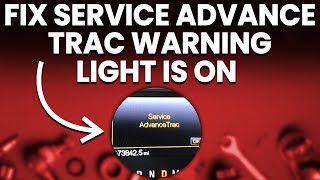
- "Service AdvanceTrac" message may appear on the instrument cluster
- "Check Brake System" message may appear on the instrument cluster
- ABS and traction control systems are disabled
- Cruise control may be inoperative
- Replacing the wheel hub/bearing assembly when only the inexpensive sensor was bad.
- Replacing the ABS sensor when the actual problem was a simple break in the wiring harness.
Most Likely Causes
- Failed Left Rear Wheel Speed Sensor 🔴 High Probability → Shop ABS Wheel Speed Sensor The sensor is exposed to harsh conditions like water, road salt, and dirt, which can lead to internal corrosion and failure over time. It is the most common point of failure for this code.
How to confirm: Using a scan tool with live data, observe the wheel speed readings for all four wheels while driving slowly. If the left rear sensor shows 0 MPH or an erratic reading while the others are reporting speed, the sensor is the likely culprit. A good sensor should have a resistance between 850-1350 ohms when tested with a multimeter. A more advanced test involves checking for a 5-12V reference voltage at the connector and observing a clean digital square wave signal with an oscilloscope while spinning the wheel.
Typical fix: Replace the left rear wheel speed sensor. This involves removing the wheel, unbolting the sensor from the knuckle with an 8mm socket, and disconnecting its electrical plug.
Est. part cost: $25-$60 - Damaged Wiring Harness or Connector 🟡 Medium Probability The sensor's wiring harness runs along the rear suspension and can be damaged by road debris, improper jacking, or chafing. The connector on the subframe can also accumulate dirt and moisture, leading to corrosion and a poor connection.
How to confirm: Visually inspect the entire length of the wiring from the sensor to its connection point on the subframe. Look for any breaks, chafing, or melted sections. Unplug the connector and check for green or white corrosion on the pins. Check for continuity through the harness with a multimeter, specifically from the sensor connector to pins 36 and 37 of the ABS module connector (C135).
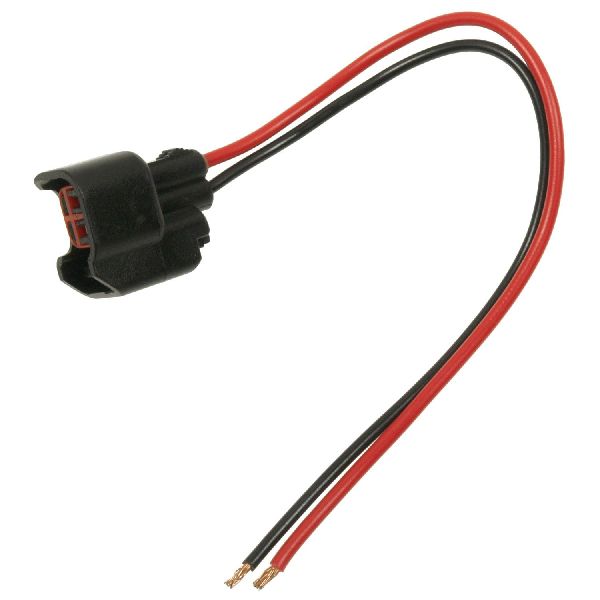
Typical fix: Repair the damaged section of wire with a new piece of wire and weatherproof connectors. If the connector is 🎬 See how to properly repair damaged ABS sensor wiring. corroded, clean it with an electrical contact cleaner or replace the connector pigtail.
Est. part cost: $5-$30 - Damaged or Debris-Covered Magnetic Encoder Ring ⚪ Low Probability The magnetic encoder ring is integrated into the wheel bearing/hub assembly. While protected, severe corrosion can cause the hub to swell ('rust jacking') and damage the ring, or metallic debris can stick to it, disrupting the sensor's reading.
How to confirm: After removing the wheel speed sensor, use a flashlight to inspect the surface of the encoder ring on the wheel hub. Look for cracks, missing magnetic segments, or a buildup of metallic shavings and rust. The ring must be clean and intact for a proper signal.
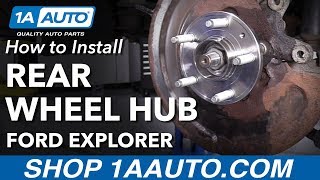
Typical fix: The encoder ring is not serviced separately. If it is damaged, the entire rear wheel hub and bearing assembly must be replaced.
Est. part cost: $100-$250
Rare But Worth Checking
- Faulty ABS Control Module: → Shop ABS Control Module This is very uncommon. This should only be considered after the sensor, wiring, and wheel hub assembly have been thoroughly tested and confirmed to be good. A faulty module will typically set multiple wheel speed sensor codes or communication codes (like U-codes), not just one.
Diagnosis Steps
- Connect an OBD-II scanner capable of reading ABS codes to confirm C0045 is the primary code.
- Use the scanner's live data function to monitor the speeds of all four wheels while driving in a straight line at a low speed (5-10 MPH).
- Confirm that the Left Rear (LR) wheel speed reads 0 or is significantly different from the other three.
- Safely raise and support the vehicle. Remove the left rear wheel.
- Visually inspect the ABS sensor wiring harness from the wheel knuckle up to the main connector on the subframe behind the gas tank. Look for any signs of damage, chafing, corrosion, or loose connections.
- Disconnect the sensor and inspect the connector pins for corrosion or damage. Clean with electrical contact cleaner if necessary.
- If the wiring looks good, remove the 8mm bolt holding the sensor in the knuckle and carefully wiggle the sensor out.
- Inspect the tip of the sensor for metallic debris. Also, inspect the magnetic encoder ring on the wheel hub for damage, cracks, or debris.
- If no visual faults are found, test the sensor's resistance with a multimeter. A reading between 850-1350 ohms is typical for a good sensor. If the reading is out of spec, the sensor has failed internally.
- If the sensor tests good, perform a continuity test on the wiring harness between the sensor connector and the ABS module connector (C135, pins 36 and 37) to rule out a hidden wire break.
- After replacing any parts, clear the code with the scanner and perform a test drive to ensure the ABS and AdvanceTrac lights do not return.
Parts You'll Likely Need
- Rear ABS Wheel Speed Sensor
(OEM #AE9Z2C190A, AE9Z2C190B, AE9Z2C190C)— This is the most common failure point for a C0045 code due to its exposure to the elements and constant operation. Part numbers have been superseded over time.
Trusted brands: Motorcraft, Standard Motor Products (SMP), NTK, Bosch, Duralast, TRQ, Carquest, Dorman
OEM price range: $70-$100
Aftermarket price range: $25-$60 - Rear Wheel Hub and Bearing Assembly
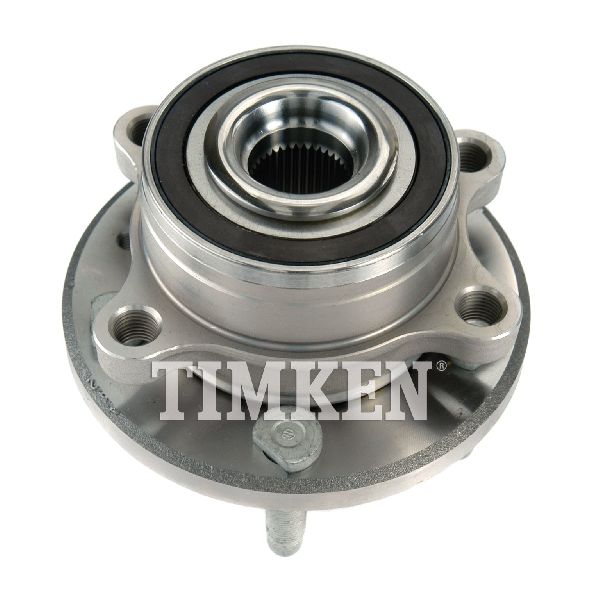
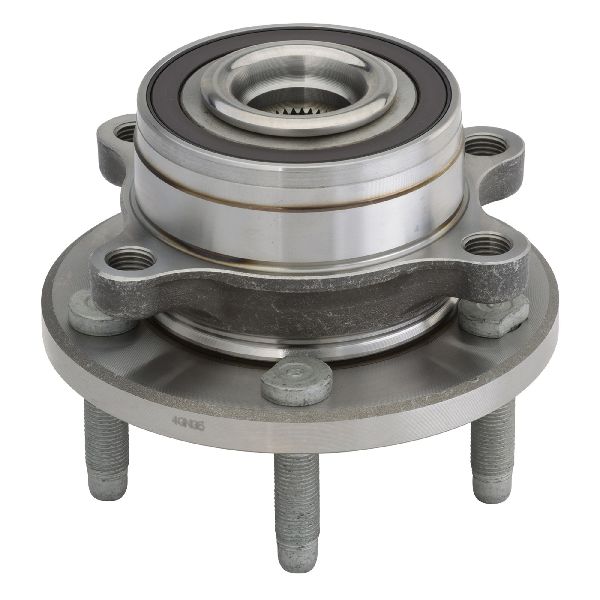
(OEM #BB5Z1104A)— Needed if the integrated magnetic encoder ring is found to be cracked, damaged, or if the bearing itself has failed, causing excessive play that damages the sensor.
Trusted brands: Motorcraft, Timken, MOOG, SKF
OEM price range: $250-$350
Aftermarket price range: $100-$200
Platform-Specific Known Issues
- Wiring Harness Chafing: The routing of the rear ABS sensor harness makes it susceptible to rubbing against suspension components or the subframe, leading to intermittent or complete signal loss. A thorough visual and electrical test of the harness is crucial before replacing more expensive parts.
Mechanic-Grade Diagnostic Values
- Left Rear ABS Sensor Signal (Active Sensor) — expected: A digital square wave (0-5V or 0-12V) that increases in frequency as the wheel spins.. Failure: A missing, flat-lined, or erratic waveform when viewed on an oscilloscope.
- Left Rear ABS Sensor Reference Voltage — expected: 5 to 12 Volts DC at the sensor connector with key on, engine off.. Failure: 0 Volts or significantly low voltage, indicating a wiring or ABS module issue.
- Continuity Test at ABS Module Connector C135 — expected: Check for continuity between the sensor connector and the corresponding pins at the ABS module. Pin 36 (VCA04, BU-OG wire) is the sensor signal. Pin 37 (RCA18, BN-GN wire) is the sensor control/return.. Failure: An open circuit (infinite resistance) on either wire indicates a break in the harness.
Hidden / Shadow Codes Worth Checking
- C0045:06: Indicates Left Rear Wheel Speed Sensor Circuit Low Voltage or Open. This points specifically to an open wire, poor connection, or a short to ground. (see via A professional scan tool (like Ford IDS) that can read ABS symptom bytes (also known as sub-codes or suffix codes).)
- C0045:0F: Indicates Left Rear Wheel Speed Sensor Circuit Signal Erratic. This often points to a damaged magnetic encoder ring on the hub, debris on the sensor, or electrical interference. (see via A professional scan tool (like Ford IDS) that can read ABS symptom bytes (also known as sub-codes or suffix codes).)
- C0045:5A: Indicates Left Rear Wheel Speed Sensor Signal is Not Plausible. The signal is present but does not match the inputs from other vehicle sensors. (see via A professional scan tool (like Ford IDS) that can read ABS symptom bytes (also known as sub-codes or suffix codes).)
Scan Tool Commands That Help
- Ford IDS (or equivalent): Self-Test > All CMDTCs — To retrieve all continuous memory diagnostic trouble codes from all modules, including the ABS module, to get a complete picture of any related faults.
- Ford IDS (or equivalent): Module Programming > Programmable Module Installation (PMI) > ABS — This function is required when a new or used ABS control module is installed. It configures the module with the vehicle's specific 'As-Built' data and VIN.
- Ford IDS (or equivalent): Special Functions > IVD Initialization Sequence — After replacing the ABS module, this procedure must be run to calibrate the new module's internal sensors (like the yaw rate sensor) to the vehicle.
Wiring & Ground Locations
- C135 — The main electrical connector on the ABS control module, located on the ABS hydraulic unit in the engine bay.. This is the termination point for the wheel speed sensor circuit. Testing for signal, power, and ground at pins 36 and 37 of this connector can definitively rule out a wiring harness issue between the sensor and the module.
- Sensor-to-Harness Connector — Clipped to the rear subframe, located behind the gas tank area. The harness routes from the wheel knuckle along the control arm to this point.. This is a common point for corrosion and damage due to its exposed location. It should be disconnected and inspected for green/white corrosion or pushed-out pins.
- G101 / G102 — G101 is on the left side of the engine compartment; G102 is on the right front corner of the engine compartment.. These are the primary ground points for the ABS module. A poor ground connection at these locations can cause a variety of strange electrical issues and false codes, including C0045.
OEM Part Supersession History
AE9Z2C190A→AE9Z2C190B, then AE9Z2C190C— Standard part revisions for improved durability or manufacturing changes.
Heads up: The revisions are generally backward and forward compatible within the specified model years, but it's always best to verify with a VIN. Note that models with Automated Parking Assist may use a different part.
Model Year Variations Within This Range
- 2014: Parts listings show a distinction for models with 'Automated Parking Assist'. For 2014 models, a part change occurred on 12/1/2013. Vehicles with this option may use a different rear ABS sensor than those without it, as the system relies on these sensors for operation.
Diagnostic Flowchart
Other Known Issues on This Vehicle
Issues unrelated to this code that are worth knowing about as an owner of this generation:
- Internal Water Pump Failure (3.5L & 3.7L V6) 🔴 High — Commonly occurs between 80,000-120,000 miles. Failure can cause coolant to mix with engine oil, leading to catastrophic engine damage. (Ref: No recall, but it is a widely documented failure. A small weep hole near the A/C compressor may leak coolant as an early warning sign.)
- Power Transfer Unit (PTU) Overheating/Failure (AWD Models) 🔴 High — Ford considers the PTU fluid 'lifetime,' but it often degrades by 60,000-80,000 miles, causing the unit to fail. Owners recommend changing the fluid every 30,000 miles to prevent a $1,500+ repair. (Ref: No recall. This is a preventative maintenance issue not specified in the standard service schedule.)
- Exhaust Odor / Carbon Monoxide In Cabin 🔴 High — Affects 2011-2017 models. Can occur during hard acceleration with the A/C on. Caused by unsealed seams or cracked exhaust manifolds. (Ref: TSB 17-0044 was issued to inspect and seal gaps. A class-action lawsuit was also filed regarding this issue.)
- Electronic Throttle Body Failure 🟠 Medium — Can cause the vehicle to unexpectedly enter 'limp mode' with reduced power. This was more common on earlier models of this generation.
- Steering Gear Failure 🔴 High — A significant number of complaints have been filed for power steering failure or issues with the steering rack. (Ref: Several steering-related recalls were issued, but problems can still occur.)
Used vs. New Parts: Buying Guide for This Vehicle
When a used part is the smart pick: A used wheel hub/bearing assembly can be a cost-effective choice if the donor vehicle has low mileage and comes from a dry, non-salt-belt climate. A used ABS module can also be used but requires specialized programming.
Donor-vehicle mileage cap: roughly under 60000 miles for the part to have meaningful remaining life.
What to inspect on the donor part:
- For a wheel hub, inspect the magnetic encoder ring meticulously. It must be free of cracks, chips, and any 'rust jacking' or swelling.
- Check the electrical connector pins on any used part for corrosion, ensuring they are straight and clean.
- Verify the part number from the donor vehicle matches the required part for your vehicle's options (e.g., with/without parking assist).
Aftermarket brands forum-validated for this vehicle:
- Motorcraft (OEM)
- NTK
- Bosch
- Standard Motor Products (SMP)
- Duralast
- Timken (for hubs)
Documented NHTSA Reports
Cross-Manufacturer Diagnostic Insights
While C0045 is standard for the left rear wheel speed sensor, other manufacturers have documented specific failure modes. For instance, NHTSA ODI #11219167 describes a case where the left rear wheel speed sensor encoder ring was broken, requiring both the sensor and the hub assembly to be replaced. Similarly, NHTSA ODI #11165895 notes a service center recommendation to replace the left rear hub bearing assembly to resolve the code, though owner experiences with the fix varied. In some cases, as seen in NHTSA ODI #10382746, C0045 can appear alongside multiple other codes (C0057, C0231, C0232, C0282) during complex electronic events. Furthermore, in certain vehicle architectures, C0045 has been found in conjunction with fuel system codes like P0463 and P069E, as reported in NHTSA ODI #11399819.
Real Owner Stories
Aggregated from forums and TSBs cited above. Mileages and costs reflect what owners reported in those sources.
2011 Ford Explorer Limited
Symptoms: ABS and Traction Control warning lights came on. The owner used a multimeter to find different resistance values between the rear sensors.
What fixed it: Replacement of the failed wheel speed sensor after confirming the failure by swapping wiring side-to-side for diagnosis.
Source hint: FordForums.com - '2011 Explorer Limited ABS/TRACTION CONTROL issues'
2011-2019 Ford Explorer
Symptoms: Intermittent or complete signal loss from the rear ABS sensor.
What fixed it: Repairing the wiring harness where it had been damaged by rubbing against suspension components or the subframe.
Source hint: vehicle_specific_issues - 'Wiring Harness Chafing'
Related OBD-II Codes
Frequently Asked Questions
What is the specific part number for the rear ABS sensor on my 2011-2019 Ford Explorer?
My Explorer is showing 'Service AdvanceTrac' and the cruise control stopped working. Is this related to code C0045?
Is there a TSB for the exhaust smell in my 2015 Explorer cabin?
Can I just replace the magnetic encoder ring if it's damaged on my Explorer's rear hub?
I'm seeing a U3000:49 code along with my wheel speed sensor codes. Does this mean my ABS module is dead?
How can I check if the wiring harness is the problem before buying a new sensor?
Helpful Videos
![ABS Wheel Speed Sensor Wiring Repair Comeback [What Did I Do Wrong?]](https://img.youtube.com/vi/i5_OSaLAcH4/mqdefault.jpg)
We Have This Part in Stock


The information in this article is provided for general reference and educational purposes only. Vehicle specifications, procedures, and part compatibility can vary by production date, trim level, and region. Always consult your vehicle's factory service manual and verify part numbers before purchasing or performing repairs. Safety-critical components such as airbags, seat belts, and braking systems should be installed by a qualified professional.
- Ford Explorer:
- 🧭 Diagnostic Flowchart
- 🎬 Helpful Videos
- 🛍️ Shop This Part
- What's Unique About the 2011-2019 Ford Explorer
- Symptoms You May Notice
- Most Likely Causes
- Rare But Worth Checking
- Diagnosis Steps
- Parts You'll Likely Need
- Platform-Specific Known Issues
- Mechanic-Grade Diagnostic Values
- Hidden / Shadow Codes Worth Checking
- Scan Tool Commands That Help
- Wiring & Ground Locations
- OEM Part Supersession History
- Model Year Variations Within This Range
- Other Known Issues on This Vehicle
- Used vs. New Parts: Buying Guide for This Vehicle
- Documented NHTSA Reports
- Cross-Manufacturer Diagnostic Insights
- Real Owner Stories
- 2011 Ford Explorer Limited
- 2011-2019 Ford Explorer
- Related OBD-II Codes
- Frequently Asked Questions
- 🎟️ Get 5% Off