

C0045 on 2009-2014 Ford F-150: Left Rear Wheel Speed Sensor Circuit Causes and Fixes
On a 2009-2014 F-150, code C0045 is most often caused by a damaged rear wiring harness near the spare tire or a failed left rear wheel speed sensor. Inspect the harness for damage before replacing the sensor. This is a very common and well-documented failure point on this platform.
- Code C0045 on a 2009-2014 F-150 means the ABS and traction control are disabled due to a fault in the left rear wheel speed sensor circuit.
- The most common cause by far is damage to the rear wiring harness where it runs along the frame near the spare tire.
- Always inspect the wiring harness for corrosion, chafing, or breaks before spending money on a new wheel speed sensor.
- If codes C0045 and C0050 (right rear) are present together, the wiring harness is almost certainly the problem.
- The repair can involve splicing the broken wires or replacing the entire rear harness section (OEM part # 9L3Z-15A416-B).
What's Unique About the 2009-2014 Ford F-150
On the 12th generation (2009-2014) F-150, the wiring harness that runs along the driver's side frame rail to the rear axle is a notorious failure point. This harness, which includes the circuits for the rear wheel speed sensors and often the trailer lights, is highly exposed to moisture, road salt, and physical damage from road debris or chafing against the frame, especially near the spare tire. It's extremely common for this issue to cause both C0045 (left rear) and C0050 (right rear) codes to appear at the same time, which is a strong indication the harness is the culprit, not two simultaneously failed sensors.
Symptoms You May Notice
- ABS warning light is on
- Traction control or stability control (AdvanceTrac) warning light is on
- "Service AdvanceTrac" message may appear in the instrument cluster
- ABS and traction control systems are disabled
- Cruise control may be inoperative
- Replacing the wheel speed sensor without first thoroughly inspecting the wiring harness. Many owners and shops replace the sensor, find the code returns, and only then discover the true fault is in the wiring harness. Given the high failure rate of the harness on this truck, it should be the first item inspected.
Most Likely Causes
- Damaged Rear Wiring Harness 🔴 High Probability The harness is routed along the frame rail near the spare tire, making it highly susceptible to damage from moisture, corrosion, and chafing against the frame or spare tire holder. This is a widely documented issue on this F-150 platform.
How to confirm: Visually inspect the entire wiring harness that runs along the driver's side frame rail from the rear axle towards the front of the truck. Pay close attention to the area above the spare tire and where the harness connects near the rear bumper. Look for green corrosion, swollen or brittle wire loom, and physically pinch the harness to feel for broken wires inside the insulation. Often the damage is not visible externally until the loom is cut open.
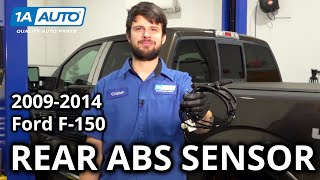
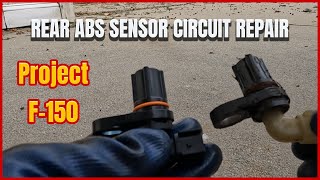
Typical fix: Repair the damaged section of the wire(s) by splicing in new wire with weatherproof butt connectors and heat shrink tubing. In cases of extensive damage, the entire rear harness section 🎬 Watch this guide on repairing damaged wiring and sensor replacement. (often called the trailer tow harness) must be replaced. The OEM part is readily available.
Est. part cost: $90-$145 - Failed Left Rear Wheel Speed Sensor 🟡 Medium Probability → Shop ABS Wheel Speed Sensor The sensor is located on the rear axle housing, where it is exposed to heat, water, and road debris, which can lead to internal failure over time. It is a magnetic sensor that can also become contaminated.
How to confirm: After confirming the wiring is intact, use a multimeter to check the resistance of the sensor (typically 850-1350 ohms for a passive sensor, but check specs). An open circuit (infinite resistance) or a short (near-zero resistance) indicates a failed sensor. An ABS-capable scan tool can also show live data; a reading of 0 MPH from the left rear wheel while the others show speed points to a bad sensor or circuit.
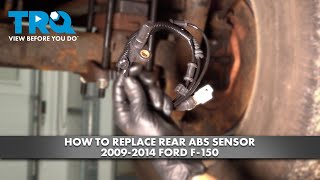
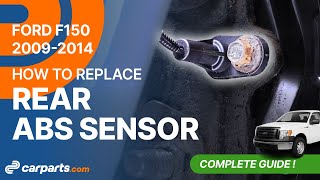
Typical fix: Replace the left rear wheel speed sensor. The sensor is held into the rear differential housing by a single 10mm bolt. Ensure the mounting surface is clean before 🎬 See a step-by-step walkthrough of the rear sensor replacement. installing the new sensor.
Est. part cost: $30-$75 - Debris on Sensor or Tone Ring ⚪ Low Probability The sensor is magnetic and can attract metallic debris (like gear oil particles from normal wear) which can interfere with its ability to read the tone ring on the axle's differential carrier. This can create a weak or erratic signal.
How to confirm: Remove the wheel speed sensor (one 10mm bolt) and inspect its 🎬 Watch how to quickly remove and inspect the rear sensor. magnetic tip for any metal shavings or a thick paste of metallic sludge. The tone ring is inside the differential and harder to inspect, but debris on the sensor tip is the primary indicator.
Typical fix: Clean the magnetic tip of the sensor and the mounting hole thoroughly with a rag and brake cleaner before reinstalling. This costs nothing and can sometimes resolve the issue.
Est. part cost: $0
Rare But Worth Checking
- Faulty ABS Control Module: → Shop ABS Control Module This is very rare and should only be considered after the sensor and all wiring have been thoroughly tested and confirmed to be good. An ABS module failure will typically set multiple, often nonsensical, codes and is a last resort diagnosis.
- Binding Intermediate Steering Shaft: A binding or seized U-joint in the intermediate steering shaft can cause a jerky or tight steering feel. This can sometimes be misdiagnosed or occur alongside electronic faults, but it is a separate mechanical issue unrelated to the C0045 code's direct cause.
Diagnosis Steps
- Read the codes with an ABS-capable scan tool to confirm C0045 is present. Note if C0050 is also present.
- Using the scan tool, view live data for all four wheel speed sensors while driving slowly (5-10 MPH). Confirm that the left rear sensor reads 0 MPH or has an erratic signal compared to the others.
- Safely raise and support the rear of the vehicle.
- Begin with the most likely cause: the wiring. Thoroughly inspect the wiring harness running from the rear axle, along the driver's side frame rail, up and over the spare tire. Open the plastic loom in suspicious areas (especially where it might rub the frame) and check for broken, corroded (green), or chafed wires.
- If the harness looks visually perfect, disconnect the sensor and inspect the connector for corrosion or bent pins.
- With the sensor disconnected, measure its resistance with a multimeter. Compare the reading to factory specifications (typically in the 850-1350 ohm range). If out of spec, the sensor is bad.
- If the sensor tests good, check the harness wiring. Check for continuity on both wires from the sensor connector to the main harness connector further up the frame. Then, check each wire for a short to ground and a short to power.
- If wiring and sensor are confirmed good, remove the sensor and check its tip for metallic debris. Clean and reinstall.
- If all the above steps fail to find the fault, the problem may be the ABS control module, which requires professional diagnosis.
Parts You'll Likely Need
- Rear Wiring Harness
(OEM #9L3Z-15A416-B)— This harness is the most common point of failure on the 2009-2014 F-150 for this code due to its exposed location. It often gets damaged by moisture and chafing, causing an open or short in the wheel speed sensor circuit. It is officially described as a Trailer Tow Harness but contains the WSS circuits.
Trusted brands: Motorcraft
OEM price range: $90-$145
Aftermarket price range: $70-$120 - Left Rear ABS Wheel Speed Sensor
(OEM #9L3Z-2C190-A (2009-2010), BL3Z-2C190-D (2011-2014))— If the wiring is intact, the sensor itself is the next most likely part to fail due to exposure to the elements at the wheel.
Trusted brands: Motorcraft, Bosch, Delphi, Dorman
OEM price range: $60-$100
Aftermarket price range: $30-$75
Related Codes That Often Appear With This One
- C0050 — This is the code for the Right Rear Wheel Speed Sensor Circuit. When C0045 and C0050 appear together, it is a very strong indicator that the fault lies in the shared wiring harness where the circuits for both sensors run together, not with both individual sensors failing simultaneously.
Platform-Specific Known Issues
- A major recall (NHTSA #19V433, Ford #19S19) was issued for some 2011-2013 F-150s for a faulty *transmission molded lead frame*, which contains the *transmission output speed sensor* (OSS). This could cause an unintended downshift into first gear. This is a completely different part and problem from the C0045 code, which relates to the *ABS wheel speed sensor* (WSS). Do not confuse these two issues, although both involve 'speed sensors'.
Mechanic-Grade Diagnostic Values
- Rear Wheel Speed Sensor Resistance — expected: Approximately 780-1900 ohms. Some forum users report measuring around 1200-2000 ohms on a known good sensor.. Failure: A reading of infinite resistance (Open Loop) or near-zero resistance (short circuit) indicates a failed sensor.
Hidden / Shadow Codes Worth Checking
- C0045 with Symptom Byte: Professional scan tools like Ford's IDS can display a two-digit symptom byte that provides deeper insight. For example, C0045:06 indicates an open circuit or missing component, C0045:0F indicates an erratic signal, and C0045:5A indicates the signal is not plausible when compared to other vehicle data. (see via Requires an advanced or dealer-level scan tool (like Ford IDS) capable of reading manufacturer-specific enhanced DTCs.)
Scan Tool Commands That Help
- Ford IDS (Integrated Diagnostic System): ABS Self Test — Use this function to retrieve not just the C0045 code but also the critical symptom byte (e.g., :06, :0F, :5A) which directs diagnosis towards an open wire, a faulty sensor, or a signal rationality problem.
- Ford IDS (Integrated Diagnostic System): Data Logger — Use the data logger to graph all four wheel speed sensor inputs simultaneously. This allows you to visually confirm if the left rear sensor is dropping out, showing noise, or reading zero while the other three are reporting speed correctly.
Wiring & Ground Locations
- G401 — Under the center rear of the vehicle, on a rear frame crossmember.. This is a primary chassis ground point for the rear of the vehicle. While the sensor circuit has its own low-reference wire back to the ABS module, a poor main chassis ground in this area can cause electrical noise and intermittent issues for multiple rear-mounted systems, including the circuits within the nearby rear harness.
OEM Part Supersession History
BL3Z-2C190-D→BL3Z-2C190-F— Standard part revision and update by the manufacturer.
Heads up: The new part number BL3Z-2C190-F is the correct service replacement for BL3Z-2C190-D. They are interchangeable.
Model Year Variations Within This Range
- 2009-2010 vs 2011-2014: The rear ABS wheel speed sensor part numbers are different for the first two years of this generation versus the later years. 2009-2010 models use part number 9L3Z-2C190-A. 2011-2014 models originally used BL3Z-2C190-D, which has since been superseded by BL3Z-2C190-F. Ensure you order the correct part for your specific model year.
Diagnostic Flowchart
Other Known Issues on This Vehicle
Issues unrelated to this code that are worth knowing about as an owner of this generation:
- 5.4L 3V V8 Cam Phaser Rattle 🔴 High — Very common on 2009-2010 models with the 5.4L engine, often starting around 70,000-100,000 miles. Caused by wear in the phasers or low oil pressure at idle.
- Transmission Molded Lead Frame Failure (Sudden Downshift) 🔴 High → Shop Transmission Valve Body — Affects 2011-2013 models with the 6R80 6-speed automatic transmission. Can cause an unexpected downshift to 1st gear at speed. (Ref: Ford Recalls 19S07, 19S19, NHTSA #19V433)
- Electronic Power Assist Steering (EPAS) Failure 🔴 High — Common on 2011-2014 models. Can result in a sudden loss of power steering, making the vehicle very difficult to turn. Often requires full rack replacement.
- 3.5L EcoBoost Intercooler Condensation 🟠 Medium — Affects 2011-2014 models, especially in humid climates. Moisture can build up in the intercooler and be ingested by the engine, causing a shudder or misfire under acceleration. (Ref: Ford TSB 12-6-4 mentioned in forums, though multiple TSBs were released to address this.)
- IWE Actuator / 4WD Vacuum System Failure 🟠 Medium — Common across the generation. A vacuum leak in the lines or a faulty solenoid can cause the front hubs to partially engage, creating a grinding noise.
- Cracked or Leaking Heater Core Connectors 🟡 Low — On 2009-2013 models, the plastic inlet/outlet connectors at the firewall can become brittle and crack, causing a coolant leak.
Used vs. New Parts: Buying Guide for This Vehicle
When a used part is the smart pick: A used part is generally not recommended for this repair. The primary cause of failure for the wiring harness is environmental exposure (moisture, salt, chafing), so a used harness carries a high risk of having the same problem or developing it soon. A used sensor is less risky but given the low cost of new aftermarket parts, it's usually not worth the labor to install a used sensor with unknown life remaining.
Donor-vehicle mileage cap: roughly under 50000 miles for the part to have meaningful remaining life.
What to inspect on the donor part:
- For a wiring harness, only consider one from a vehicle registered exclusively in a dry, non-salt-belt state (e.g., Arizona, Southern California).
- Inspect the entire length of a used harness for any signs of swelling, brittleness in the loom, or previous repairs (tape, butt connectors).
- For a used sensor, ensure the connector pins are clean, straight, and free of corrosion. Check that the mounting tab is not cracked.
Aftermarket brands forum-validated for this vehicle:
- Delphi
- Standard Motor Products (SMP)
- NTK
Brands owners have reported issues with on this vehicle:
- While Dorman is a common brand and sometimes offers design improvements, quality can be inconsistent across different part types. For critical sensors, forum users often prefer brands known for being OEM suppliers.
Real Owner Stories
Aggregated from forums and TSBs cited above. Mileages and costs reflect what owners reported in those sources.
2018 Ford F-150
Symptoms: Owner discovered chewed wires for the rear wheel speed sensor.
What fixed it: DIY splice repair of the broken wires to avoid a high dealer repair quote.
Cost: $600-$600
Source hint: F150Forum.com thread titled 'I need to repair Broken ABS Wheel Sensor wiring'
2009-2014 Ford F-150
Symptoms: ABS warning light on and traction control disabled due to wiring harness damage.
What fixed it: Repairing individual pins or wires within the harness connector rather than replacing the entire harness.
Source hint: F150Forum.com - "wiring harness repair"
Documented NHTSA Reports
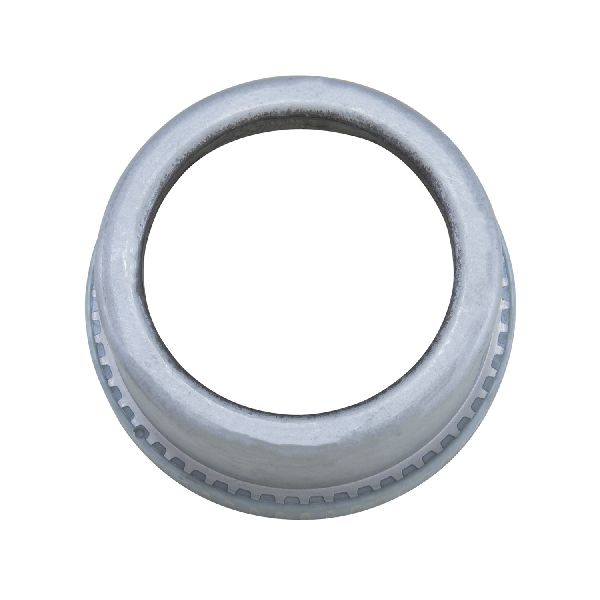
While the C0045 code is frequently tied to wiring on the F-150, reports from other manufacturers highlight different mechanical failure modes for this specific code. For instance, NHTSA ODI #11219167 describes a case where the left rear wheel speed sensor encoder ring was broken, requiring replacement of both the sensor and the rear hub assembly. Similarly, NHTSA ODI #11165895 notes a service center recommendation to replace the hub bearing assembly to resolve a C0045 fault. In some cases, the code may appear alongside other electrical faults; NHTSA ODI #11399819 reports C0045 appearing in conjunction with fuel level sensor codes P0463 and P069E. Additionally, NHTSA ODI #10382746 describes an instance where C0045 was one of several codes (including C0057 and C0231) that a manufacturer advised clearing and addressing via a software re-program.
Related OBD-II Codes
Frequently Asked Questions
Does the transmission lead frame recall (19S19) address my C0045 ABS code?
Where is the most common failure point for the rear ABS wiring on the F-150?
Can I just clean the sensor instead of replacing it for a C0045 code?
What are the resistance specifications for a 2009-2014 F-150 rear wheel speed sensor?
Will a C0045 fault affect my cruise control or AdvanceTrac system?
Is the F-150 Raptor also affected by these rear wiring harness issues?
Helpful Videos
We Have This Part in Stock

The information in this article is provided for general reference and educational purposes only. Vehicle specifications, procedures, and part compatibility can vary by production date, trim level, and region. Always consult your vehicle's factory service manual and verify part numbers before purchasing or performing repairs. Safety-critical components such as airbags, seat belts, and braking systems should be installed by a qualified professional.
- Ford F-150:
- 🧭 Diagnostic Flowchart
- 🎬 Helpful Videos
- 🛍️ Shop This Part
- What's Unique About the 2009-2014 Ford F-150
- Symptoms You May Notice
- Most Likely Causes
- Rare But Worth Checking
- Diagnosis Steps
- Parts You'll Likely Need
- Related Codes That Often Appear With This One
- Platform-Specific Known Issues
- Mechanic-Grade Diagnostic Values
- Hidden / Shadow Codes Worth Checking
- Scan Tool Commands That Help
- Wiring & Ground Locations
- OEM Part Supersession History
- Model Year Variations Within This Range
- Other Known Issues on This Vehicle
- Used vs. New Parts: Buying Guide for This Vehicle
- Real Owner Stories
- 2018 Ford F-150
- 2009-2014 Ford F-150
- Documented NHTSA Reports
- Related OBD-II Codes
- Frequently Asked Questions
- 🎟️ Get 5% Off