

C0045 on 2015-2020 Honda Fit: Left Rear Wheel Speed Sensor Circuit Causes and Fixes
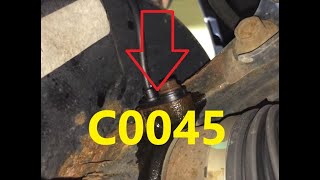
Code C0045 on a 2015-2020 Honda Fit means there's a fault in the left rear wheel speed sensor circuit. The most common fix is replacing the faulty sensor itself. Expect to pay around $170 for an OEM sensor and it's a relatively simple DIY job for many.
- C0045 means the ABS and VSA systems are disabled due to a fault with the left rear wheel speed sensor circuit.
- The most likely cause is a failed wheel speed sensor, which is a DIY-friendly replacement for many.
- Before buying parts, always inspect the sensor's wiring and connector for obvious damage, as this is a common and cheaper fix.
- Driving is possible, but your vehicle's safety systems are compromised, so exercise caution, especially in poor weather.
- The correct OEM part number for the Left Rear sensor is 57475-T5R-033, which supersedes 57475-T5R-013 and 57475-T5R-023.
What's Unique About the 2015-2020 Honda Fit
For the third-generation Honda Fit (2015-2020), the C0045 code is a straightforward fault within the ABS system. There are no widespread, unique design flaws that make this model particularly prone to this code compared to other vehicles. The cause is almost always a standard failure of the sensor due to its exposed location near the wheel, or damage to its wiring. Diagnosis follows a conventional path of checking the sensor, wiring, and the hub's magnetic encoder ring.
Symptoms You May Notice
- ABS warning light is on
- Vehicle Stability Assist (VSA) or traction control warning light is on
- Brake system warning light may be on
- ABS and VSA systems are disabled
- Unwanted or unexpected ABS activation at low speeds 🎬 Watch: Step-by-step guide to troubleshooting ABS and VSA warning lights.
- Replacing the wheel hub/bearing when only the sensor is bad. Always test the sensor and wiring first before condemning the more expensive hub assembly.
Most Likely Causes
- Failed Left Rear Wheel Speed Sensor 🔴 High Probability → Shop ABS Wheel Speed Sensor The sensor is located in a harsh environment behind the wheel hub, exposed to water, road salt, and debris, which can lead to internal failure or corrosion over time.
How to confirm: Use a scan tool to view live data; the left rear wheel speed will read 0 MPH or show an erratic signal while the other wheels report speed correctly. You can also test the sensor's internal resistance with a multimeter; an open or shorted reading confirms failure.
Typical fix: Replace the left rear wheel speed sensor. It is typically held in by a single 10mm bolt and has one electrical connector that is accessed from inside the vehicle.
Est. part cost: $150-$250 - Damaged Wiring or Corroded Connector 🟡 Medium Probability The wiring harness runs along the suspension and can be damaged by road debris, improper servicing, or animal nesting. The connector pins can also corrode from moisture exposure.
How to confirm: Perform a close visual inspection of the wiring harness from the sensor to where it enters the vehicle body. Check for chafing, breaks, or pinch points. Unplug the connector and inspect for green or white corrosion or bent pins.
Typical fix: Repair the broken section of wire or replace the connector pigtail. If damage is extensive, the entire harness section may need replacement.
Est. part cost: $20-$100 - Damaged or Debris-Covered Tone Ring ⚪ Low Probability The magnetic encoder ring is integrated into the wheel hub/bearing assembly. While protected, rust jacking or metallic debris from brake wear can accumulate on it, disrupting the sensor's reading. In some cases, a failing brake component inside the drum can come apart and physically damage the sensor strip.
How to confirm: After removing the wheel speed sensor, visually inspect the magnetic ring on the hub. Look for cracks, heavy rust, or a build-up of metallic shavings. Clean the surface and re-test. If the ring is cracked, the hub must be replaced.
Typical fix: Clean the face of the hub's magnetic encoder ring. If the ring is physically damaged, the entire rear wheel hub and bearing assembly must be replaced.
Est. part cost: $150-$250 for a new hub assembly
Rare But Worth Checking
- Faulty ABS/VSA Control Module: This is the least likely cause and should only be considered after the sensor, wiring, and hub have been thoroughly tested and ruled out. A module failure is expensive and requires programming.
Diagnosis Steps
- Connect an ABS-capable OBD-II scanner and confirm C0045 is the active code.
- Access the live data stream for the wheel speed sensors.
- Safely drive the vehicle or raise the rear wheels and spin them by hand. Observe the speed readings. Confirm that the Left Rear (LR) sensor reads 0 or erratically while the other three sensors show a plausible speed.
- Raise and safely support the vehicle. Remove the left rear wheel.
- Visually inspect the wheel speed sensor and its wiring harness for any obvious signs of damage, such as cut wires, chafing, or a loose connector.
- Follow the wire into the cabin (may require removing some interior trim) to find the electrical connector. Disconnect it and inspect the pins for corrosion or damage.
- If a multimeter is available, measure the resistance across the two pins of the sensor. Compare this reading to the manufacturer's specification (typically in the range of 500-1500 Ω for passive sensors). An infinite (open) or zero (short) reading indicates a failed sensor.
- If the sensor tests good, check for continuity on the wiring harness between the sensor connector and the main ABS/VSA control module connector.
- If wiring and sensor are confirmed good, remove the sensor (one 10mm bolt) and inspect the magnetic encoder ring on the wheel hub for damage or debris.
- If all other components are good, the final step is to suspect a fault within the ABS/VSA control module itself.
Parts You'll Likely Need
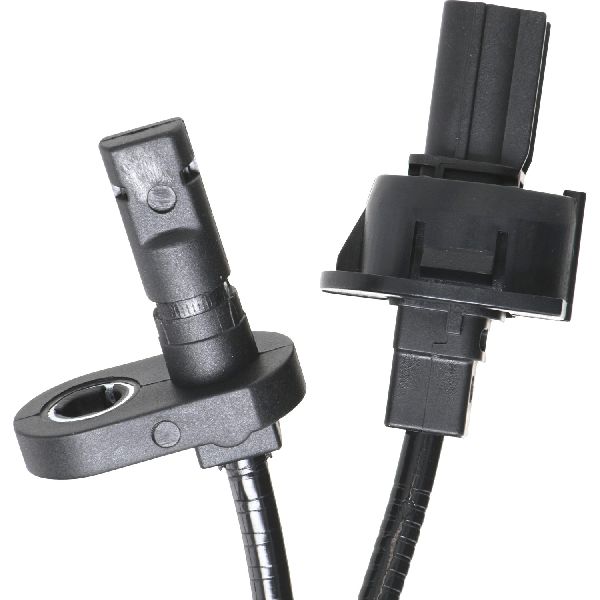
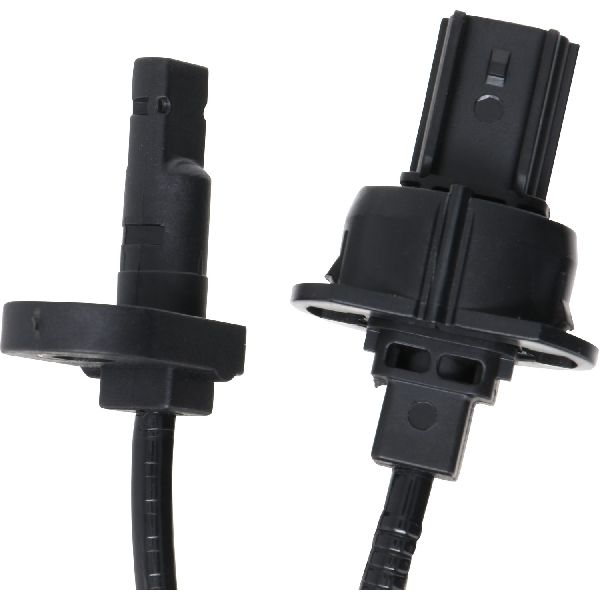
- Left Rear Wheel Speed Sensor
(OEM #57475-T5R-033)— This is the most common failure point for code C0045 due to its exposure to the elements.
Trusted brands: Honda (Genuine OEM), NTK, Standard Motor Products (SMP), WVE, Dorman
OEM price range: $168-$251
Aftermarket price range: $40-$90
Platform-Specific Known Issues
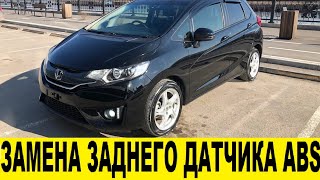
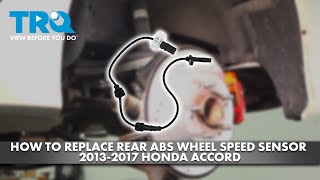
- Sensor Removal Difficulty: Some owners on forums note that accessing the sensor requires removing the entire hub assembly, while others state it can be done with the hub in place. This may depend on the level of corrosion. 🎬 Watch: A mechanic's walkthrough of the rear ABS sensor replacement.
Mechanic-Grade Diagnostic Values
- Left Rear Wheel Speed Sensor Signal (Magnetoresistive type) — expected: A digital square wave signal that switches between approximately 10V and 12V DC as the wheel is rotated. The frequency of the wave should increase smoothly with wheel speed.. Failure: Signal drops out, is erratic, or is absent entirely when the wheel is spinning.
Hidden / Shadow Codes Worth Checking
- C0045-06: Left Rear Wheel Speed Sensor Circuit Low Voltage/Open. This points to a break in the wire, a bad connection, or a short to ground. (see via Honda HDS (i-HDS) or a professional-grade scanner capable of reading Honda-specific symptom bytes (sub-codes).)
- C0045-0F: Left Rear Wheel Speed Sensor Circuit Signal Erratic. This often indicates a damaged magnetic encoder ring on the hub, metallic debris on the sensor tip, or electrical interference. (see via Honda HDS (i-HDS) or a professional-grade scanner capable of reading Honda-specific symptom bytes (sub-codes).)
- C0045-14: Left Rear Wheel Speed Sensor Circuit Failure (Circuit Short to Ground or Open). This is a general circuit failure code seen on other Honda models. (see via Honda HDS (i-HDS). This specific suffix is documented in Honda TSBs for other models like the Ridgeline.)
- C0045-5A: Left Rear Wheel Speed Sensor Circuit Signal Plausibility Failure. The signal is present but does not make sense compared to other vehicle speed inputs. (see via Honda HDS (i-HDS) or a professional-grade scanner capable of reading Honda-specific symptom bytes (sub-codes).)
- C0045-62: Left Rear Wheel Speed Sensor Signal Compare Failure. The signal from this sensor does not match the signals from the other wheel speed sensors. (see via Honda HDS (i-HDS). This specific suffix is documented in Honda TSBs for other models.)
Scan Tool Commands That Help
- Honda HDS (or advanced tools like Autologic DrivePRO): Pulser Test — This non-intrusive test is used to verify the functionality of the wheel speed sensor and its magnetic ring. The tool commands the user to rotate the wheel one full revolution and compares the actual pulse count from the sensor to the target pulse count. A mismatch indicates a problem with the sensor, the magnetic ring, or debris causing interference.
Wiring & Ground Locations
- G402 — Located in the cabin, under the dashboard on the driver's side. It serves as a primary ground point for the VSA/ABS modulator-control unit on LHD models.. A corroded or loose G402 ground can cause a variety of difficult-to-diagnose VSA faults, including communication errors and false sensor codes. It should be inspected and cleaned if the sensor and wiring test good but the code persists.
- VSA Modulator-Control Unit Connector — Located in the engine bay, typically on the passenger side firewall.. This is the termination point for the wheel speed sensor harness. Testing for the signal at the module's connector pins is the final step to confirm if the fault is in the wiring harness or the module itself. A generic Honda 38-pin connector diagram identifies Pin 33 for the Left-Rear sensor signal (+) and Pin 15 for the signal (-), though this should be verified with a model-specific diagram.
- In-Cabin Sensor Connector — The wheel speed sensor harness passes through the body behind the rear wheel and connects to the main body harness inside the vehicle, often requiring removal of rear seats or interior trim panels to access.. This connector is a common point for corrosion or loose pins, as it's the transition from the exposed underbody harness to the protected interior harness. It should be disconnected and inspected if a wiring fault is suspected.
Real Owner Repair Stories
- r/hondafit forum user (Honda Fit (generation not specified, but relevant)) — ABS and traction control lights on.
❌ Tried (didn't work) Buying the cheapest aftermarket ABS sensor from eBay ($25-35).
✅ What actually fixed it The mechanic advised against the cheapest aftermarket parts, having seen them fail quickly. The consensus from other owners was to use OEM ($170) or a quality aftermarket brand from a reputable source like RockAuto to ensure longevity. One user noted they 'split the difference' with a mid-tier brand and it worked fine. - r/RockAuto forum user (Nissan Titan (cross-platform relevance)) — ABS light, wheel speed sensor code.
❌ Tried (didn't work) Using a generic RockAuto branded sensor, which failed after about a month.
✅ What actually fixed it The community recommended using NTK or Beck/Arnley for Asian vehicles, as NTK is often the OEM supplier. The user ultimately purchased an NTK sensor.
OEM Part Supersession History
57475-T5R-013, 57475-T5R-023→57475-T5R-033— Standard part revision by the manufacturer.
Model Year Variations Within This Range
- 2018-2020: The 2018 model year introduced a mid-cycle refresh with updated styling and the availability of the Honda Sensing suite of driver-assist features. However, the underlying VSA and ABS hardware, including the wheel speed sensors, remained fundamentally the same and use the same part numbers as the 2015-2017 models.
Diagnostic Flowchart
Other Known Issues on This Vehicle
Issues unrelated to this code that are worth knowing about as an owner of this generation:
- Premature Starter Motor Failure 🔴 High — Common failure, often between 45,000 and 70,000 miles, particularly on the 2015 model year. Symptoms include a single click with no crank. (Ref: No recall, but a known weak point. A faulty start/stop switch (TSB 20-098) on push-button models can mimic starter failure.)
- VTC Actuator Rattle on Cold Start 🟠 Medium — A very common issue where the engine produces a loud grinding or rattling noise for a couple of seconds on a cold start. (Ref: Honda TSB 16-088 addresses this issue, recommending the replacement of the VTC actuator. Some owners have had success just replacing an internal spring.)
- Direct Injection Carbon Buildup 🟠 Medium — As a direct-injection engine, the intake valves are prone to carbon buildup over time, which can cause misfires (P0300-P0304) and general performance issues, sometimes as early as 30,000 miles. (Ref: Honda TSB 21-007 describes the procedure for cleaning the intake ports and includes a software update.)
- Faulty Fuel Injectors 🟠 Medium — Particularly noted on 2015 models, faulty fuel injectors can cause misfires and trigger check engine lights. This can sometimes be related to the carbon buildup issue. (Ref: TSB A18-027 was issued for faulty injectors causing a false P0420 code. TSB A21-007 for misfires also involves the fuel system.)
- CVT Transmission Issues 🟡 Low → Shop Transmission Assembly — Some owners report hesitation or jerking from the CVT, especially when cold. Premature wear of the CVT drive belt is a concern. (Ref: Honda extended the warranty on the CVT drive belt to 7 years/150,000 miles for some models.)
Used vs. New Parts: Buying Guide for This Vehicle
When a used part is the smart pick: For this repair, a used OEM wheel speed sensor from a low-mileage, non-corroded donor vehicle is a viable budget option. However, given the low cost of quality aftermarket parts, it's often not worth the risk or effort. A used wheel hub/bearing assembly is generally not recommended due to the unknown wear on the bearing and magnetic encoder ring.
Donor-vehicle mileage cap: roughly under 60000 miles for the part to have meaningful remaining life.
What to inspect on the donor part:
- Check for a clean, corrosion-free sensor body and connector.
- Ensure the wiring pigtail is not brittle, cracked, or repaired.
- If buying a hub, verify the magnetic encoder ring is free of cracks, chips, or rust jacking.
- Spin the hub by hand to feel for any roughness or play in the bearing.
OEM-only on this vehicle (don't cheap out):
- VSA/ABS Control Module: Due to the need for VIN-specific programming and the critical safety function, this part should only be replaced with a new or professionally remanufactured OEM unit.
Aftermarket brands forum-validated for this vehicle:
- NTK: Frequently cited as an OEM supplier for Japanese vehicles; considered a top-tier choice.
- Beck/Arnley: Known for often repackaging OEM parts, making them a reliable option.
- Standard Motor Products (SMP): Generally regarded as a reliable mid-tier option.
Brands owners have reported issues with on this vehicle:
- Unbranded/white-box eBay or Amazon parts: Forum users report high failure rates and short lifespans for the cheapest available sensors.
- Dorman: While a major brand, some owners express skepticism due to mixed experiences with quality on other parts.
Real Owner Stories
Aggregated from forums and TSBs cited above. Mileages and costs reflect what owners reported in those sources.
2015 Honda Fit
Symptoms: ABS and VSA warning lights on; code C0045 present. Owner attempted to change the sensor but the code persisted.
What fixed it: The source suggests checking for a damaged sensor strip/tone ring inside the drum or wiring issues if a new sensor doesn't clear the code.
Source hint: Reddit r/AskMechanics thread titled 'C0045 code after changing speed sensor already'
2015-2020 Honda Fit
Symptoms: ABS light on. Upon inspection, the sensor was found to be stuck due to corrosion.
What fixed it: Replacement of the wheel speed sensor; note that some owners found it necessary to remove the hub assembly to get the old sensor out due to corrosion.
Source hint: FitFreak.net forum thread titled 'rear wheel peed sensor'
2nd Gen Honda Fit (GE8)
Symptoms: ABS sensor strip damaged by internal brake components coming apart.
What fixed it: Repairing the damaged sensor strip/tone ring area after brake component failure.
Source hint: FitFreak.net forum thread titled 'strip abs sensor damaged'
Documented NHTSA Reports
Cross-Manufacturer Reference: Hub and Encoder Failure
Symptoms: ABS stability code C0045. An owner reported that the left rear wheel speed sensor encoder ring was broken at 96,020 miles (NHTSA ODI #11219167).
What fixed it: The owner replaced both the speed sensor and the rear hub assembly.
Cross-Manufacturer Reference: Intermittent Warning Lights
Symptoms: Service center reported code C0045 with warning lights that would extinguish after a couple of seconds to minutes (NHTSA ODI #11165895).
What fixed it: The recommended solution was to replace the left rear hub bearing assembly.
Cross-Manufacturer Reference: Software and Multiple Codes
Symptoms: A vehicle exhibited multiple codes including C0045, C0057, and C0231 (NHTSA ODI #10382746).
What fixed it: In this instance, the manufacturer instructed the dealer to erase the codes and re-program the software.
Cross-Manufacturer Reference: Fuel System Correlation
Symptoms: An owner reported that despite installing new fuel level sensors, codes P0463, P069E, and C0045 returned (NHTSA ODI #11399819).
Related OBD-II Codes
Frequently Asked Questions
Is there a TSB for the C0045 code on my 2015-2020 Honda Fit?
I'm seeing C0045 and my VSA light is on; could this be related to the CVT warranty extension?
Can I replace the left rear sensor myself, or do I need to remove the whole hub?
Could my 2015 Fit's C0045 code be caused by a faulty start/stop switch?
Is the C0045 issue common on other Honda models similar to the Fit?
Will cleaning the magnetic encoder ring fix the C0045 code?
Helpful Videos
We Have This Part in Stock


The information in this article is provided for general reference and educational purposes only. Vehicle specifications, procedures, and part compatibility can vary by production date, trim level, and region. Always consult your vehicle's factory service manual and verify part numbers before purchasing or performing repairs. Safety-critical components such as airbags, seat belts, and braking systems should be installed by a qualified professional.
- Honda Fit:
- 🧭 Diagnostic Flowchart
- 🎬 Helpful Videos
- 🛍️ Shop This Part
- What's Unique About the 2015-2020 Honda Fit
- Symptoms You May Notice
- Most Likely Causes
- Rare But Worth Checking
- Diagnosis Steps
- Parts You'll Likely Need
- Platform-Specific Known Issues
- Mechanic-Grade Diagnostic Values
- Hidden / Shadow Codes Worth Checking
- Scan Tool Commands That Help
- Wiring & Ground Locations
- Real Owner Repair Stories
- OEM Part Supersession History
- Model Year Variations Within This Range
- Other Known Issues on This Vehicle
- Used vs. New Parts: Buying Guide for This Vehicle
- Real Owner Stories
- 2015 Honda Fit
- 2015-2020 Honda Fit
- 2nd Gen Honda Fit (GE8)
- Documented NHTSA Reports
- Cross-Manufacturer Reference: Hub and Encoder Failure
- Cross-Manufacturer Reference: Intermittent Warning Lights
- Cross-Manufacturer Reference: Software and Multiple Codes
- Cross-Manufacturer Reference: Fuel System Correlation
- Related OBD-II Codes
- Frequently Asked Questions
- 🎟️ Get 5% Off