

C0045 on 2011-2014 Hyundai Sonata: Left Rear Wheel Speed Sensor Circuit Causes and Fixes
This code indicates a fault with the left rear wheel speed sensor circuit. The most common fix is replacing the sensor itself due to internal failure or damage to its wiring. Expect to pay around $40-$80 for an aftermarket sensor and $250-$330 for an OEM part. In some cases, the magnetic tone ring integrated into the wheel hub fails, requiring a more expensive hub replacement.
- C0045 on your Sonata means the ABS and ESC systems are off; drive with extra caution.
- The problem is most likely a bad left rear wheel speed sensor or its wiring.
- Use a scan tool with live data to confirm the left rear wheel isn't reporting speed before buying parts.
- To replace the sensor, you must remove the rear seat cushion and side bolster to access the connector.
- If a new sensor doesn't fix the code, the wiring harness or the entire wheel hub assembly are the next most likely culprits.
What's Unique About the 2011-2014 Hyundai Sonata
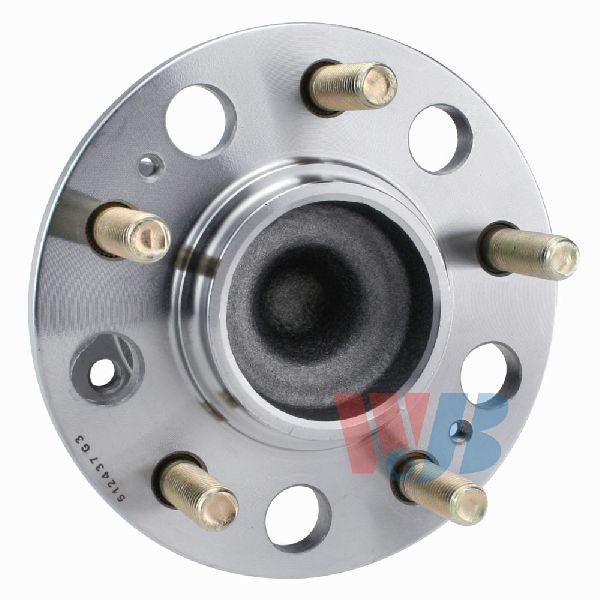
For the 2011-2014 (YF generation) Sonata, the rear wheel speed sensor's wiring harness is routed through the cabin. To replace it, you must remove the rear seat's lower cushion and side bolster to access the electrical connector, making the job more labor-intensive than on other vehicles. While the sensor and its wiring are the most common culprits, the magnetic tone ring (or reluctor ring) it reads is integrated into the rear wheel hub and bearing assembly's seal. If this magnetic encoder ring becomes cracked, corroded, or contaminated with metallic debris, it can cause an erratic signal, and the entire hub assembly must be replaced. This is a known failure pattern on these models.
Symptoms You May Notice
- ABS warning light is on
- Electronic Stability Control (ESC) or Traction Control System (TCS) warning light is on
- Cruise control may not function
- Brake pedal may feel different or ABS may not activate during hard braking
- Possible unwanted or noisy ABS activation at low speeds if the signal is erratic before failing completely.
- Replacing the wheel speed sensor without first checking the wiring harness for damage, especially the pigtail near the connector.
- Replacing the wheel speed sensor when the actual fault is a cracked or debris-covered magnetic tone ring on the wheel hub assembly.
- Replacing the ABS control module before thoroughly testing the sensor, wiring, and hub assembly.
Most Likely Causes
- Failed Left Rear Wheel Speed Sensor 🔴 High Probability → Shop ABS Wheel Speed Sensor The sensor is exposed to road debris, water, salt, and extreme temperatures, leading to internal failure (open or shorted circuits) over time.
How to confirm: Use a multimeter to check the sensor's resistance; an open circuit (infinite resistance) or a short (zero resistance) indicates failure. A scan tool showing 0 MPH for the left rear wheel while others show speed also points to a bad sensor. These are typically passive sensors, so you can also check for a generated AC voltage (should be >100mV) while spinning the wheel by hand.
Typical fix: Replace the left rear wheel speed sensor.
Est. part cost: $40-$80 - Damaged Wiring or Connector 🟡 Medium Probability The wiring harness can be damaged by road debris, improper routing after previous repairs, or corrosion at the connector pins. The pigtail right at the sensor is a common point of failure.
How to confirm: Visually inspect the entire length of the harness from the sensor to where it enters the cabin for breaks, chafing, or corrosion. Perform a continuity test with a multimeter from the sensor connector to the ABS module connector. Wiggle the harness during testing to find intermittent breaks.
Typical fix: Repair the broken section of wire or replace the damaged connector/pigtail.
Est. part cost: $5-$50 - Damaged Wheel Hub / Tone Ring ⚪ Low Probability The magnetic tone ring is integrated into the wheel hub assembly's seal. Rust can build up and cause the ring to crack, or metallic debris from bearing wear can stick to it, causing a distorted or missing signal. This is a common failure pattern on GM vehicles with a similar design and has been observed on Sonatas.
How to confirm: After confirming the sensor and wiring are good, remove the sensor and visually inspect the magnetic encoder ring on the hub for cracks, heavy rust, or attached metallic debris. If the ring is damaged, the hub must be replaced.
Typical fix: Replace the entire rear wheel hub and bearing assembly.
Est. part cost: $100-$200
Rare But Worth Checking
- Faulty ABS Control Module: → Shop ABS Control Module This is the least likely cause. Only consider this after definitively ruling out the sensor, wiring, and wheel hub assembly. Several Hyundai models of this era were subject to recalls for potential ABS module electrical shorts, though the Sonata was not part of the most prominent ones. Still, module failure is a possibility.
Diagnosis Steps
- Connect an OBD-II scanner capable of reading ABS codes to confirm C0045 is present and active.
- Use the scanner's live data function to monitor all four wheel speeds while driving slowly or spinning the wheel by hand. Confirm that the left rear sensor reads 0 or an erratic value compared to the others.
- Raise and safely support the vehicle. Remove the left rear wheel.
- Visually inspect the wheel speed sensor and its wiring harness for any obvious signs of damage, such as cuts, chafing, or corrosion at the connector.
- Disconnect the sensor. Use a multimeter set to Ohms to measure the resistance across the sensor's two pins. Compare the reading to the manufacturer's specification (typically in the range of 800-2,000 Ω for passive sensors). An infinite (OL) or zero reading indicates a failed sensor.
- Alternatively, set the multimeter to AC Volts, reconnect the sensor, back-probe the connector, and spin the wheel. A healthy passive sensor will generate a small AC voltage (e.g., >100mV) that increases with speed.
- If the sensor tests good, remove it (usually one 10mm bolt) and inspect the wheel hub's magnetic encoder ring through the sensor mounting hole. Look for cracks, heavy rust buildup, or attached metallic debris.
- If the tone ring is okay, test the wiring harness. Check for continuity from the sensor's connector back to the ABS control module connector. Check for shorts to ground or power. Remember to wiggle the harness to detect intermittent faults.
- On this Sonata model, the final connection point is inside the cabin, requiring removal of the rear seat cushion and side bolster to access.
- If the sensor, hub, and wiring are all confirmed to be good, the issue may be with the ABS control module, which may require professional diagnosis.
Parts You'll Likely Need
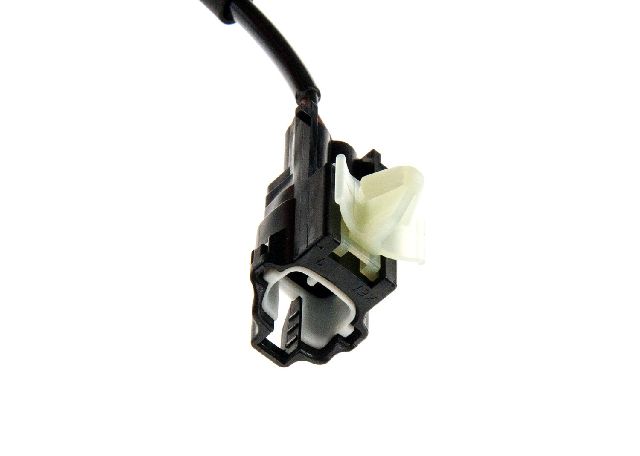
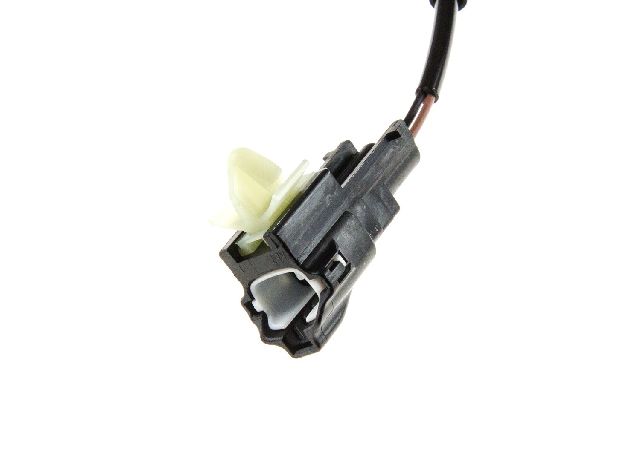
- Left Rear ABS Wheel Speed Sensor
(OEM #59910-3Q000)— This is the most common failure point for code C0045, failing due to exposure to the elements or internal shorts/opens. Note: Hybrid models may use a different part number like 59910-3S000 or 59910-3S300; always verify with VIN.
Trusted brands: Hyundai (OEM), Bosch, Delphi, Standard Motor Products (SMP), TRQ
OEM price range: $250-$330
Aftermarket price range: $40-$80 - Rear Wheel Hub and Bearing Assembly
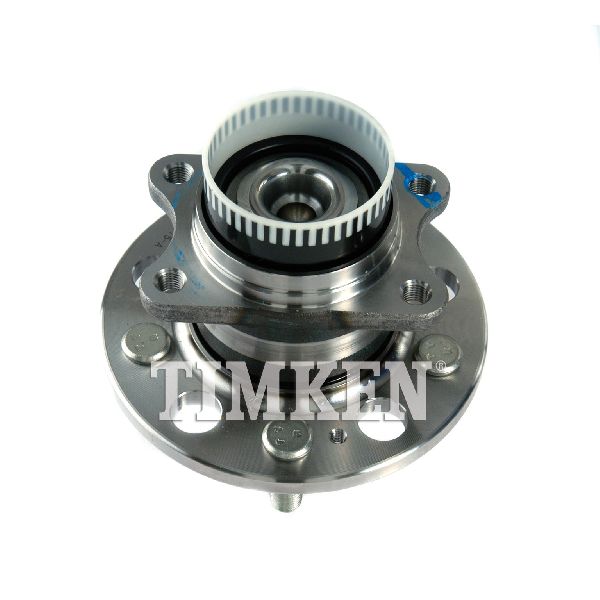
(OEM #52730-3S200)— Required if the integrated magnetic tone ring is cracked, rusted, or damaged, as it cannot be replaced separately from the hub.
Trusted brands: Timken, SKF, MOOG, FAG, Detroit Axle
OEM price range: $370-$540
Aftermarket price range: $100-$220
Related Codes That Often Appear With This One
- C0046 — This code indicates an erratic signal from the same sensor, often pointing towards a damaged tone ring or wheel bearing play, whereas C0045 usually indicates a complete circuit failure (open/short).
- C0050 — This is the code for the right rear wheel speed sensor. Seeing both codes together could suggest a problem common to both sides, like a wiring harness issue, a fault within the ABS module, or similar age-related failure of both sensors/hubs.
Platform-Specific Known Issues
- The rear wheel speed sensor connector is located inside the vehicle, under the rear seat side bolster, making replacement more labor-intensive than on vehicles where the connector is in the wheel well.
- The magnetic encoder for the ABS sensor is integrated with the rear wheel hub's seal, making it non-serviceable. Damage or contamination of this ring requires full hub replacement.
Mechanic-Grade Diagnostic Values
- Passive Wheel Speed Sensor Resistance — expected: 800 - 1700 Ω. Failure: A reading of OL (Open Loop/infinite resistance) or near 0 Ω indicates a failed sensor.
- Passive Wheel Speed Sensor AC Voltage Output — expected: Greater than 100mV AC, increasing with wheel speed.. Failure: No voltage or an erratic, inconsistent voltage when the wheel is spun indicates a failed sensor or a problem with the tone ring.
Scan Tool Commands That Help
- Hyundai GDS (Global Diagnostic System): ABS/ESC Live Data & Fault Code Search — This is the factory tool used to view wheel speed sensor data from all four wheels in real-time, which is the primary step in confirming the fault is isolated to the left rear corner.
- Hyundai GDS (Global Diagnostic System): Actuation Test — The GDS tool can perform actuation tests on various ABS components. While not directly testing the sensor circuit, it can help verify the health of the ABS module itself by commanding valves or the pump motor.
- Hyundai GDS (Global Diagnostic System): Vehicle S/W Management (Variant Coding) — If the ABS module (HECU) is replaced, it must be programmed or 'variant coded' to the vehicle's VIN and specific options. This function is only available on a dealer-level tool like GDS.
Wiring & Ground Locations
- ABS Control Module / HECU (Hydraulic and Electronic Control Unit) — Located in the engine bay, on the driver's side, behind the brake fluid reservoir. It is an assembly with the ABS pump and has multiple metal brake lines running into it.. This is the module that receives the signal from the left rear wheel speed sensor. All wiring tests for continuity or shorts will terminate at this module's main connector. A poor ground or power supply to this module can also cause various ABS codes.
- Ground Points (e.g., GE01, GE02, GM02, GM03) — Wiring diagrams for the 2012 Sonata show several key ground points: GE01 and GE02 are located in the left front of the engine compartment. GM02 is at the right end of the dash, and GM03 is on the left side of the dash. A 2014 ground distribution document confirms these locations.. A faulty or corroded ground connection for the ABS module can introduce electrical noise or voltage drops, potentially causing the module to misinterpret the wheel speed sensor signal and set a C0045 code.
Real Owner Repair Stories
- Reddit user in r/AskMechanics (Vehicle year not specified, but design is consistent with 2011-2014 Sonata) — C0045 code returned after the wheel speed sensor had already been replaced.
❌ Tried (didn't work) Replacing the left rear wheel speed sensor.
✅ What actually fixed it The suggested fix, based on common issues with this design, was to inspect the magnetic ring on the wheel bearing for metallic debris. Cleaning the debris from the ring would likely resolve the issue that was causing an incorrect sensor reading.
Documented NHTSA Reports
- In a cross-manufacturer reference, NHTSA ODI #11219167 describes a C0045 code where the left rear wheel speed sensor encoder ring was broken, requiring replacement of both the speed sensor and the rear hub assembly.
- NHTSA ODI #11165895 notes a case where a service center reported code C0045 and recommended replacing the left rear hub bearing assembly to resolve intermittent warning messages.
- NHTSA ODI #10382746 reports an instance where C0045 appeared alongside other codes (C0057, C0231, C0232, C0282), and the manufacturer instructed the dealer to erase the codes and reprogram the software.
- NHTSA ODI #11399819 mentions C0045 appearing in conjunction with fuel level sensor codes P0463 and P069E, illustrating how this code may occasionally surface alongside unrelated electrical faults.
OEM Part Supersession History
Not specified→52730-3S200— Standard part evolution and consolidation.
Heads up: Part number 52730-3S200 is listed as fitting the 2011-2014 Sonata (non-hybrid and hybrid), as well as the 2011-2016 Azera and 2009-2014 Tucson, indicating wide compatibility for FWD models without an electric parking brake.
Model Year Variations Within This Range
- 2013: The Sonata Hybrid model received a more powerful electric motor and battery pack in 2013. While the base hub assembly part number appears to remain the same, the ABS sensor part number for Hybrid models (e.g., 59910-3S300) is often different from non-Hybrid models (59910-3Q000). Always verify by VIN.
- 2014: The 2014 Sonata received revised front and rear styling. While this was primarily cosmetic, it's important to verify part numbers for sensors and harnesses as minor changes can sometimes occur during a mid-cycle refresh.
- 2011-2013: Some ABS modules for 2011-2013 models are specific to the engine (2.0T vs 2.4L) and suspension type (sport vs standard). If the ABS module is suspected, matching the exact OEM part number is critical.
Diagnostic Flowchart
Other Known Issues on This Vehicle
Issues unrelated to this code that are worth knowing about as an owner of this generation:
- Theta II Engine Failure 🔴 High — Widespread across 2.0L Turbo and 2.4L GDI engines. Can occur at various mileages, often between 60k-100k miles. (Ref: Multiple recalls (e.g., NHTSA 15V-568, 17V-226) and a warranty extension to 10 years/120,000 miles, and later a lifetime warranty for some owners following a class-action lawsuit.)
- Worn Steering Coupler 🟠 Medium — Very common. Owners typically notice a clicking or 'thud' noise in the steering column when turning, usually starting after 50,000 miles. (Ref: Warranty Extension TXX7 (TSB 17-ST-002) extended coverage to 10 years/100,000 miles for the flexible coupler part (56315-2K000-FFF).)
- Subframe Corrosion 🔴 High — More common in salt-belt states. Severe rust can compromise the structural integrity of the front or rear subframe. (Ref: Hyundai has issued warranty extensions and recalls for subframe corrosion on various models and years, though coverage for the YF Sonata can be inconsistent. Owners often report issues.)
- Transmission Shift Cable Detachment 🟠 Medium → Shop Transmission Assembly — Affects a large number of 2011-2014 Sonatas, preventing the driver from changing gears and potentially causing a rollaway risk. (Ref: NHTSA Recall 14V-434 addressed this issue, requiring inspection and replacement of the shift cable.)
- Peeling/Flaking Paint 🟡 Low — Particularly common on white-painted vehicles. Large flakes of paint can delaminate from the e-coat, typically starting on the roof and hood. (Ref: No recall, but Hyundai has offered goodwill repairs or extended paint warranties for some customers on a case-by-case basis after numerous complaints.)
Used vs. New Parts: Buying Guide for This Vehicle
When a used part is the smart pick: A used wheel hub assembly from a low-mileage, non-corroded donor vehicle can be a cost-effective option, as the part itself is a simple mechanical component. However, given the labor involved, the savings may not be worth the risk of a shorter lifespan.
Donor-vehicle mileage cap: roughly under 60000 miles for the part to have meaningful remaining life.
What to inspect on the donor part:
- Check for a clean, rust-free magnetic encoder ring integrated into the hub's seal.
- Spin the bearing by hand; it should be smooth, silent, and have no rough spots or grinding.
- Ensure there is zero side-to-side or up-and-down play in the bearing.
- Source from a vehicle in a dry, non-salt-belt region if possible to minimize corrosion risk.
OEM-only on this vehicle (don't cheap out):
- ABS Control Module (HECU) - Aftermarket or used modules often cause compatibility and programming issues. A replacement module requires VIN-specific programming with a factory tool like Hyundai GDS.
Aftermarket brands forum-validated for this vehicle:
- Wheel Hub Assembly: Timken, SKF, MOOG, FAG are reputable brands known for quality bearings.
- Wheel Speed Sensor: Bosch, Delphi, and NTK are trusted OEM-quality suppliers.
Brands owners have reported issues with on this vehicle:
- Unbranded, 'white-box' sensors and hubs from online marketplaces often have higher failure rates, poor fitment, and may not last, leading to the code returning prematurely.
Real Owner Stories
Aggregated from forums and TSBs cited above. Mileages and costs reflect what owners reported in those sources.
2011-2014 Hyundai Sonata
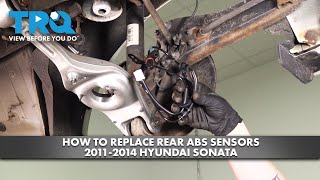
Symptoms: ABS and ESC warning lights are on; owner needs to replace the rear ABS sensor and must remove the rear seat to reach the plug.
What fixed it: Replacement of the rear ABS sensor, including the specific steps of removing the rear seat to access the internal connector.
Source hint: 1A Auto YouTube video 'How to Replace Rear ABS Wheel Speed Sensor 11-14 Hyundai Sonata'
2011-2014 Hyundai Sonata
Symptoms: ABS and ESC lights illuminated with related performance codes; discussion regarding the diagnosis of rear speed sensors and integrated hub assemblies.
What fixed it: Diagnosing and replacing the rear speed sensors and wheel hubs.
Source hint: hyundai-forums.com thread titled 'ABS/ESC lights on - code C1207, C1208'
Related OBD-II Codes
Frequently Asked Questions
Why is the labor for replacing the left rear wheel speed sensor on my 2011-2014 Sonata more intensive than other cars?
Can I just clean the ABS tone ring on my Sonata if it's giving a C0045 code?
Is there a recall for the ABS sensor or wheel hub on the 2011-2014 Sonata?
What should the resistance be when testing the left rear wheel speed sensor on my Sonata?
Will a C0045 code affect my cruise control or traction control?
Helpful Videos
We Have This Part in Stock


The information in this article is provided for general reference and educational purposes only. Vehicle specifications, procedures, and part compatibility can vary by production date, trim level, and region. Always consult your vehicle's factory service manual and verify part numbers before purchasing or performing repairs. Safety-critical components such as airbags, seat belts, and braking systems should be installed by a qualified professional.
- Hyundai Sonata:
- 🧭 Diagnostic Flowchart
- 🎬 Helpful Videos
- 🛍️ Shop This Part
- What's Unique About the 2011-2014 Hyundai Sonata
- Symptoms You May Notice
- Most Likely Causes
- Rare But Worth Checking
- Diagnosis Steps
- Parts You'll Likely Need
- Related Codes That Often Appear With This One
- Platform-Specific Known Issues
- Mechanic-Grade Diagnostic Values
- Scan Tool Commands That Help
- Wiring & Ground Locations
- Real Owner Repair Stories
- Documented NHTSA Reports
- OEM Part Supersession History
- Model Year Variations Within This Range
- Other Known Issues on This Vehicle
- Used vs. New Parts: Buying Guide for This Vehicle
- Real Owner Stories
- 2011-2014 Hyundai Sonata
- 2011-2014 Hyundai Sonata
- Related OBD-II Codes
- Frequently Asked Questions
- 🎟️ Get 5% Off