

C0045 on 2010-2015 Hyundai Tucson: Left Rear Wheel Speed Sensor Circuit Causes and Fixes
This code means there's a fault in the left rear wheel speed sensor circuit. Most often, the fix is replacing the sensor itself, which costs about $30-$130 for the part. Sometimes, the issue is damaged wiring or a bad wheel hub bearing, which is a more involved repair.
- Code C0045 on a 2010-2015 Tucson means the left rear wheel speed sensor circuit is malfunctioning, which disables ABS and stability control.
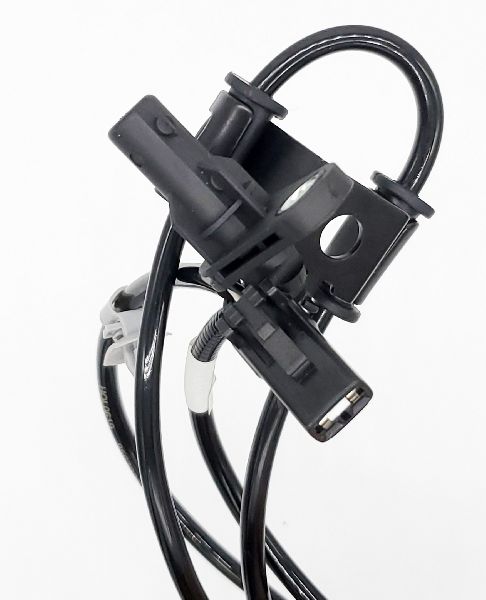
- The most common fix is replacing the sensor (Part #95680-2S500 for AWD, #95680-2S300 for FWD), but damaged wiring is also a frequent cause.
- A less common but more severe cause is a failed wheel hub/bearing, which contains the tone ring the sensor reads. A bad bearing or debris can trigger this code.
- Always inspect the wiring and the tone ring inside the hub before assuming the sensor is bad. A new sensor won't fix a broken wire or a damaged hub.
- This generation of Tucson has several major known issues unrelated to this code, including engine failures, high oil consumption, and a fire risk from the ABS module, which owners should be aware of.
What's Unique About the 2010-2015 Hyundai Tucson
For the 2010-2015 Tucson (LM generation), the wheel speed sensor wiring is routed through the wheel well and into the cabin behind an interior trim piece. This makes replacement slightly more complex than on vehicles where the connection is entirely underneath the car. Additionally, while the sensor is the most common failure, the magnetic tone ring it reads is integrated into the wheel hub bearing assembly; damage to this ring from rust, debris, or internal bearing failure necessitates replacing the entire hub.
Symptoms You May Notice
- ABS warning light is on
- Electronic Stability Control (ESC) or Traction Control (TCS) warning light is on
- ABS may not activate during hard braking, potentially causing wheels to lock up
- Traction control may be disabled
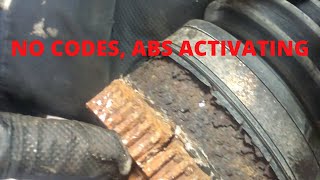
- Brake pedal may feel different or pulsate at low speeds if the signal is noisy. 🎬 Watch: Diagnosing ABS activation issues when no codes are present.
- Replacing the wheel speed sensor without checking the wiring or the tone ring on the hub. If the wiring is broken or the tone ring is cracked, a new sensor will not fix the problem.
- Not inspecting the inside of the hub for debris. A failed wheel bearing can leave fragments that block the new sensor from getting a reading, causing the code to return immediately.
Most Likely Causes
- Faulty Left Rear Wheel Speed Sensor 🔴 High Probability → Shop ABS Wheel Speed Sensor The sensor is exposed to harsh elements like water, salt, and road debris, which can lead to internal failure or corrosion over time.
How to confirm: Use a scan tool to monitor live wheel speed data; the left rear sensor will show a zero or erratic reading while driving or spinning the wheel. 🎬 Watch: How to test and identify a bad wheel speed sensor. You can also test the sensor's internal resistance with a multimeter and compare it to the manufacturer's specification. An open or shorted sensor is a definitive failure.
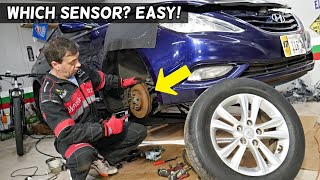
Typical fix: Replace the left rear wheel speed sensor. The sensor is typically held in by a single bolt, but the wiring needs to be disconnected from inside the cabin. 🎬 See this walkthrough for replacing the rear wheel speed sensor.
Est. part cost: $30-$130 - Damaged Wiring or Connector 🟡 Medium Probability The wiring harness runs along suspension components and can be damaged by road debris, improper servicing, or corrosion, leading to an open or shorted circuit.
How to confirm: Visually inspect the entire length of the wiring from the sensor to where it enters the body for any breaks, chafing, or corrosion. Perform a continuity test on the wires between the sensor connector and the ABS module connector. Wiggle the harness while testing to check for intermittent breaks.
Typical fix: Repair the damaged section of wire or replace the pigtail connector. In severe cases, the entire harness segment may need replacement.
Est. part cost: $15-$50 - Damaged or Corroded Tone Ring on Wheel Hub ⚪ Low Probability The tone ring is integrated into the wheel hub bearing. Rust can build up and cause the ring to crack, or a failing wheel bearing can disintegrate internally, sending debris into the sensor area and blocking the signal. This can happen from age, moisture intrusion, or impact.
How to confirm: After removing the sensor, visually inspect the tone ring inside the hub for cracks, missing teeth, or heavy rust/debris. Check for excessive play in the wheel bearing by grabbing the wheel at 12 and 6 o'clock and trying to rock it. A humming or grinding noise that changes pitch when turning is a classic sign of a bad wheel bearing.
Typical fix: The entire wheel hub and bearing assembly must be replaced, as the tone ring is not serviced separately.
Est. part cost: $70-$200
Rare But Worth Checking
- Faulty ABS Control Module: → Shop ABS Control Module This is the least likely cause. The ABS module is the computer for the brake system. It should only be considered after all other possibilities (sensor, wiring, hub) have been thoroughly tested and ruled out. In some cross-manufacturer instances, such as NHTSA ODI #10382746, a dealer addressed C0045 and other codes by erasing them and re-programming the software.
Diagnosis Steps
- Connect an OBD-II scanner capable of reading ABS codes to confirm C0045 is the active fault.
- Use the scanner's live data function to monitor all four wheel speed sensors while driving slowly (or with the wheels raised and spinning by hand). Confirm that the Left Rear (LR) wheel speed is zero, erratic, or does not match the others.
- Raise and secure the vehicle on jack stands. Remove the left rear wheel.
- Visually inspect the wheel speed sensor and its wiring harness for any obvious signs of damage, such as cut wires, chafing, or corrosion on the connector.
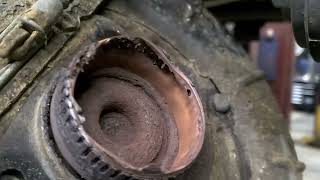
- Unbolt and remove the sensor. Inspect the sensor tip for damage and the tone ring (inside the hub) for cracks, heavy rust, or debris. A borescope can be helpful here. In one documented case, fragments from a disintegrated wheel bearing were found blocking the sensor hole.
- Check for wheel bearing play by grabbing the tire at the top and bottom and attempting to rock it. Any significant movement or a grinding/humming noise when spinning the wheel indicates a bad bearing/hub assembly.
- If no visual faults are found, use a multimeter to test the resistance of the sensor and compare it to the manufacturer's specifications. An open circuit (infinite resistance) or short (zero resistance) indicates a failed sensor.
- If the sensor tests good, check the wiring. Disconnect the harness at the sensor and the ABS module. Check for continuity on both wires and ensure neither is shorted to ground or power.
- Based on the findings, replace the faulty component (sensor, hub, or repair wiring).
- Clear the code and perform a test drive to ensure the warning lights do not return.
Parts You'll Likely Need
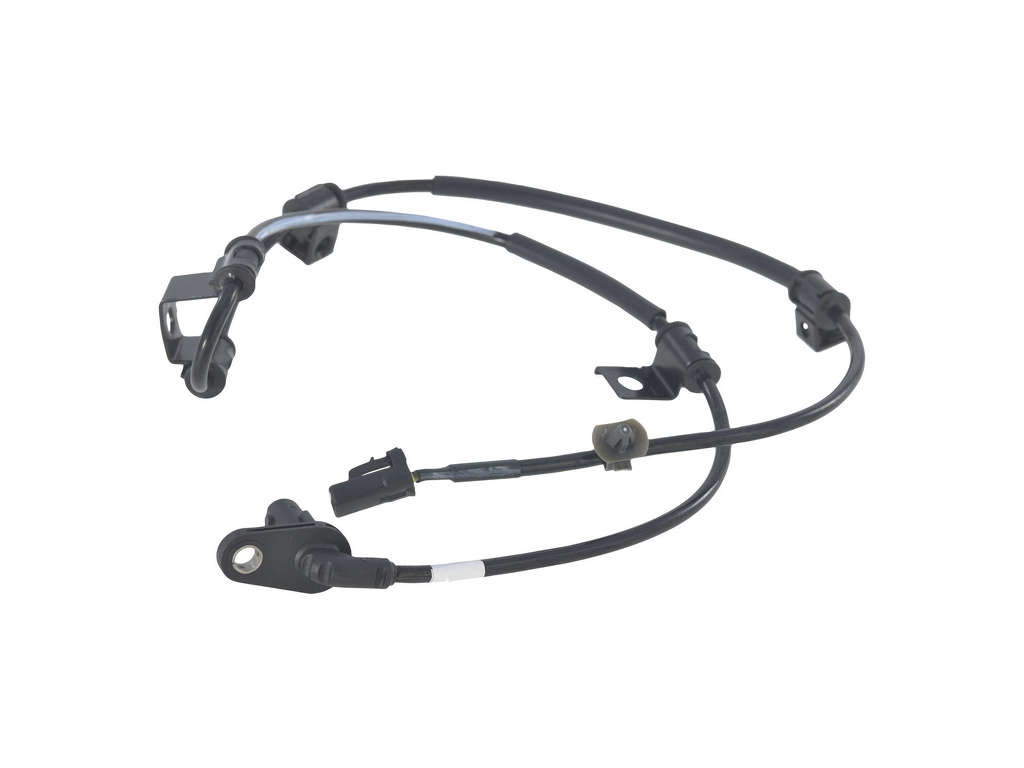
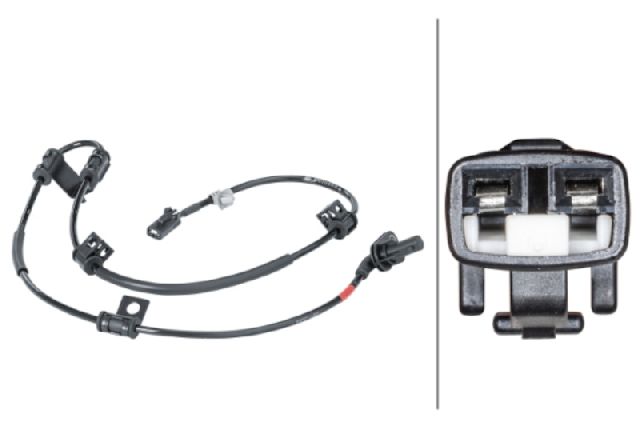
- Rear Left ABS Wheel Speed Sensor
(OEM #95680-2S500 (for AWD models), 95680-2S300 (for FWD models))— This is the most frequent point of failure for a C0045 code due to its exposure to the elements. Note the different part numbers for All-Wheel Drive vs. Front-Wheel Drive.
Trusted brands: Hyundai (OEM), Mando, Duralast, Beck/Arnley, API
OEM price range: $80-$130
Aftermarket price range: $30-$70 - Rear Wheel Hub & Bearing Assembly
(OEM #52730-2S000 (FWD) / 52750-2S000 (AWD))— Required if the integrated magnetic tone ring is damaged or if the wheel bearing has failed, as the ring is not sold separately.
Trusted brands: Hyundai (OEM), Timken, SKF, MOOG, FAG
OEM price range: $150-$250
Aftermarket price range: $70-$150
Related Codes That Often Appear With This One
- C0561 — This code often relates to stability control system information being disabled. It is frequently a secondary code triggered by a primary fault like C0045, which provides essential data to the stability system.
- C0046 — This code indicates the left rear wheel speed sensor signal is present but erratic or implausible. This points more directly to a damaged tone ring, excessive wheel bearing play, or debris, rather than a complete circuit failure like C0045.
- P0463 and P069E — While primarily seen in other manufacturers (NHTSA ODI #11399819), these fuel system codes have been documented appearing alongside C0045 in complex multi-system failures.
Platform-Specific Known Issues
- Real-World Repair Story: Disintegrated Wheel Bearing: In a YouTube video by 'Ron Ananian The Car Doctor', a 2013 Tucson with an ABS fault was diagnosed. After replacing the sensor didn't fix the erratic signal, a full teardown revealed the wheel bearing had disintegrated. Debris from the failed bearing was physically blocking the sensor's hole, preventing it from reading the tone wheel. This highlights that the root cause can be mechanical failure of the hub itself, not just an electrical issue.
- Safety Recall 206 (NHTSA 21V-303 / Canada 2021-262): Affects 2010-2013 Tucson models. The ABS module may develop an electrical short, increasing the risk of an engine compartment fire, even when the vehicle is parked. This is a critical safety issue unrelated to the C0045 sensor fault but involves the same ABS computer. Owners should contact a Hyundai dealer to have the recall service performed, which involves installing a new relay kit.
Mechanic-Grade Diagnostic Values
- Left Rear Wheel Speed Sensor Resistance — expected: 800 - 1500 Ohms (Ω) is a common range for passive sensors; check specific OEM spec if available.. Failure: An open circuit (infinite resistance) or a direct short (near zero resistance) indicates a failed sensor.
- Left Rear Wheel Speed Sensor AC Voltage Output — expected: Greater than 100 millivolts (mV) AC when spinning the wheel by hand, increasing with speed.. Failure: No AC voltage produced while the wheel is spinning points to a failed sensor.
Wiring & Ground Locations
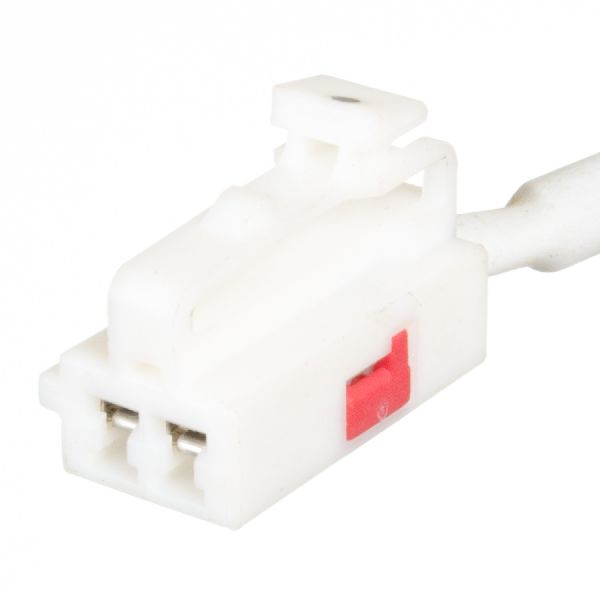
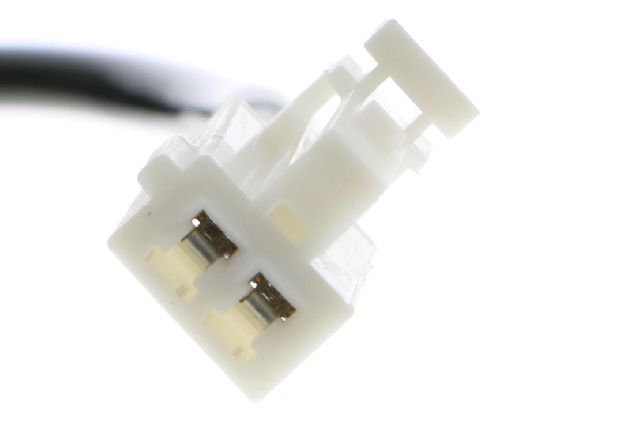
- Left Rear Wheel Sensor Connector — The sensor is on the rear left wheel hub assembly. The harness-side connector is located inside the cabin, behind the interior trim panel in the rear passenger area, after passing through a grommet in the wheel well.. This is the primary connector for the sensor circuit. Corrosion here or damage to the wire where it passes into the cabin can cause the C0045 code.
- GHG03 — Under the center of the dash.. This is a potential ground point for chassis electronics. While not directly for the sensor, a poor ground in the ABS system can cause various faults.
- ABS Module Connector — The ABS module is typically located in the engine compartment, often near the brake master cylinder.. This is the termination point for the wheel speed sensor circuit. Testing for continuity and shorts between this connector and the sensor connector is the definitive way to validate the wiring harness.
Real Owner Repair Stories
- YouTube channel 'FixItAll' (2011 Hyundai Tucson) — ABS light was on. Scan tool showed a code for the rear left ABS sensor with an intermittent signal.
❌ Tried (didn't work) The video directly proceeds to replacement, implying no other fixes were attempted.
✅ What actually fixed it Replacing the left rear ABS wheel speed sensor. The video shows the old and new parts being identical and the process of routing the new wire into the cabin to fix the issue. - YouTube channel 'Beer Wrench' (2012 Cadillac CTS (GM Vehicle, not a Tucson)) — ABS and Traction Control lights on, with codes C0045 (Left Rear) and C0050 (Right Rear) for erratic wheel speed sensor signals.
❌ Tried (didn't work) The technician suspected that both sensors failing simultaneously was unlikely.
✅ What actually fixed it Replacing both rear wheel hub assemblies. The magnetic encoder rings integrated into the old hubs had broken apart and worn away, providing a bad signal for the sensors to read. This is a critical diagnostic pattern applicable to the Tucson, which also uses a hub-integrated tone ring. - NHTSA ODI #11219167 — An owner reported the ABS stability code (C0045) was caused by a broken left rear wheel speed sensor encoder ring.
✅ What actually fixed it The repair required replacing both the speed sensor and the rear hub assembly. - NHTSA ODI #11165895 — A service center reported code C0045 and recommended a specific mechanical fix.
✅ What actually fixed it Replacing the left rear hub bearing assembly resolved the message that varied from a couple of seconds to minutes before lights extinguished.
When the Usual Fixes Don't Work
- In cases where a new wheel speed sensor does not resolve the C0045 code, the root cause is frequently mechanical, not electrical. As documented in repair videos and forum discussions, the magnetic tone ring integrated into the wheel hub assembly can crack or become contaminated with metallic debris from a failing wheel bearing. This causes an erratic signal that the ABS module interprets as a circuit fault. Technicians who stop diagnosis after confirming the sensor's resistance is within spec may miss this underlying mechanical failure, leading to repeat repairs. The definitive diagnosis in this scenario is to remove the sensor and visually inspect the tone ring for physical damage or debris.
Model Year Variations Within This Range
- 2010-2015: A facelift for the 2014 model year introduced cosmetic and some engine changes, but the ABS sensors and hub assemblies (including the FWD/AWD part number split) remained consistent across the entire 2010-2015 generation.
Diagnostic Flowchart
Other Known Issues on This Vehicle
Issues unrelated to this code that are worth knowing about as an owner of this generation:
- Theta II Engine Failure 🔴 High — Widespread across multiple model years (2014-2015 Tucson specifically mentioned), leading to knocking, seizure, and potential fires. Caused by manufacturing debris leading to connecting rod bearing failure. (Ref: Subject of multiple recalls, class-action lawsuits (Case No. 8:15-cv-02052-DOC), and warranty extensions to 15 years/150,000 miles for affected vehicles.)
- Excessive Oil Consumption 🟠 Medium — Commonly reported, particularly in 2.0L Nu GDI and 2.4L GDI engines. Owners report needing to add a quart of oil every 1,000-3,000 miles. Often attributed to stuck piston rings. (Ref: Included in engine-related class action settlements. Some owners have had success with piston soak procedures or warranty engine replacement after a dealer-monitored oil consumption test.)
- Spontaneously Shattering Panoramic Sunroof 🟠 Medium — Affects models equipped with the panoramic sunroof. The glass can shatter without impact, startling the driver and creating a safety hazard. (Ref: Subject of a class-action lawsuit (Glenn v. Hyundai Motor America) resulting in an extended warranty (10-year/120,000-mile) and reimbursement for repairs for shattering events.)
- Faulty Dual-Clutch Transmission (DCT) Behavior 🟡 Low → Shop Transmission Assembly — Primarily affects models with the 7-speed DCT. Owners report hesitation from a stop, and jerky or delayed shifting. (Ref: Hyundai released TSB #20-AT-025H to update the transmission control unit (TCU) software to address hesitation issues.)
- ABS Module Electrical Short 🔴 High → Shop ABS Control Module — Affects 2010-2013 models. The ABS module can internally leak brake fluid, causing an electrical short that poses a fire risk even when the vehicle is parked and off. (Ref: NHTSA Recall 251 / Hyundai Recall 206 was issued to address this. The fix involves installing a new relay in the vehicle's fuse box.)
Used vs. New Parts: Buying Guide for This Vehicle
When a used part is the smart pick: For the wheel hub and bearing assembly. If the tone ring is confirmed to be the failure point, a used hub assembly from a low-mileage, non-corroded donor vehicle can be a significant cost saving over a new OEM part.
Donor-vehicle mileage cap: roughly under 70000 miles for the part to have meaningful remaining life.
What to inspect on the donor part:
- Check for zero play or roughness when spinning the bearing by hand.
- Inspect the magnetic tone ring surface for any cracks, chips, or heavy rust.
- Ensure the donor vehicle is from a region with minimal road salt usage to avoid premature corrosion.
- Verify the part number matches for FWD vs. AWD.
OEM-only on this vehicle (don't cheap out):
- ABS Control Module. Due to the need for specific programming and the critical safety function, a new or professionally remanufactured OEM module is the only reliable choice if it is deemed faulty.
Aftermarket brands forum-validated for this vehicle:
- For Wheel Hubs: Timken, SKF, MOOG, FAG
- For Sensors: Mando (often an OEM supplier), Beck/Arnley, NTK
Brands owners have reported issues with on this vehicle:
- Unbranded, low-cost ABS sensors from online marketplaces have a higher reported failure rate and may have incorrect electrical characteristics, causing the code to persist.
Real Owner Stories
Aggregated from forums and TSBs cited above. Mileages and costs reflect what owners reported in those sources.
2013 Hyundai Tucson
Symptoms: ABS fault and erratic signal that persisted even after the sensor was replaced.
What fixed it: A full teardown revealed a disintegrated wheel bearing; fragments were physically blocking the sensor hole, requiring a hub replacement.
Source hint: YouTube video by 'Ron Ananian The Car Doctor' cited in vehicle_specific_issues
2010-2015 Hyundai Tucson
Symptoms: C0045 code returned months after changing the speed sensor.
What fixed it: The report suggests the true root cause was likely the wiring or the hub assembly rather than the sensor itself.
Source hint: Reddit - r/AskMechanics: C0045 code after changing speed sensor already?
Related OBD-II Codes
Frequently Asked Questions
Is there a safety recall for the ABS system on my 2010-2013 Hyundai Tucson?
Can I just replace the tone ring on my Tucson's rear wheel hub to fix C0045?
Why did my C0045 code return a few months after I already replaced the left rear sensor?
Is it possible to fix the C0045 code without buying new parts?
Does the 2011-2016 Kia Sportage have this same wheel speed sensor issue?
Where is the wiring for the left rear sensor disconnected on the Tucson?
Helpful Videos

We Have This Part in Stock


The information in this article is provided for general reference and educational purposes only. Vehicle specifications, procedures, and part compatibility can vary by production date, trim level, and region. Always consult your vehicle's factory service manual and verify part numbers before purchasing or performing repairs. Safety-critical components such as airbags, seat belts, and braking systems should be installed by a qualified professional.
- Hyundai Tucson:
- 🧭 Diagnostic Flowchart
- 🎬 Helpful Videos
- 🛍️ Shop This Part
- What's Unique About the 2010-2015 Hyundai Tucson
- Symptoms You May Notice
- Most Likely Causes
- Rare But Worth Checking
- Diagnosis Steps
- Parts You'll Likely Need
- Related Codes That Often Appear With This One
- Platform-Specific Known Issues
- Mechanic-Grade Diagnostic Values
- Wiring & Ground Locations
- Real Owner Repair Stories
- When the Usual Fixes Don't Work
- Model Year Variations Within This Range
- Other Known Issues on This Vehicle
- Used vs. New Parts: Buying Guide for This Vehicle
- Real Owner Stories
- 2013 Hyundai Tucson
- 2010-2015 Hyundai Tucson
- Related OBD-II Codes
- Frequently Asked Questions
- 🎟️ Get 5% Off