

C0045 on 2005-2010 Jeep Grand Cherokee: Left Rear Wheel Speed Sensor Circuit Fixes
This code means there's a fault with the left rear wheel speed sensor circuit. The most common fixes are replacing the sensor itself or the entire wheel hub assembly if the integrated tone ring is damaged. Expect ABS, traction, and stability control warning lights.
- C0045 means the ABS module has lost the signal from the left rear wheel speed sensor.
- Your ABS, traction control, and stability control systems will be disabled, so drive with extra caution.
- The most common causes are a failed sensor or a damaged tone ring on the wheel hub assembly.
- Always inspect the tone ring for rust or damage before replacing just the sensor, as this is a very common failure point on the WK Grand Cherokee.
- Check the wiring harness for damage, as it's exposed to the elements and can be a hidden cause of the fault.
What's Unique About the 2005-2010 Jeep Grand Cherokee
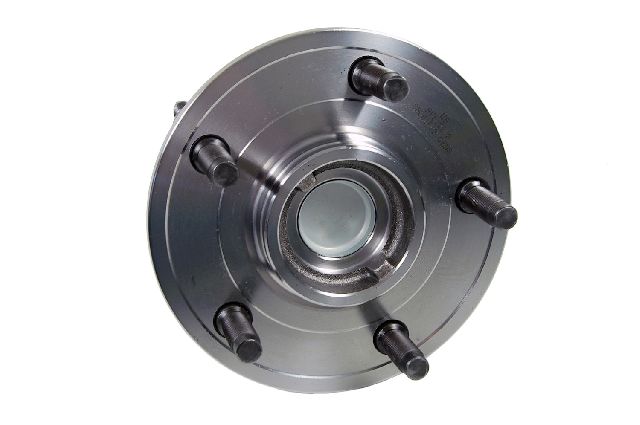
For the WK generation Grand Cherokee (2005-2010), the magnetic tone ring that the ABS sensor reads is integrated directly into the wheel hub and bearing assembly. While the sensor itself can fail, it is very common for the tone ring to become damaged by rust, debris, or wear. This means that even if the sensor is new, it cannot get a proper reading. As a result, a common repair for C0045 on this platform involves replacing the entire rear wheel hub assembly, not just the sensor. This issue is shared with its direct platform mate, the 2006-2010 Jeep Commander (XK).
Symptoms You May Notice
- ABS warning light illuminated
- Traction Control (TCS/ESP) warning light illuminated
- Brake Assist System (BAS) warning light illuminated
- "Service 4WD System" message may appear
- ABS and traction control systems are disabled
- Cruise control may be disabled
- Replacing only the wheel speed sensor when the actual problem is a damaged tone ring on the wheel hub assembly. This is the most common reason for the code returning after a repair.
- Assuming the sensor is bad without checking the wiring harness for breaks or corrosion, which is a frequent point of failure.
Most Likely Causes
- Failed Left Rear Wheel Speed Sensor 🔴 High Probability → Shop ABS Wheel Speed Sensor The sensor is exposed to harsh conditions (water, salt, debris, heat) at the wheel, leading to internal failure or corrosion over time. These are active (magnetoresistive) sensors on this platform, meaning they receive voltage from the ABS module to operate.
How to confirm: Use a scan tool with live data to see if the left rear wheel speed reads 0 MPH or is erratic while driving. You can also test the sensor's wiring for the correct reference voltage (around 11-12V) from the ABS module. Swapping sensors side-to-side is a good diagnostic step to see if the code follows the sensor.
Typical fix: Replace the left rear wheel speed sensor. The sensor is held to the knuckle by a single bolt.
Est. part cost: $25-$75 - Damaged/Corroded Tone Ring on Wheel Hub Assembly 🔴 High Probability → Shop Hub Assembly The magnetic encoder ring is built into the wheel hub's seal. Rust can build up underneath the ring, causing it to swell, crack, or flake apart. This creates an incorrect air gap or a damaged surface that the sensor cannot read accurately. This is a very common failure point in regions with road salt.
How to confirm: Visually inspect the back of the wheel hub assembly where the sensor reads. Look for cracks, missing pieces, or severe rust on the magnetic encoder ring. Often, metallic debris will be stuck to the magnetic ring, interfering with the signal. If the ring is damaged, the hub must be replaced.
Typical fix: Replace the entire left rear wheel hub and bearing assembly.
Est. part cost: $80-$200 - Damaged Wiring or Corroded Connector 🟡 Medium Probability The wiring harness runs down the suspension and is susceptible to damage from road debris, improper jacking, or corrosion at the connector pins. Wires can chafe and break internally, even if the outer insulation looks intact.
How to confirm: Visually inspect the entire length of the sensor's wiring harness from the wheel to where it connects in the chassis. Check for chafed wires, breaks, or green corrosion inside the connector plugs. Perform a continuity test on the wires between the sensor connector and the ABS module connector.
Typical fix: Repair the broken section of wire or replace the pigtail connector. In severe cases, a new harness may be needed.
Est. part cost: $15-$50
Rare But Worth Checking
- Faulty ABS Control Module: → Shop ABS Control Module This is rare and should only be considered after definitively ruling out the sensor, wiring, and wheel hub assembly. A faulty module will often set multiple wheel speed sensor codes at once or fail to communicate with a scan tool.
Diagnosis Steps
- Connect an ABS-capable scan tool to the OBD-II port.
- Confirm C0045 is the active code. Check for any other related codes, such as C1041.
- View the live data stream for all four wheel speed sensors. Drive the vehicle slowly (or spin the wheel by hand with the vehicle safely supported) and observe the speed reading from the left rear sensor. Compare it to the other three. A reading of zero or one that is erratic confirms a problem at that corner.
- Safely raise and support the vehicle. Remove the left rear wheel.
- Perform a thorough visual inspection. Check the wheel speed sensor for physical damage. Inspect the wiring harness for any signs of chafing, breaks, or melted spots. Unplug the connector and check for corrosion or bent pins.
- Closely inspect the magnetic encoder ring on the back of the wheel hub assembly. Look for any cracks, chips, or signs that the ring is flaking apart or swollen with rust. Check for metallic debris stuck to the ring.
- If the tone ring is damaged, the wheel hub assembly must be replaced.
- If the tone ring and wiring appear intact, test the sensor circuit. Using a multimeter, check for reference voltage (should be around 11-12 volts) at the sensor connector coming from the ABS module.
- If voltage is present, the next step is to check for continuity and shorts in the wiring harness between the sensor connector and the ABS control module.
- If all wiring and components check out, the issue may be a rare failure of the ABS control module itself.
Parts You'll Likely Need
- Left Rear Wheel Speed Sensor
(OEM #56044146AB)— This is the most direct component implicated by the code and is a common failure item due to its exposed location.
Trusted brands: Mopar, Standard Motor Products (SMP), Delphi, Bosch
OEM price range: $50-$90
Aftermarket price range: $25-$60 - Left Rear Wheel Hub and Bearing Assembly
(OEM #52111884AB)— The magnetic tone ring required for the sensor to function is integrated into this assembly. Damage to the ring from rust or debris is a very common cause of C0045 and requires replacing the entire hub.
Trusted brands: Mopar, Timken, SKF, MOOG
OEM price range: $150-$250
Aftermarket price range: $80-$150
Related Codes That Often Appear With This One
- C1041 / C1043 — These codes specifically point to erratic performance of the tone wheel ('Left Rear Tone Ring Performance'), strongly suggesting the problem is with the hub assembly's magnetic ring rather than a complete electrical failure of the sensor circuit.
- C100A — This is the equivalent code for the Left Front wheel speed sensor circuit. Seeing multiple sensor codes can sometimes point towards a wiring harness issue common to both sides or a failing ABS module.
Platform-Specific Known Issues
- Owner Experience: Multiple Lights and Limp Mode: An owner on JeepForum described having the ABS, ESP, and BAS lights illuminate, along with a 'Service 4WD System' message. The vehicle would sometimes enter a limp mode. The issue was traced back to a faulty rear wheel speed sensor that had been damaged by a deteriorated tone ring on the original hub assembly. Replacing both the hub and sensor resolved all the warning lights.
- Incorrect Sensor Installation Causing Failure: A technician noted a case on a 2006 Grand Cherokee where a previously replaced front wheel speed sensor was installed incorrectly, causing the wiring to rub against the tire until it wore through and failed. While this was a front sensor, the same mistake can be made on the rear, emphasizing the need to route the new sensor wire exactly as the original to avoid contact with moving parts.
Mechanic-Grade Diagnostic Values
- Wheel Speed Sensor Supply Voltage — expected: ~11.0-12.0V. Failure: Low or no voltage at the sensor connector (with key on) points to a wiring issue from the ABS module.
- Wheel Speed Sensor Signal Fluctuation (Voltage) — expected: A very small voltage fluctuation (e.g., 0.05V) when the wheel is turned slowly.. Failure: No fluctuation in voltage when the wheel is spun indicates a dead sensor or a damaged tone ring.
Hidden / Shadow Codes Worth Checking
- C1041 / C1043: These codes indicate 'Left Rear Tone Wheel Performance' or an implausible signal, which specifically points to a problem with the magnetic tone ring on the hub assembly (e.g., damage, debris, excessive air gap) rather than a simple open/short in the sensor's electrical circuit. (see via A professional-level scan tool capable of reading manufacturer-specific ABS codes, such as WiTech or AlfaOBD.)
Scan Tool Commands That Help
- wiTECH or AlfaOBD: View Live Data - Wheel Speed Sensors — This is the most critical diagnostic step. It allows you to view the speed readings from all four wheels in real-time while driving or spinning the wheel. A reading of 0 MPH or an erratic signal from the left rear, while the others read correctly, immediately confirms the fault location.
Wiring & Ground Locations
- ABS Control Module — Located on the driver's side of the engine bay, attached to the hydraulic control unit, below the master cylinder.. This is the destination for the wheel speed sensor wiring. The main connector here is the final point for testing continuity from the sensor. Corrosion on this connector can cause the C0045 code.
- Wheel Speed Sensor Harness Connector — Located in the left rear wheel well, where the sensor pigtail connects to the main chassis harness.. This connector is a common point of failure due to exposure to water and debris. It should be the first place to check for corrosion or damage after the sensor itself.
- ABS Module Power/Ground — The ABS module receives power and ground through its main connector. A wiring diagram is needed to identify the specific pins for power (fused battery+) and ground (chassis ground).. While unlikely to cause a single wheel speed sensor code, a poor ground or power feed to the module can cause erratic behavior and multiple faults. Verifying these is a key step if other causes are ruled out.
Real Owner Repair Stories
- Reddit user on r/AskMechanics (2011 Chevrolet Equinox (similar active sensor design)) — ABS and traction control lights on, code C0045.
❌ Tried (didn't work) Replacing the left rear wheel speed sensor. The code returned after a few days.
✅ What actually fixed it The issue was metallic debris stuck to the magnetic encoder ring on the wheel hub. Cleaning the debris off the ring resolved the issue without needing to replace the hub or the new sensor. - NHTSA ODI #11219167 (Cadillac SRX cross-reference) — An owner reported the ABS stability code C0045 was caused by a broken left rear wheel speed sensor encoder ring. The repair required replacing both the speed sensor and the rear hub assembly.
- NHTSA ODI #11165895 (Chevrolet Equinox cross-reference) — A service center reported code C0045 and recommended replacing the left rear hub bearing assembly to resolve intermittent warning lights.
OEM Part Supersession History
56044146AA→56044146AB— Standard part revision by the manufacturer.
Heads up: The parts are interchangeable. 56044146AB is the current replacement for the original part.52111884AA→52111884AB— Standard part revision by the manufacturer.
Heads up: The parts are interchangeable. 52111884AB is the current replacement for the original part.
Model Year Variations Within This Range
- 2008-2010: The Grand Cherokee received a mid-cycle refresh for the 2008 model year, which included exterior and interior styling updates and a revised 4.7L V8 engine. However, the ABS, traction control systems, and the relevant wheel speed sensors and hub assemblies for this code remained fundamentally the same as the 2005-2007 models. New electronic features like Hill Descent Control and Hill Start Assist were added, which rely on the same wheel speed sensor data.
Diagnostic Flowchart
Other Known Issues on This Vehicle
Issues unrelated to this code that are worth knowing about as an owner of this generation:
- Totally Integrated Power Module (TIPM) Failure 🔴 High — Common across 2007-2014 Chrysler/Jeep/Dodge vehicles. Can occur at any mileage. (Ref: Multiple recalls and a class-action lawsuit have been issued, including for fuel pump relay failure within the TIPM.)
- Electronic Shifter Module (ESM) Failure / Rollaway Risk 🔴 High — Primarily affected later WK2 models (2014-2015) but earlier WK models had issues with the shifter getting stuck in Park. The WK2 issue was due to a non-intuitive design. (Ref: Safety Recall S27 / NHTSA 16V-240 for 2014-2015 models.)
- Front Differential Bushing Failure 🟠 Medium — Very common on 4WD models, typically noticeable after 80,000 miles. Causes a loud clunk when shifting into Drive or Reverse.
- Engine Stalling / Won't Start 🔴 High — Frequently reported, often a symptom of the underlying TIPM failure causing the fuel pump to lose power intermittently. (Ref: Related to TIPM recalls.)
- HVAC Blend/Recirculation Door Failure 🟡 Low — Common issue where plastic gears in the actuator break, causing clicking noises from the dash and inability to control air temperature or direction.
Used vs. New Parts: Buying Guide for This Vehicle
When a used part is the smart pick: A used wheel hub assembly from a junkyard can be a cost-effective option, especially if it comes from a low-mileage vehicle from a dry, salt-free climate. The wheel speed sensor itself is inexpensive enough that buying new is always the recommended choice.
Donor-vehicle mileage cap: roughly under 70000 miles for the part to have meaningful remaining life.
What to inspect on the donor part:
- Check the donor vehicle's mileage and location history (avoid rust-belt states if possible).
- Inspect the magnetic tone ring on the back of the hub for any cracks, swelling, or missing chunks.
- Ensure the tone ring is free of metallic debris.
- Spin the bearing by hand; it should be smooth with no grinding, noise, or excessive play.
OEM-only on this vehicle (don't cheap out):
- ABS Control Module
Aftermarket brands forum-validated for this vehicle:
- Timken (Hub Assembly)
- SKF (Hub Assembly)
- MOOG (Hub Assembly)
- Standard Motor Products (Sensor)
- Bosch (Sensor)
- NTK (Sensor)
Brands owners have reported issues with on this vehicle:
- Unbranded, 'white box' parts from online marketplaces with no warranty or reputation, as bearing quality can be very poor.
Real Owner Stories
Aggregated from forums and TSBs cited above. Mileages and costs reflect what owners reported in those sources.
2005-2010 Jeep Grand Cherokee
Symptoms: ABS, ESP, and BAS lights illuminated, along with a 'Service 4WD System' message. The vehicle would sometimes enter a limp mode.
What fixed it: Replacing both the wheel hub and the left rear wheel speed sensor after finding the original hub's tone ring had deteriorated.
Source hint: JeepForum.com - WK Grand Cherokee ABS/ESP/BAS Lights On
2006 Jeep Grand Cherokee
Symptoms: ABS / Traction Control / ESP BAS Light illuminated; code C100A (front sensor) was present but diagnostic process matched C0045.
What fixed it: Diagnosis using the AlfaOBD app to identify the specific wheel sensor failure.
Source hint: YouTube - Fixing a Jeep ABS / Traction Control / ESP BAS Light
2006 Jeep Grand Cherokee
Symptoms: Sensor failure shortly after replacement due to wiring damage.
What fixed it: Correcting the sensor installation; the wiring had been routed incorrectly and rubbed against the tire until it failed.
Source hint: Incorrect Sensor Installation Causing Failure
Documented NHTSA Reports
Symptoms: An owner reported a number of codes including C0057, C0045, C0231, C0232, and C0282 (NHTSA ODI #10382746).
What fixed it: In another instance involving code C0045, a service center reported that the solution was to replace the L/R hub bearing assembly (NHTSA ODI #11165895).
Related OBD-II Codes
Frequently Asked Questions
Why is my 2005-2010 Grand Cherokee showing 'Service 4WD System' along with the ABS light?
Can I just replace the sensor, or do I need a new wheel hub assembly?
Is there a specific TSB for the TIPM causing these brake codes?
Does the Jeep Commander share this same wheel sensor issue?
How can I confirm if the left rear sensor is actually the problem before buying parts?
Helpful Videos
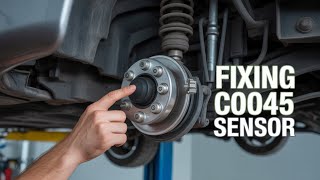
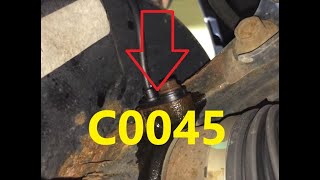
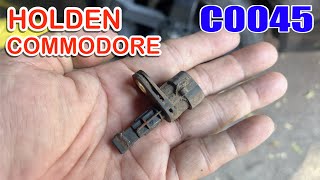
We Have This Part in Stock

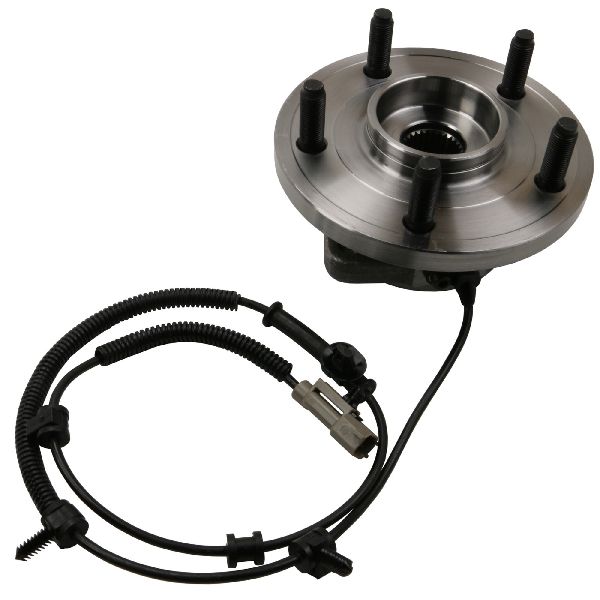
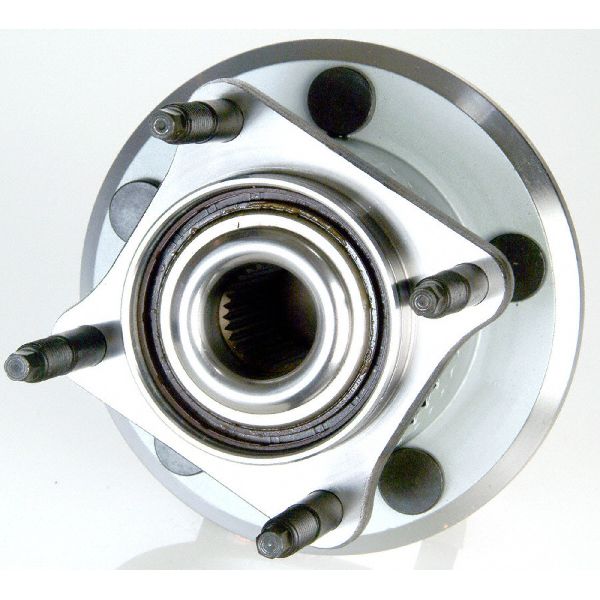

The information in this article is provided for general reference and educational purposes only. Vehicle specifications, procedures, and part compatibility can vary by production date, trim level, and region. Always consult your vehicle's factory service manual and verify part numbers before purchasing or performing repairs. Safety-critical components such as airbags, seat belts, and braking systems should be installed by a qualified professional.
- Jeep Grand Cherokee:
- 🧭 Diagnostic Flowchart
- 🎬 Helpful Videos
- 🛍️ Shop This Part
- What's Unique About the 2005-2010 Jeep Grand Cherokee
- Symptoms You May Notice
- Most Likely Causes
- Rare But Worth Checking
- Diagnosis Steps
- Parts You'll Likely Need
- Related Codes That Often Appear With This One
- Platform-Specific Known Issues
- Mechanic-Grade Diagnostic Values
- Hidden / Shadow Codes Worth Checking
- Scan Tool Commands That Help
- Wiring & Ground Locations
- Real Owner Repair Stories
- OEM Part Supersession History
- Model Year Variations Within This Range
- Other Known Issues on This Vehicle
- Used vs. New Parts: Buying Guide for This Vehicle
- Real Owner Stories
- 2005-2010 Jeep Grand Cherokee
- 2006 Jeep Grand Cherokee
- 2006 Jeep Grand Cherokee
- Documented NHTSA Reports
- Related OBD-II Codes
- Frequently Asked Questions
- 🎟️ Get 5% Off