

C0045 on 2011-2015 Kia Optima: Left Rear Wheel Speed Sensor Circuit Fault Causes and Fixes
Code C0045 on a 2011-2015 Kia Optima means there's a fault in the left rear wheel speed sensor circuit. This usually points to a bad wheel speed sensor or its wiring. In some cases, the magnetic tone ring, which is integrated into the rear wheel hub, can become cracked or corroded, requiring hub replacement. Expect to pay $25-$75 for an aftermarket sensor, and it's a common DIY fix.
- C0045 means the ABS and ESC systems are off, so drive with extra caution, especially in bad weather.
- The most likely fix is replacing the left rear wheel speed sensor, which is an affordable part and a manageable DIY job.
- Before buying parts, use a scan tool to watch live wheel speed data to confirm the fault is at the left rear wheel.
- Always inspect the wiring harness for damage before replacing the sensor.
- Be aware of the serious safety recall concerning the ABS control module (HECU) on these models, which can cause a fire.
What's Unique About the 2011-2015 Kia Optima
The 2011-2015 Kia Optima (third generation, TF) and its platform-mate, the Hyundai Sonata (YF), integrate the magnetic tone ring, which the sensor reads, directly into the rear wheel hub and bearing assembly. While the sensor itself is the most common failure point, a damaged or corroded tone ring requires replacing the entire hub assembly. Additionally, this generation has a notable and critical safety recall (NHTSA Campaign ID 20V-519, Kia recall SC197) for the ABS control module (HECU) potentially leaking brake fluid internally, which can cause an electrical short and engine compartment fire, even when the vehicle is parked. Owners should verify this recall has been performed when diagnosing any ABS-related issues.
Symptoms You May Notice
- ABS warning light is on
- Electronic Stability Control (ESC) or Traction Control (TCS) warning light is on
- ABS and traction control systems are disabled and will not activate
- A 'Service ESC' or similar message may appear on the instrument cluster
- In some cases, the brake pedal may pulsate at low speeds as the ABS system incorrectly activates due to erratic sensor readings.
- Replacing the ABS control module before thoroughly testing the sensor, wiring, and hub assembly.
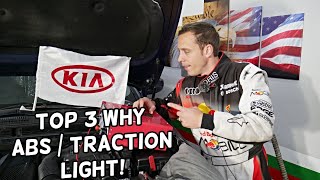
- Replacing the wheel speed sensor without checking the wiring harness for damage, leading to a repeat failure. 🎬 See why these three issues often trigger your ABS light.
- Replacing the wheel speed sensor when the actual fault is a cracked or corroded tone ring on the wheel hub assembly.
Most Likely Causes
- Failed Left Rear Wheel Speed Sensor 🔴 High Probability → Shop ABS Wheel Speed Sensor The sensor is exposed to water, salt, and road debris, leading to internal corrosion and electronic failure over time. It's a common failure point on many vehicles, including the Optima.
How to confirm: Use a scan tool to monitor live data from all four wheels. The left rear sensor will show a speed of 0 MPH or an erratic reading while the other wheels show the correct speed. A visual inspection may not reveal an internal electronic fault.
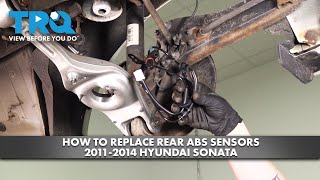
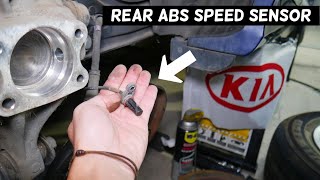
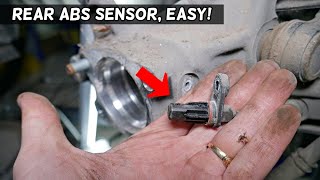
Typical fix: Replace the left rear wheel speed sensor. It is typically held in by a single 10mm bolt 🎬 Watch: This video shows exactly where to find the sensor. and is accessible after removing the wheel.
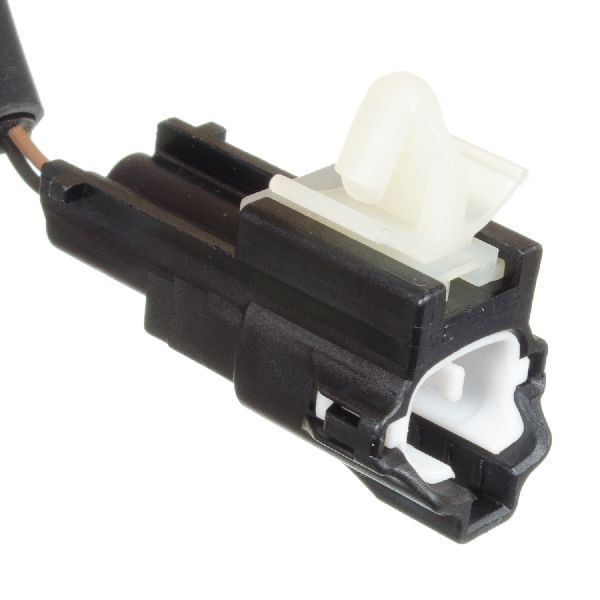
Est. part cost: $25-$75 - Damaged Wiring or Connector 🟡 Medium Probability The wiring harness runs along the suspension and can be damaged by road debris, improper servicing (like a strut replacement), or corrosion in the connector plug. Rodents have also been known to chew on the soy-based wire coatings used by Kia.
How to confirm: Visually inspect the entire length of the sensor's wiring harness for breaks, chafing, or corrosion. Unplug the connector and check for bent or corroded pins. Test for continuity and shorts between the sensor connector and the ABS module connector using a multimeter.
Typical fix: Repair the damaged section of wire or replace the sensor pigtail/harness if damage is severe.
Est. part cost: $5-$50 for repair materials - Damaged or Corroded Tone Ring on Wheel Hub ⚪ Low Probability The magnetic tone ring is integrated into the seal of the rear wheel hub assembly. Rust can build up underneath it, causing it to crack, break apart, or delaminate from the hub. This sends a distorted or nonexistent signal to the sensor.
How to confirm: After removing the wheel speed sensor (10mm bolt), use a light and a small mirror to visually inspect the magnetic ring inside the hub for visible cracks, rust jacking, or missing segments. This is often the cause if a new sensor doesn't fix the code.
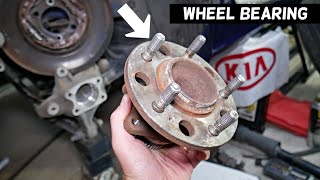
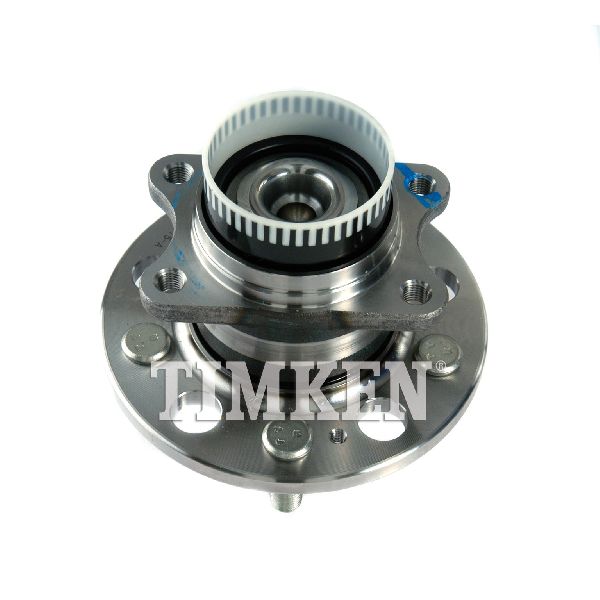
Typical fix: Replace the entire rear wheel hub and bearing assembly. The tone ring is not available 🎬 Watch: A step-by-step guide to replacing the rear hub assembly. as a separate part.
Est. part cost: $70-$150
Rare But Worth Checking
- Faulty ABS Control Module (HECU): → Shop ABS Control Module This is the least likely cause for a single wheel speed sensor code. It should only be considered after the sensor, wiring, and hub assembly have been confirmed to be in good working order. These vehicles were subject to a major safety recall (SC197) for HECU electrical shorts due to internal brake fluid leaks, which could cause a fire. A faulty module could also manifest as multiple, nonsensical codes.
- Software or Programming Issues: While rare, some manufacturers have addressed similar clusters of codes through software updates. For instance, NHTSA ODI #10382746 describes a case where a dealer was instructed to erase codes including C0045 and re-program the software to address intermittent faults.
Diagnosis Steps
- Connect an OBD-II scanner capable of reading ABS codes to confirm C0045 is present and to check for any other related codes.
- Access the live data stream for all four wheel speed sensors.
- Drive the vehicle slowly (or safely raise and spin the wheels) and observe the speed readings. Confirm that the Left Rear (LR) sensor reads 0 MPH or shows erratic values compared to the other three sensors.
- Raise and secure the vehicle on jack stands. Remove the left rear wheel.
- Perform a thorough visual inspection of the wheel speed sensor and its wiring harness. Look for any signs of physical damage, chafed wires, or corrosion on the connector pins. Follow the harness as far back as possible.
- Disconnect the sensor and use a multimeter to test its internal resistance (if it's a passive sensor) or check for voltage and ground at the connector (if it's an active sensor). Compare readings to manufacturer specifications.
- Inspect the wiring harness for continuity from the sensor connector to the ABS module and check for shorts to power or ground.
- If the sensor and wiring test good, remove the sensor (typically one 10mm bolt) and carefully inspect the magnetic tone ring on the wheel hub for cracks, heavy rust, or debris. Rotate the hub slowly to inspect the entire ring.
- If the tone ring is damaged, the wheel hub assembly must be replaced. If the sensor or wiring is faulty, replace the defective part.
- After the repair, clear the code with the scan tool and perform a test drive. The ABS and ESC lights should turn off within a few moments of driving as the system verifies the repair.
Parts You'll Likely Need
- Left Rear ABS Wheel Speed Sensor
(OEM #599102T000)— This is the most common failure point for a C0045 code due to its exposed location and electronic nature.
Trusted brands: Standard Motor Products, Delphi, Bosch, SKP, Mando
OEM price range: $80-$120
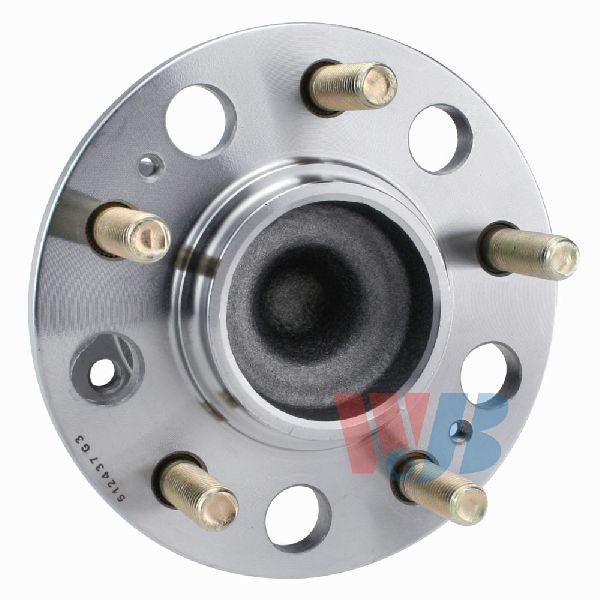
Aftermarket price range: $25-$75 - Rear Wheel Bearing and Hub Assembly
(OEM #527303S200)— Required if the integrated magnetic tone ring is damaged, which is the second most likely hardware failure after the sensor itself. The bearing and hub are a single, non-serviceable unit.
Trusted brands: Timken, SKF, MOOG, WJB, GMB
OEM price range: $150-$220
Aftermarket price range: $70-$150
Related Codes That Often Appear With This One
- C0050 — This is the code for the Right Rear Wheel Speed Sensor. Seeing both C0045 and C0050 together could point to a shared wiring problem, a bad batch of sensors, or damage to both rear hub tone rings, which may have been exposed to the same conditions.
- C1611, C1616, C2402 — These codes can relate to ABS/ESC module communication errors or motor faults. A recall on the HECU for this model makes any related module codes particularly important to investigate, as they could be related to the internal shorting issue described in recall SC197.
- P0463, P069E — While primarily fuel system related, NHTSA ODI #11399819 notes these codes appearing alongside C0045 in some diagnostic scenarios, suggesting that multiple system faults can sometimes trigger simultaneously.
Technical Service Bulletins (TSBs) & Recalls
- While no TSBs directly address code C0045, TSB CHA043 for other models describes a similar diagnostic process involving checking the sensor, wiring, and hub/tone ring. Additionally, TSBs related to the MDPS steering coupler (e.g., CS1604) show that Kia is aware of component wear issues on this platform.
Platform-Specific Known Issues
- Recall SC197 / NHTSA 20V-519: Affects 2013-2015 Optimas. Brake fluid can leak inside the Hydraulic Electronic Control Unit (HECU), causing an electrical short and increasing the risk of an engine compartment fire, even while parked. This recall was later superseded by SC212 (NHTSA 21V331) which involved installing a new multi-fuse and inspecting/replacing the HECU. Owners were advised to park outside until the repair was completed.
Mechanic-Grade Diagnostic Values
- Active Wheel Speed Sensor Signal Voltage — expected: A digital square wave signal that toggles between two voltages (e.g., 7mA and 14mA current pulses, which translate to voltage shifts). The frequency of the wave should increase with wheel speed.. Failure: No signal, a flat line voltage, or an erratic/inconsistent waveform when the wheel is spinning indicates a failed sensor or tone ring. A maxed-out reading (e.g., 255 km/h) indicates an open or shorted circuit.
- Sensor Harness Voltage Supply (Key On, Engine Off) — expected: With the sensor disconnected, one pin on the harness-side connector should have a reference voltage (typically 5V or 12V) and the other should be a ground provided by the ABS module.. Failure: Absence of voltage or ground points to a wiring issue between the connector and the ABS module, or a fault within the module itself.
Scan Tool Commands That Help
- Kia GDS (Global Diagnostic System) or equivalent advanced scanner: Live Data / Data Stream for 'Wheel Speed Sensor' — This is the primary diagnostic step. It allows the technician to view the speed reading from all four sensors simultaneously while driving or spinning the wheels to confirm the left rear sensor is the one providing no or an erratic signal.
Wiring & Ground Locations
- ABS Control Module (HECU) — In the engine bay, on the passenger side, near the firewall.. This is the termination point for the wheel speed sensor wiring. Testing for continuity and shorts must be done between the sensor connector and the main HECU connector. A poor ground for the module itself can cause various ABS faults.
- HECU Connector — Large multi-pin connector on the ABS module, typically with a red locking tab and a grey lever to release it.. This is where you would back-probe to test the signal from the sensor as it arrives at the module, confirming the integrity of the wiring harness along its entire length.
- HECU Ground Circuit — On older Kia models, ground continuity is checked between terminals 8 and 24 of the HECU harness connector and a chassis ground point.. While specific to an older model, this illustrates the diagnostic principle. A bad ground for the ABS module can cause erratic behavior and codes, including false sensor faults. Verifying the module's ground is a key step if sensor and wiring tests are inconclusive.
Real Owner Repair Stories
- YouTube video by 'Kia Optima Abs & Traction light On' (Kia Optima (year not specified, but within TF generation)) — ABS and Traction control lights on, with codes C1206 (Right Rear) and C1209 (Left Rear) which are equivalent to C0045 and C0050.
✅ What actually fixed it A visual inspection revealed that the wiring harnesses for both rear wheel speed sensors were damaged and severed near the sensor connectors. The fix was to repair or replace the damaged wiring sections. - YouTube video by 'Traverse C0045 Wheel Speed Signal Drops Out' (2014 Chevy Traverse (different vehicle, but identical failure mode)) — ABS and StabiliTrak lights on, false ABS activation, code C0045.
✅ What actually fixed it Live data showed the left rear signal dropping out. A visual inspection after removing the sensor showed the magnetic encoder ring on the back of the wheel hub assembly was cracked and delaminating. Replacing the entire wheel hub and bearing assembly resolved the issue.
OEM Part Supersession History
527301D400→527303S200— Part has been updated by the manufacturer.
Heads up: The new part number (527303S200) is the correct replacement for the 2011-2015 Optima.N/A→599102T000— This is the primary OEM part number for the Left Rear sensor for this generation.
Heads up: Note that Hyundai and Kia share part numbers. The part may come in a Kia or Hyundai branded box but is the same component. Also, verify if your vehicle has an electronic parking brake (EPB) as there may be variations.
Model Year Variations Within This Range
- 2014-2015: The 2014 model year marked a significant facelift for the Optima. While the underlying ABS hardware (sensors, hubs) remained the same, the interior controls, dashboard layout, and front/rear fascias were redesigned. This does not change the diagnosis for C0045 but is a key identifier for the vehicle's production period.
- 2013-2015: Vehicles in this range are specifically cited in the major HECU/ABS module fire risk recall (SC197 / NHTSA 20V-519). While earlier models may also be affected by similar issues, this specific recall campaign targeted these years.
Diagnostic Flowchart
Other Known Issues on This Vehicle
Issues unrelated to this code that are worth knowing about as an owner of this generation:
- Catastrophic Engine Failure (Theta II 2.0L & 2.4L) 🔴 High — Widespread across 2011-2015 models. Failures can occur under 100,000 miles. Caused by metallic debris from manufacturing leading to premature bearing wear. (Ref: Multiple recalls (e.g., SC147, NHTSA 17V-224) and a major class-action lawsuit settlement were issued, extending warranty coverage and providing for engine replacement.)
- ABS Module (HECU) Fire Risk 🔴 High → Shop ABS Control Module — Affects 2013-2015 models. The issue is an internal brake fluid leak causing an electrical short. (Ref: NHTSA Recalls 20V-519 (SC197) and 21V-331 (SC212) were issued. The remedy involves inspection, potential HECU replacement, and adding a new multi-fuse.)
- Worn Steering Coupler 🟠 Medium — Common on 2011-2014 models, causing a clicking or clunking noise when turning the steering wheel. More prevalent in high-humidity areas. (Ref: Kia issued a Customer Satisfaction Program (CS1604) and extended the warranty to 10 years/unlimited miles for this specific part (P/N 56315-2K000FFF).)
- Engine Seizing and Stalling 🔴 High — A primary symptom of the larger Theta II engine defect, with numerous complaints filed with NHTSA. (Ref: Covered under the same engine-related recalls and warranty extensions as the catastrophic failures (e.g., SC147).)
Used vs. New Parts: Buying Guide for This Vehicle
When a used part is the smart pick: A used wheel speed sensor or wiring pigtail from a low-mileage donor vehicle is a reasonable choice, as they are simple electronic components. A complete used wheel hub assembly can also be a cost-effective option if the donor vehicle has significantly lower mileage than yours and comes from a dry, salt-free climate to minimize the risk of bearing wear and corrosion.
Donor-vehicle mileage cap: roughly under 60000 miles for the part to have meaningful remaining life.
What to inspect on the donor part:
- For a hub assembly, spin the bearing by hand. It should be completely silent and smooth with zero play or roughness.
- Visually inspect the magnetic tone ring on the hub's seal. It must be perfectly intact, with no cracks, chips, or signs of rust bubbling up from underneath.
- For a sensor or harness, inspect for any cuts, abrasions, or brittleness in the wiring insulation. Ensure connector pins are straight and free of corrosion.
OEM-only on this vehicle (don't cheap out):
- ABS Control Module (HECU): Due to the critical safety recalls and complex programming/VIN-locking procedures, using a used module is highly discouraged. A new OEM unit is the only reliable and safe option.
Aftermarket brands forum-validated for this vehicle:
- For Wheel Hub Assemblies: Timken, SKF, MOOG, and WJB are reputable brands known for quality bearings.
- For Wheel Speed Sensors: Standard Motor Products (SMP), Delphi, and Bosch are trusted names in automotive electronics.
Brands owners have reported issues with on this vehicle:
- Be cautious with unbranded, 'white-box' hub assemblies and sensors from online marketplaces. While the initial cost is low, they have a higher reported failure rate, often leading to doing the job twice.
Documented NHTSA Reports
While C0045 is a standardized code, its implications can vary. NHTSA ODI #11165895 describes a situation where a service center recommended replacing the left rear hub bearing assembly to resolve the code, though the owner noted that online references suggested various other solutions. In another instance, NHTSA ODI #11219167 confirms a repair where both the wheel speed sensor and the rear hub assembly were replaced because the left rear wheel speed sensor encoder ring was broken at approximately 96,020 miles.
Real Owner Stories
Aggregated from forums and TSBs cited above. Mileages and costs reflect what owners reported in those sources.
2017 Hyundai Sonata
Symptoms: ABS and traction control lights turned on while driving.
What fixed it: The fault was identified as the left rear wheel speed sensor circuit.
Source hint: Reddit r/AskAMechanic - 'While driving the other night, I noticed that the ABS traction control lights turn on in my 2017 Hyundai Sonata...'
Related OBD-II Codes
Frequently Asked Questions
My 2014 Kia Optima has the ABS and ESC lights on. Could this be related to the HECU fire recall?
I replaced the left rear sensor on my 2012 Optima but the C0045 code is still there. What else should I check?
Is there a specific TSB for the C0045 code on the 2011-2015 Optima?
Can I use a used wheel hub assembly from a donor car to fix a C0045 tone ring issue?
Why did my brake pedal pulsate at low speeds before the ABS light stayed on?
Could rodents be the cause of my C0045 code on my Kia?
Helpful Videos

We Have This Part in Stock


The information in this article is provided for general reference and educational purposes only. Vehicle specifications, procedures, and part compatibility can vary by production date, trim level, and region. Always consult your vehicle's factory service manual and verify part numbers before purchasing or performing repairs. Safety-critical components such as airbags, seat belts, and braking systems should be installed by a qualified professional.
- Kia Optima:
- 🧭 Diagnostic Flowchart
- 🎬 Helpful Videos
- 🛍️ Shop This Part
- What's Unique About the 2011-2015 Kia Optima
- Symptoms You May Notice
- Most Likely Causes
- Rare But Worth Checking
- Diagnosis Steps
- Parts You'll Likely Need
- Related Codes That Often Appear With This One
- Technical Service Bulletins (TSBs) & Recalls
- Platform-Specific Known Issues
- Mechanic-Grade Diagnostic Values
- Scan Tool Commands That Help
- Wiring & Ground Locations
- Real Owner Repair Stories
- OEM Part Supersession History
- Model Year Variations Within This Range
- Other Known Issues on This Vehicle
- Used vs. New Parts: Buying Guide for This Vehicle
- Documented NHTSA Reports
- Real Owner Stories
- 2017 Hyundai Sonata
- Related OBD-II Codes
- Frequently Asked Questions
- 🎟️ Get 5% Off